AI agents for business finance: what they can and can't do
What AI agents can do in bookkeeping, close, collections and compliance today, where a person must stay in charge, and how to judge a product.
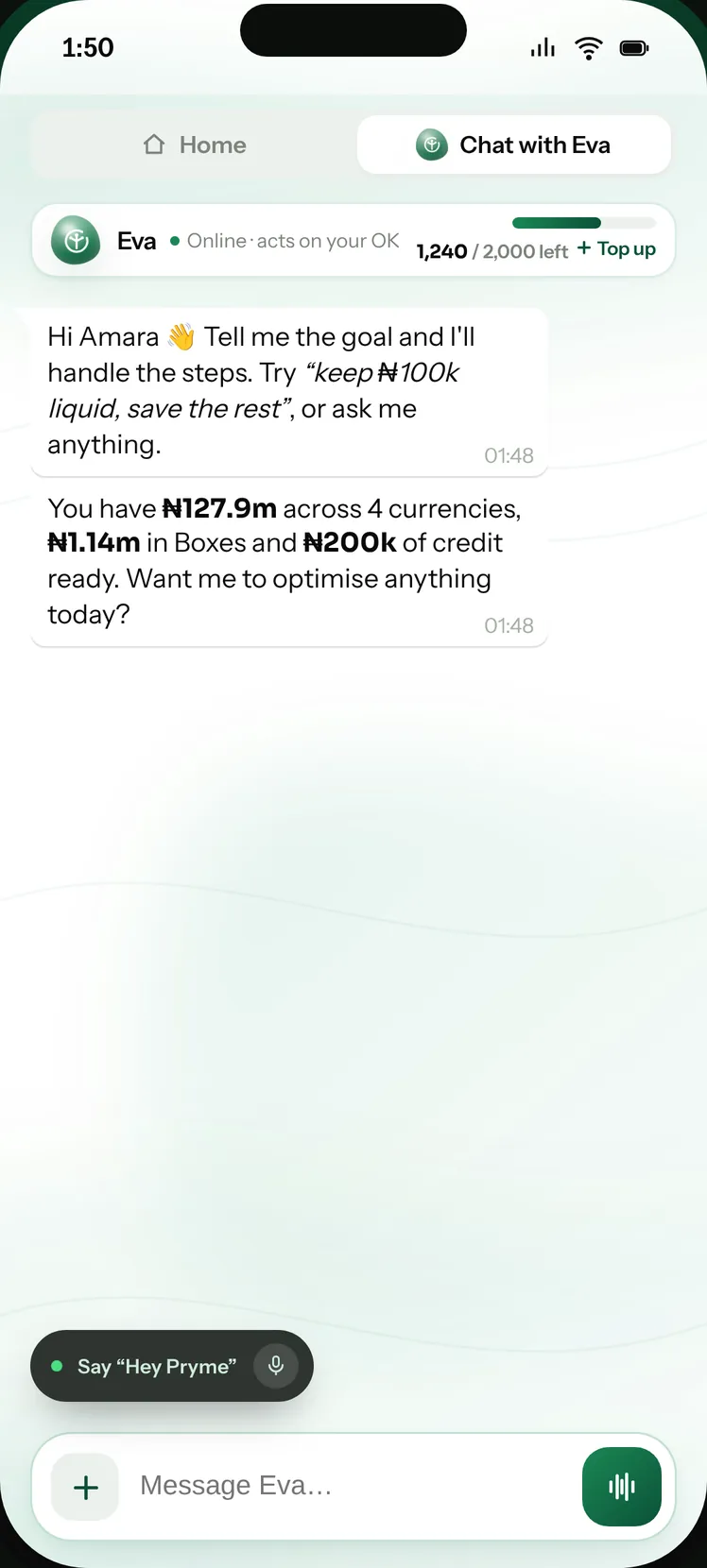
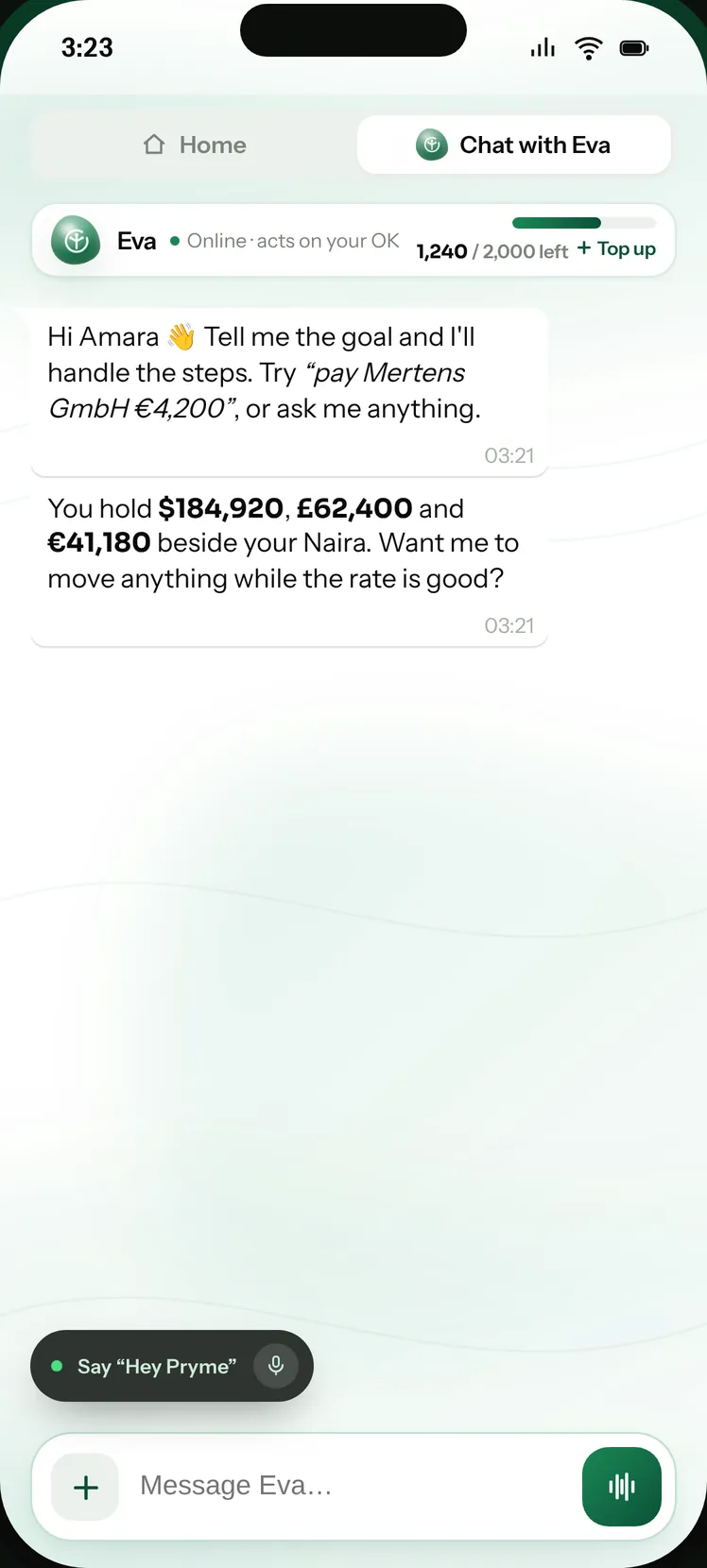
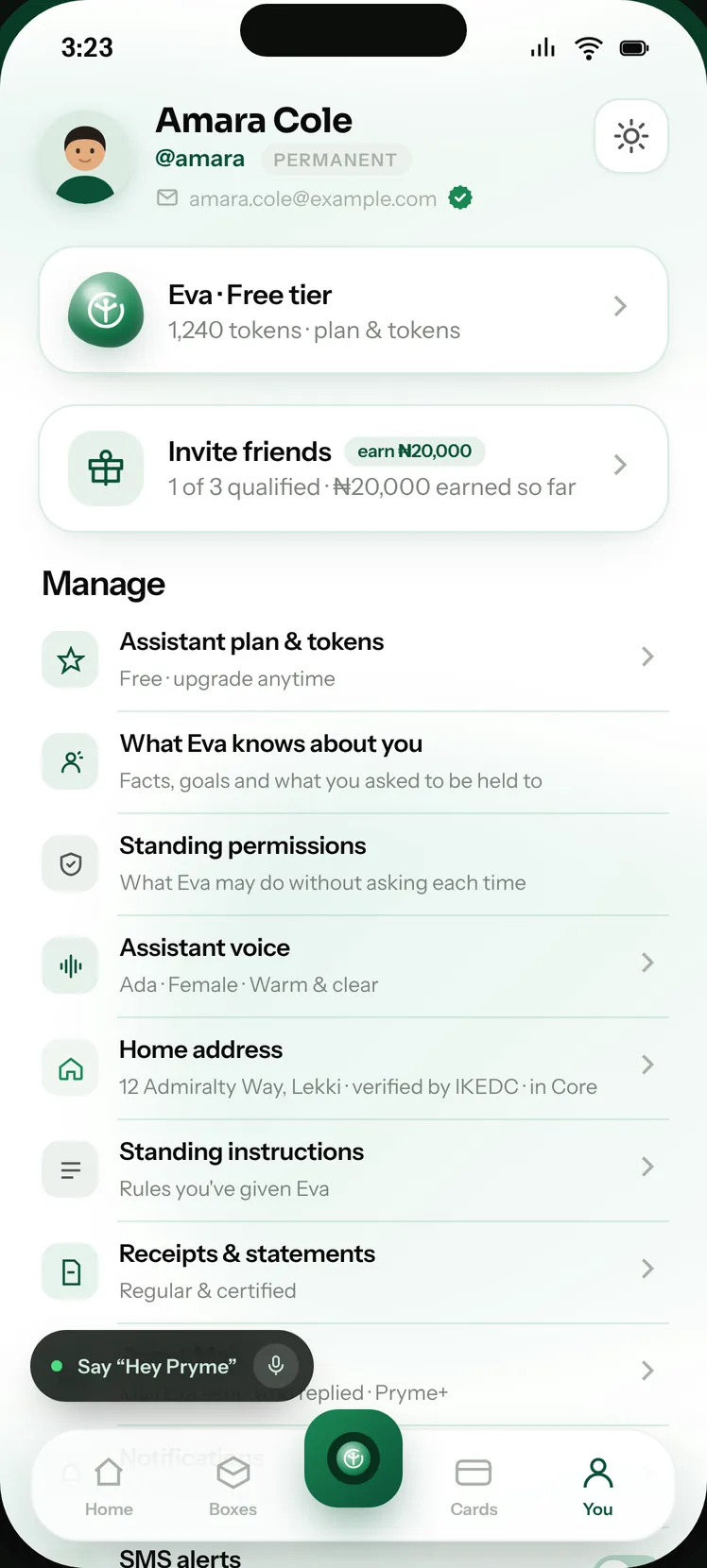
Meet Eva, the assistant inside the Pryme app. She opens accounts, moves money, saves toward your goals and follows up. Nothing leaves your account without your approval.
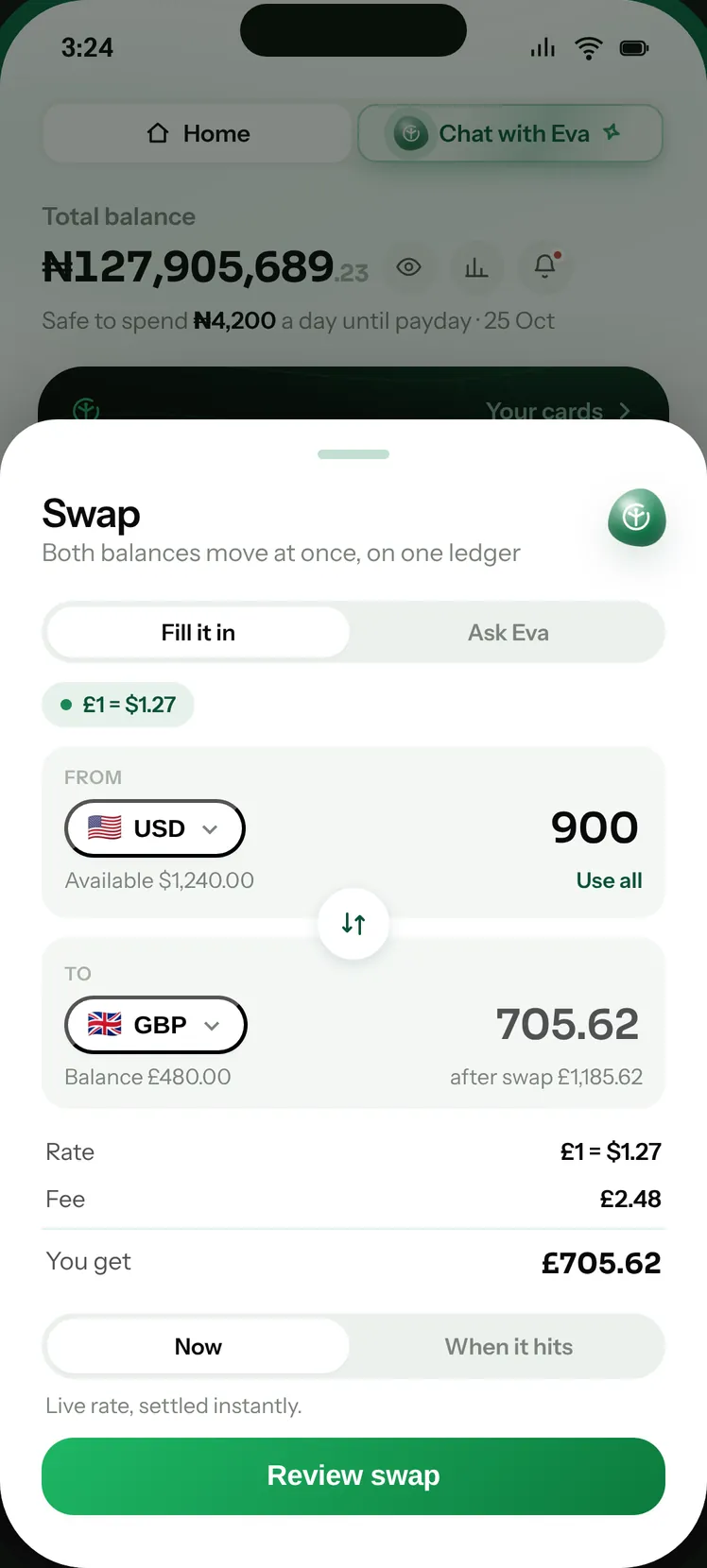
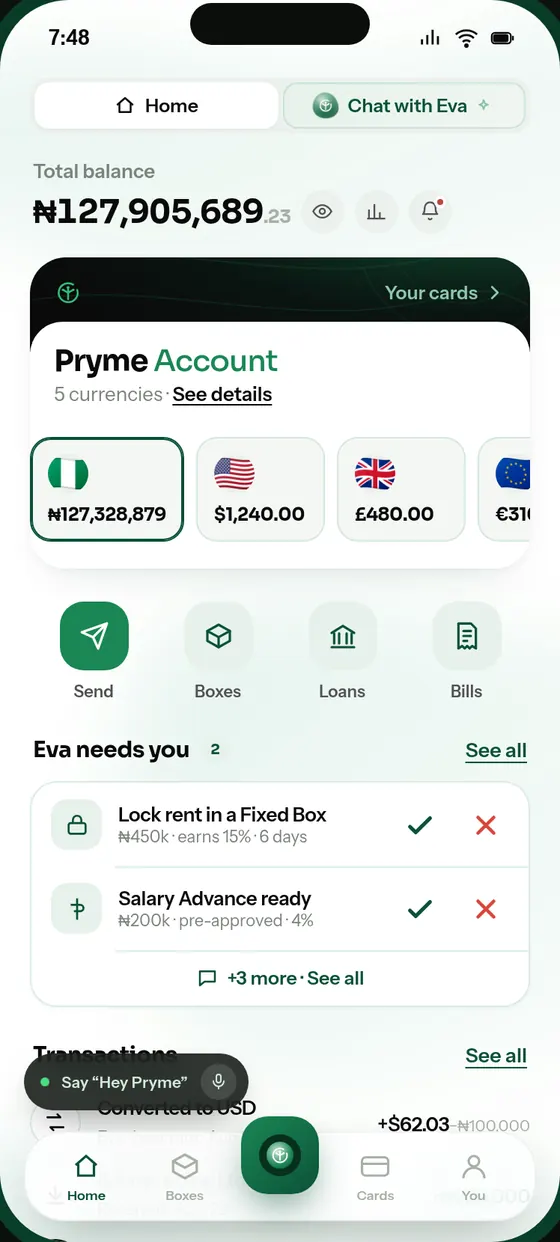
Meet Eva, the assistant inside the Pryme app. She holds dollars, pounds, euros and Naira side by side, swaps at a locked rate, pays bills in any of them and sends anywhere, asking before anything moves.
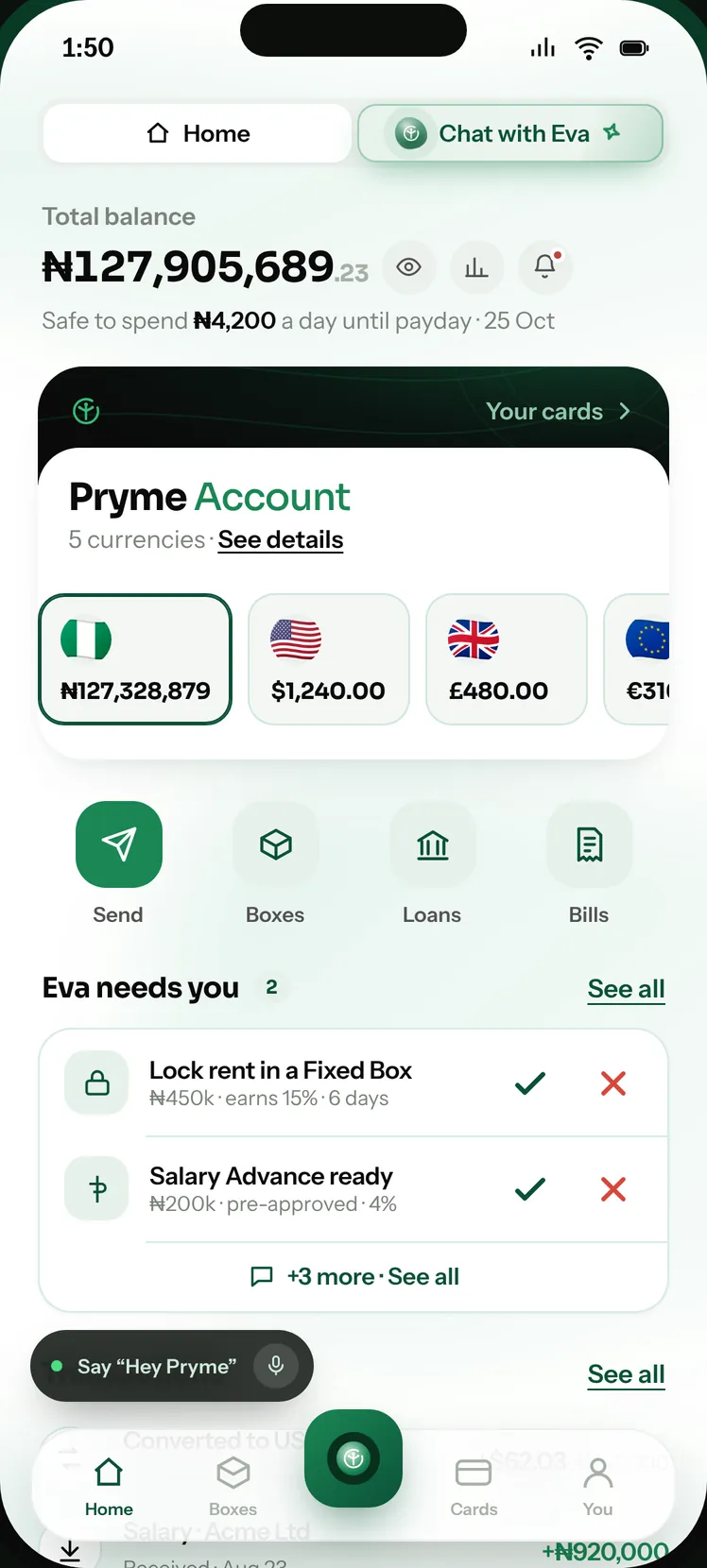
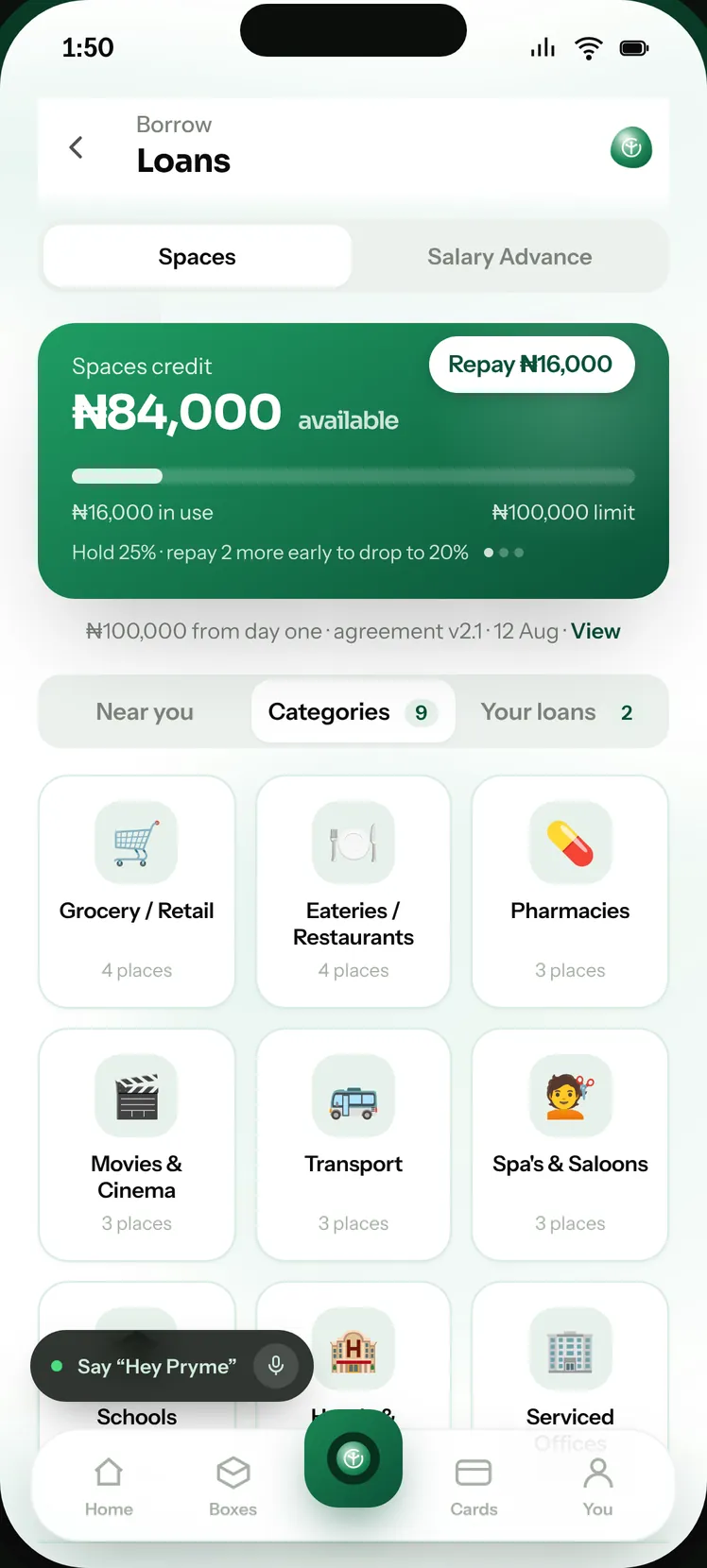
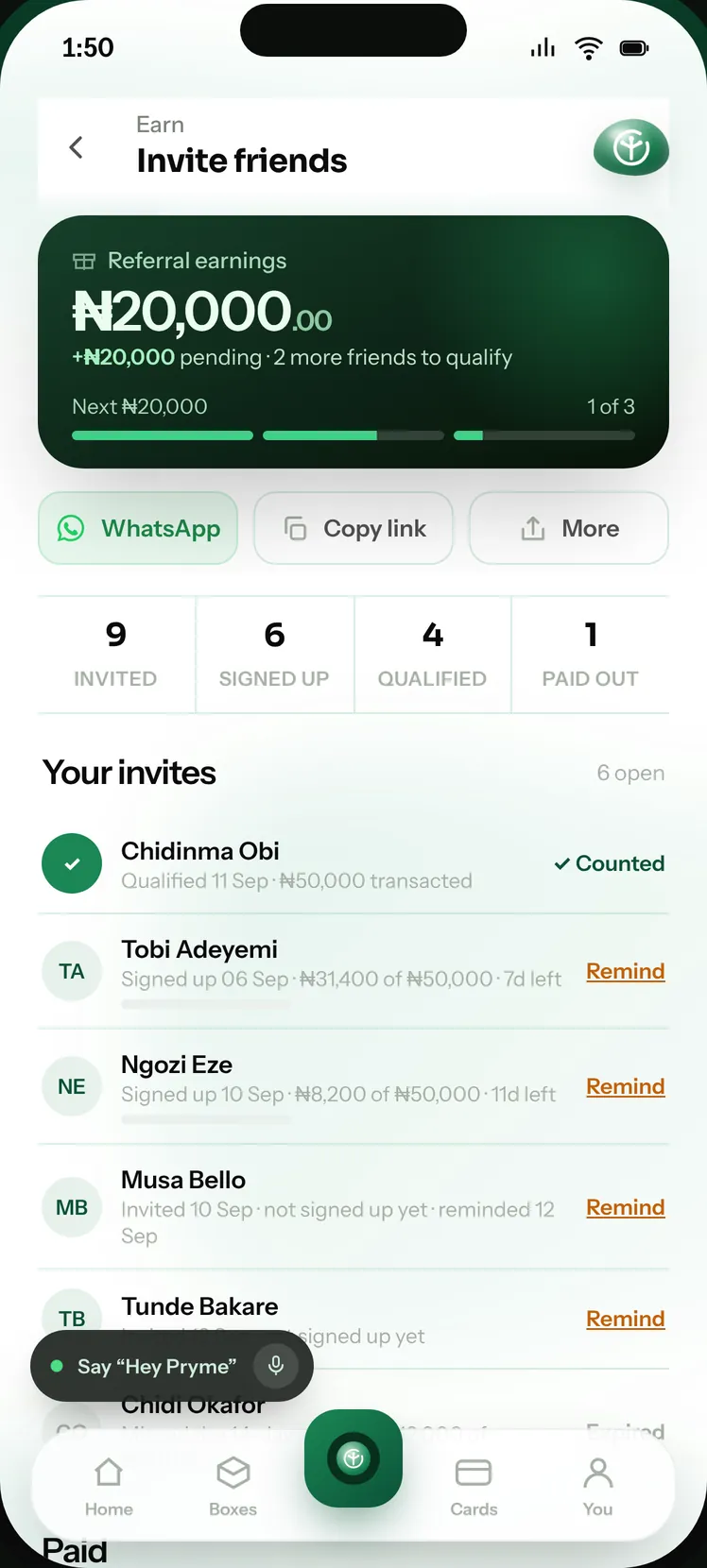
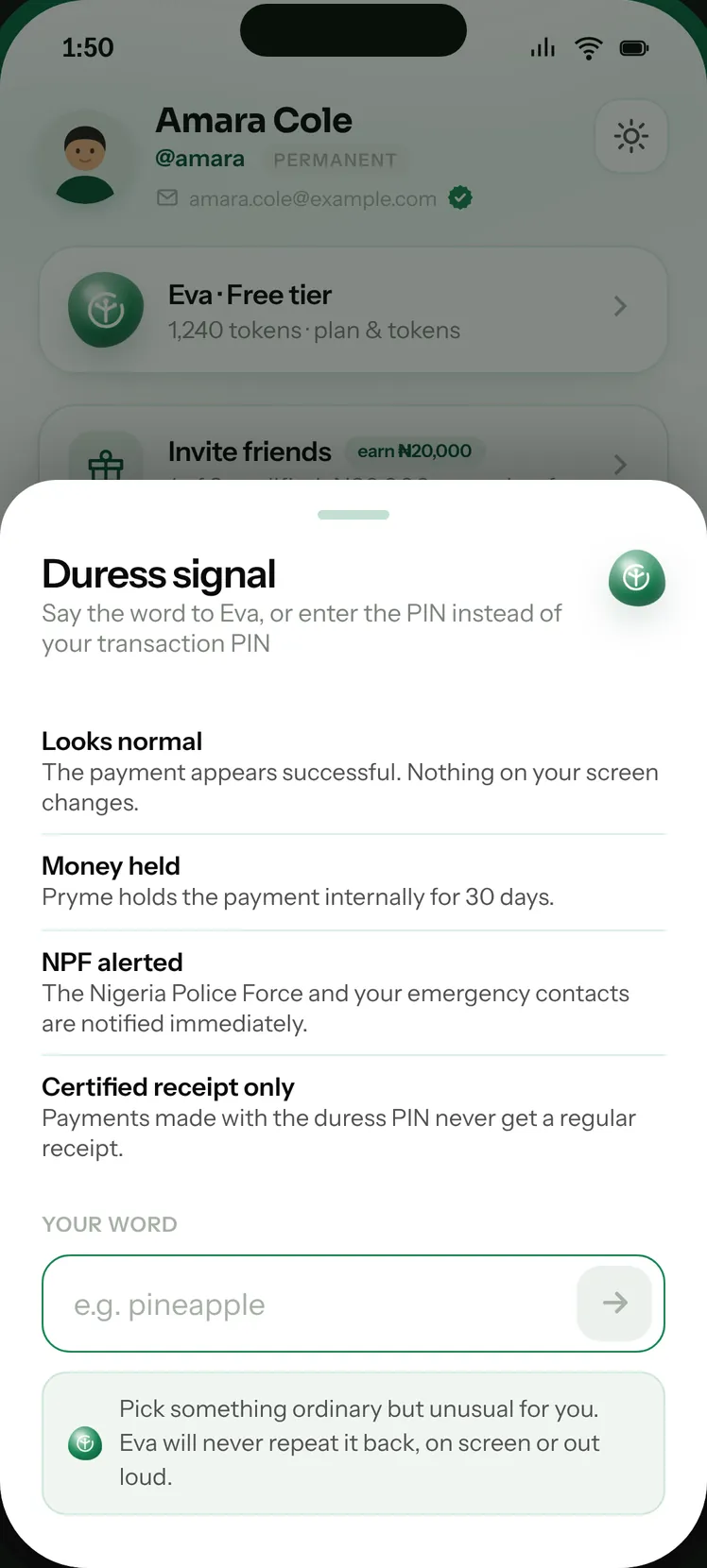
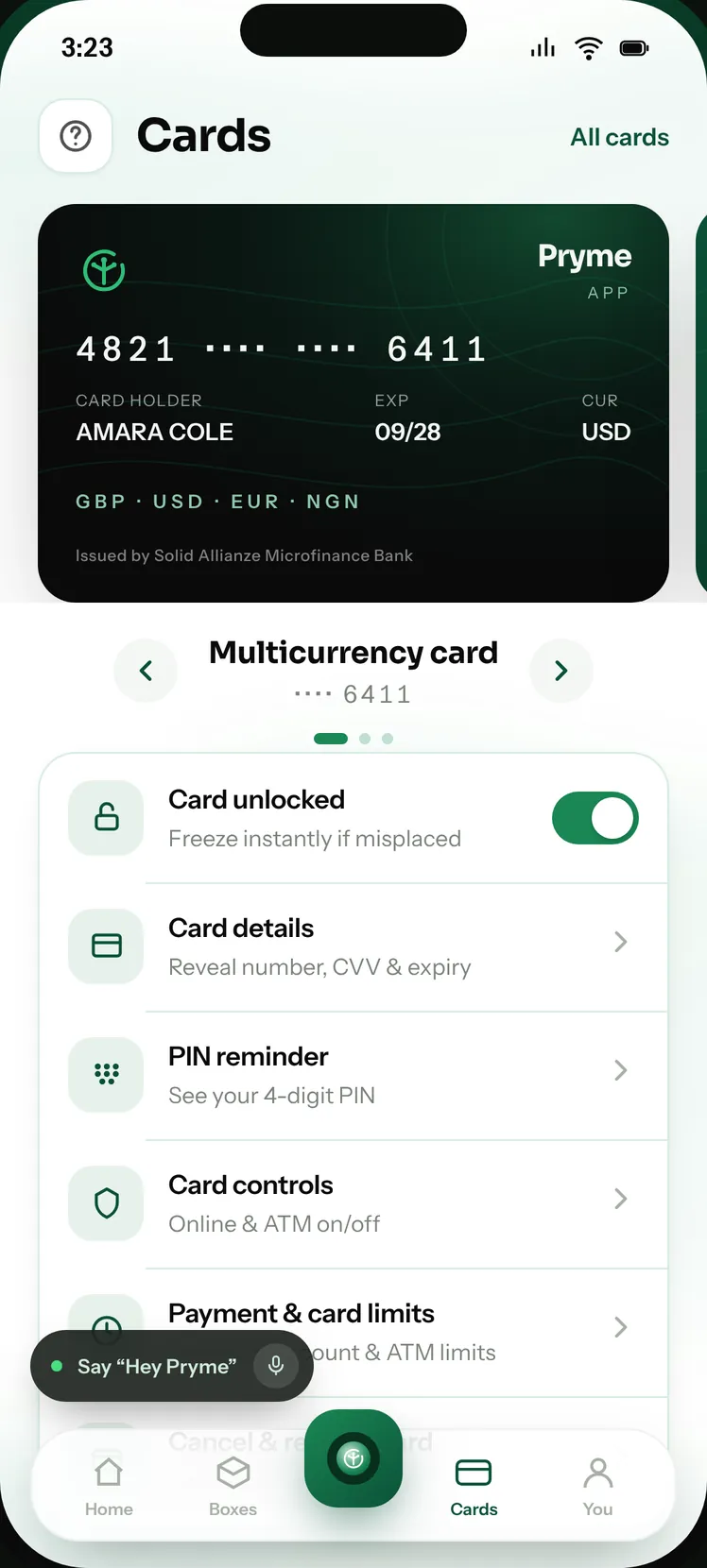
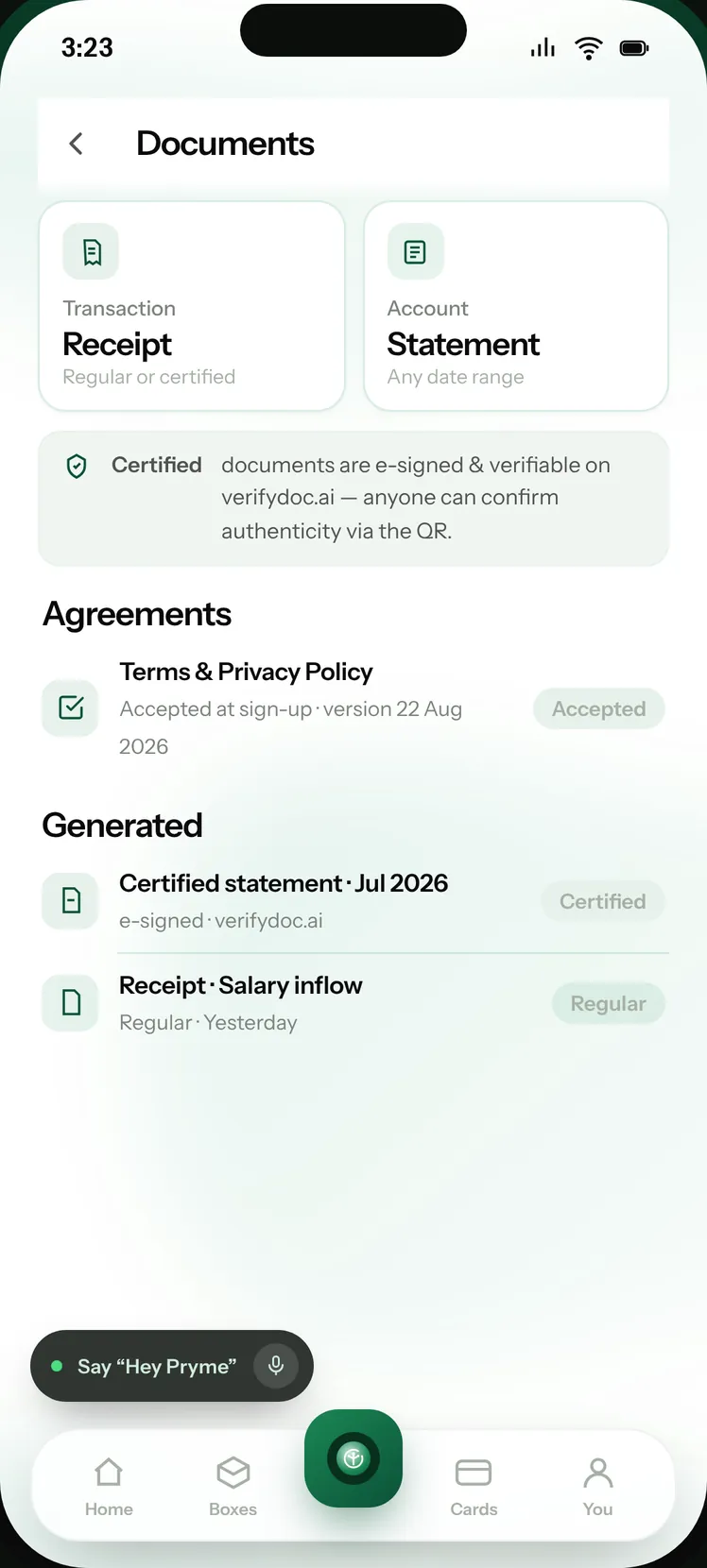
We give you a limit to spend at the shops and services you already use — and an account that works on your month while you get on with it. Dollars, pounds and euros sit beside your Naira, and an assistant handles the running of it, asking you first every single time.
One global account for your money and business. Move across currencies, automate everyday operations and put AI agents to work — with you in control of every important decision.

 Evayour assistant
 DanielChief of Staff
 BenFinance
 BruceCare
Your competitor down the road sells the same thing you sell. The difference is who walks in. We put money in people’s hands that can only be spent in businesses like yours — and then we point them at you.
You are not borrowing. You are selling to somebody who already has the money — and that money can only be spent with a business like yours.
₦100,000 from day one · agreement v2.1 · 12 Aug · View
Eva waits for your rate and asks before she moves anything.
No card, no OTP, nothing for the buyer to type in. They transfer from the bank app they already use, and the money lands in the same account your agents are running — already matched to the order, already in your books.
We give the buyer a one-time account number. They transfer to it from any bank app or by USSD — no card, no OTP, nothing to type in.
Get the account numberTo this account, from any bank app. We watch it, and the page updates itself.
₦26,767.50 from GTBank · John D., matched to order ORD‑1042.
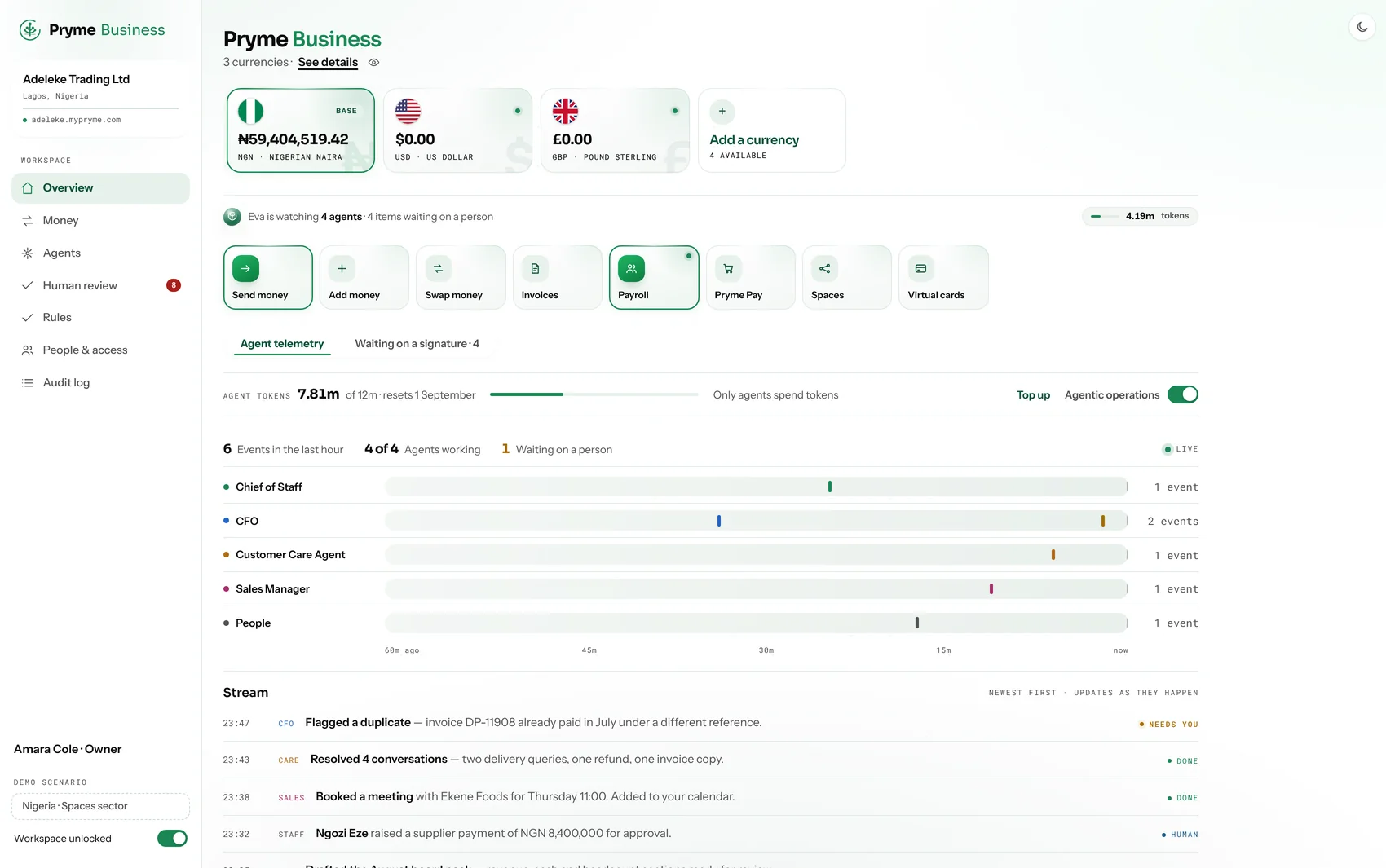
Five agents come with the account. Each one has a job description, a budget and a ceiling you set. They do the work and bring it to you — nothing leaves the account without your signature.
Knows what is stuck, who is waiting and what you promised — and keeps all three moving.
Booked a meeting with John Doe Foods for Thursday 11:00.Keeps the books as you trade and tells you the moment something does not add up.
Flagged a duplicate — invoice DP‑11908 was already paid in July.Holds every filing to its own clock and screens names and payments against your policy — and logs what it refuses.
Screened 412 payments overnight and refused two of them.Goes back to the buyers who went quiet, with the receipt already attached.
Recovered ₦410,000 across three overdue invoices.Replies, follows up on what they asked for and hands you only the ones that need you.
Resolved 4 conversations — two deliveries, one refund.Issue a dedicated Naira account number to each of your own customers, collect into it and reconcile against it. The same rails the Business Account runs on, with the licence behind them.
Dollars, pounds and euros beside a Naira account, on one ledger and one set of books. Five agents come with it and run the account — nothing leaves without your signature.
Five agents come with the account. Each has a job description, a budget and a ceiling you set. They do the work and bring it to you — they propose, you approve.
Knows what is stuck, who is waiting and what you promised, and keeps all three moving.
Booked the quarterly review with your auditor for Thursday.Keeps the books in every currency you hold and flags the moment something does not add up.
Flagged a duplicate — invoice DP‑11908 was already paid in July.Holds every filing to its own clock and screens names and payments against your policy — and logs what it refuses.
Screened 412 payments overnight and refused two of them.Goes back to the buyers who went quiet, with the invoice and the receipt already attached.
Recovered $12,400 across three overdue invoices.Replies, follows up on what they asked for and hands you only the ones that need you.
Resolved 4 conversations — two deliveries, one refund.The business has changed shape four times and never changed what it was rooted in. Each version was built out of what the last one could not do.
An online grocery store, built out of a faulty tab. Selling the food was the easy part — taking the money for it, and moving it, turned out to be the business.
A prepaid card. The first time the company issued rather than resold, and the first time it carried the obligations that come with holding somebody else’s money.
Solid Allianze acquired — an existing bank with an existing licence. The perimeter stopped being someone else’s to draw.
More than one currency on one balance, and the rebrand to Pryme. A Nigerian business could hold dollars without holding a second institution.
Accounts that do the work rather than only hold value. Five agents on the account, inside a policy you write — which is where the new mark starts.
Pryme is a financial technology company. It gives people and businesses in Nigeria one account that holds Naira alongside dollars, pounds and euros, and a set of agents that do the running of it — keeping the books, chasing what is owed, answering customers and paying bills. Nothing leaves an account without the owner’s approval.
Yes. A Pryme account holds Naira, US dollars, pounds sterling and euros side by side on one ledger, each with its own account details — a Nigerian account number, a US account number, a UK sort code and an IBAN for the euro area. You can swap between them at a rate you set, and every currency has its own statement.
Spaces is available in Nigeria. It gives a shopper money to spend that can only be spent with a participating business. The business is paid into its Naira account whether or not the shopper repays, because Pryme carries the credit. For the business it is free to join, there is nothing monthly, and the customer’s identity is never shown — only a reference and what it is worth.
Five agents come with the account. The Chief of Staff runs the week and keeps what is stuck moving. Finance watches the money and keeps the books as you trade. Compliance keeps the filings on time and screens what moves. Sales chases what you are owed. Customer Support answers your customers and follows up. Each has a job description, a budget and a ceiling you set, and each one proposes rather than acts — nothing leaves the account without your signature.
Pryme Pay takes payments on your own site or on a checkout page you control. The buyer is given a one-time account number and transfers to it from any bank app or by USSD — no card, no OTP, nothing to type in. The money lands in the same account your agents are running, already matched to the order and already in your books.
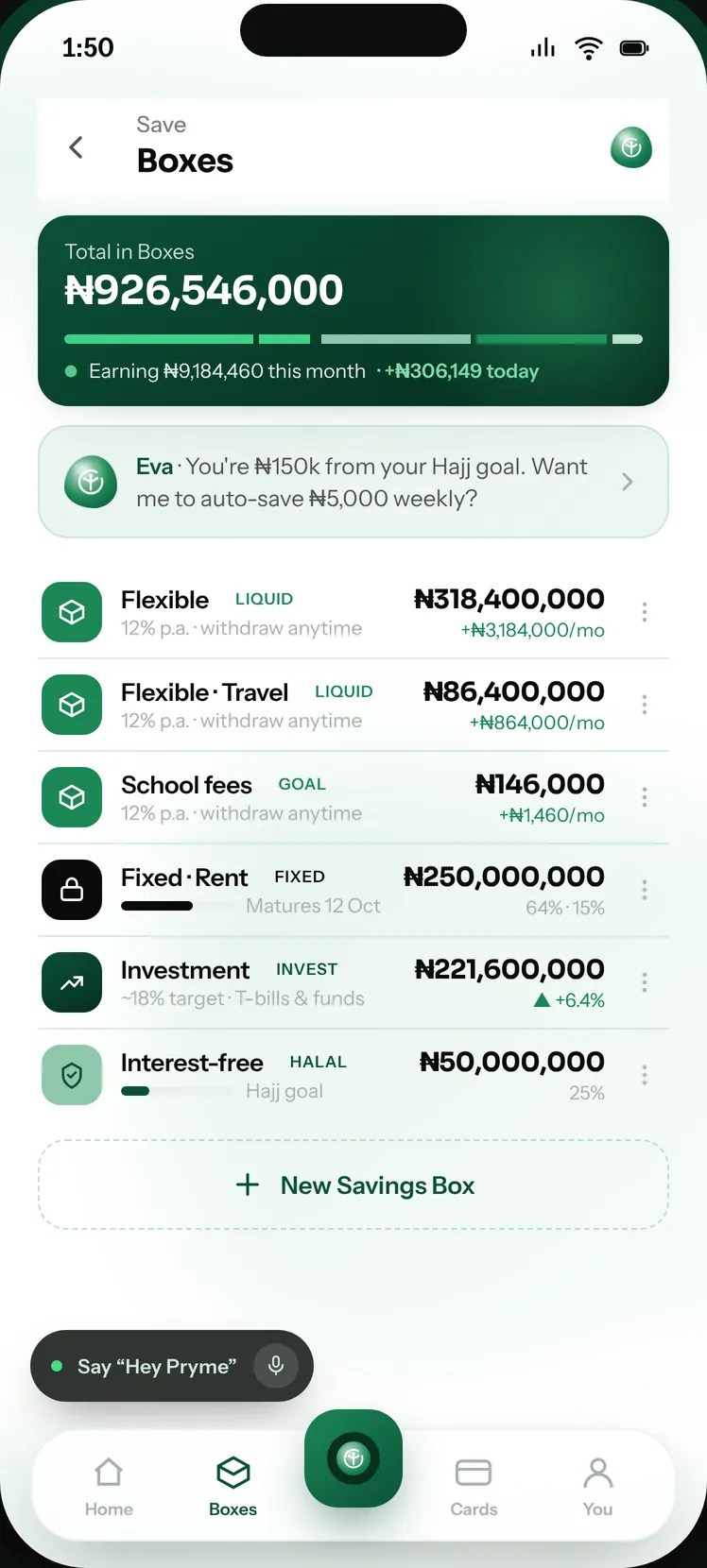
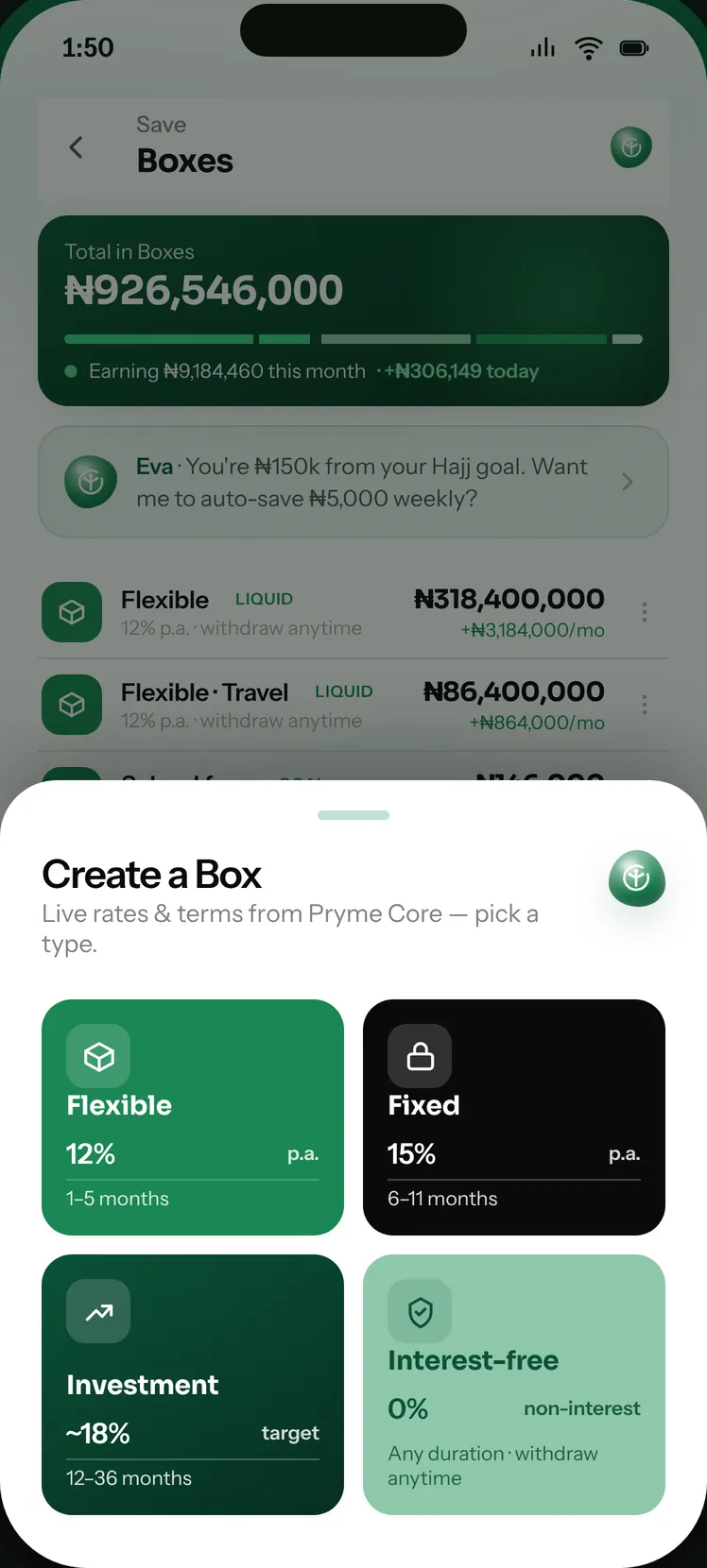
Savings Boxes are separate pots inside a Pryme account, held in Naira. Flexible Boxes can be withdrawn at any time, Fixed Boxes hold to a date, Investment Boxes hold for longer, and Interest-free Boxes earn nothing by design. A business can use them to ring-fence payroll and the tax it withholds, so that money cannot be spent by accident.
Pryme is a financial technology company, not a bank. Accounts and deposits are provided by Solid Allianze Microfinance Bank Limited, which is licensed by the Central Bank of Nigeria and is a member of the Nigeria Deposit Insurance Corporation.
Yes. Pryme Rails lets a platform issue a dedicated Naira account number to each of its own customers, collect into it and reconcile against it, over one API — the same rails the Pryme Business Account runs on.
Pryme is a financial technology company. It gives you one account that holds US dollars, pounds sterling and euros beside Naira, with an assistant that runs the account for you and asks before anything moves. Accounts are provided in Nigeria today, and further markets open as each licence lands.
Accounts are provided in Nigeria today, subject to verification and approval. Foreign-currency balances are held and converted inside that account, so you can hold, receive and swap dollars, pounds and euros wherever you are.
Naira, US dollars, pounds sterling and euros, side by side on one ledger. Each has its own details — a Nigerian account number, a US account number, a UK sort code and an IBAN for the euro area — and each has its own statement.
Swap at a rate you set rather than the rate of the day, then send to any Pryme username or to a Nigerian bank account. There is no fee to send to another Pryme account.
Eva is the assistant inside the Pryme app. She opens accounts, moves money, saves toward your goals, pays what is due and follows up what is owed to you — and asks you before anything moves.
Pryme Rails lets a platform issue a dedicated Naira account number to each of its own customers, collect into it and reconcile against it, over one API — the same rails the Pryme Business Account runs on.
Notes on money that does the work: what we are building, what the regulation actually says, and how we think about letting software act on money. Read the Ledger
What AI agents can do in bookkeeping, close, collections and compliance today, where a person must stay in charge, and how to judge a product.
How multi-currency business accounts work: local details vs SWIFT, payment rails, the real cost of FX, safeguarding vs deposit protection, and hedging.
How UK, US, Canadian and European firms pay Nigerian suppliers and get paid by Nigerian clients: FX, Form A and M, tax, compliance and payout routes.
What it really costs to send money to Nigeria from the UK, US, Canada and Europe: fees, exchange-rate margins, CBN naira rules, BVN, speed and scams.
What AI can and cannot do in day-to-day bookkeeping, how much time it saves on real numbers, and which jobs must stay with you or your accountant.
What we are building, what the regulation actually says, and how we think about letting software act on money.
All of United StatesSend money home · 172 articles
Citizenship does not decide the US remittance excise tax; payment method does. Who pays the 1% tax, which funding is covered and what is exempt.
A federal tax on transfers abroad paid in cash, money order or cashier's check began in January 2026. It is 1%: who pays, how it works, what is exempt.
What the Bank Secrecy Act's $3,000 recordkeeping rule makes your US bank or money transfer app collect, how long it keeps it, and what it means for you.
Why a bank-account (ACH) payment can hold a Nigeria transfer for days while a debit card moves it in minutes, and what you pay for speed.
Your US bank sent back the ACH debit that paid for a transfer to Nigeria. What the app can do, what you may owe, and how to put it right.
How Afriex works for US senders: debit card funding only, a $3,000 daily limit, bank payout in Nigeria, refunds and where Afriex stands on licensing.
Afriex emails you when funds are delivered but publishes no delivery time. Why a US transfer is slow, how to cancel before payout and get a refund.
Afriex shows its USD to naira rate and fee on the Send screen in its app, not on its website. How to read the quote, the limits and how it is funded.
Bank of America says wires to Nigeria should be sent in US dollars. What that means for fees, the exchange rate and the receiver's account.
Bank of America charges $45 for an international wire in dollars and says wires to Nigeria should be sent in USD. The details, cutoff and cancel window.
The Bank Secrecy Act duties behind your bank's questions about transfers to Nigeria, and how to answer source-of-funds requests well.
Your relative's Nigerian microfinance bank is missing from your US remittance app. Why lists differ and five safe ways to get the money there.
What to put in the beneficiary and bank address fields when you wire from the US to Nigeria, and why a missing or wrong address bounces wires.
When timing matters for US transfers to Nigeria: weekends, cut-offs, Federal Reserve holidays and quote validity, and when timing the rate does not help.
How BOSS Money's naira bank deposit to Nigeria works from the US, what its own page says about fees, rates, ID and speed, and what to check before sending.
What we could confirm about BOSS Money and UBA, how a UBA customer receives a BOSS Money deposit, and what to ask before relying on cash collection.
US rules give you 30 minutes to cancel a transfer to Nigeria for a full refund, unless the money is already deposited or collected. What comes after that.
A second charge for one transfer to Nigeria is usually a pending hold, a duplicate transfer or a retry. How to tell which, and how to get money back.
What a Chase international wire to a Nigerian bank costs online and in branch, the details you need, and how the exchange rate and timing work.
Why a Chase wire to Nigeria is rejected or returned, from name and account mismatches to missing bank details, and how to fix it.
Use NMLS Consumer Access to confirm a money transfer app holds a licence for your state, read the record correctly and spot regulatory actions.
What Citi asks for on an international wire, how long Citi says it takes, why it publishes no Nigeria fee, and how to check the naira rate before you send.
Why your US bank stops a large online wire to Nigeria, what the banks publish about limits, and how to send above them safely in branch.
Why US debit cards get declined on transfers to Nigeria, from fraud rules and daily limits to address checks, and how to clear the payment with your bank.
When a chargeback on a card-funded transfer to Nigeria is possible, how it fits with the US remittance rule, and why to start with the provider.
How to compare a provider's naira rate with the market rate, turn the gap into a dollar cost, and add it to the fee to see what a transfer really costs.
The path of a US wire to a Nigerian bank: your bank, Fedwire, the US correspondent, the SWIFT message, and where delays and fees sit.
When to escalate a remittance problem to the CFPB, what to prepare, how to submit online or by phone, and what happens once the company is asked to reply.
How a Chime checking account or Chime debit card can pay for a transfer to Nigeria, the Chime limits that apply, and what Chime's terms do not cover.
The $19,000 annual exclusion for 2026, when a US sender must file Form 709, why tax is rarely due, and what Nigeria says about gifts received.
The ID US remittance apps ask for when you send to Nigeria, from passport or state ID to SSN or ITIN and proof of address, and the federal rules behind it.
Why US dollar wires to Nigerian domiciliary accounts pass through a correspondent bank, where its details go on the form, and how its fee comes off.
What reaches the IRS when you send remittances to Nigeria: the new cash remittance tax, gift returns, foreign account reports, and what is not taxed.
What US money transmitter law and Nigeria's CBN rules say about informal dollar-for-naira swaps, who the laws target, and what that means for senders.
LemFi shows its USD-to-naira rate and any fee before you confirm. How to read a LemFi quote from the US, where the cost hides and how to compare it.
LemFi does not publish a list of rejection reasons. The usual causes of a failed US identity check, what to fix before resubmitting and who to contact.
LemFi does not publish daily or monthly figures for US senders. Where your own limit is shown in the app, what sets it and how to raise it.
LemFi transfer stuck on In progress or In review? What each status means, why it happens, how long LemFi says to wait and when to contact support.
No US federal rule caps how much you send to Nigeria. Limits come from providers, banks and the recipient's account, and most can be raised with ID.
Why apps that send money to Nigeria ask you to connect your bank through Plaid, what data Plaid says it collects, and how to see or cut those connections.
Under the US remittance rule you have 180 days from the date on your receipt to report an error. What counts and how the provider must respond.
Remitly transfers to Nigeria can arrive quickly, but speed depends on Express or a slower option, card or bank funding, checks and the receiving bank.
Why a personal US cheque mailed to family in Nigeria is slow and often unusable, what a Nigerian bank does with one, and the faster ways that replaced it.
How MoneyGram bank deposit to Nigeria works from the US: the ten banks it names, the details you enter, naira payout and what it costs.
Where to find your MoneyGram reference number, how to track a US to Nigeria transfer, and what to do when it stalls or the receiver cannot collect.
Why MoneyGram holds a US-to-Nigeria transfer, the documents typically asked for, how to answer, and your rights if it stays stuck.
What MoneyGram says about fees from the US to Nigeria, which Nigerian banks it pays into, and how naira cash pickup works at a GTBank branch.
Why the naira rate you saw in a US app can differ from what your family gets, when the law lets providers estimate, and what your receipt must say.
How each US provider builds its own dollar-to-naira rate from the market price, its margin, its fee and the payout method, and how to compare fairly.
Navy Federal does send international wires to Nigeria: its $25 fee, 5 to 7 business days, how to request one and the details the form asks for.
Nigeria uses the 10-digit NUBAN, not IBAN. What to put in each box of a US wire form when your bank asks for an IBAN for a Nigerian account.
A state fee applies to money transmissions at licensed Oklahoma counters. It is $5, plus 1% above $500, and can be claimed back as an income tax credit.
Which remittance apps say they accept Apple Pay or Google Pay for transfers from the US to Nigeria, and how the underlying card decides cost and tax.
How to check a Nigerian estate agent and their account before sending a rent or property deposit from the US, and what to do if you paid a fake.
How to check a Nigerian lawyer, what paperwork to get, how to pay from the US and the proof file to keep in case of a dispute or an impostor.
The "pay me dollars here, I credit naira there" swap: why it can freeze your family's account, leave you without protection, and break the law.
How a PNC customer wires money to a Nigerian bank: where to find it in the app, the details to collect, the fees PNC lists and timing.
Full account name, 10-digit NUBAN and bank name for naira; SWIFT and dom account details for dollars; ID for cash pickup. Collect these before sending.
When charges land on the Nigerian side of a transfer from the US: intermediary bank deductions on wires, stamp duty, conversion and onward-transfer fees.
What a Post No Debit restriction on your recipient's Nigerian account means for money you sent from the US, who can lift it and what each of you should do.
How scheduled transfers to Nigeria work, which provider pages describe them, why the exchange rate is not fixed in advance, and how to cancel one.
Remitly prices Express and Economy differently for Nigeria and ties the fastest speed to card payment. What changes, what is not stated, and how to choose.
What a Remitly transfer from the US to Nigeria costs: how the fee varies, the welcome rate on the first $500, the exchange-rate margin and how to read a quote.
The details your recipient must give for a Remitly transfer to OPay, how delivery works as wallet or bank deposit, and the limits on both sides.
Remitly lists PalmPay as a naira payout from the US, but publishes no PalmPay limit or delivery time. Where the real ceilings and timings are shown.
Remitly now allows up to $300,000 per transfer from the US, but your own limit for Nigeria may be lower. What sets it, and the documents that can raise it.
Remitly lists a crypto wallet payout and a USD to USDC fee table for Nigeria. What a stablecoin transfer is, what Remitly explains and the risks.
A Remitly transfer to Nigeria stuck or on hold usually needs documents, a details fix or time. The steps to release it, and your rights if it stays stuck.
How to read Remitly's naira quote from the US: the welcome rate, the standard rate, the fee line and what your receipt fixes for your recipient.
Why a US money transfer app asks for income proof before a Nigeria transfer, which documents usually satisfy it, and how to answer without delay.
Why US apps that send money to Nigeria ask for a Social Security number, what the rules require, and how to tell a real request from a scam.
Lost the receipt for a transfer to Nigeria? Why US providers must keep records, what a full receipt shows and how to get a copy for disputes or taxes.
Every item a US remittance receipt must carry under federal rules, when you must get it, and how to use it if a transfer to Nigeria goes wrong.
How a US victim reports a fraud involving a Nigerian bank account to the FBI's IC3, what to include, what happens next and the other calls to make first.
Ria sends from the US to Nigerian bank accounts and naira cash pickup. What its page says on amounts, speed by payment method and the first-transfer offer.
What Ria's verification hold means for a US sender to Nigeria, the documents Ria lists, its 7-day deadline, and how to release the money.
The CFPB Remittance Transfer Rule gives US senders disclosures before paying, 30 minutes to cancel and 180 days to report errors. What each right covers.
Impersonation, fake agents, cheap-rate offers and "relative in trouble" calls: the scams Nigerians in the US meet when sending money home, and checks.
Step by step: setting up LemFi in the US, verifying your ID, adding money by card or Apple Pay, adding a Nigerian bank recipient and tracking it.
Cash App is a US-only service with no access in Nigeria, and its UK service closed in 2024. What that means and the routes that do reach Nigeria.
Remittance rules do not turn on visa status. What F-1 students in the US are asked for when sending to Nigeria: passport, SSN or ITIN, and source of funds.
PayPal to Nigeria has changed in 2026 with the Paga link. What a US sender can do, what the receiver needs, and where Xoom fits instead.
Puerto Rico counts as a State under US remittance rules, but not every app signs up Puerto Rico residents. How to check, and the fallbacks.
Cash pickup and mobile wallet options for family in Nigeria with no bank account, the naira-only rule, the $200 cash point and the ID they will need.
What US and Nigerian rules say about using stablecoins to send money home, which platforms Nigeria recognises, and the risks the apps do not carry.
Sendwave pays naira into Nigerian bank accounts from the US and offers cash pickup at Access, Zenith and Fidelity. What its page does and does not say.
A labelled worked example of how the transfer fee, the FX margin and the 1% cash tax change what $1,000 sent from the US delivers in Nigeria.
Why a flat fee bites harder on a $200 transfer than on $1,000, and how to compare providers on the naira that actually arrives.
A worked example of what $5,000 from the US to Nigeria costs by bank wire and by app: the fee, the FX margin, deductions and timing.
When a US dollar payout to a domiciliary account makes sense, when naira is simpler, who sets the rate in each case, and the rules that apply.
How to fill in the beneficiary name when sending from the US to a joint Nigerian bank account, so the transfer is not rejected or held for a name mismatch.
App or agent counter: how Atlanta senders fund transfers to Nigeria, the 1% federal tax on cash since 2026, and what family need to collect.
How Maryland regulates money transmitters and their agents, where to complain, and the federal protections every Maryland sender to Nigeria has.
Your US bank closed your account and family in Nigeria still need support. Safe ways to keep sending money home, and the shortcuts to avoid.
The Texas Department of Banking's role, in-person and app options in Dallas, the 1% tax on cash transfers and how to complain if a payment fails.
Why sending a transfer to Nigeria for someone else, or under their name, breaks US provider terms, and the practical and legal risks for both of you.
How Nigerians in Boston and across Massachusetts send money home, what each route costs, and how to check a provider is licensed in the state.
How Nigerians in Charlotte and across North Carolina send money home, how costs compare, and how to check a provider with the Commissioner of Banks.
Agent counters or a bank branch wire: in-person ways to send money to Nigeria from Chicago, what each costs and how to check an Illinois licence.
Whose ID a remittance app checks when a transfer to Nigeria is paid from a joint account with your spouse, how it is recorded and how to avoid holds.
App and in-person options for sending money to Nigeria from Los Angeles, how to read a quote, and how to check a California DFPI licence.
How Nigerians in Minneapolis and St Paul send money home: funding methods, limits, naira payouts and how to check a Minnesota licence.
How Navy Federal and PenFed members can send money to Nigeria: international wires, funding a transfer app by debit card, and the fees on each.
In-person and app options for sending money to Nigeria from Newark and North Jersey, how to check a New Jersey licence, and nearby BVN services.
Apps, agents and wires for sending money to Nigeria from Philadelphia, how to check a Pennsylvania licence on NMLS, and your rights on each transfer.
Whether SSA keeps paying you in Nigeria, the 40-credit and 10-year rules for non-citizens, and how retirees get US pension income home.
The fastest legitimate ways to get naira to family for a funeral the same day, what slows a transfer down, and what to collect before you send.
In-person and app options for sending money to Nigeria from Houston: agent counters, bank branch wires, the 1% cash tax and the ID you will be asked for.
Whether US providers accept money orders for transfers to Nigeria, the federal remittance tax on them since January 2026, and ID rules when buying them.
Why a New York sender should use a company licensed by the NYDFS, how to check a licence before paying, and what the licence does not cover.
Being on F-1 OPT does not cap what you can send home to Nigeria. The limits come from the app, your ID and your income records. Here is what to expect.
Why a property deposit sent from the US needs a paper trail on both sides, what to check about the developer first, and the records to keep.
Paying the airline directly from the US or sending money for a relative to book: the costs, the risks and the proof each route leaves.
Why US remittance protections cover consumers, not companies, what to check before paying Nigeria from an LLC account, and the alternatives.
Why card issuers can treat a transfer to Nigeria as a cash advance, what that costs in fees and interest, and how to check before paying by credit card.
Whether your credit union can wire money to a Nigerian bank, the details its form will ask for, what it costs, and when a remittance app is simpler.
On a B1/B2 visit you can send money to Nigeria, but many US apps are for US residents only. What their terms say, the ID you need and other routes.
No visa-based cap applies to remittances from the US. What does limit an H-1B holder: provider limits, ID and source-of-funds checks, and tax rules.
How Nigerian-born service members send money home from a US base or a deployment: credit union wires, remittance apps, consumer rights and tax points.
Which US-facing providers say they pay into OPay, PalmPay and other Nigerian wallets, what the recipient must give you, and the wallet limits to check.
You can usually send money to Nigeria from the US without an SSN. What providers accept instead, from a passport to an ITIN, and what happens to limits.
How Nigeria's 10-digit NUBAN and its check digit work, why one wrong digit fails a US transfer, and the two mistakes the check cannot catch.
Whether US remittance apps will pay a Nigerian company account, what the terms and CFPB rule say about business use, and the purpose to state.
What US banks and money transmitters report when you send more than $10,000 to Nigeria, the $3,000 record rule, structuring, and what you need to do.
How to pay school fees to a Nigerian university from the US: the payment reference, naira payouts, what to keep as proof and the US tax point.
Sendwave asks US senders for more checks on some transfers to Nigeria. Why it happens, the source-of-funds documents it lists and how to upload them.
How Sendwave prices a US-to-Nigeria transfer: a possible small fee, a margin in the exchange rate, debit-card-only payment and naira-only payout.
Your 30-minute cancellation window, when a wrong account number is the provider's problem under US rules, and when recovery depends on goodwill.
A US remittance app has asked where the money for your Nigeria transfer came from. Which documents usually satisfy the check and how to present them.
The SWIFT/BIC codes for GTBank, Zenith, Access, FirstBank, UBA and Fidelity, where each was confirmed, and how to check a code before a US wire.
What Taptap Send's speed claim for Nigerian bank deposits covers, why a credit can still be late, what cannot be reversed, and the steps to take.
Taptap Send advertises zero transfer fees to Nigeria. What that means, its US sending limits by state, payout options and what cannot be undone.
Taptap Send says it charges no transfer fee to Nigeria, so the rate is the whole cost. How to read the naira amount in the app and check the margin.
How TD Bank customers in the US wire money to Nigeria: details to collect, how the fee works, what we could and could not confirm on TD's fees.
How remittance records to Nigeria can show support of family in a USCIS case, which records make them strong, and the mistakes to avoid.
What a compliance review on a US transfer to Nigeria involves, how long it can last, what your rights are, and the documents that usually help release it.
Why a US transfer to Nigeria can stop for OFAC sanctions screening, how providers clear a false name match, and what you can do to speed it up.
Why US banks flag transfers to Nigeria as money-mule activity, what a SAR means, and the steps to take now to protect yourself and your records.
Which Federal Reserve holidays pause ACH funding, how the Nigerian side treats public holidays, and the late-2026 dates to plan around.
The details a U.S. Bank customer needs to wire money to a Nigerian account, how the costs build up, and what to confirm before sending.
Why most US payroll systems split pay only between US accounts, the usual workaround of a split deposit plus a scheduled transfer, and what to check.
What a state money transmitter licence does and does not protect when you send to Nigeria, how it links to CFPB rights, and how to look one up on NMLS.
Why a recipient name that does not match the Nigerian account or BVN record gets a transfer from the US held or rejected, and how to fix it.
Why US remittance apps now pay Nigeria in naira only, how Nigerian dollar cards are funded, and the routes that work for getting dollars onto one.
Whether US remittance apps pay naira into Nigerian microfinance bank accounts, how to check the bank list, and what to do if the MFB is not listed.
No for US-issued debit and credit cards and bank-account transfers; yes for cash, money orders and cashier's checks. The exemptions and the grey areas.
Why a US wire lands in Nigeria for less than you sent: correspondent and receiving bank charges, OUR, SHA and BEN, and how to check.
The usual reasons Nigerian banks send US wires back, what US rules say about refunds and errors, and why the amount returned can be less than you sent.
Whether Nigerian banks still accept a US dollar bank draft or cashier's check from the US, which account it can go into, and why clearing takes so long.
Can family in Nigeria still collect US dollars in cash from a transfer sent in the US? What the CBN's naira-only rule changed and the ID a receiver shows.
Where to find today's USD/NGN reference rate, why US providers quote a different naira rate, and how to read your quote before you send money home.
Venmo is a US-only service. What its own terms say about non-US PayPal accounts, why that rarely helps a Nigerian recipient, and what to use instead.
Zelle only moves money between US bank accounts, so it cannot reach Nigeria. Why, the risks of Zelle "naira swaps", and what to use instead.
Whether US remittance apps accept an Employment Authorization Document for identity checks, what their terms actually say, and what to use if it fails.
The risks of funding a Nigeria transfer from another person's US bank account or card: closures, fraud flags, ChexSystems records and lost protections.
How to send a Wells Fargo wire to a Nigerian bank from Wells Fargo Online, the fees for dollar and foreign currency wires, and details to collect.
Your receiver has the MTCN but cannot collect. The status, name, ID and amount checks to run, and what your US rights are if it goes wrong.
Since 1 May 2026 IMTO transfers into Nigeria pay out in naira. What that means for Western Union cash pickup and bank deposits sent from the US.
Paying cash at a US Western Union agent for a transfer to Nigeria: how it works, what to bring, the 1% federal remittance tax on cash and naira payout.
A Western Union hold usually means an identity or detail check. The reasons Western Union gives, what it may ask for, the 48-hour rule and how to respond.
How paying by bank account, debit card, credit card or cash changes what a Western Union transfer from the US to Nigeria costs you.
The details a US bank needs to wire dollars to a Nigerian dom account, and what the CBN's 2026 FX Manual lets the receiver do with those dollars.
What Wise's own US page says a transfer to Nigeria costs, how the fee changes with the way you pay, and how the naira reaches a Nigerian bank account.
What Wise's US Nigeria page says about the currency your recipient receives, and the routes that do put dollars into a Nigerian domiciliary account.
WorldRemit lists cash pickup for Nigeria. What your recipient must bring, how the reference reaches them, what it costs and how to fix a failed pickup.
WorldRemit's US page for Nigerian mobile money names OPay and Paga. The details you need, the wallet rules on names and tiers, and what can go wrong.
WorldRemit says refunds usually take up to 7 working days after a cancellation. Why Nigeria transfers get cancelled, how to request one and your US rights.
WorldRemit says naira transfers to Nigeria are fee-free, so the cost sits in the rate. How to measure it, and how fast bank, cash and mobile money land.
What Xe's own US pages say about fees, exchange rates and delivery times, what they leave unsaid for Nigeria, and how to check a quote before you send.
Xoom, a PayPal service, pays Nigerian bank accounts and cash pickup in naira. How to fund it from PayPal, a bank or a card, and what it charges.
Xoom's three US sending levels, the 24-hour, 30-day and 180-day caps, the documents each needs, and Nigerian partner limits on top.
Why Xoom reviews a US-to-Nigeria transfer, what it asks for, how long you might wait, and what a sender can do while the money is held.
You can add the other type later — many of our customers hold both.
The business first, then you. Nothing is submitted until you review it.
Ideal customer profiles
Generated from your website by VerifiedLead.ai
Pick the ones that look right. Your Sales agent works these first, and you can change them at any time after opening.
We ask this because you have not given us a website. It helps us set the right limits from day one.
Which of these represents you?
Officers listed against this company on the UK register.
We have sent a six-digit code to your email address. Enter it below to confirm the address is yours.
Wrong address? Go back and change it — nothing is created until this step passes. We never ask for a code by phone or email; anyone who does is not us.
Last step. Each time you sign in we email you a six-digit code — we never send codes by SMS.