AI agents for business finance: what they can and can't do
What AI agents can do in bookkeeping, close, collections and compliance today, where a person must stay in charge, and how to judge a product.
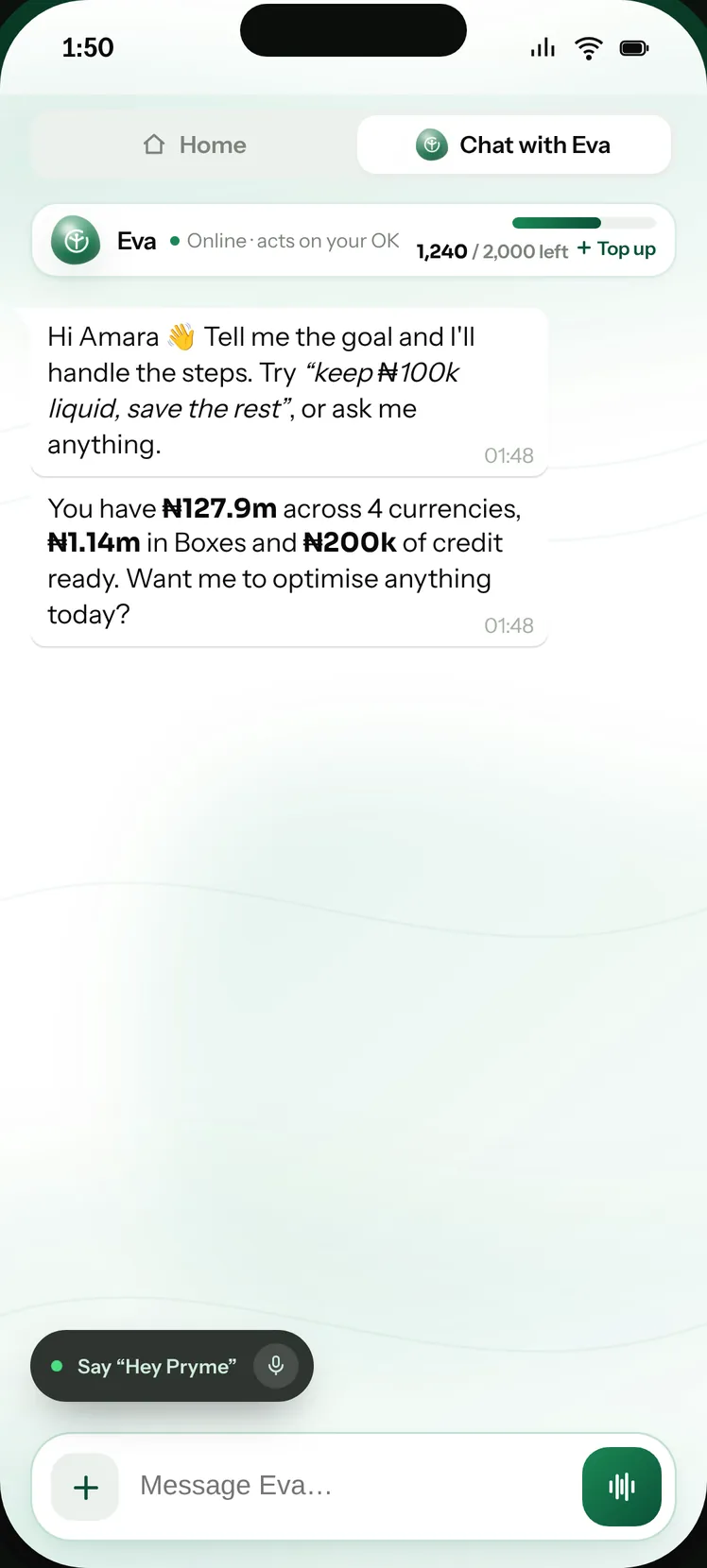
Meet Eva, the assistant inside the Pryme app. She opens accounts, moves money, saves toward your goals and follows up. Nothing leaves your account without your approval.
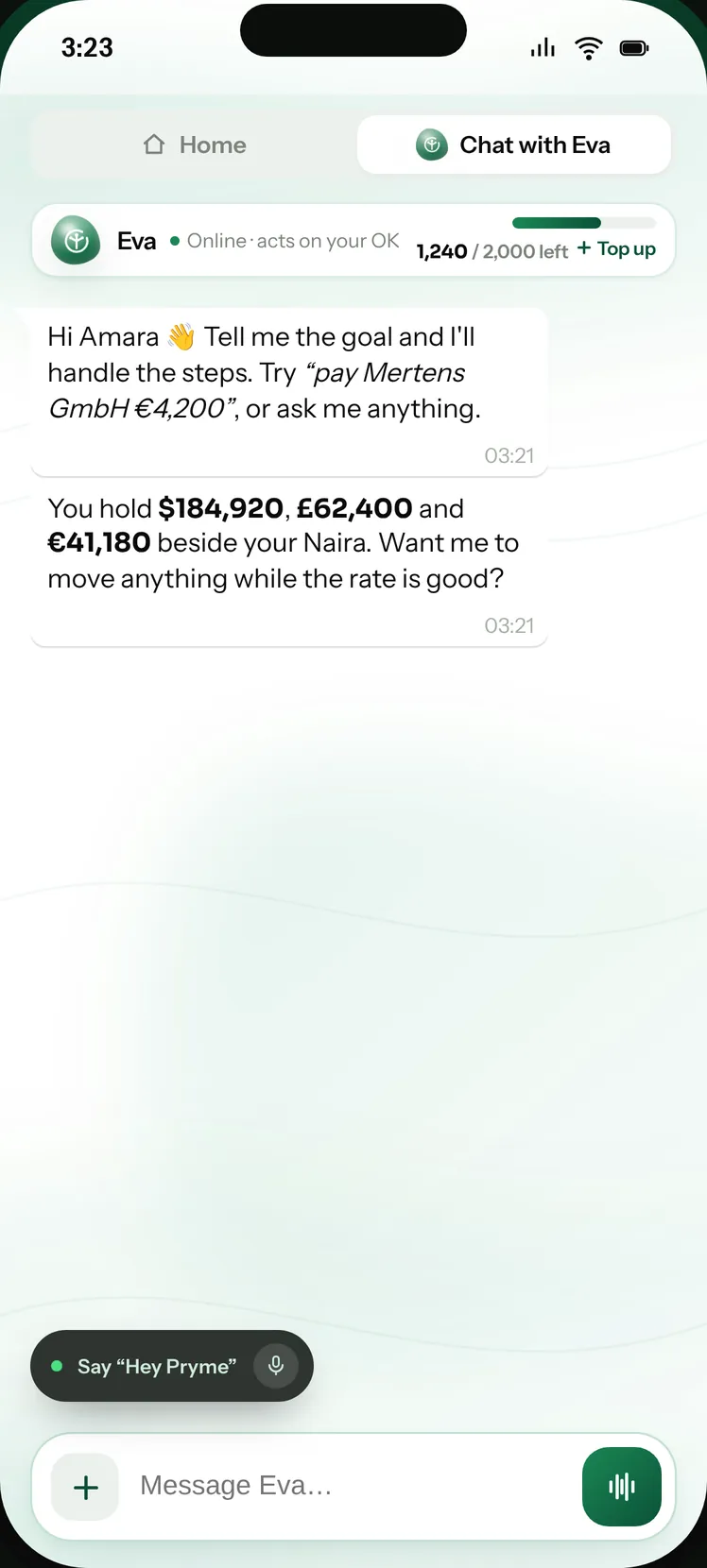
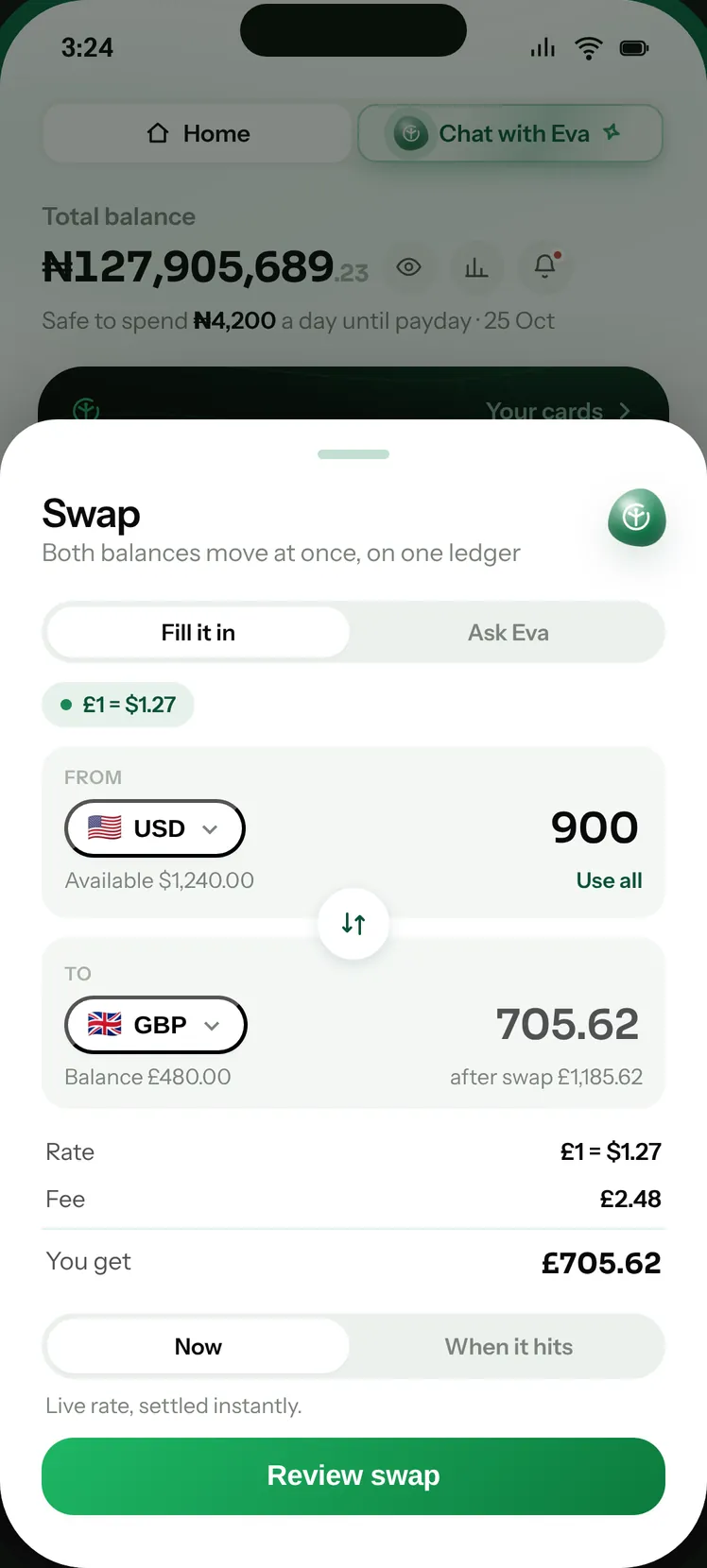
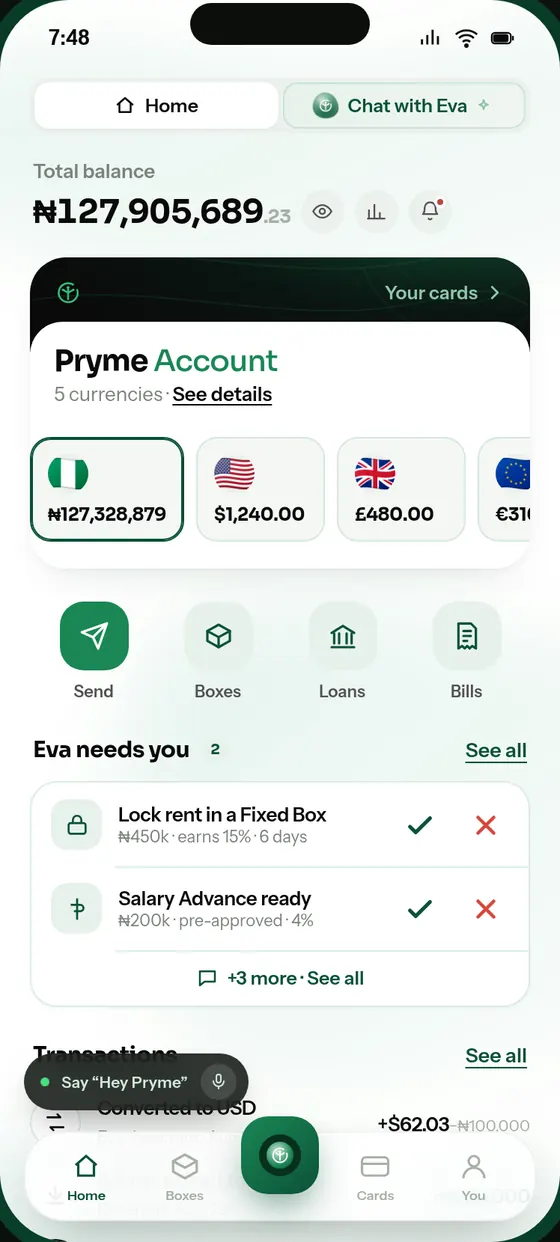
Meet Eva, the assistant inside the Pryme app. She holds dollars, pounds, euros and Naira side by side, swaps at a locked rate, pays bills in any of them and sends anywhere, asking before anything moves.
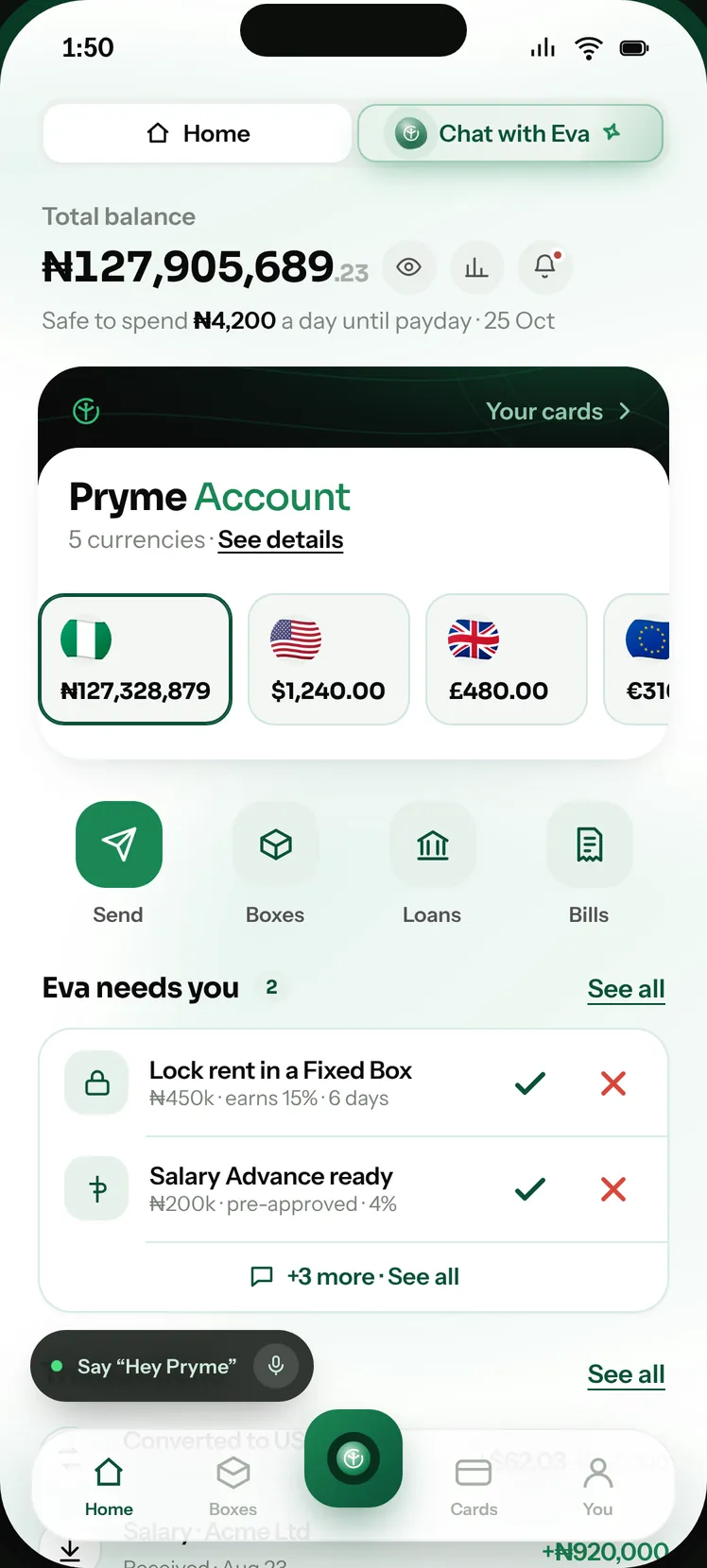
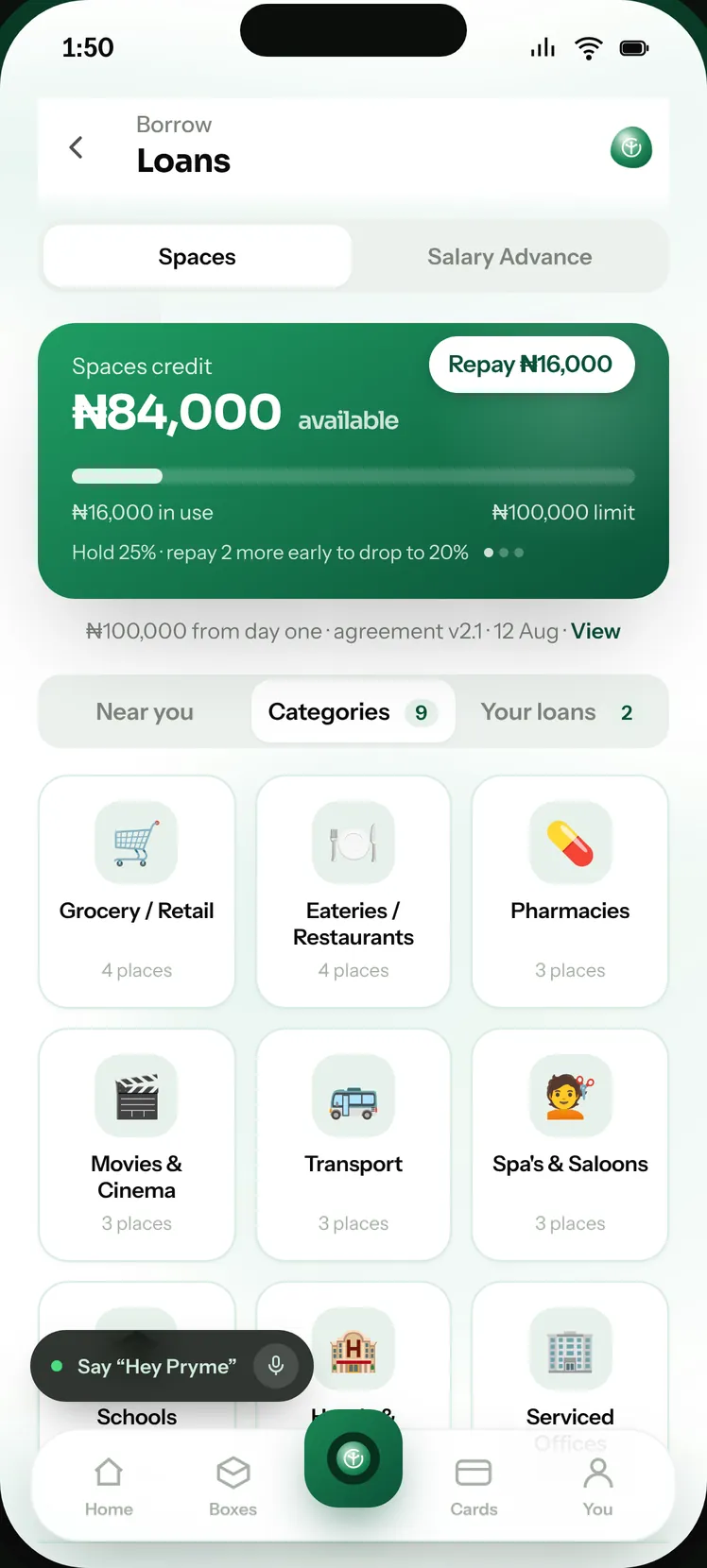
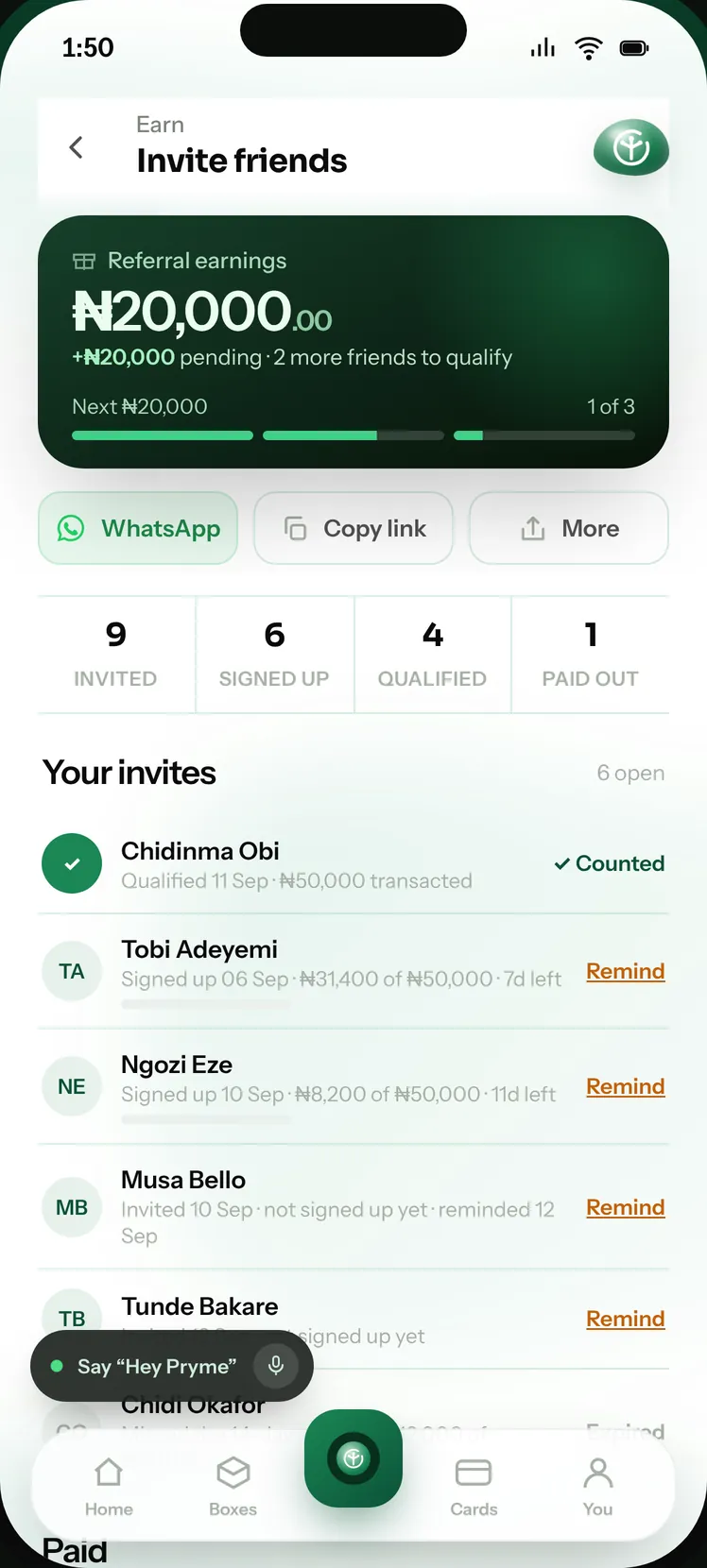
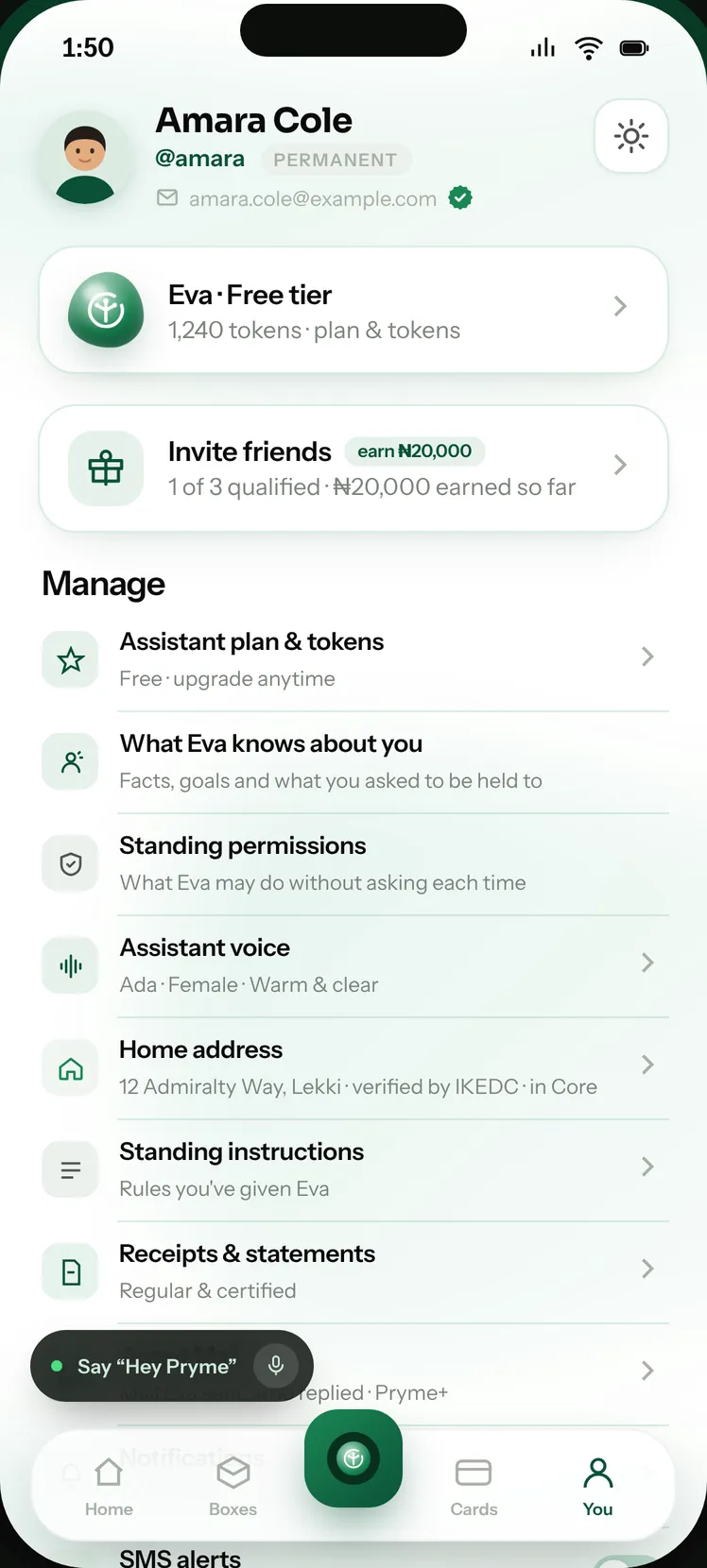
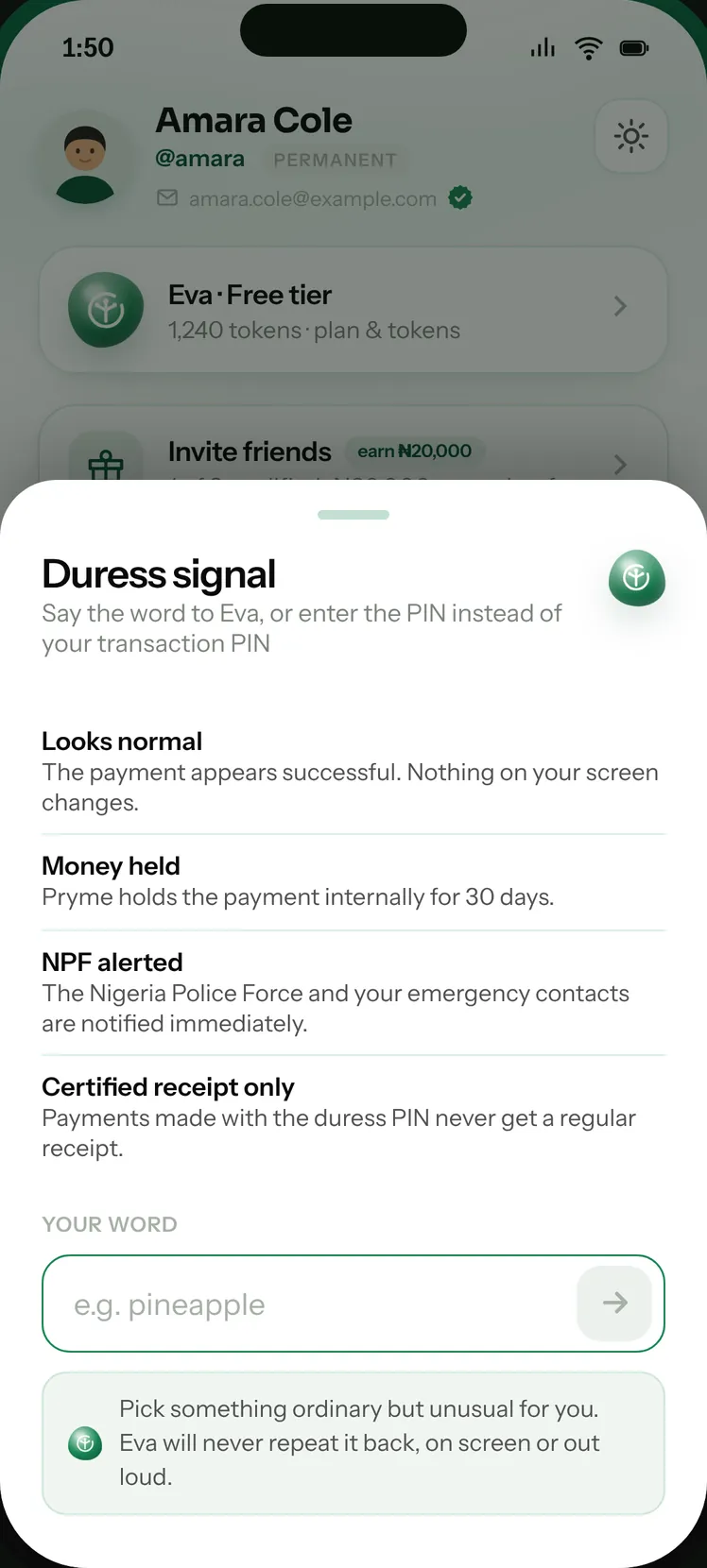
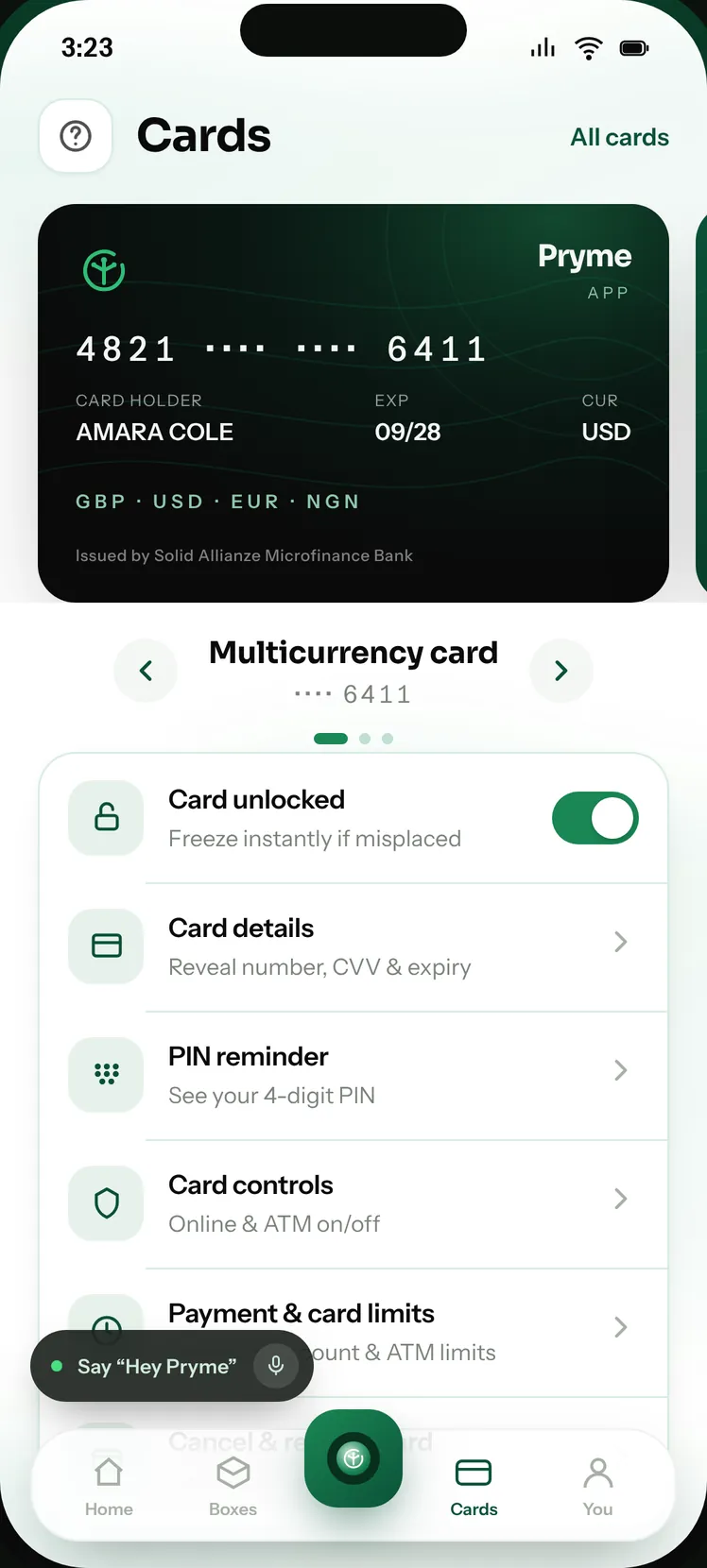
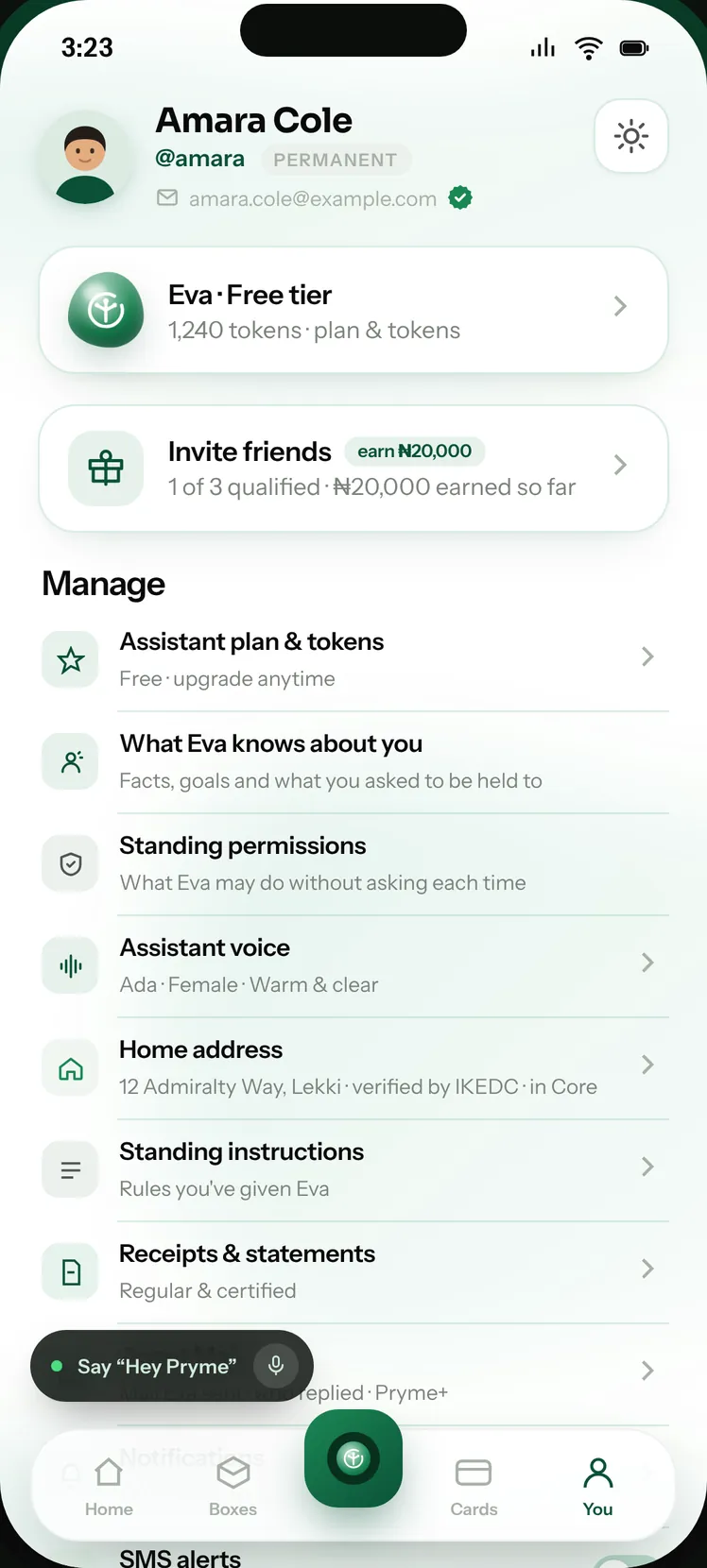
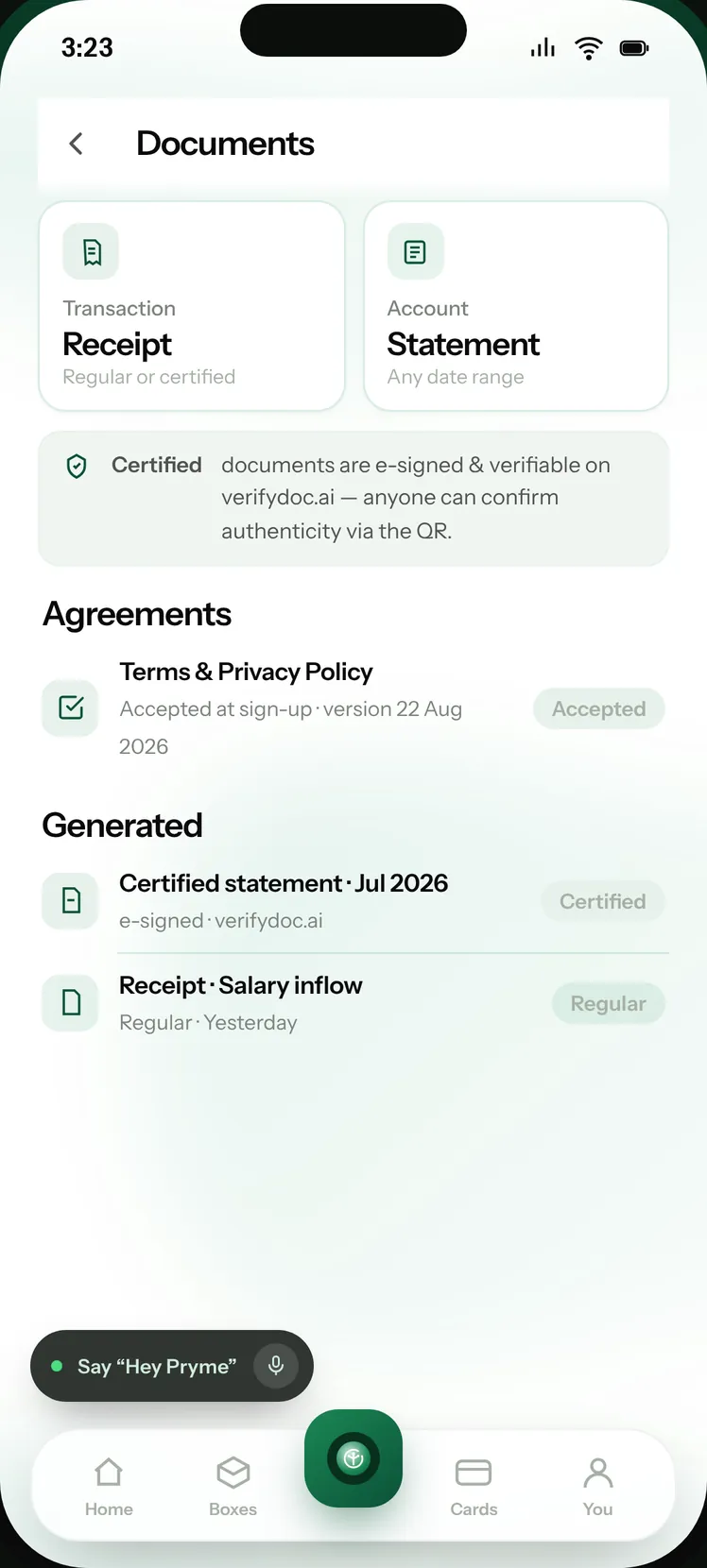
We give you a limit to spend at the shops and services you already use — and an account that works on your month while you get on with it. Dollars, pounds and euros sit beside your Naira, and an assistant handles the running of it, asking you first every single time.
One global account for your money and business. Move across currencies, automate everyday operations and put AI agents to work — with you in control of every important decision.


 Evayour assistant
 DanielChief of Staff
 BenFinance
 BruceCare
Your competitor down the road sells the same thing you sell. The difference is who walks in. We put money in people’s hands that can only be spent in businesses like yours — and then we point them at you.
You are not borrowing. You are selling to somebody who already has the money — and that money can only be spent with a business like yours.
₦100,000 from day one · agreement v2.1 · 12 Aug · View
Eva waits for your rate and asks before she moves anything.
No card, no OTP, nothing for the buyer to type in. They transfer from the bank app they already use, and the money lands in the same account your agents are running — already matched to the order, already in your books.
We give the buyer a one-time account number. They transfer to it from any bank app or by USSD — no card, no OTP, nothing to type in.
Get the account numberTo this account, from any bank app. We watch it, and the page updates itself.
₦26,767.50 from GTBank · John D., matched to order ORD‑1042.
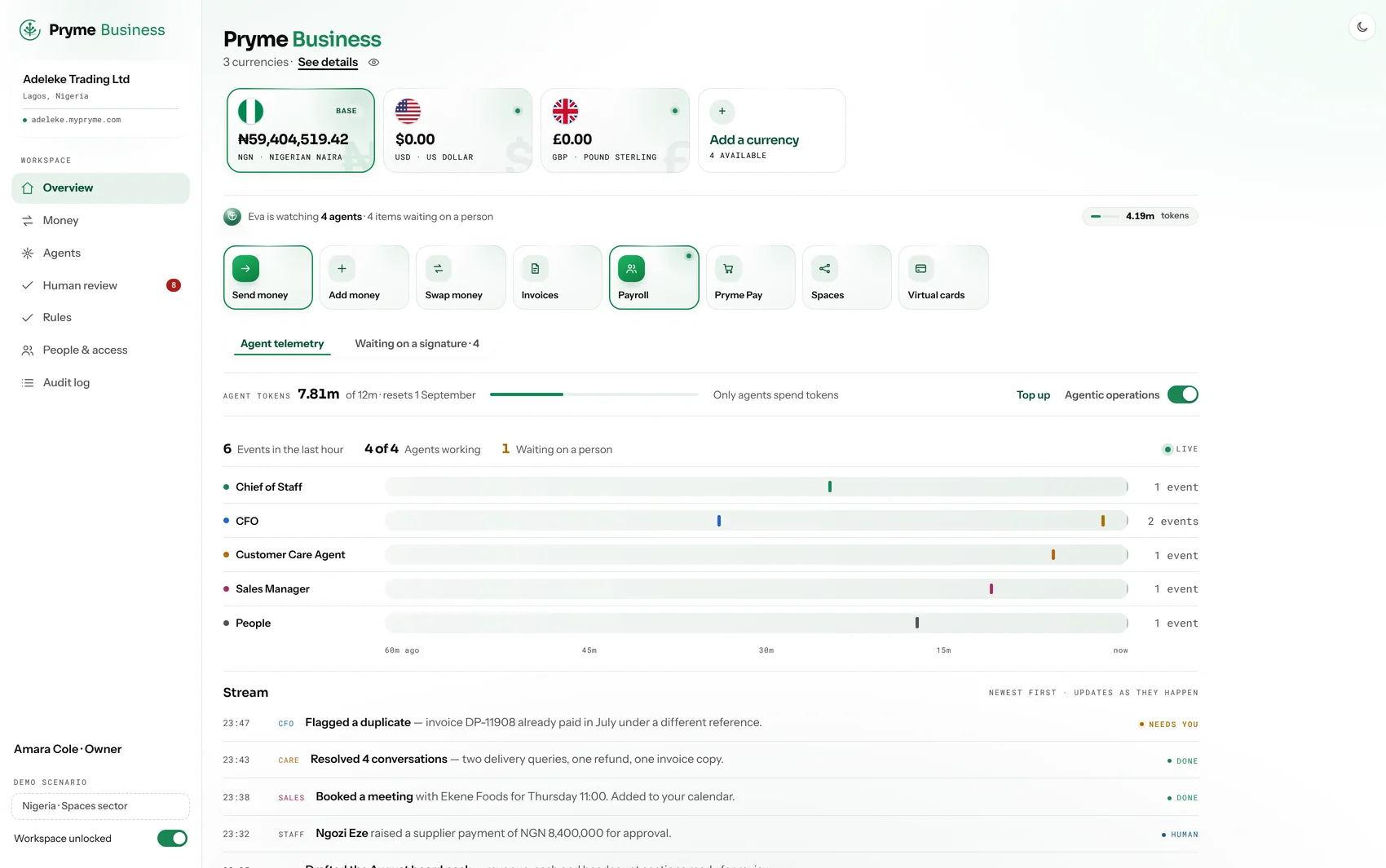
Five agents come with the account. Each one has a job description, a budget and a ceiling you set. They do the work and bring it to you — nothing leaves the account without your signature.
Knows what is stuck, who is waiting and what you promised — and keeps all three moving.
Booked a meeting with John Doe Foods for Thursday 11:00.Keeps the books as you trade and tells you the moment something does not add up.
Flagged a duplicate — invoice DP‑11908 was already paid in July.Holds every filing to its own clock and screens names and payments against your policy — and logs what it refuses.
Screened 412 payments overnight and refused two of them.Goes back to the buyers who went quiet, with the receipt already attached.
Recovered ₦410,000 across three overdue invoices.Replies, follows up on what they asked for and hands you only the ones that need you.
Resolved 4 conversations — two deliveries, one refund.Issue a dedicated Naira account number to each of your own customers, collect into it and reconcile against it. The same rails the Business Account runs on, with the licence behind them.
Dollars, pounds and euros beside a Naira account, on one ledger and one set of books. Five agents come with it and run the account — nothing leaves without your signature.
Five agents come with the account. Each has a job description, a budget and a ceiling you set. They do the work and bring it to you — they propose, you approve.
Knows what is stuck, who is waiting and what you promised, and keeps all three moving.
Booked the quarterly review with your auditor for Thursday.Keeps the books in every currency you hold and flags the moment something does not add up.
Flagged a duplicate — invoice DP‑11908 was already paid in July.Holds every filing to its own clock and screens names and payments against your policy — and logs what it refuses.
Screened 412 payments overnight and refused two of them.Goes back to the buyers who went quiet, with the invoice and the receipt already attached.
Recovered $12,400 across three overdue invoices.Replies, follows up on what they asked for and hands you only the ones that need you.
Resolved 4 conversations — two deliveries, one refund.The business has changed shape four times and never changed what it was rooted in. Each version was built out of what the last one could not do.
An online grocery store, built out of a faulty tab. Selling the food was the easy part — taking the money for it, and moving it, turned out to be the business.
A prepaid card. The first time the company issued rather than resold, and the first time it carried the obligations that come with holding somebody else’s money.
Solid Allianze acquired — an existing bank with an existing licence. The perimeter stopped being someone else’s to draw.
More than one currency on one balance, and the rebrand to Pryme. A Nigerian business could hold dollars without holding a second institution.
Accounts that do the work rather than only hold value. Five agents on the account, inside a policy you write — which is where the new mark starts.
Pryme is a financial technology company. It gives people and businesses in Nigeria one account that holds Naira alongside dollars, pounds and euros, and a set of agents that do the running of it — keeping the books, chasing what is owed, answering customers and paying bills. Nothing leaves an account without the owner’s approval.
Yes. A Pryme account holds Naira, US dollars, pounds sterling and euros side by side on one ledger, each with its own account details — a Nigerian account number, a US account number, a UK sort code and an IBAN for the euro area. You can swap between them at a rate you set, and every currency has its own statement.
Spaces is available in Nigeria. It gives a shopper money to spend that can only be spent with a participating business. The business is paid into its Naira account whether or not the shopper repays, because Pryme carries the credit. For the business it is free to join, there is nothing monthly, and the customer’s identity is never shown — only a reference and what it is worth.
Five agents come with the account. The Chief of Staff runs the week and keeps what is stuck moving. Finance watches the money and keeps the books as you trade. Compliance keeps the filings on time and screens what moves. Sales chases what you are owed. Customer Support answers your customers and follows up. Each has a job description, a budget and a ceiling you set, and each one proposes rather than acts — nothing leaves the account without your signature.
Pryme Pay takes payments on your own site or on a checkout page you control. The buyer is given a one-time account number and transfers to it from any bank app or by USSD — no card, no OTP, nothing to type in. The money lands in the same account your agents are running, already matched to the order and already in your books.
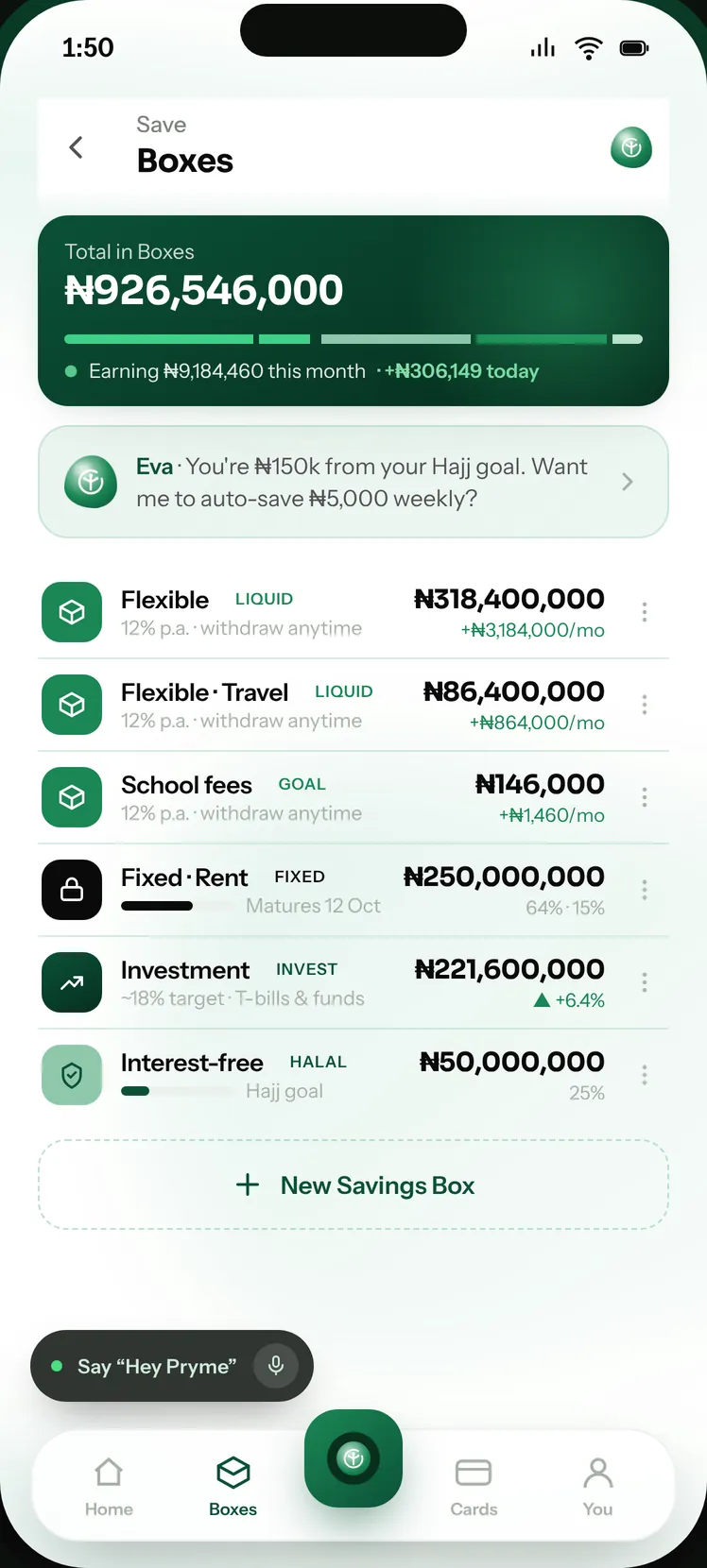
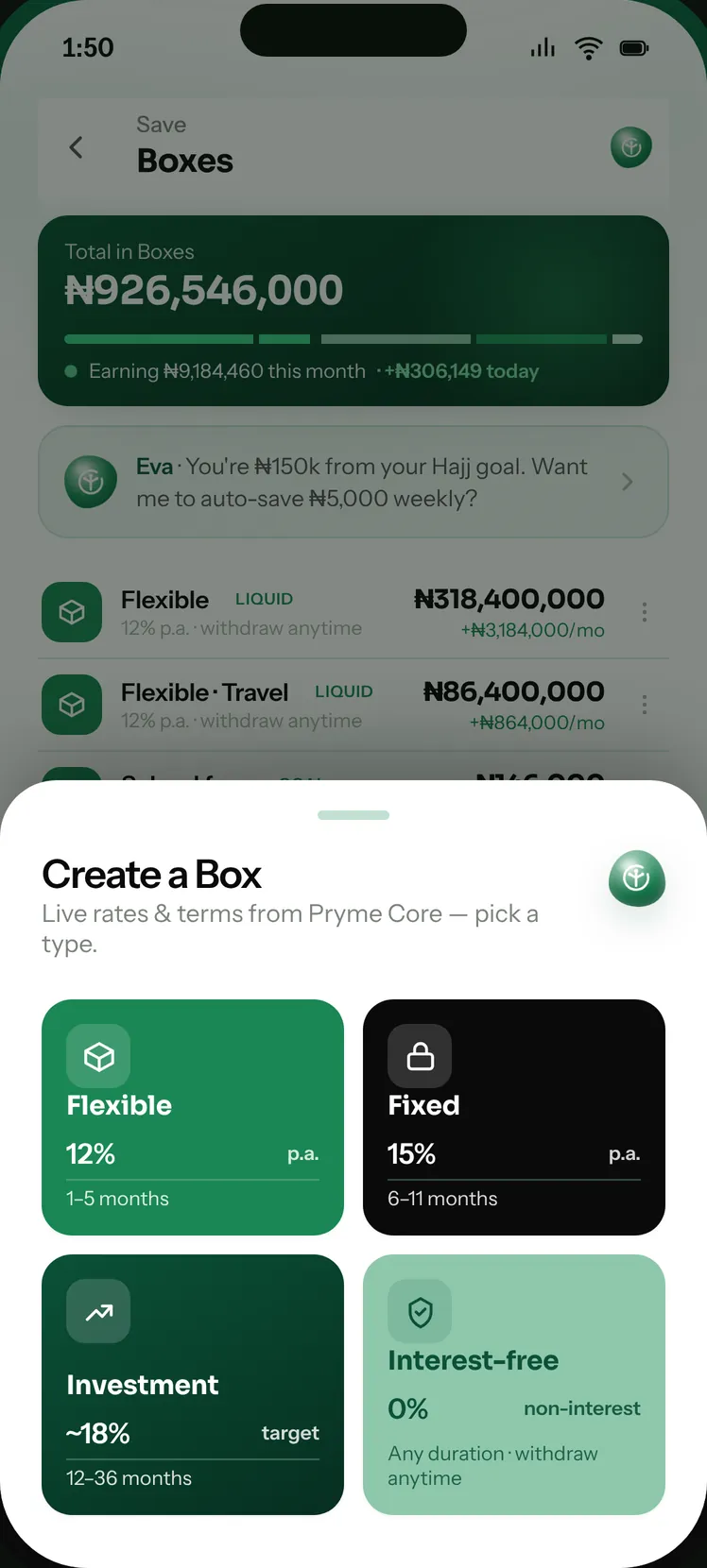
Savings Boxes are separate pots inside a Pryme account, held in Naira. Flexible Boxes can be withdrawn at any time, Fixed Boxes hold to a date, Investment Boxes hold for longer, and Interest-free Boxes earn nothing by design. A business can use them to ring-fence payroll and the tax it withholds, so that money cannot be spent by accident.
Pryme is a financial technology company, not a bank. Accounts and deposits are provided by Solid Allianze Microfinance Bank Limited, which is licensed by the Central Bank of Nigeria and is a member of the Nigeria Deposit Insurance Corporation.
Yes. Pryme Rails lets a platform issue a dedicated Naira account number to each of its own customers, collect into it and reconcile against it, over one API — the same rails the Pryme Business Account runs on.
Pryme is a financial technology company. It gives you one account that holds US dollars, pounds sterling and euros beside Naira, with an assistant that runs the account for you and asks before anything moves. Accounts are provided in Nigeria today, and further markets open as each licence lands.
Accounts are provided in Nigeria today, subject to verification and approval. Foreign-currency balances are held and converted inside that account, so you can hold, receive and swap dollars, pounds and euros wherever you are.
Naira, US dollars, pounds sterling and euros, side by side on one ledger. Each has its own details — a Nigerian account number, a US account number, a UK sort code and an IBAN for the euro area — and each has its own statement.
Swap at a rate you set rather than the rate of the day, then send to any Pryme username or to a Nigerian bank account. There is no fee to send to another Pryme account.
Eva is the assistant inside the Pryme app. She opens accounts, moves money, saves toward your goals, pays what is due and follows up what is owed to you — and asks you before anything moves.
Pryme Rails lets a platform issue a dedicated Naira account number to each of its own customers, collect into it and reconcile against it, over one API — the same rails the Pryme Business Account runs on.
Notes on money that does the work: what we are building, what the regulation actually says, and how we think about letting software act on money. Read the Ledger
What AI agents can do in bookkeeping, close, collections and compliance today, where a person must stay in charge, and how to judge a product.
How multi-currency business accounts work: local details vs SWIFT, payment rails, the real cost of FX, safeguarding vs deposit protection, and hedging.
How UK, US, Canadian and European firms pay Nigerian suppliers and get paid by Nigerian clients: FX, Form A and M, tax, compliance and payout routes.
What it really costs to send money to Nigeria from the UK, US, Canada and Europe: fees, exchange-rate margins, CBN naira rules, BVN, speed and scams.
What AI can and cannot do in day-to-day bookkeeping, how much time it saves on real numbers, and which jobs must stay with you or your accountant.
How UK, US, Canadian and European firms pay Nigerian suppliers and get paid by Nigerian clients: FX, Form A and M, tax, compliance and payout routes.
To pay a Nigerian supplier, either wire USD, GBP or EUR to their domiciliary account at a Nigerian bank, or use a provider that converts your money and pays naira into their local account within minutes. To get paid by a Nigerian client, send a bank-ready invoice in your currency, expect Nigerian withholding tax (usually 10% on professional fees) to be deducted, and allow time for their bank to source FX on the official market. Nigeria unified its FX windows in 2023 and left the FATF grey list in October 2025, so the process is more predictable than it was.
Every payment between a foreign firm and a Nigerian counterparty passes through the naira at some point, so the state of the foreign exchange (FX) market sets the terms for everything else. That market changed more between 2023 and 2025 than in the previous decade.
On 14 June 2023 the Central Bank of Nigeria (CBN) ended the system of multiple FX windows and moved to a "willing buyer, willing seller" model. All official segments were folded into a single market, now called the Nigerian Foreign Exchange Market (NFEM). The old Investors' and Exporters' window was renamed in October 2023. In December 2024 the CBN added an Electronic Foreign Exchange Matching System (EFEMS): FX trades by authorised dealers must be priced through it, every trade must be reported to the CBN within minutes, and unlicensed intermediaries may not deal in FX.
The adjustment was sharp. The official rate was about ₦469.50 to the dollar on 8 June 2023 and about ₦1,538 by February 2024. The parallel (street) market touched ₦1,700 in October 2024. Since then the naira has stabilised. On 2 October 2026 the NFEM rate was about ₦1,328 per dollar, with the parallel market around ₦1,375–₦1,390, and external reserves had passed $55 billion in September 2026. The gap between official and street rates, once several hundred naira, is now a few per cent.
Nigeria runs a documented FX system. Foreign currency moves through authorised dealer banks, and each outward payment is tied to a reason the CBN recognises. Knowing the forms your counterparty must file explains most delays.
The CBN's revised Foreign Exchange Manual, implemented from 1 June 2026, replaced the 2018 edition. The changes that matter most for foreign firms:
For services, a Nigerian client's bank will typically want your invoice, the signed contract or purchase order, evidence that the service was delivered, and proof that tax obligations (withholding tax and VAT) have been handled. For goods, it will want the Form M, a proforma invoice, shipping documents and, for some items, price verification. Sending a clean invoice with your legal name, address, tax reference, bank details and a clear description of the service shortens this step.
If you hire Nigerian developers, designers or agents, or buy from Nigerian suppliers, you have three broad choices: pay in foreign currency to a Nigerian domiciliary account, pay in naira to a local account, or pay through a platform that does one of these for you.
An international wire (usually SWIFT) in USD, GBP or EUR to the payee's domiciliary account. The payee keeps the foreign currency and decides when to convert. Many contractors prefer this because it protects their earnings from naira moves. The costs are your bank's outgoing wire fee, any intermediary bank charges deducted along the way, and the receiving bank's charges. Arrival typically takes one to three working days.
You send your currency to a provider that converts it and pays naira into any Nigerian bank account over the local instant payment rails, identified by the 10-digit NUBAN account number. This is usually faster and cheaper than a wire, and the payee gets spendable money at once. The trade-off is that the conversion happens at the provider's rate on the day, so check the margin against the NFEM rate.
Note the CBN's rules on personal remittances. Since the January 2024 guidelines for International Money Transfer Operators (IMTOs), money sent to individuals through IMTOs is paid out in naira, and a CBN circular in March 2026 confirmed naira-only payouts through designated naira settlement accounts from 1 May 2026. Payments for services under a contract, sent bank to bank, follow the trade route instead. Ask your provider which route it uses.
| Route | Currency the payee receives | Typical speed | Main costs | Best for |
|---|---|---|---|---|
| International wire to domiciliary account | USD, GBP or EUR | 1–3 working days | Sending fee, intermediary deductions, receiving fee | Large invoices; payees who want to hold foreign currency |
| Local naira payout via a provider | Naira | Minutes to same day | Provider fee plus FX margin | Regular contractor pay; smaller invoices |
| Freelance or payroll platform | Varies by platform | 1–5 days | Platform fee, withdrawal fee, FX margin | One-off gigs; teams already on the platform |
| Card or cash-based remittance | Naira | Minutes | Higher fees; cash limits | Not suitable for business payments |
| Multicurrency account with Nigerian details | Naira or foreign currency, as chosen | Minutes for naira; varies for foreign currency | Conversion fee shown up front | Firms paying and receiving in both directions |
Being paid by a Nigerian business is mostly about removing friction on their side. Their bank has to approve and source the FX, their finance team has to deduct the right tax, and both need your paperwork.
Nigeria rewrote its tax laws in 2025. The Nigeria Tax Act and three related Acts took effect on 1 January 2026, and the federal tax authority is now the Nigeria Revenue Service (NRS). This section is general information, not tax advice. Rules on digital services and permanent establishment in particular are developing, so take local advice for material contracts.
When a Nigerian business pays a foreign company, it is often required to deduct withholding tax (WHT) and remit it to the tax authority. As of May 2026, published rates for non-resident companies were 10% on dividends, interest, royalties, rent, and consulting, technical, management and professional fees, and 5% on other services. KPMG notes that under the new law WHT operates as a final minimum tax for non-residents, can apply even without a permanent establishment in Nigeria, and the rate may double where the recipient has not registered for a Nigerian tax identification number.
Nigerian VAT is 7.5%. Under the 2025 reforms, VAT is due where a service is consumed in Nigeria, wherever the supplier is based. Non-resident suppliers of goods or services to Nigeria are required to register for VAT. Where the customer is a VAT-registered Nigerian business, it generally self-accounts for the VAT under a reverse charge. If you sell digital services to Nigerian consumers, check whether you need to register and charge VAT yourself.
Nigeria has double tax treaties in force with 15 countries, including the United Kingdom, Canada, France, the Netherlands, Spain, Belgium and Sweden. There is no treaty with the United States. The UK–Nigeria agreement dates from 1987. It caps Nigerian tax on interest and royalties at 12.5%, and on dividends at 12.5% or 15% depending on the holding, but Nigeria's domestic withholding rate of 10% is already lower, so in practice 10% applies and the main benefit for a UK firm is the ability to credit Nigerian tax against UK tax on the same income. US firms rely on their domestic foreign tax credit rules instead.
| Where you are based | Treaty with Nigeria | What to keep |
|---|---|---|
| United Kingdom | Yes (1987) | WHT receipt, invoice, contract; claim relief through HMRC |
| Canada | Yes | WHT receipt; claim foreign tax credit with the CRA |
| United States | No | WHT receipt; foreign tax credit rules under US law |
| France, Netherlands, Spain, Belgium, Sweden | Yes | WHT receipt and a certificate of residence if requested |
| Other EU countries | Check; many have none | WHT receipt; domestic relief rules |
Nigeria's compliance profile improved markedly in 2025. The Financial Action Task Force (FATF) placed Nigeria on its list of jurisdictions under increased monitoring (the "grey list") in February 2023. At its plenary of 22–24 October 2025 the FATF removed Nigeria, along with South Africa, Mozambique and Burkina Faso, after Nigeria completed its action plan. Reforms cited included the 2022 money laundering and terrorism prevention Acts, an operational beneficial ownership register and better supervision of non-financial businesses.
The European Commission followed. It announced in January 2026 that Nigeria would come off the EU list of high-risk third countries, ending mandatory enhanced due diligence on Nigeria-linked transactions once the change took legal effect, reported as from 29 January 2026.
Delisting lowers friction, but it does not remove your own duties. In practice:
If your Nigerian relationship is part of wider African business, two initiatives matter.
The African Continental Free Trade Area (AfCFTA) aims to remove most tariffs between African countries. By 2026, 54 of 55 African Union members had signed the agreement and about 50 had ratified it. Implementation is uneven: only some countries have complete tariff schedules in force, and preferences can be claimed in fewer countries than have ratified. Nigeria gazetted its provisional tariff schedule in April 2025, and more than 39 countries trade under the Guided Trade Initiative. If you route goods through a Nigerian or other African entity, check whether your products qualify under the rules of origin.
The Pan-African Payment and Settlement System (PAPSS), run with Afreximbank, lets a payer in one African country pay a recipient in another in their local currencies, without first converting into dollars or euros. As of September 2026 it connected more than 30 countries, 24 central banks and more than 200 commercial banks and payment providers. Volumes grew roughly tenfold between comparable periods of 2025 and 2026. For a foreign firm, PAPSS is mainly relevant to your Nigerian subsidiary paying suppliers in, say, Ghana or Kenya. It does not replace SWIFT for payments from London or New York.
Pryme Financial Ltd is a technology company, not a bank. In Nigeria, naira deposits are held by Solid Allianze Microfinance Bank Ltd, licensed by the CBN and insured by the NDIC up to the applicable limit; outside Nigeria, activities are carried out through regulated partners. A business account can be opened from any country; the documents required for your business are shown when you apply.
See how Pryme's entities fit together, the guide to multi-currency business accounts, and how to get paid in Nigeria.
Either send a wire in USD, GBP or EUR to the supplier's domiciliary account at a Nigerian bank, or use a provider that converts your money and pays naira into their local account. Wires take one to three working days; local naira payouts usually arrive within minutes. Validate the account name first and agree in the contract which currency you pay in.
Send a complete invoice in your currency with full bank details, a contract reference and a clear service description, because the client's bank needs it to approve FX under Form A. Expect the client to deduct Nigerian withholding tax and ask for the receipt so you can claim relief at home. If you have a naira collection account, the client can pay in naira instantly instead.
No. The FATF removed Nigeria from its list of jurisdictions under increased monitoring at its October 2025 plenary, after Nigeria was listed in February 2023. The EU then announced Nigeria's removal from its high-risk third country list in January 2026. You still need to screen counterparties against sanctions lists and carry out normal due diligence.
As of 2026, the published rate for consulting, technical, management and professional fees paid to non-resident companies is 10%, and 5% for other services. The rate can double if the foreign firm has no Nigerian tax ID. The UK, Canada and some EU countries have treaties with Nigeria; the US does not.
Nigerian VAT is 7.5% and applies to services consumed in Nigeria. Non-resident suppliers are required to register, and a VAT-registered Nigerian business customer generally self-accounts for the VAT under a reverse charge. Take local advice if you sell directly to consumers.
Invoicing in your own currency protects you from naira moves but adds an FX step for your client. Invoicing in naira is faster for them but leaves you with conversion risk. Many firms invoice in dollars or pounds with a clear reference rate, or offer a naira option through a local collection account.
Yes, if they hold a domiciliary account at a Nigerian bank and you send a wire in USD. Personal remittances sent through money transfer operators are paid out in naira under CBN rules, so confirm with your provider which route your payment takes.
PAPSS is a pan-African system that settles payments between African countries in local currencies, without converting through dollars first. It connects more than 30 countries as of 2026. It mainly helps African entities pay each other, such as a Nigerian subsidiary paying a supplier in Ghana.
This article is general information, not financial, legal or tax advice. Products described are provided under the terms on this site and are subject to regulation and eligibility.
The routes UK firms use to pay contractors in Nigeria: pounds to a domiciliary account or naira to a local account, with costs, timings and checks.
What Form A and Form M are, when a Nigerian client must file them to pay you, and what the CBN's 2026 FX Manual changed for foreign suppliers.
The 2026 rates Nigerian clients deduct when paying foreign companies, when it is a final tax, why a Nigerian tax ID matters and how to claim relief.
You can add the other type later — many of our customers hold both.
The business first, then you. Nothing is submitted until you review it.
Ideal customer profiles
Generated from your website by VerifiedLead.ai
Pick the ones that look right. Your Sales agent works these first, and you can change them at any time after opening.
We ask this because you have not given us a website. It helps us set the right limits from day one.
Which of these represents you?
Officers listed against this company on the UK register.
We have sent a six-digit code to your email address. Enter it below to confirm the address is yours.
Wrong address? Go back and change it — nothing is created until this step passes. We never ask for a code by phone or email; anyone who does is not us.
Last step. Each time you sign in we email you a six-digit code — we never send codes by SMS.