AI agents for business finance: what they can and can't do
What AI agents can do in bookkeeping, close, collections and compliance today, where a person must stay in charge, and how to judge a product.
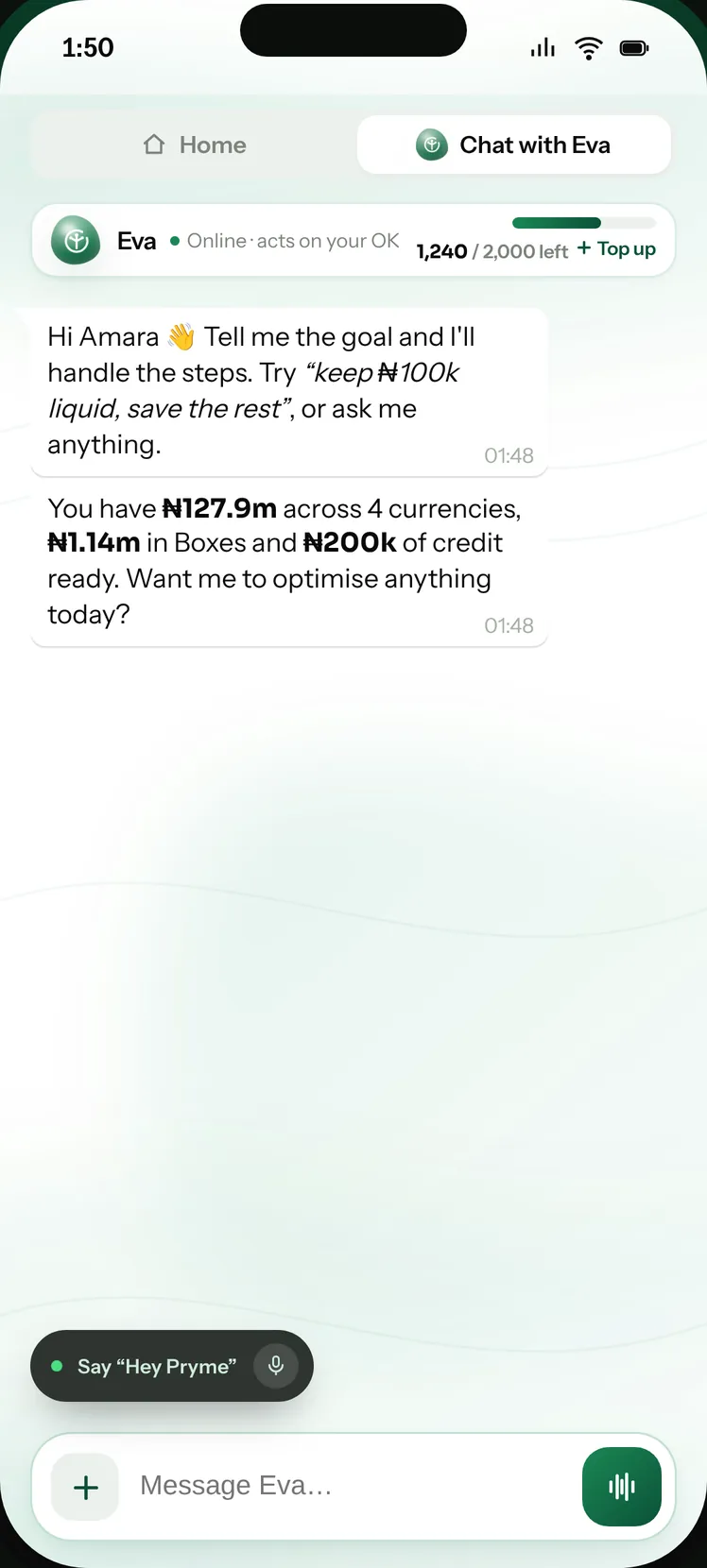
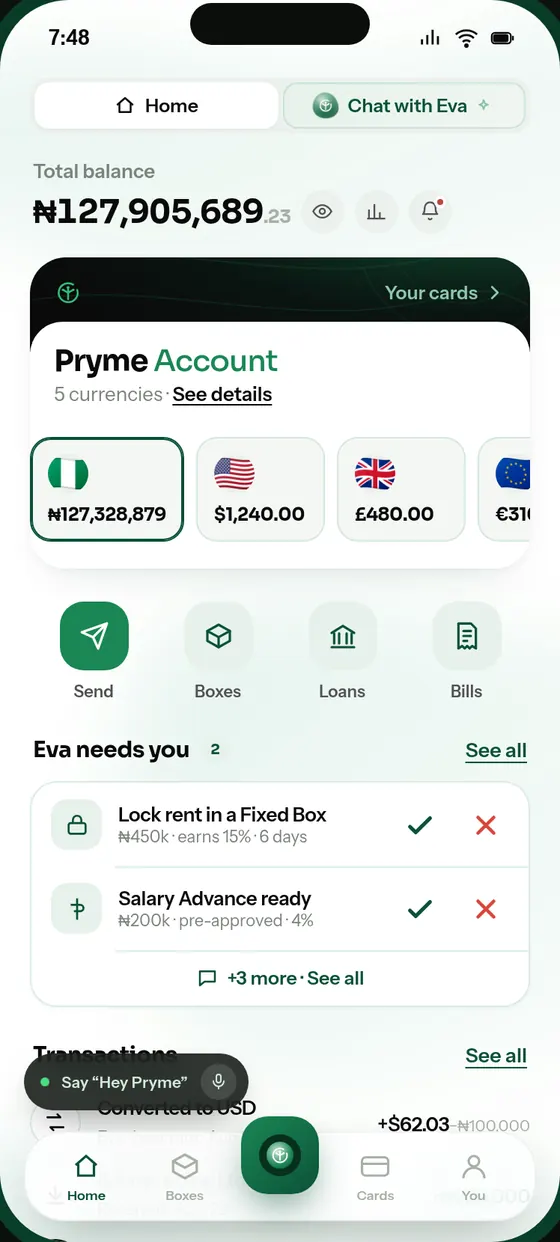
Meet Eva, the assistant inside the Pryme app. She opens accounts, moves money, saves toward your goals and follows up. Nothing leaves your account without your approval.
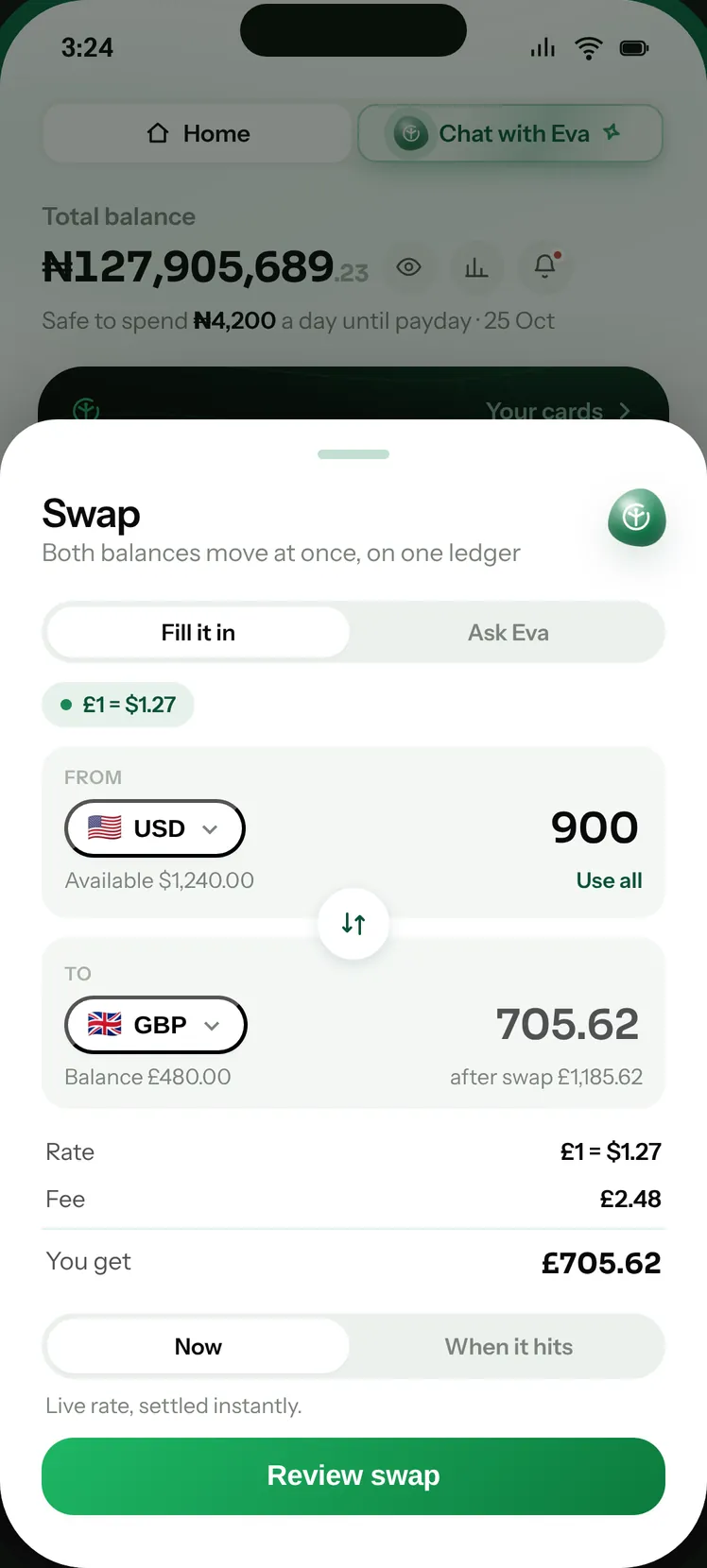
Meet Eva, the assistant inside the Pryme app. She holds dollars, pounds, euros and Naira side by side, swaps at a locked rate, pays bills in any of them and sends anywhere, asking before anything moves.
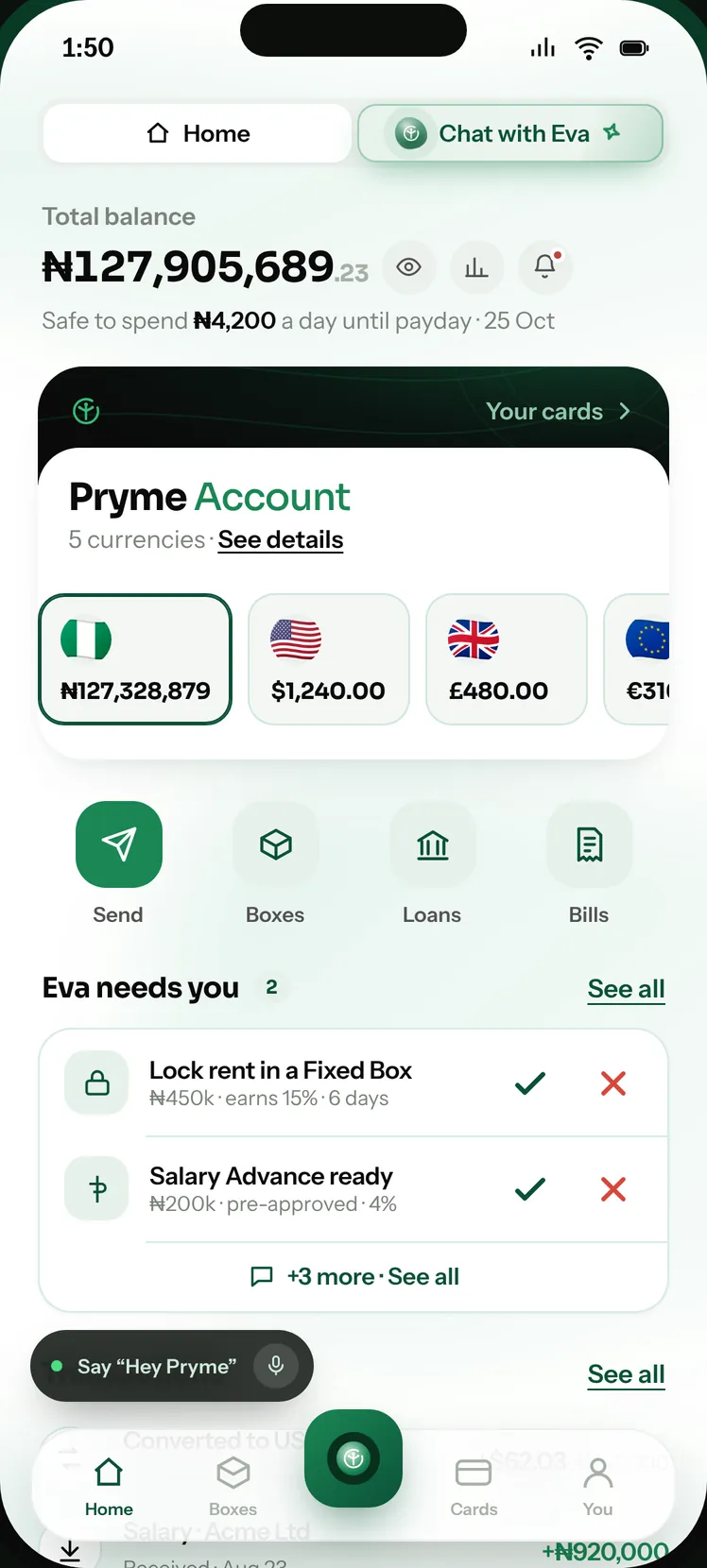
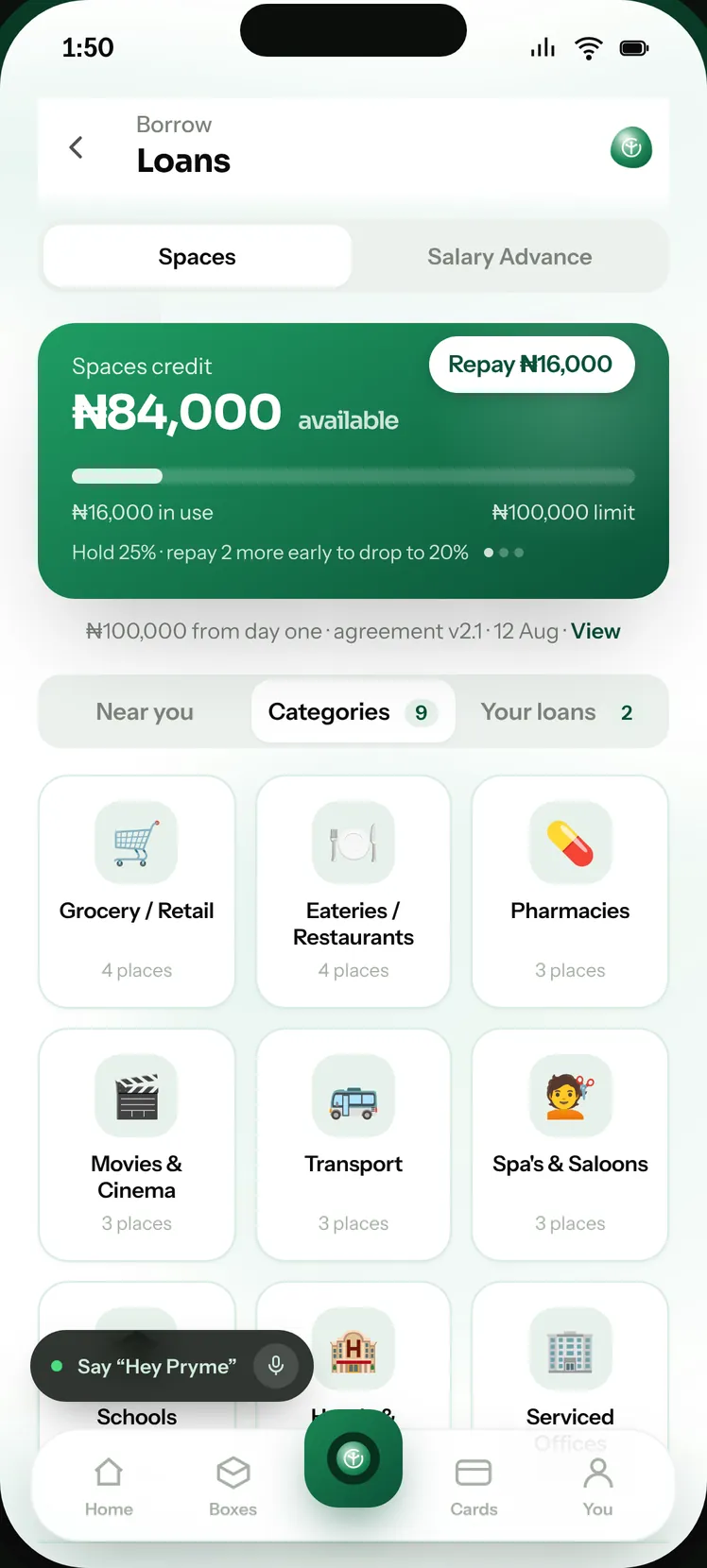
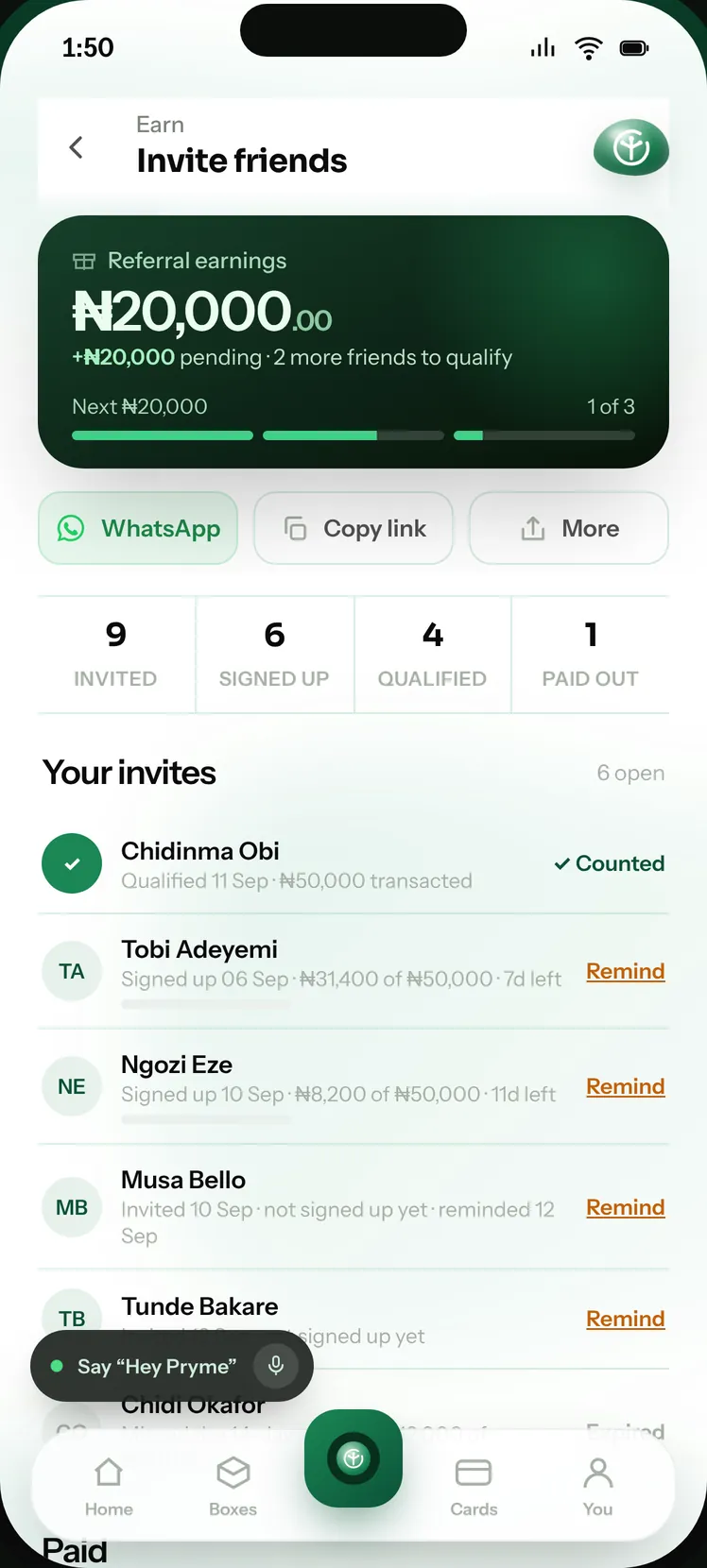
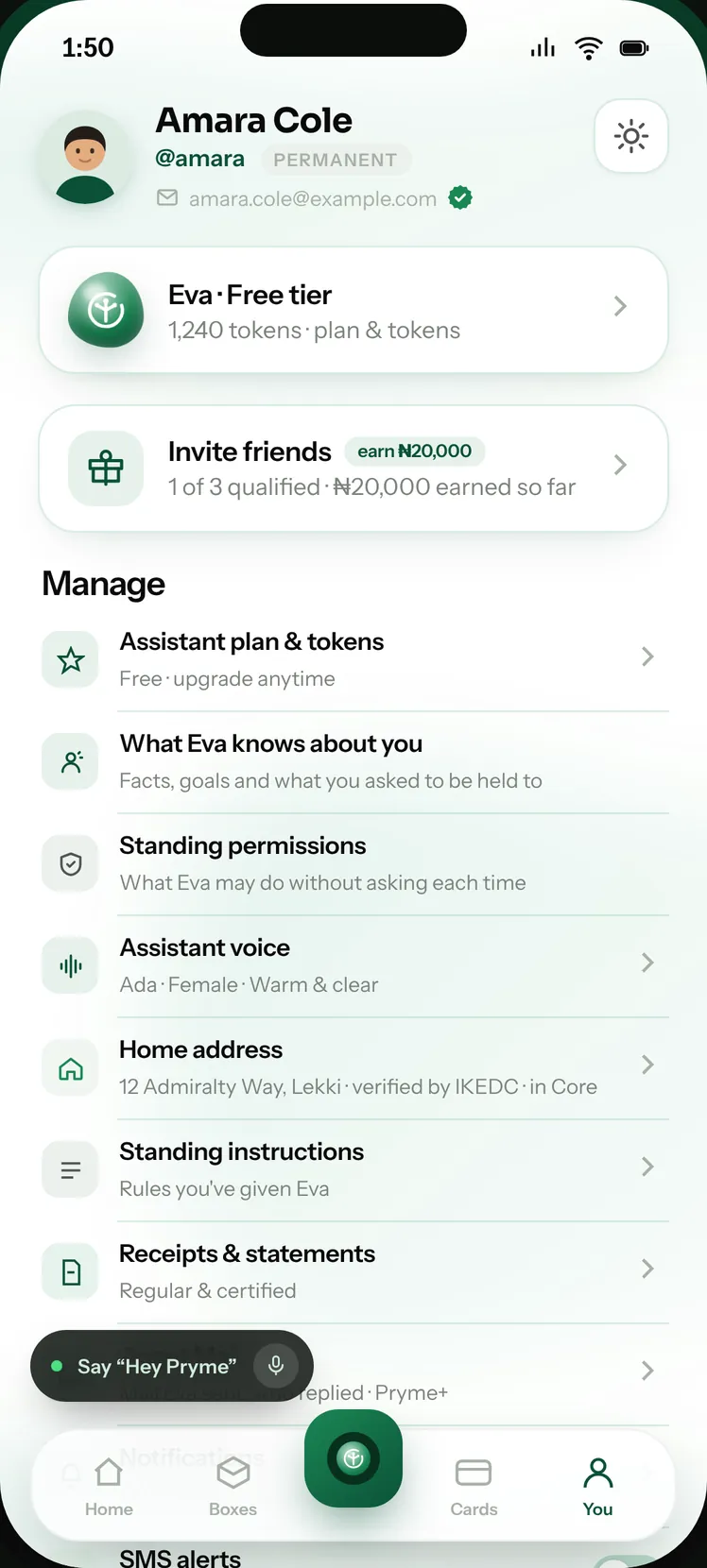
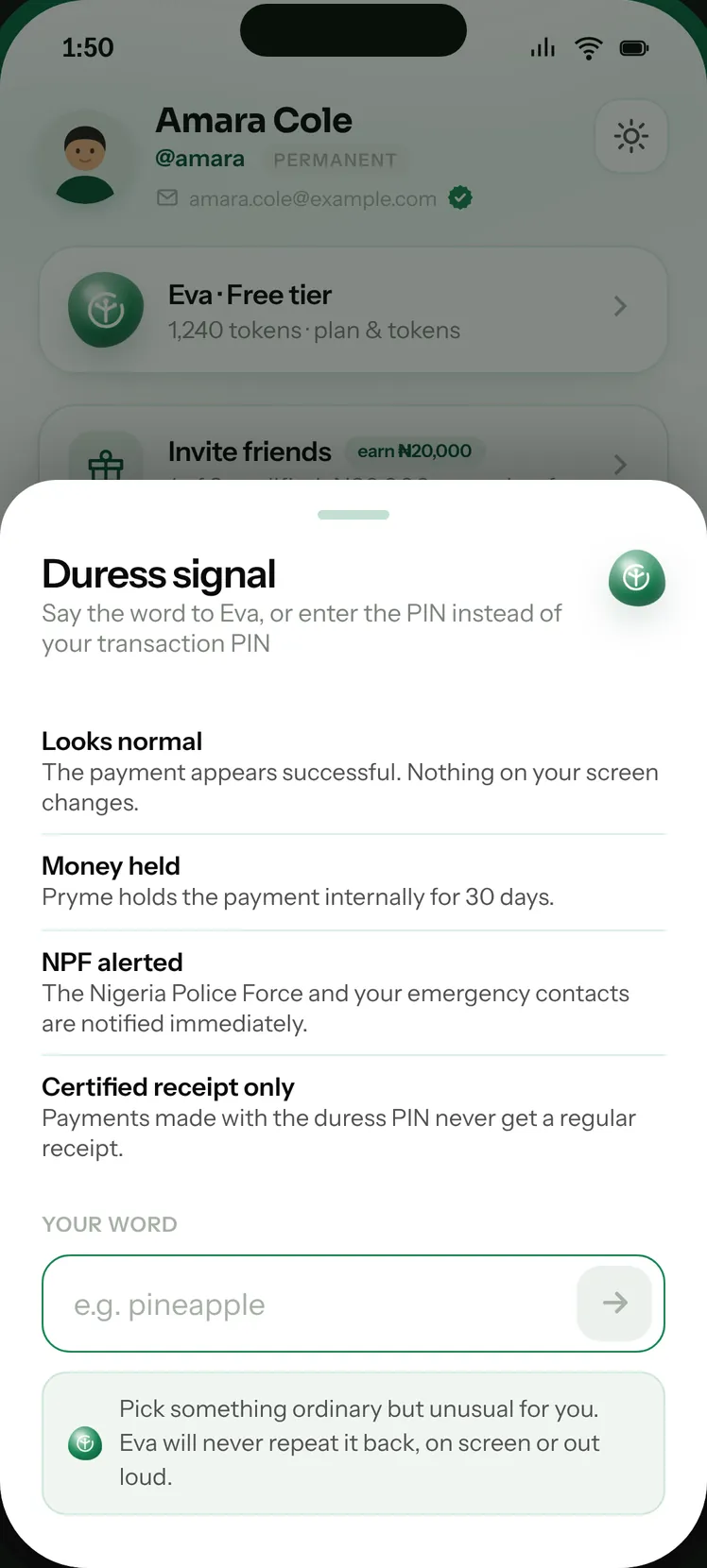
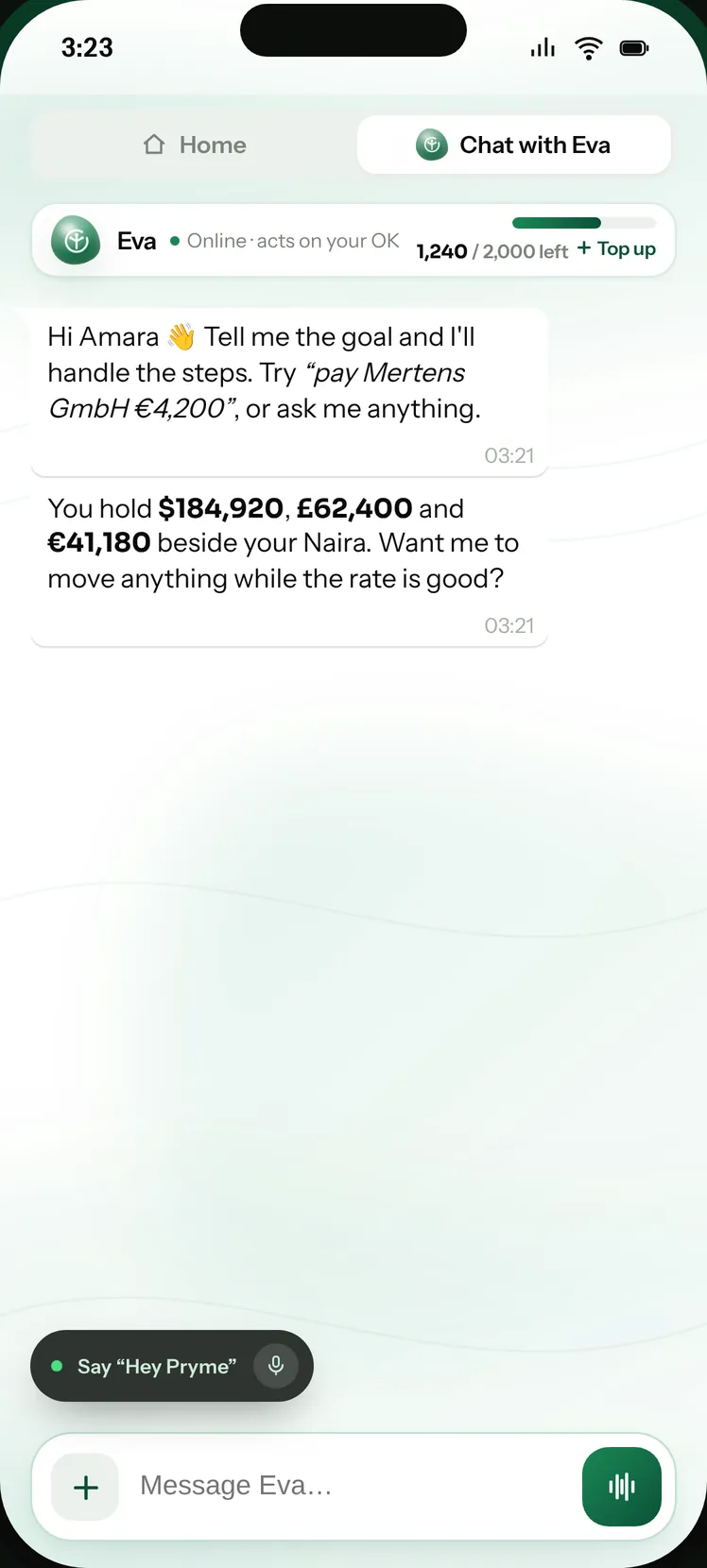
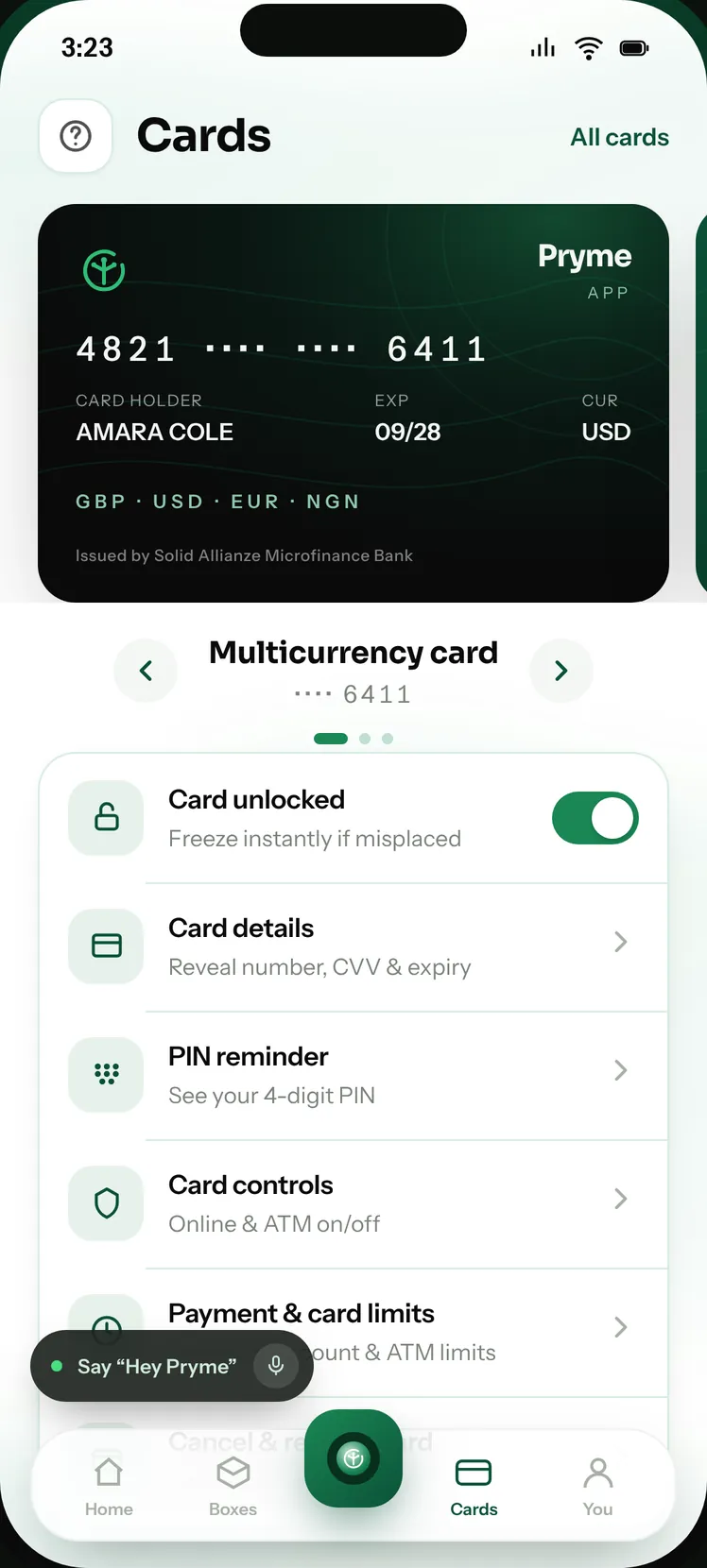
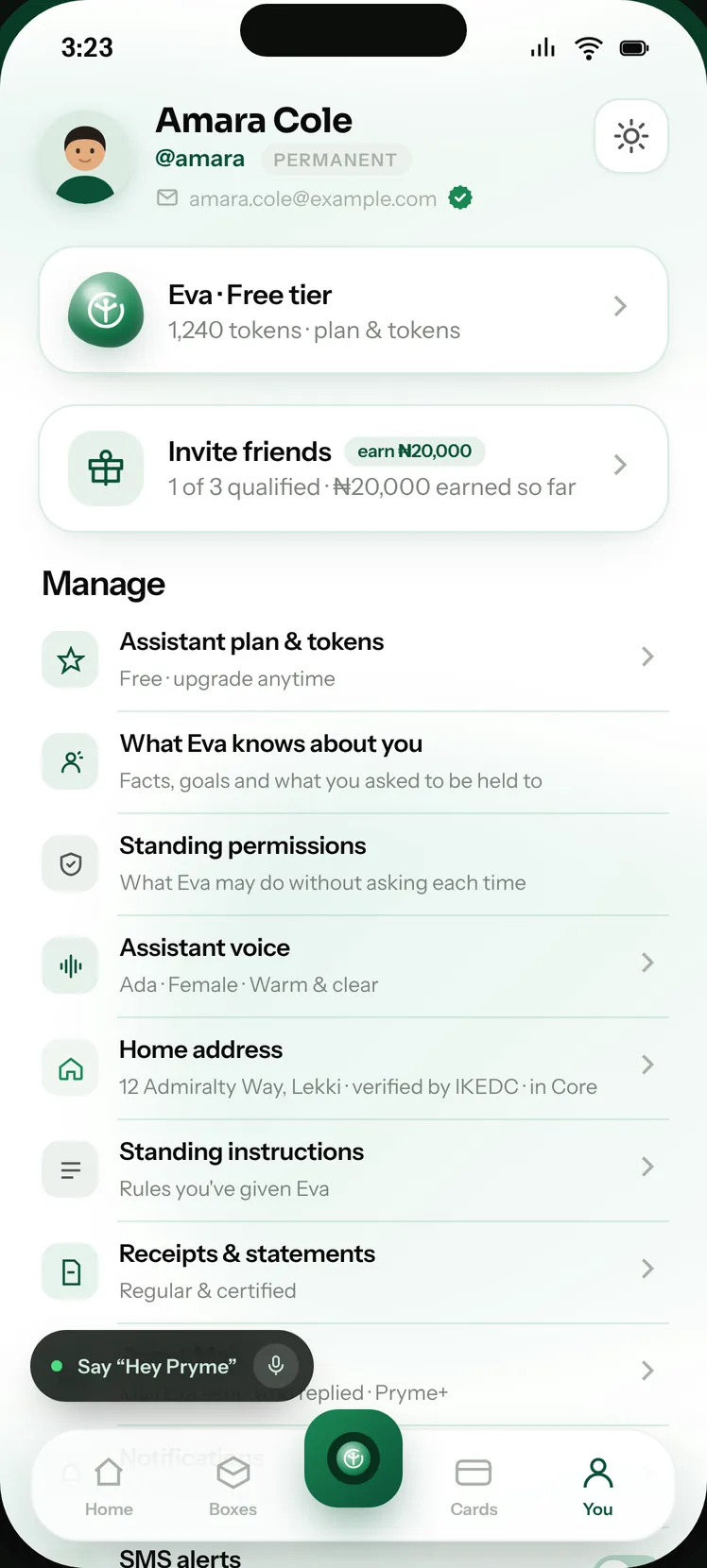
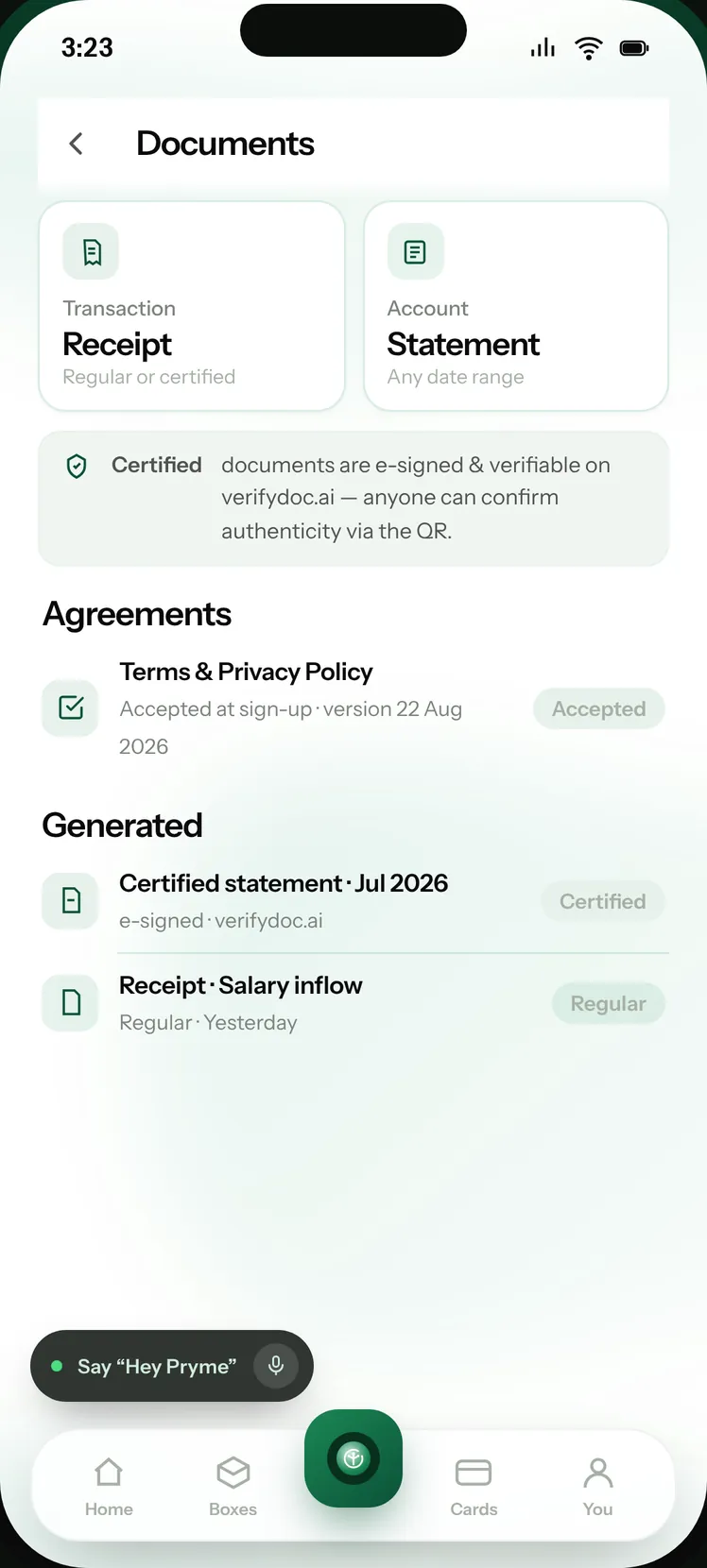
We give you a limit to spend at the shops and services you already use — and an account that works on your month while you get on with it. Dollars, pounds and euros sit beside your Naira, and an assistant handles the running of it, asking you first every single time.
One global account for your money and business. Move across currencies, automate everyday operations and put AI agents to work — with you in control of every important decision.


 Evayour assistant
 DanielChief of Staff
 BenFinance
 BruceCare
Your competitor down the road sells the same thing you sell. The difference is who walks in. We put money in people’s hands that can only be spent in businesses like yours — and then we point them at you.
You are not borrowing. You are selling to somebody who already has the money — and that money can only be spent with a business like yours.
₦100,000 from day one · agreement v2.1 · 12 Aug · View
Eva waits for your rate and asks before she moves anything.
No card, no OTP, nothing for the buyer to type in. They transfer from the bank app they already use, and the money lands in the same account your agents are running — already matched to the order, already in your books.
We give the buyer a one-time account number. They transfer to it from any bank app or by USSD — no card, no OTP, nothing to type in.
Get the account numberTo this account, from any bank app. We watch it, and the page updates itself.
₦26,767.50 from GTBank · John D., matched to order ORD‑1042.
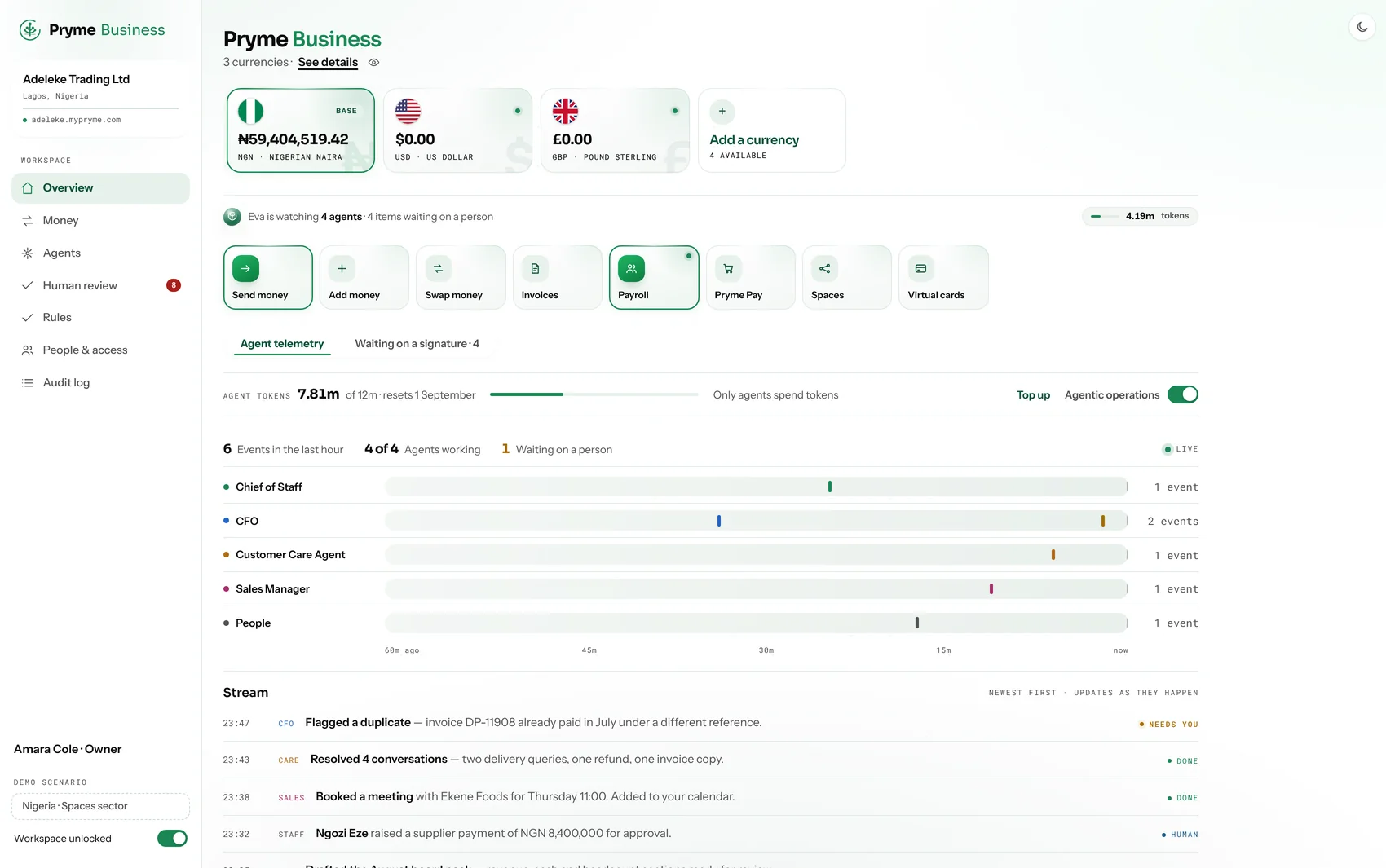
Five agents come with the account. Each one has a job description, a budget and a ceiling you set. They do the work and bring it to you — nothing leaves the account without your signature.
Knows what is stuck, who is waiting and what you promised — and keeps all three moving.
Booked a meeting with John Doe Foods for Thursday 11:00.Keeps the books as you trade and tells you the moment something does not add up.
Flagged a duplicate — invoice DP‑11908 was already paid in July.Holds every filing to its own clock and screens names and payments against your policy — and logs what it refuses.
Screened 412 payments overnight and refused two of them.Goes back to the buyers who went quiet, with the receipt already attached.
Recovered ₦410,000 across three overdue invoices.Replies, follows up on what they asked for and hands you only the ones that need you.
Resolved 4 conversations — two deliveries, one refund.Issue a dedicated Naira account number to each of your own customers, collect into it and reconcile against it. The same rails the Business Account runs on, with the licence behind them.
Dollars, pounds and euros beside a Naira account, on one ledger and one set of books. Five agents come with it and run the account — nothing leaves without your signature.
Five agents come with the account. Each has a job description, a budget and a ceiling you set. They do the work and bring it to you — they propose, you approve.
Knows what is stuck, who is waiting and what you promised, and keeps all three moving.
Booked the quarterly review with your auditor for Thursday.Keeps the books in every currency you hold and flags the moment something does not add up.
Flagged a duplicate — invoice DP‑11908 was already paid in July.Holds every filing to its own clock and screens names and payments against your policy — and logs what it refuses.
Screened 412 payments overnight and refused two of them.Goes back to the buyers who went quiet, with the invoice and the receipt already attached.
Recovered $12,400 across three overdue invoices.Replies, follows up on what they asked for and hands you only the ones that need you.
Resolved 4 conversations — two deliveries, one refund.The business has changed shape four times and never changed what it was rooted in. Each version was built out of what the last one could not do.
An online grocery store, built out of a faulty tab. Selling the food was the easy part — taking the money for it, and moving it, turned out to be the business.
A prepaid card. The first time the company issued rather than resold, and the first time it carried the obligations that come with holding somebody else’s money.
Solid Allianze acquired — an existing bank with an existing licence. The perimeter stopped being someone else’s to draw.
More than one currency on one balance, and the rebrand to Pryme. A Nigerian business could hold dollars without holding a second institution.
Accounts that do the work rather than only hold value. Five agents on the account, inside a policy you write — which is where the new mark starts.
Pryme is a financial technology company. It gives people and businesses in Nigeria one account that holds Naira alongside dollars, pounds and euros, and a set of agents that do the running of it — keeping the books, chasing what is owed, answering customers and paying bills. Nothing leaves an account without the owner’s approval.
Yes. A Pryme account holds Naira, US dollars, pounds sterling and euros side by side on one ledger, each with its own account details — a Nigerian account number, a US account number, a UK sort code and an IBAN for the euro area. You can swap between them at a rate you set, and every currency has its own statement.
Spaces is available in Nigeria. It gives a shopper money to spend that can only be spent with a participating business. The business is paid into its Naira account whether or not the shopper repays, because Pryme carries the credit. For the business it is free to join, there is nothing monthly, and the customer’s identity is never shown — only a reference and what it is worth.
Five agents come with the account. The Chief of Staff runs the week and keeps what is stuck moving. Finance watches the money and keeps the books as you trade. Compliance keeps the filings on time and screens what moves. Sales chases what you are owed. Customer Support answers your customers and follows up. Each has a job description, a budget and a ceiling you set, and each one proposes rather than acts — nothing leaves the account without your signature.
Pryme Pay takes payments on your own site or on a checkout page you control. The buyer is given a one-time account number and transfers to it from any bank app or by USSD — no card, no OTP, nothing to type in. The money lands in the same account your agents are running, already matched to the order and already in your books.
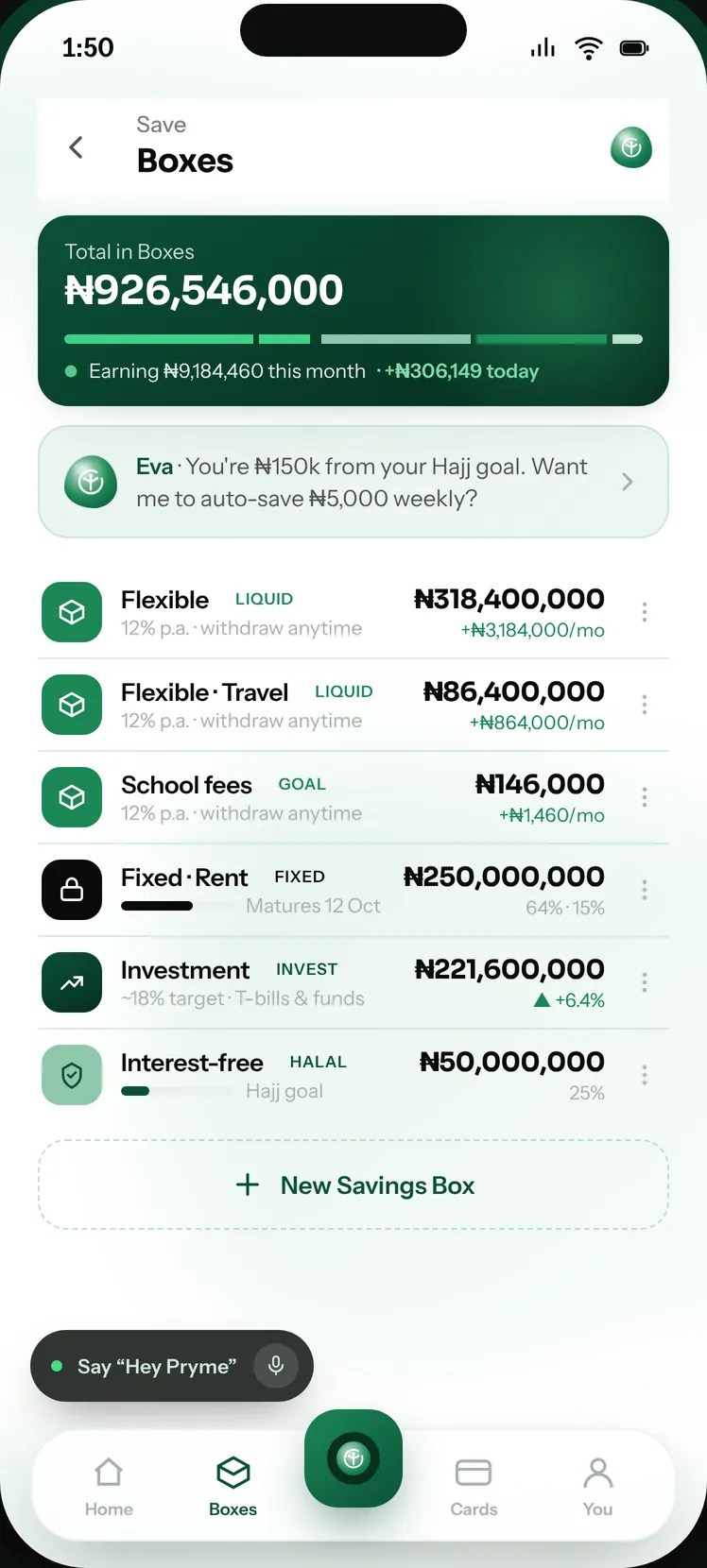
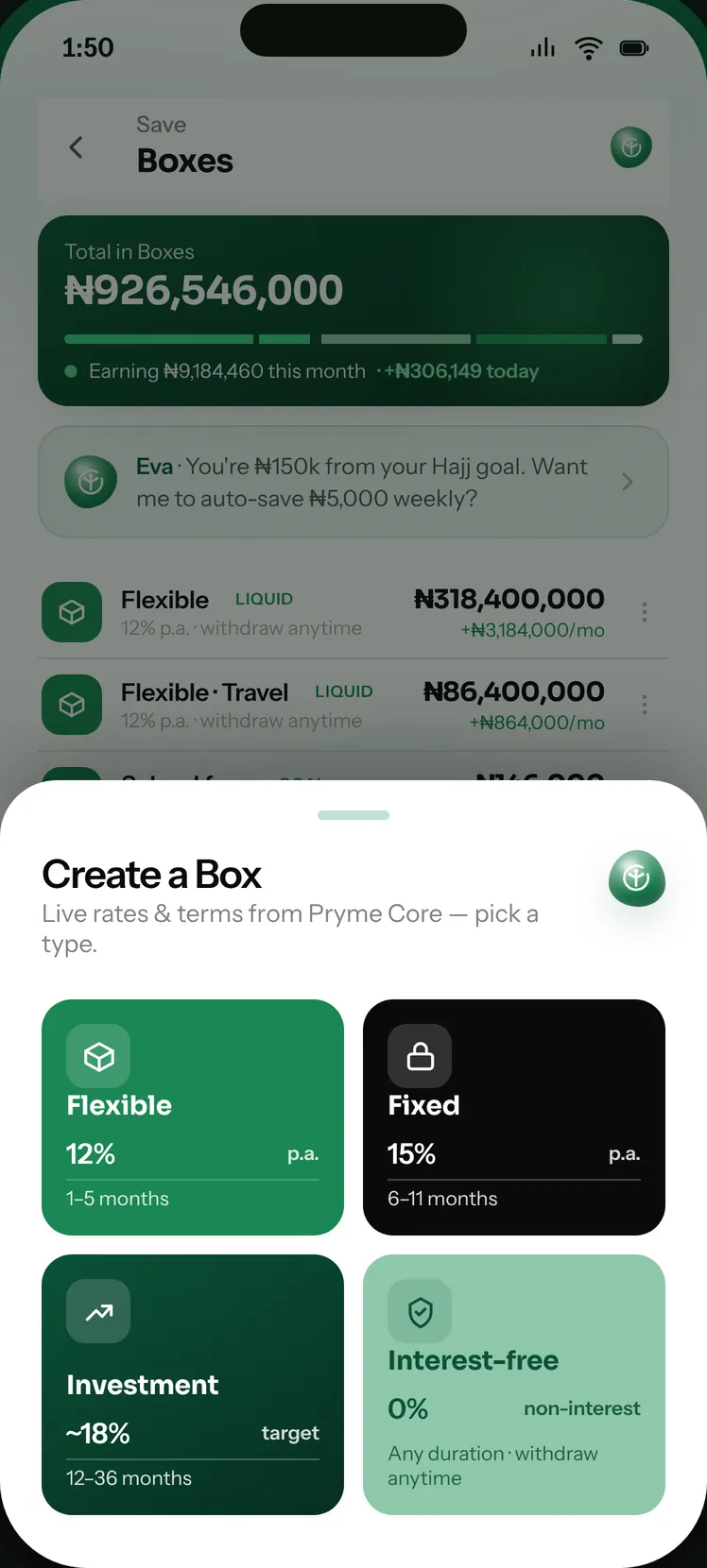
Savings Boxes are separate pots inside a Pryme account, held in Naira. Flexible Boxes can be withdrawn at any time, Fixed Boxes hold to a date, Investment Boxes hold for longer, and Interest-free Boxes earn nothing by design. A business can use them to ring-fence payroll and the tax it withholds, so that money cannot be spent by accident.
Pryme is a financial technology company, not a bank. Accounts and deposits are provided by Solid Allianze Microfinance Bank Limited, which is licensed by the Central Bank of Nigeria and is a member of the Nigeria Deposit Insurance Corporation.
Yes. Pryme Rails lets a platform issue a dedicated Naira account number to each of its own customers, collect into it and reconcile against it, over one API — the same rails the Pryme Business Account runs on.
Pryme is a financial technology company. It gives you one account that holds US dollars, pounds sterling and euros beside Naira, with an assistant that runs the account for you and asks before anything moves. Accounts are provided in Nigeria today, and further markets open as each licence lands.
Accounts are provided in Nigeria today, subject to verification and approval. Foreign-currency balances are held and converted inside that account, so you can hold, receive and swap dollars, pounds and euros wherever you are.
Naira, US dollars, pounds sterling and euros, side by side on one ledger. Each has its own details — a Nigerian account number, a US account number, a UK sort code and an IBAN for the euro area — and each has its own statement.
Swap at a rate you set rather than the rate of the day, then send to any Pryme username or to a Nigerian bank account. There is no fee to send to another Pryme account.
Eva is the assistant inside the Pryme app. She opens accounts, moves money, saves toward your goals, pays what is due and follows up what is owed to you — and asks you before anything moves.
Pryme Rails lets a platform issue a dedicated Naira account number to each of its own customers, collect into it and reconcile against it, over one API — the same rails the Pryme Business Account runs on.
Notes on money that does the work: what we are building, what the regulation actually says, and how we think about letting software act on money. Read the Ledger
What AI agents can do in bookkeeping, close, collections and compliance today, where a person must stay in charge, and how to judge a product.
How multi-currency business accounts work: local details vs SWIFT, payment rails, the real cost of FX, safeguarding vs deposit protection, and hedging.
How UK, US, Canadian and European firms pay Nigerian suppliers and get paid by Nigerian clients: FX, Form A and M, tax, compliance and payout routes.
What it really costs to send money to Nigeria from the UK, US, Canada and Europe: fees, exchange-rate margins, CBN naira rules, BVN, speed and scams.
What AI can and cannot do in day-to-day bookkeeping, how much time it saves on real numbers, and which jobs must stay with you or your accountant.
What we are building, what the regulation actually says, and how we think about letting software act on money.
All of United KingdomTrade with Nigeria · 124 articles
Egusi from Nigeria is on the GB list of restricted foods for aflatoxins. What that means at the border, and how groundnut products are sampled.
Importing direct from Nigerian suppliers or buying from UK wholesalers: what each means for paperwork, border checks, labels and cash flow.
Chargeable weight, per-kilo rates, surcharges and clearance fees: how an air freight quote from Lagos to London is built, with a worked example.
Agent or distributor in Nigeria? How UK exporters set exclusivity, targets, termination and payment terms, and which UK and Nigerian rules apply.
Flying egusi, sesame or fish from Lagos into Heathrow? Which Heathrow border control posts take which foods, what checks happen and fees.
Bulk shea sold to manufacturers is a raw material; shea in a jar sold to shoppers is a cosmetic. Where the UK line falls and who carries the duties.
Grasscutter, antelope, snail? Why bushmeat from Nigeria is taken at the UK border, the £5,000 fine risk in England, and what you can bring.
If Border Force seizes your cargo, you have one month to challenge the seizure and 45 days to ask for the goods back. The steps, deadlines and addresses.
Find the commodity code, set Nigeria as origin, read the duty and VAT, and know when to ask HMRC for a binding ruling. A step-by-step guide.
Leather, carvings, shells and other goods made from listed species need CITES documents from APHA. How to tell, and how to apply.
The bill for clearing a car at a Lagos port has two halves: government charges set by formula, and service charges that vary. A worked example.
Egusi, sesame, beans and palm oil all appear by code in UK food import law. What those codes say, why garri needs care, and how to confirm.
If you sell goods imported from Nigeria to UK consumers, the Consumer Rights Act puts quality, description and remedies on you, not your supplier.
Most Nigerian goods need no UK import licence. The ones that do: firearms, sanctioned goods, protected species, high-risk food and more.
Why a parcel from Nigeria is held for charges, how VAT and duty are worked out on it, what the courier adds, and how to claim back an overcharge.
What a UK customs broker does on an import from Nigeria, direct versus indirect representation, what it costs and how to choose one.
The customs value is the invoice price plus freight and insurance to the UK border. How HMRC Method 1 works for Nigerian goods, with an example.
The free and paid help a UK business can use to export to Nigeria: DBT teams in Lagos and Abuja, UK Export Finance, online guides and barrier reporting.
How D/P and D/A collections work when a UK exporter sells to a Nigerian buyer, what the banks do and do not promise, and where the risk sits.
Smoked catfish, bonga, crayfish, stockfish: what a UK importer needs to bring dried fish from Nigeria, and the personal 20kg luggage limit.
A duty deferment account lets regular importers pay duty and import VAT monthly by Direct Debit. Who can apply, the £10,000 guarantee waiver and timing.
How to complete the V5C permanent export section, where to send it, what happens to vehicle tax, and what to do with no log book.
Importing goods from Nigeria to sell in the UK? When you need a GB EORI number, what HMRC asks for, how fast it comes, and when you do not.
How escrow works for cross-border trade, how to check an escrow provider is regulated, and how to write release conditions both sides can prove.
Running an Etsy shop from the UK for Ankara, aso-oke and adire pieces: fees, import duty and VAT on stock, labels, returns and made-to-order items.
Most UK goods need no export licence for Nigeria, but military, dual-use and some other goods do. How to check, which licences exist and where to apply.
Form M is the Nigerian importer's declaration that drives customs, SONCAP and payment. What UK exporters must supply and when to ship.
NAFDAC registration for UK medical devices: risk classes, the documents a UK maker must provide, timelines of up to 240 workdays and labelling.
Age limits, DVLA export steps, Nigerian documents, duty lines and freight guides for shipping a used car from the UK to Nigeria.
Textbooks and school supplies sent to Nigeria go through Form M, SONCAP checks and the ECOWAS tariff. How used and donated books differ.
Before you ship a car from the UK to Nigeria, check its age against the import limit, the left-hand drive rule, and the duty and levies at the port.
New and used car parts to Nigeria: SONCAP product and shipment certificates, the used tyre ban, Form M and the UK export paperwork, with dated fees.
Tractors and farm equipment sent to Nigeria need the buyer's Form M, a SONCAP Product Certificate and duty at the ECOWAS rate. The order of steps.
Poultry is on Nigeria's import prohibition list, so frozen chicken and turkey cannot be lawfully exported from the UK to Nigeria. What the ban covers.
UK-made medicines need NAFDAC registration through a Nigerian company with a superintendent pharmacist, plus a UK certificate of pharmaceutical product.
Solar panels, inverters and batteries sent to Nigeria need SONCAP certificates, the buyer's Form M and duty under the ECOWAS tariff. What to prepare.
Every cosmetic sold in Nigeria must be NAFDAC-registered. The UK maker supplies the papers; a CAC-registered Nigerian company files them.
Packaged UK food needs NAFDAC registration before it can enter Nigeria, and several food types are restricted outright. What to check first.
Selling British-made clothing to Nigeria means checking the import prohibition list, SONCAP and how buyers pay. Second-hand clothing is banned.
NAFDAC product registration, the import prohibition list, duty and excise, and the Form M your Nigerian importer needs before UK drinks can ship.
Second-hand clothing is on Nigeria's absolute import prohibition list. What that means for UK exporters, bale traders and families shipping clothes home.
Used laptops and phones can go to Nigeria for reuse, but broken kit counts as waste, and hazardous waste electricals cannot be shipped there at all.
A guarantee sent as a PDF or email proves nothing. How UK exporters check a Nigerian bank guarantee through their own bank before shipping.
A screenshot, receipt or SWIFT copy is not payment. Check cleared funds in your own account, through your own banking app, before releasing goods.
How UK import declarations work on the Customs Declaration Service: subscribing, whether to use software or an agent, and the data each entry needs.
How Nigerian importers source foreign currency, why Form M matters to your payment, and the payment terms that protect a UK exporter.
What UK supermarket buyers expect from a Nigerian food brand: food safety certification, compliant labels, legal imports and reliable supply.
A Nigerian buyer can pay you in dollars from a domiciliary account or through their bank against Form M. How each route works and what to ask for.
Duty, import VAT, CITES and cultural property rules for paintings, carvings, beadwork and other crafts brought from Nigeria to sell in the UK.
Every cosmetic sold in Great Britain needs a UK Responsible Person, a safety assessment and an OPSS notification before sale. What each step involves.
How UK alcohol duty works on Nigerian beer, stout, spirits and palm wine: rates per litre of pure alcohol, excise warehouses and AWRS.
How UK duty and import VAT work on Ankara fabric and Nigerian-made clothes, and when the DCTS 0% rate for Nigeria applies.
Egusi, beans, palm oil, dried fish: which Nigerian foods face border checks, what is suspended, and the registrations a UK importer needs first.
VAT-registered and importing from Nigeria? How postponed VAT accounting works, what goes on the declaration, and which VAT return boxes you use.
Sugar levy rates from April 2026, who pays it on imported drinks, and the label and additive checks Nigerian malt, zobo and soft drinks face.
Dried ginger from Nigeria is not on the GB restricted foods list as at July 2026. The checks that do apply, DCTS duty and what to agree with the exporter.
Yam and cassava flours are processed plant products, so the fresh-produce rules mostly fall away. Labels, food registration and checks still apply.
Wigs and hair treatments are treated very differently at the UK border. Duty, import VAT and the cosmetics rules that apply to oils and relaxers.
Iru is a fermented plant food: food business registration, hygiene, storage and labelling rules apply, and novel food status should be checked.
Fresh kola and bitter kola are plant products and foods: check plant health category, novel food status and labelling before a UK shipment.
Ankara's commodity code turns on fibre, weight per square metre, weave and printing. How to find the right UK code and claim DCTS origin.
Printed books are zero-rated for VAT in the UK, and imports follow the same rate. What counts as a book, what does not, and how to check duty.
Wooden furniture from Nigeria falls under the UK Timber Regulations. What due diligence the first importer must do and the records OPSS can check.
Goods from Nigeria landing in Northern Ireland face an extra question that Great Britain does not ask: are they at risk of moving into the EU?
Honey is an animal product: the exporting country must be approved for it. Check Defra's list before you buy; personal allowance is 2kg.
How UK duty works on leather bags and shoes from Nigeria: finding the commodity code, the DCTS Enhanced tier, rules of origin and import VAT.
Fresh scotch bonnet, tatashe and other Nigerian peppers need a phytosanitary certificate if controlled; dried chilli is sampled for aflatoxins.
The label a Nigerian plantain chip pack needs to sell in Great Britain: ingredients, allergens, nutrition, net weight and a UK importer address.
Suya mix is sampled for aflatoxins at high priority; chilli, pepper and spice mixes for Salmonella and Sudan dyes. What a UK importer must check.
Ogbono is a plant food the UK samples for aflatoxins; dried crayfish is an animal product needing an approved source, health certificate and BCP.
Raw cashew and cocoa beans from Nigeria: how to check the UK tariff and DCTS rate, the plant health and food checks, and what a trade contract must cover.
Nigerian sesame seeds are on the GB list of foods with import restrictions for Salmonella. Designated border posts, IPAFFS and the 50% check rate.
Fresh yams are plant products: check their risk category, get a phytosanitary certificate, register for IPAFFS and pre-notify before arrival.
Dried hibiscus (zobo leaves) for the UK: plant health lookup, food registration, labelling as a food or tea, and when it becomes a sugar levy drink.
Egusi, sesame and fish from Nigeria must be pre-notified on IPAFFS. When to notify, what documents to upload, and which border post to choose.
The Lagos International Trade Fair and other LCCI events: 2026 dates, how foreign exhibitors book, the costs to budget for and the fraud warning.
How an import letter of credit works when a UK business buys from Nigeria, the documents it turns on, the costs to expect and when it is worth it.
Fish, yes, under conditions. Meat, poultry and dairy, no: Nigeria is not on Defra's approved lists. What the lists say and what that means for you.
Which NAFDAC certificate a Nigerian food exporter needs, the documents and 28-working-day timeline, and how it fits UK border checks.
An NEPC exporter certificate shows a Nigerian supplier is set up to export formally. What it proves, what it does not, and how to check it.
What is on Nigeria's import prohibition and absolute prohibition lists, how they affect UK exporters, and how to check your goods before you ship.
Antiquities are on the Nigeria Customs export prohibition list, and dealing in tainted cultural objects is a UK crime. What a buyer should check.
More than extra checks: dried beans from Nigeria are suspended from entry into Great Britain for pesticide residues. What that means for you.
When a Nigerian buyer says payment is "waiting on Form M" or "waiting for FX", what is really happening, how long each step takes, and what you can do.
When a Nigerian customer offers naira instead of pounds or dollars: the options open to a UK seller, the rules behind them and the risks to price in.
What the Nigerian-British Chamber of Commerce says it offers, how to judge any chamber or business association, and when government help is better.
Nigeria charges duty on UK goods under the ECOWAS Common External Tariff, plus levies and VAT. How the bill is built and where to check your rate.
Dollar, naira or sterling invoices from Nigeria: who carries the exchange rate risk, how the export proceeds rules shape it, and how to decide.
A food not eaten widely in the UK or EU before 15 May 1997 needs authorisation in GB. How to check a Nigerian product and the traditional food route.
Form NXP is the CBN export declaration behind every commercial shipment from Nigeria. What it means for a UK buyer's payment, timing and paperwork.
Why palm oil from Nigeria is a high sampling priority for Sudan dyes, what the GB restrictions list says, and what your labels must show.
How UK businesses pay Nigerian suppliers: dollar or naira invoices, SWIFT costs, FX margins, payment references and the export rules on the other side.
Food for yourself or a gift is a personal import; food to sell is commercial, whatever its size. The UK limits, declarations and penalties.
When plant products from Nigeria need a phytosanitary certificate, who issues it, the 13-day window, IPAFFS timing and UK checks.
Selling from Nigeria to UK buyers by post: the CN22 or CN23 form, the £135 VAT rule, duty over £135 and who pays the bill on arrival.
If you import Nigerian goods to sell in the UK, the law can treat you like the producer. What that means and what product liability cover should include.
Goods made in Nigeria keep Nigerian origin when they pass through a UK warehouse. What that means for EU duty, UK paperwork and your margins.
Food importers must register with the council where they operate at least 28 days before trading, even from an office or home. What to expect.
UK online buyers can cancel within 14 days and must be refunded within 14 days of the return. How that works when your goods are made in Nigeria.
Zero duty under the DCTS depends on origin. What counts as Nigerian, the proof your supplier must give, cumulation since 2026 and late claims.
Each cosmetic must be notified on the UK SCPN service before it is sold. What the Responsible Person submits and what to have ready first.
From booking at Apapa or Tin Can to clearance at Tilbury or Felixstowe: the steps, documents and delays in a sea shipment from Nigeria.
Selling Nigerian food, beauty or fashion on Amazon UK: account set-up, fees, who owes VAT, who imports the stock and the product rules that apply.
Selling chin chin, puff-puff mix or pepper sauce on TikTok Shop UK: council registration, labels, allergens, imports and ad disclosure rules.
Bringing Nigerian goods back to sell at a UK market stall? Personal allowances do not apply to goods for sale. What to declare, register and label.
Raw shea butter and black soap sold for skin or hair are cosmetics in the UK: they need a Responsible Person, a safety report and OPSS notification.
Courier or post, who pays VAT and duty, what paperwork travels with each parcel, and the Nigerian export steps for selling direct to UK buyers.
Moving home from the UK to Nigeria? How customs treats used household goods, which items cause trouble, and the papers your clearing agent needs.
Hydroquinone is prohibited in cosmetics sold in Great Britain. Skin lighteners that contain it are refused at the border and destroyed.
How SONCAP works for UK exporters: product certificate, per-shipment certificate, the published fees, exemptions and the documents to prepare.
A practical check list before paying a new Nigerian supplier: CAC search, NEPC papers, samples, call-backs and staged payments that limit loss.
Clothing and fabric sold in the UK need an English fibre composition label using permitted fibre names and percentages. Who is responsible and how.
Over-invoicing, under-invoicing, third-party payers and vague goods: the trade patterns that make banks ask questions on UK–Nigeria deals.
Private trade credit insurance and UK Export Finance export insurance for UK firms selling to Nigerian buyers: what is covered and who qualifies.
Nigeria sits in the Enhanced tier of the UK's Developing Countries Trading Scheme. What that covers, what it does not, and how to check a product.
What UK Export Finance offers exporters selling to Nigeria: buyer finance, working capital and insurance up to 95%, and how to check current cover.
The mandatory information a Nigerian packaged food needs before it can sit on a UK shelf, from the 14 allergens to the UK address rule.
If you sell from Nigeria to UK customers, consignments of £135 or less carry UK VAT at checkout, charged by you or the marketplace. How it works.
What the UK-Nigeria ETIP is, what its first ministerial dialogue in March 2026 covered, and what it does and does not change for traders.
Every cosmetic sold in Great Britain needs a UK-based Responsible Person. Who that can be, what they hold, and why it matters for Nigerian brands.
How a UK trader checks a Nigerian supplier or buyer against the UK Sanctions List, what a match means and when to report to OFSI.
Before you stock Nigerian food from a UK wholesaler: registration, labels, traceability records and the products that should raise questions.
What a London freight forwarder does for cargo from Lagos, how its fees are made up, and the checks to make before you hand over goods or money.
A UK sale to a Nigerian buyer is only VAT-free if the goods leave in time and you hold the right proof. What HMRC accepts, and the 3-month rule.
You can add the other type later — many of our customers hold both.
The business first, then you. Nothing is submitted until you review it.
Ideal customer profiles
Generated from your website by VerifiedLead.ai
Pick the ones that look right. Your Sales agent works these first, and you can change them at any time after opening.
We ask this because you have not given us a website. It helps us set the right limits from day one.
Which of these represents you?
Officers listed against this company on the UK register.
We have sent a six-digit code to your email address. Enter it below to confirm the address is yours.
Wrong address? Go back and change it — nothing is created until this step passes. We never ask for a code by phone or email; anyone who does is not us.
Last step. Each time you sign in we email you a six-digit code — we never send codes by SMS.