AI agents for business finance: what they can and can't do
What AI agents can do in bookkeeping, close, collections and compliance today, where a person must stay in charge, and how to judge a product.
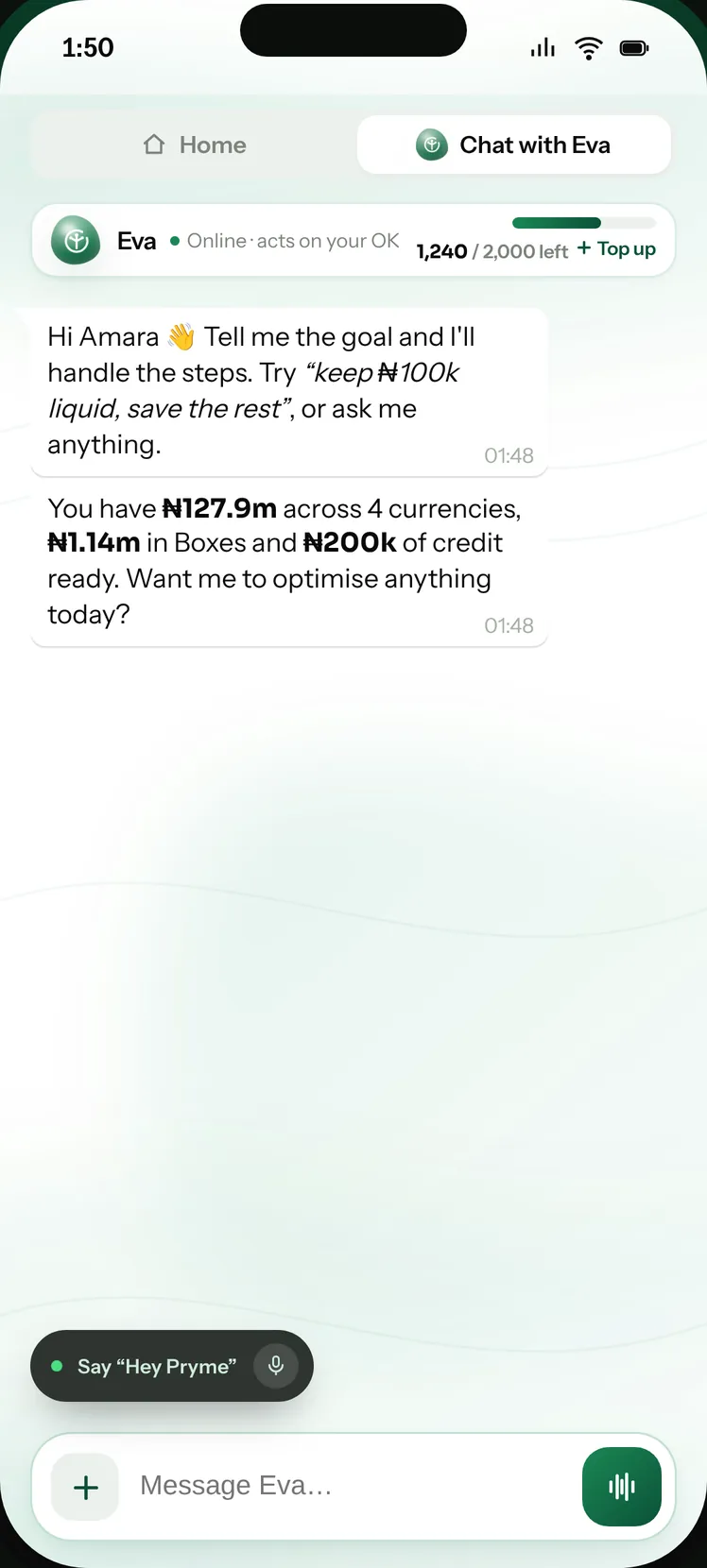
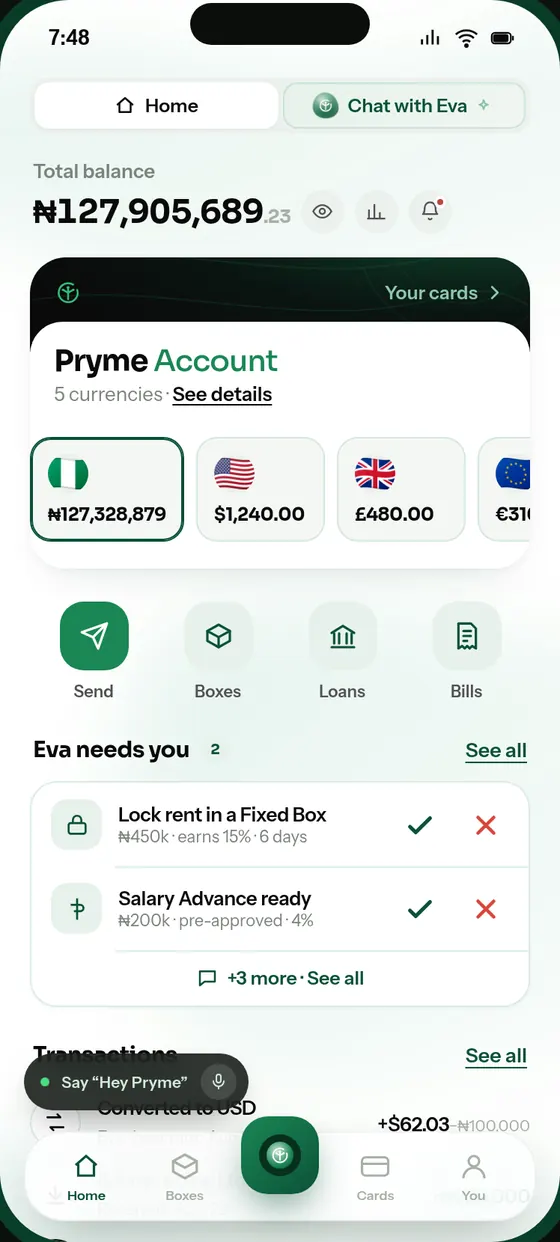
Meet Eva, the assistant inside the Pryme app. She opens accounts, moves money, saves toward your goals and follows up. Nothing leaves your account without your approval.
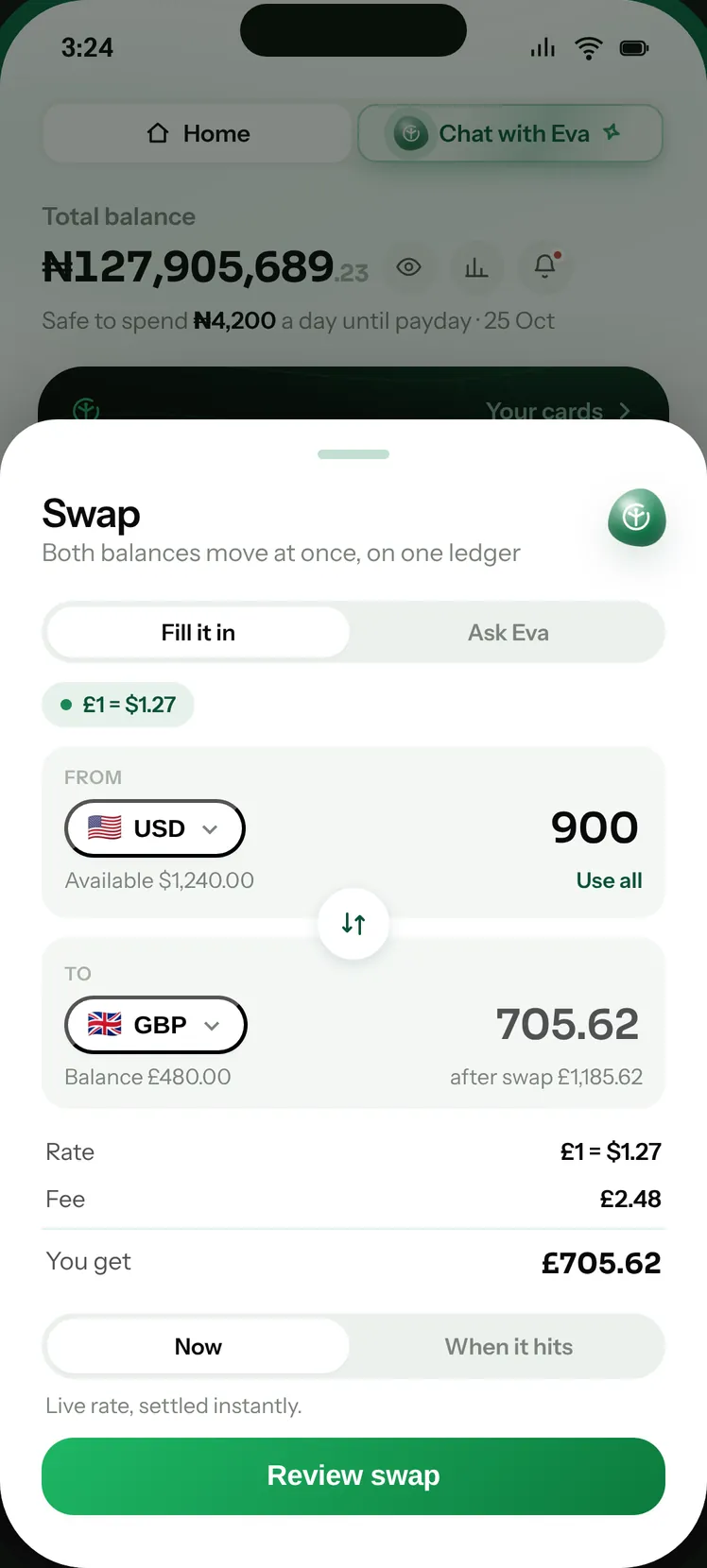
Meet Eva, the assistant inside the Pryme app. She holds dollars, pounds, euros and Naira side by side, swaps at a locked rate, pays bills in any of them and sends anywhere, asking before anything moves.
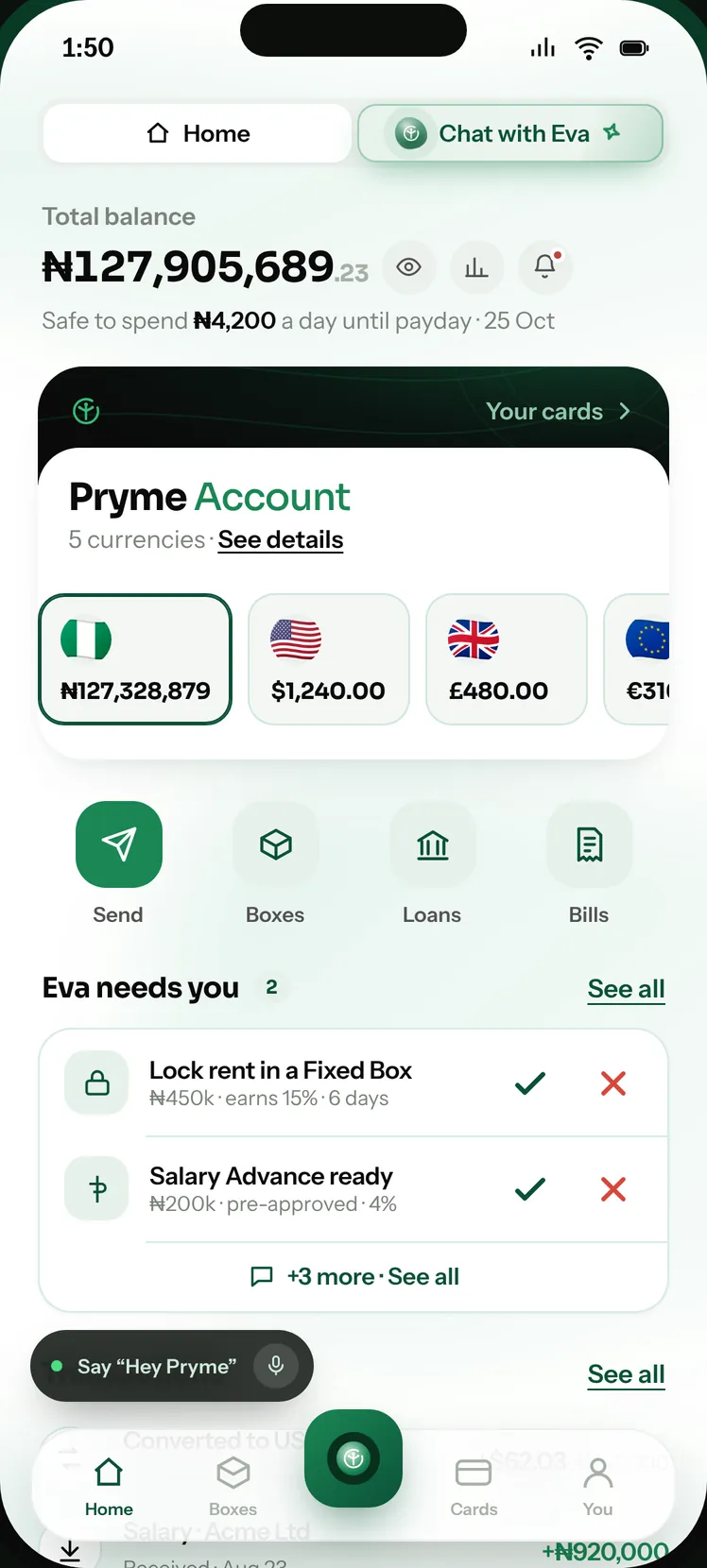
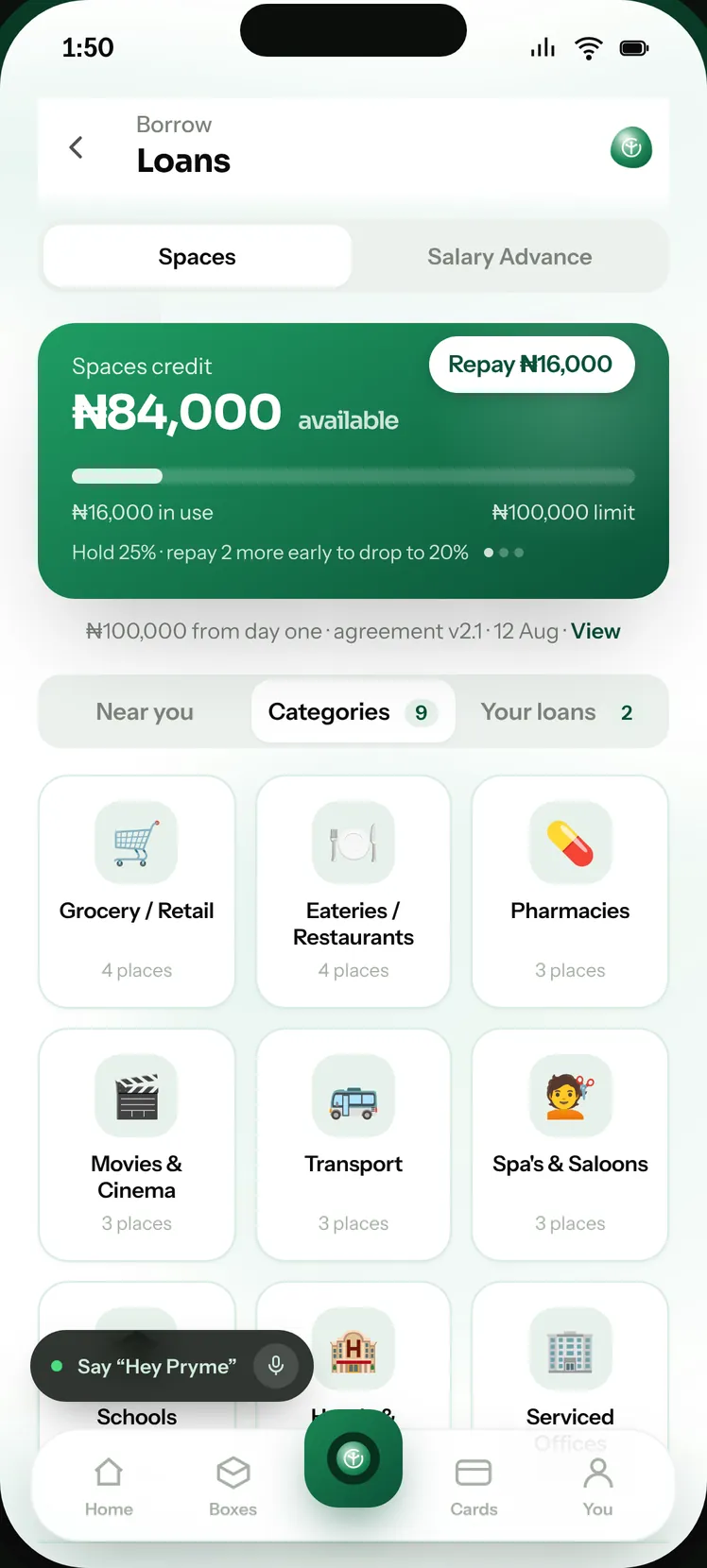
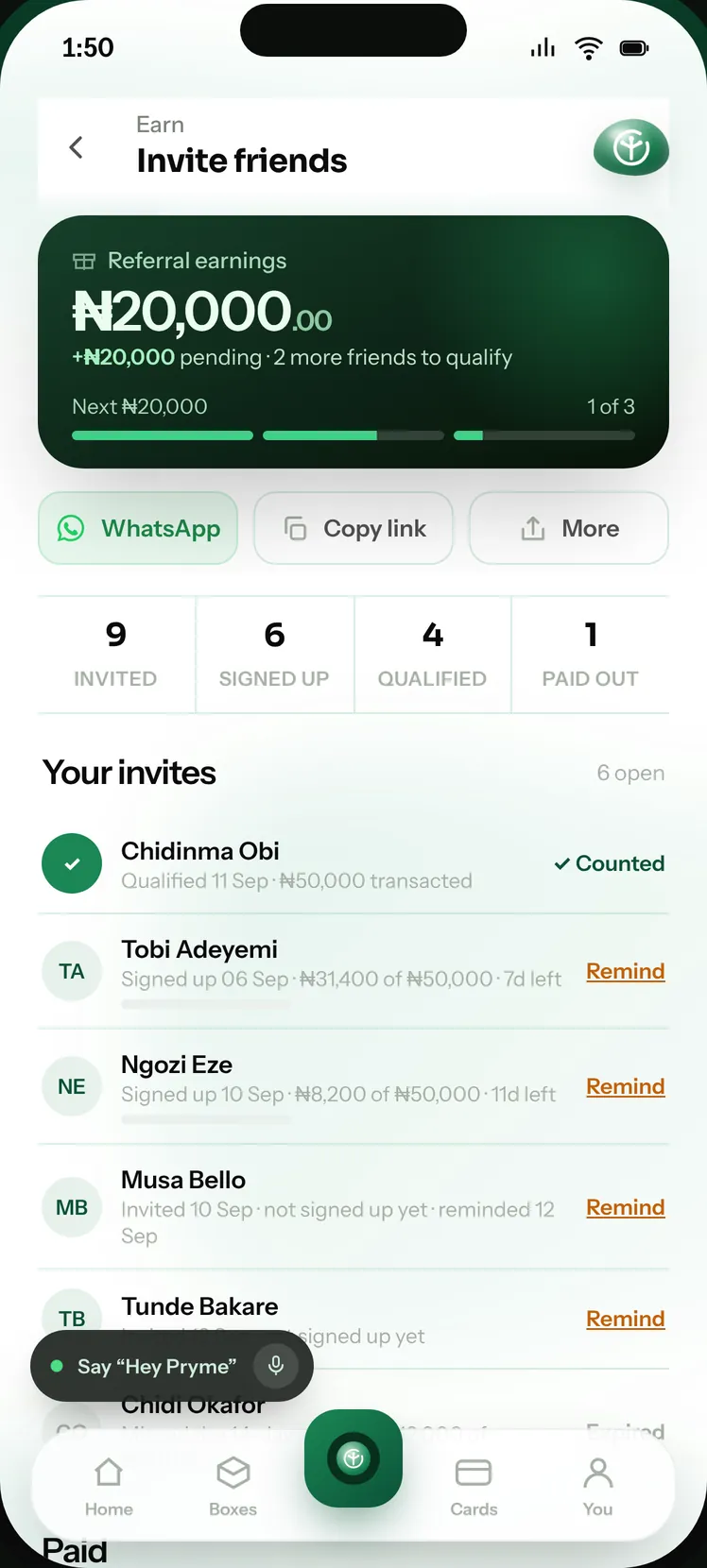
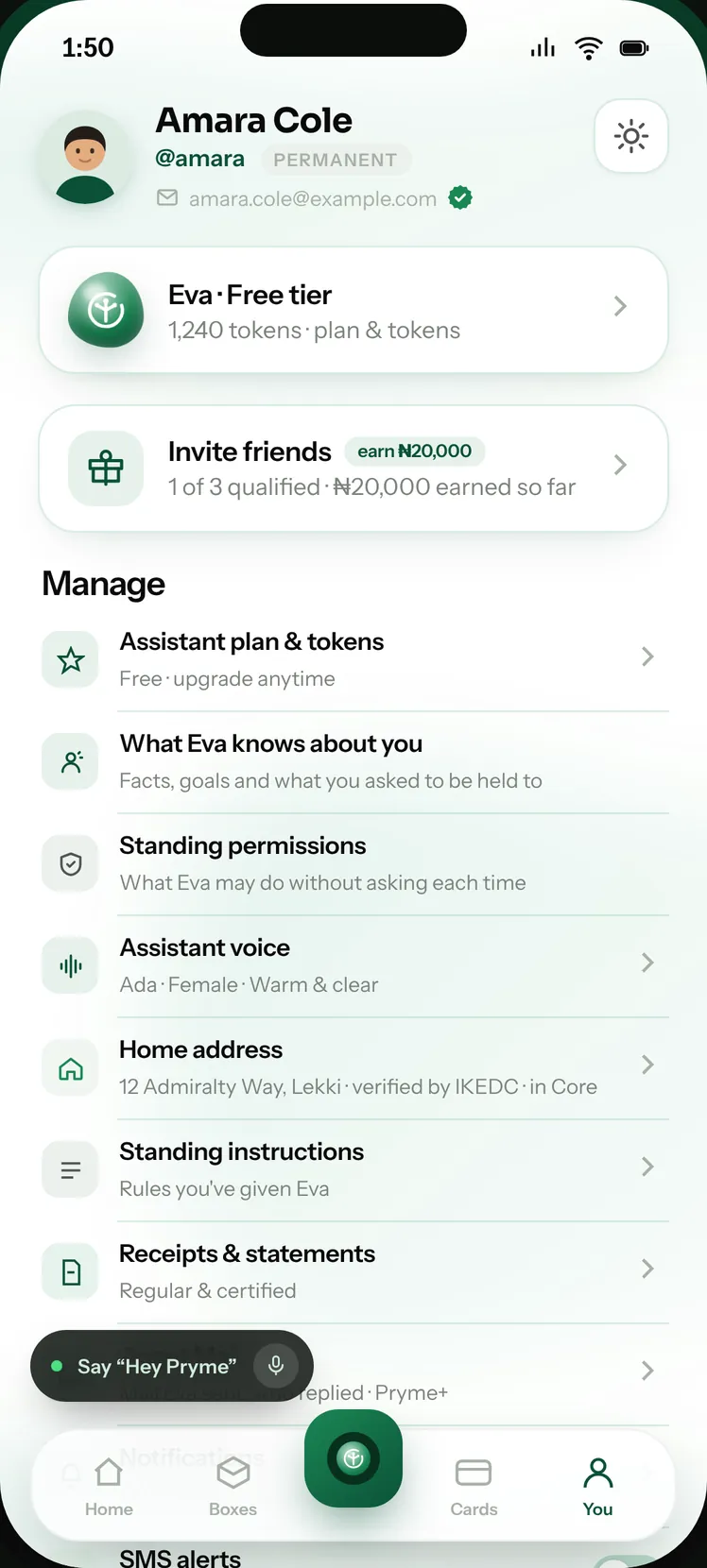
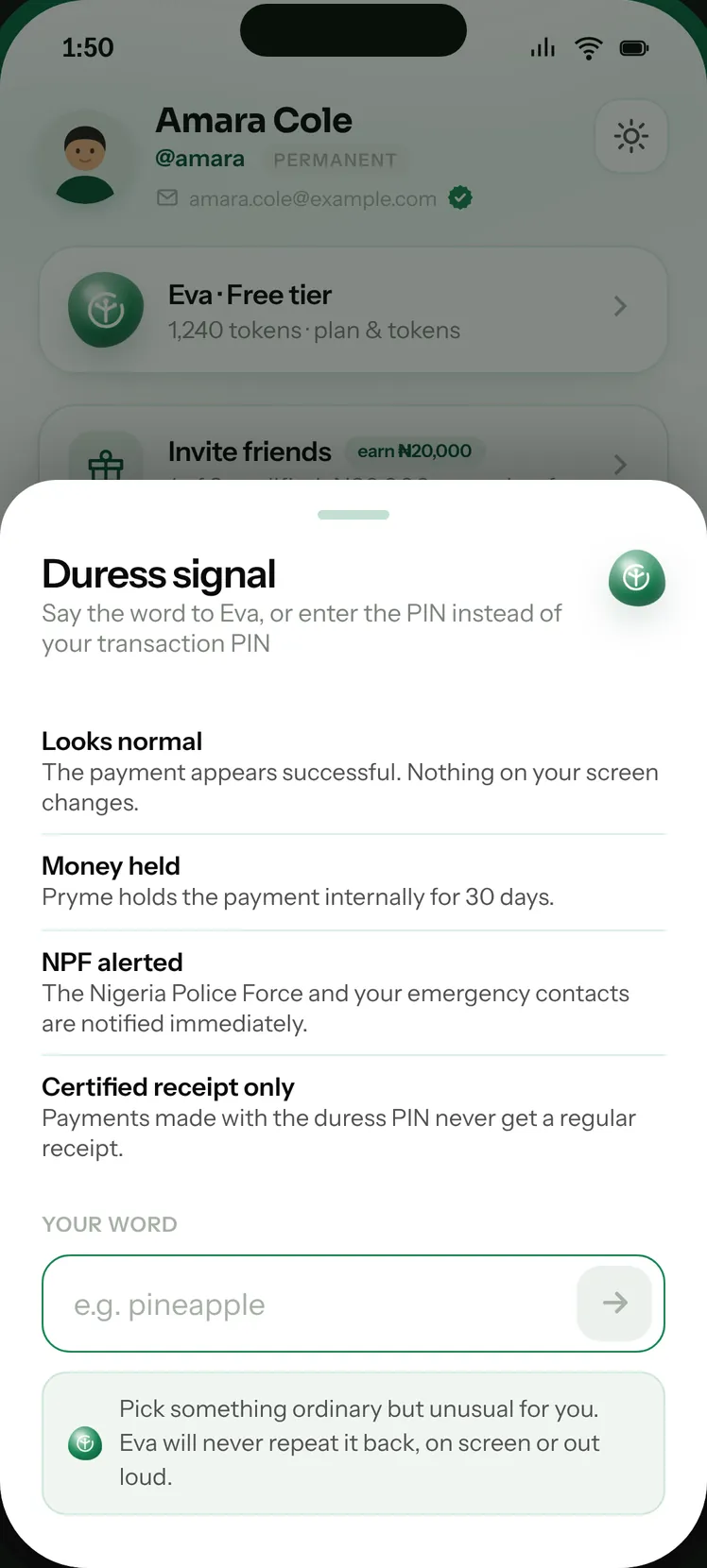
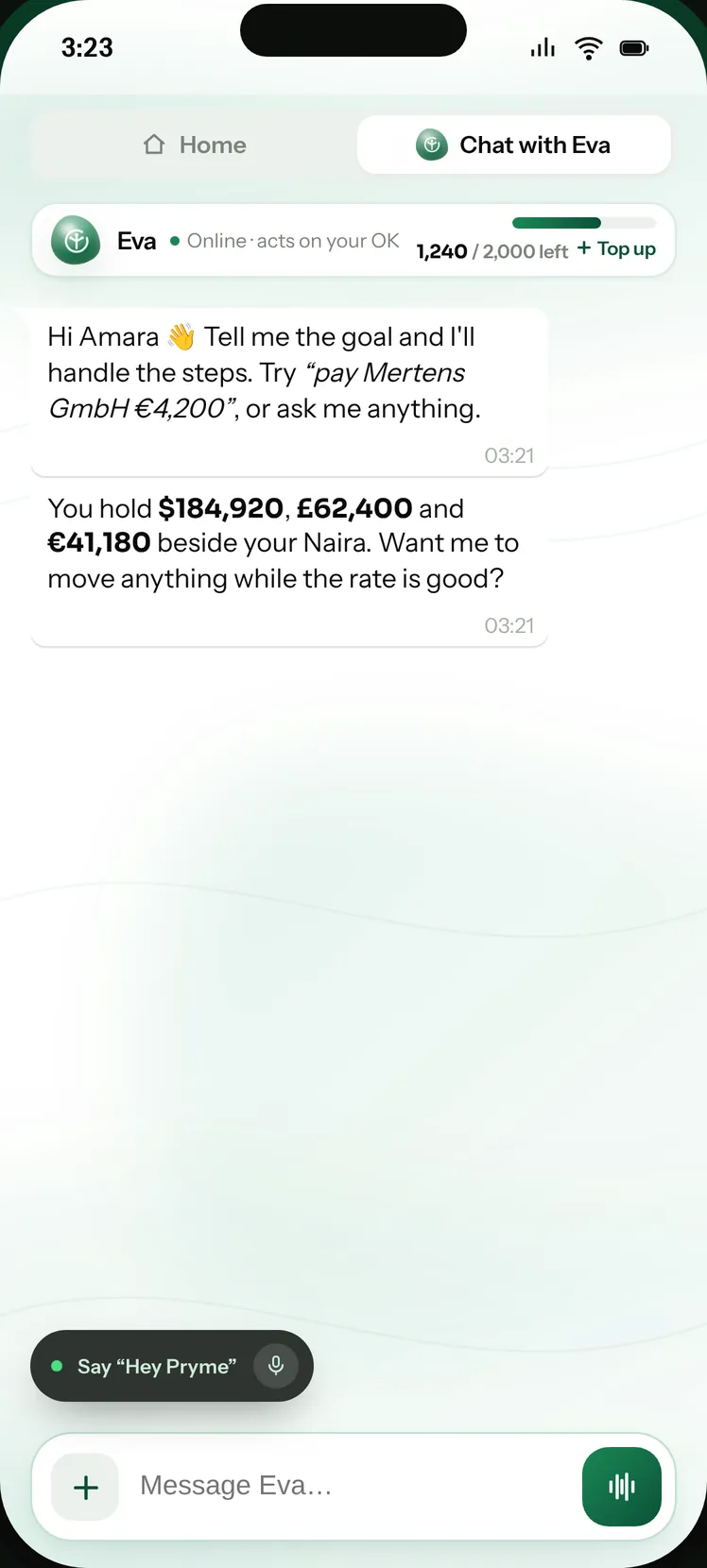
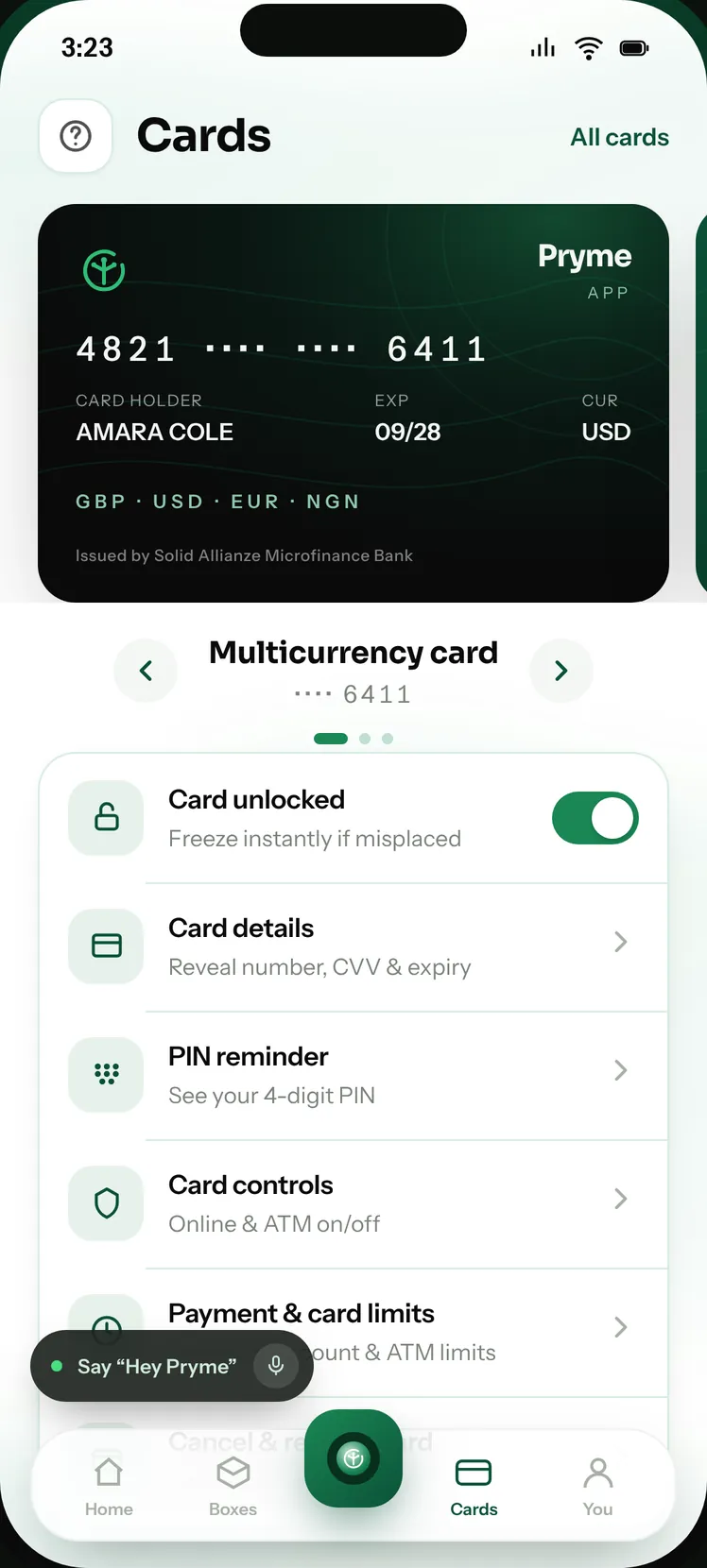
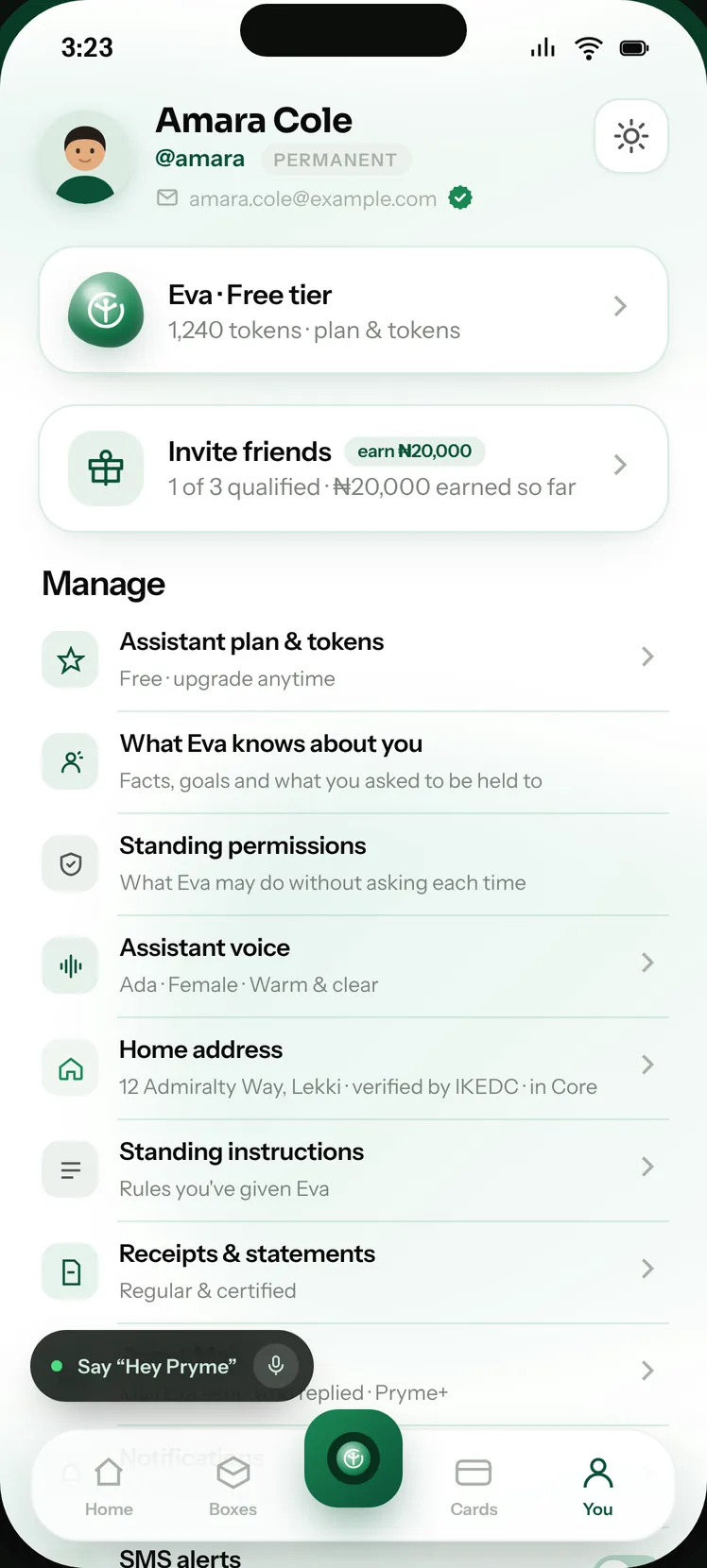
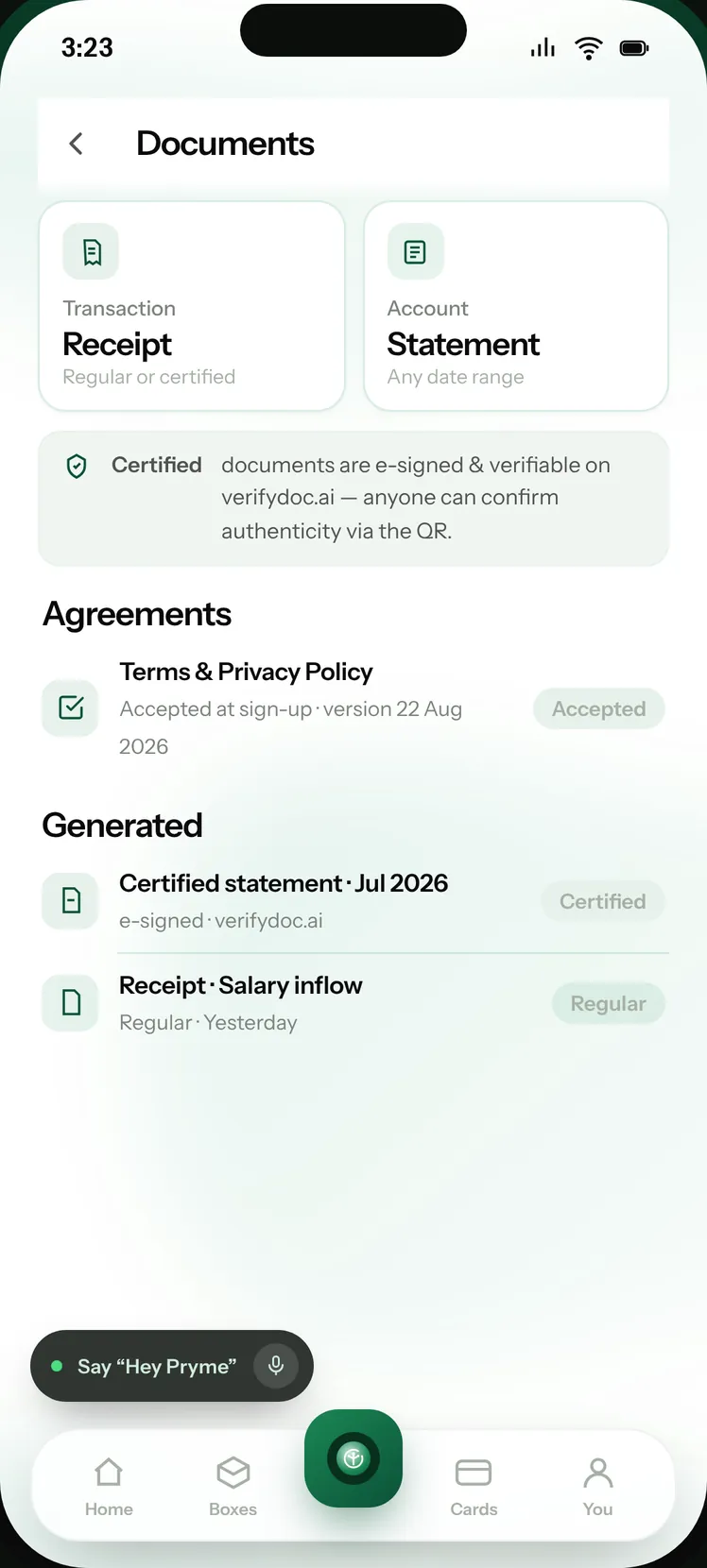
We give you a limit to spend at the shops and services you already use — and an account that works on your month while you get on with it. Dollars, pounds and euros sit beside your Naira, and an assistant handles the running of it, asking you first every single time.
One global account for your money and business. Move across currencies, automate everyday operations and put AI agents to work — with you in control of every important decision.


 Evayour assistant
 DanielChief of Staff
 BenFinance
 BruceCare
Your competitor down the road sells the same thing you sell. The difference is who walks in. We put money in people’s hands that can only be spent in businesses like yours — and then we point them at you.
You are not borrowing. You are selling to somebody who already has the money — and that money can only be spent with a business like yours.
₦100,000 from day one · agreement v2.1 · 12 Aug · View
Eva waits for your rate and asks before she moves anything.
No card, no OTP, nothing for the buyer to type in. They transfer from the bank app they already use, and the money lands in the same account your agents are running — already matched to the order, already in your books.
We give the buyer a one-time account number. They transfer to it from any bank app or by USSD — no card, no OTP, nothing to type in.
Get the account numberTo this account, from any bank app. We watch it, and the page updates itself.
₦26,767.50 from GTBank · John D., matched to order ORD‑1042.
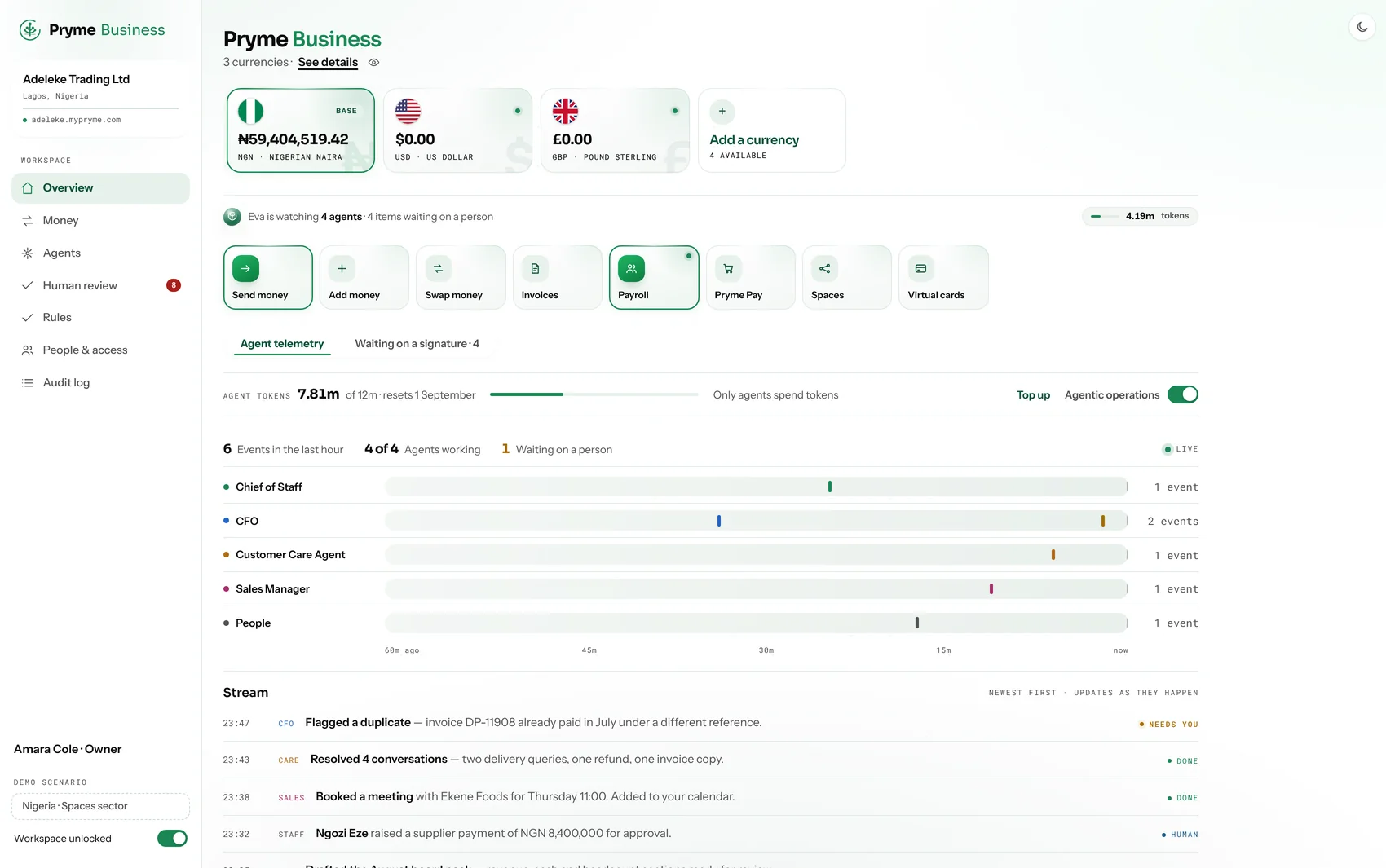
Five agents come with the account. Each one has a job description, a budget and a ceiling you set. They do the work and bring it to you — nothing leaves the account without your signature.
Knows what is stuck, who is waiting and what you promised — and keeps all three moving.
Booked a meeting with John Doe Foods for Thursday 11:00.Keeps the books as you trade and tells you the moment something does not add up.
Flagged a duplicate — invoice DP‑11908 was already paid in July.Holds every filing to its own clock and screens names and payments against your policy — and logs what it refuses.
Screened 412 payments overnight and refused two of them.Goes back to the buyers who went quiet, with the receipt already attached.
Recovered ₦410,000 across three overdue invoices.Replies, follows up on what they asked for and hands you only the ones that need you.
Resolved 4 conversations — two deliveries, one refund.Issue a dedicated Naira account number to each of your own customers, collect into it and reconcile against it. The same rails the Business Account runs on, with the licence behind them.
Dollars, pounds and euros beside a Naira account, on one ledger and one set of books. Five agents come with it and run the account — nothing leaves without your signature.
Five agents come with the account. Each has a job description, a budget and a ceiling you set. They do the work and bring it to you — they propose, you approve.
Knows what is stuck, who is waiting and what you promised, and keeps all three moving.
Booked the quarterly review with your auditor for Thursday.Keeps the books in every currency you hold and flags the moment something does not add up.
Flagged a duplicate — invoice DP‑11908 was already paid in July.Holds every filing to its own clock and screens names and payments against your policy — and logs what it refuses.
Screened 412 payments overnight and refused two of them.Goes back to the buyers who went quiet, with the invoice and the receipt already attached.
Recovered $12,400 across three overdue invoices.Replies, follows up on what they asked for and hands you only the ones that need you.
Resolved 4 conversations — two deliveries, one refund.The business has changed shape four times and never changed what it was rooted in. Each version was built out of what the last one could not do.
An online grocery store, built out of a faulty tab. Selling the food was the easy part — taking the money for it, and moving it, turned out to be the business.
A prepaid card. The first time the company issued rather than resold, and the first time it carried the obligations that come with holding somebody else’s money.
Solid Allianze acquired — an existing bank with an existing licence. The perimeter stopped being someone else’s to draw.
More than one currency on one balance, and the rebrand to Pryme. A Nigerian business could hold dollars without holding a second institution.
Accounts that do the work rather than only hold value. Five agents on the account, inside a policy you write — which is where the new mark starts.
Pryme is a financial technology company. It gives people and businesses in Nigeria one account that holds Naira alongside dollars, pounds and euros, and a set of agents that do the running of it — keeping the books, chasing what is owed, answering customers and paying bills. Nothing leaves an account without the owner’s approval.
Yes. A Pryme account holds Naira, US dollars, pounds sterling and euros side by side on one ledger, each with its own account details — a Nigerian account number, a US account number, a UK sort code and an IBAN for the euro area. You can swap between them at a rate you set, and every currency has its own statement.
Spaces is available in Nigeria. It gives a shopper money to spend that can only be spent with a participating business. The business is paid into its Naira account whether or not the shopper repays, because Pryme carries the credit. For the business it is free to join, there is nothing monthly, and the customer’s identity is never shown — only a reference and what it is worth.
Five agents come with the account. The Chief of Staff runs the week and keeps what is stuck moving. Finance watches the money and keeps the books as you trade. Compliance keeps the filings on time and screens what moves. Sales chases what you are owed. Customer Support answers your customers and follows up. Each has a job description, a budget and a ceiling you set, and each one proposes rather than acts — nothing leaves the account without your signature.
Pryme Pay takes payments on your own site or on a checkout page you control. The buyer is given a one-time account number and transfers to it from any bank app or by USSD — no card, no OTP, nothing to type in. The money lands in the same account your agents are running, already matched to the order and already in your books.
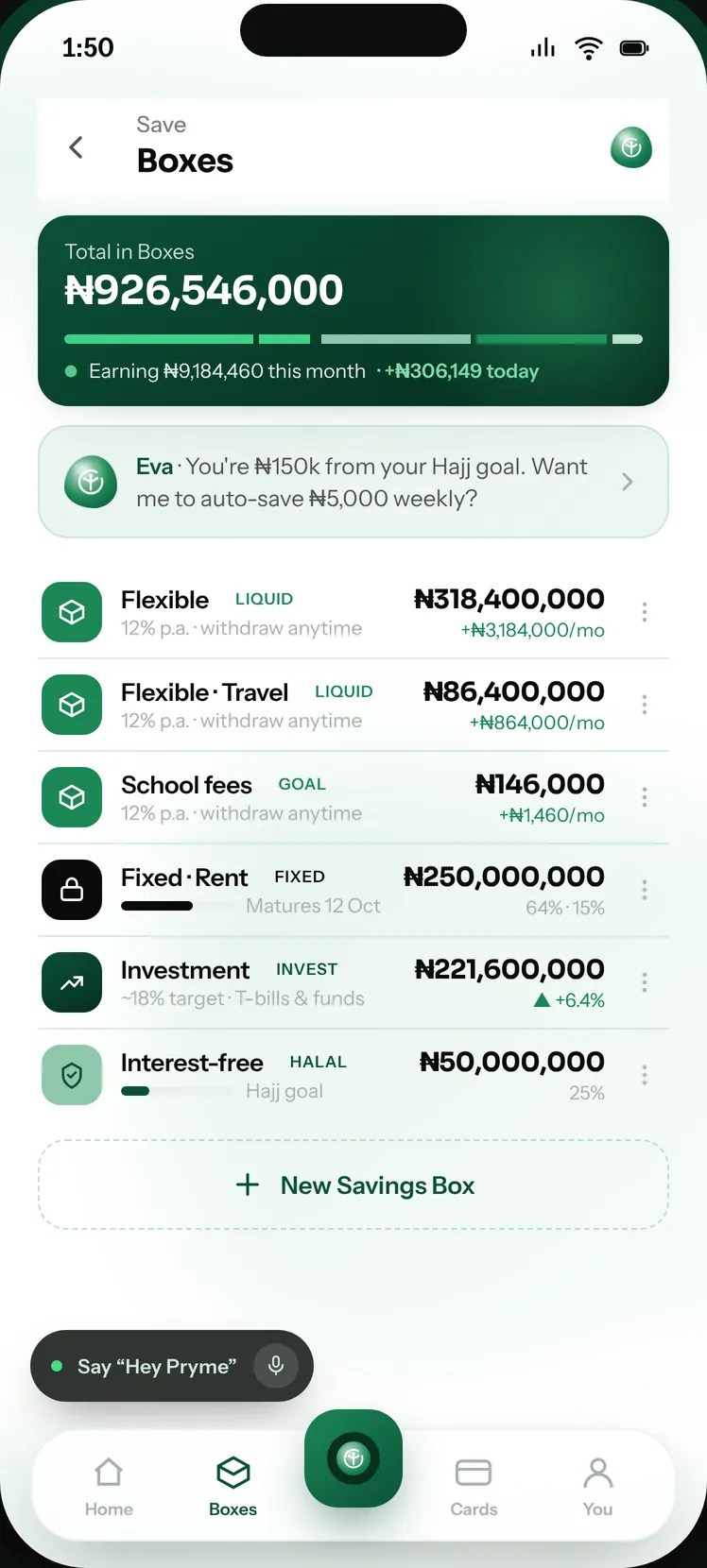
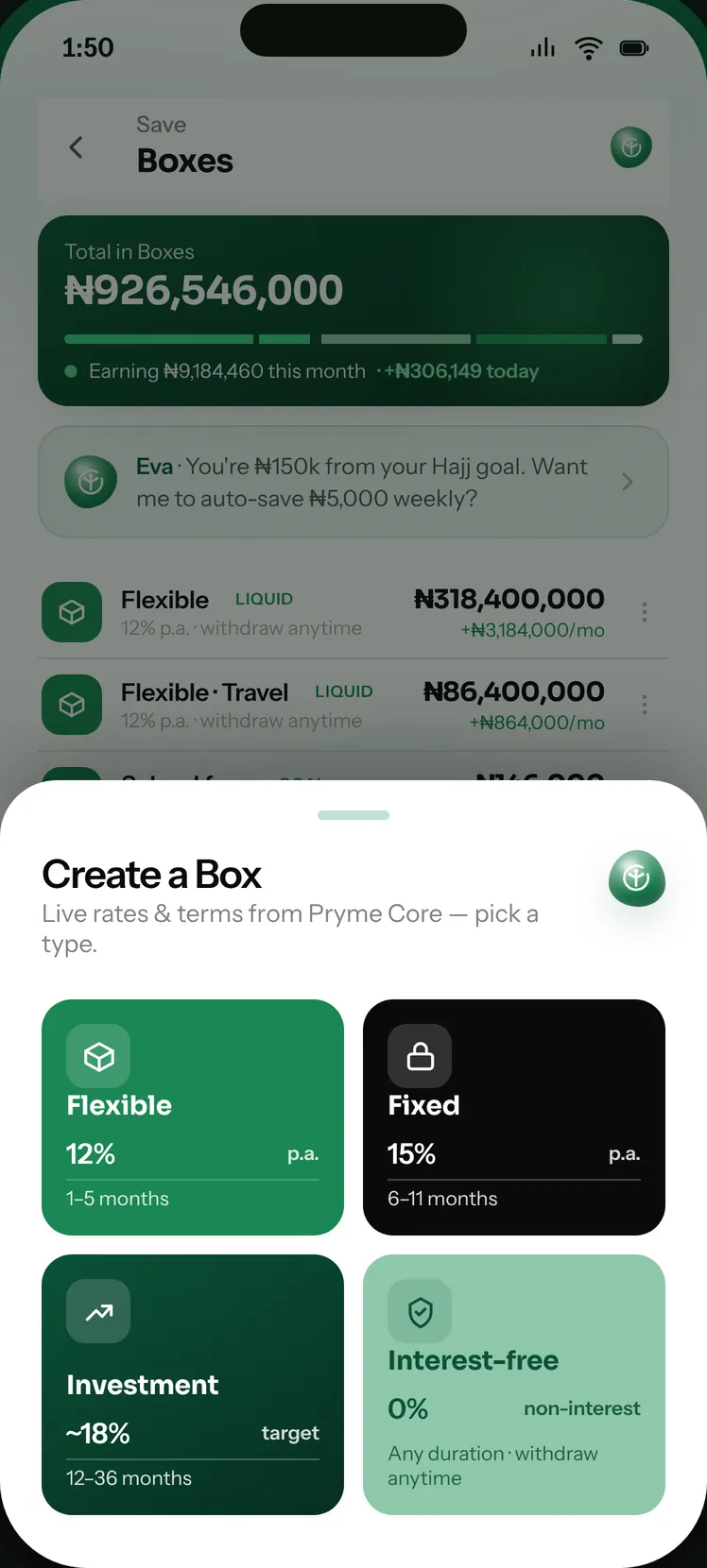
Savings Boxes are separate pots inside a Pryme account, held in Naira. Flexible Boxes can be withdrawn at any time, Fixed Boxes hold to a date, Investment Boxes hold for longer, and Interest-free Boxes earn nothing by design. A business can use them to ring-fence payroll and the tax it withholds, so that money cannot be spent by accident.
Pryme is a financial technology company, not a bank. Accounts and deposits are provided by Solid Allianze Microfinance Bank Limited, which is licensed by the Central Bank of Nigeria and is a member of the Nigeria Deposit Insurance Corporation.
Yes. Pryme Rails lets a platform issue a dedicated Naira account number to each of its own customers, collect into it and reconcile against it, over one API — the same rails the Pryme Business Account runs on.
Pryme is a financial technology company. It gives you one account that holds US dollars, pounds sterling and euros beside Naira, with an assistant that runs the account for you and asks before anything moves. Accounts are provided in Nigeria today, and further markets open as each licence lands.
Accounts are provided in Nigeria today, subject to verification and approval. Foreign-currency balances are held and converted inside that account, so you can hold, receive and swap dollars, pounds and euros wherever you are.
Naira, US dollars, pounds sterling and euros, side by side on one ledger. Each has its own details — a Nigerian account number, a US account number, a UK sort code and an IBAN for the euro area — and each has its own statement.
Swap at a rate you set rather than the rate of the day, then send to any Pryme username or to a Nigerian bank account. There is no fee to send to another Pryme account.
Eva is the assistant inside the Pryme app. She opens accounts, moves money, saves toward your goals, pays what is due and follows up what is owed to you — and asks you before anything moves.
Pryme Rails lets a platform issue a dedicated Naira account number to each of its own customers, collect into it and reconcile against it, over one API — the same rails the Pryme Business Account runs on.
Notes on money that does the work: what we are building, what the regulation actually says, and how we think about letting software act on money. Read the Ledger
What AI agents can do in bookkeeping, close, collections and compliance today, where a person must stay in charge, and how to judge a product.
How multi-currency business accounts work: local details vs SWIFT, payment rails, the real cost of FX, safeguarding vs deposit protection, and hedging.
How UK, US, Canadian and European firms pay Nigerian suppliers and get paid by Nigerian clients: FX, Form A and M, tax, compliance and payout routes.
What it really costs to send money to Nigeria from the UK, US, Canada and Europe: fees, exchange-rate margins, CBN naira rules, BVN, speed and scams.
What AI can and cannot do in day-to-day bookkeeping, how much time it saves on real numbers, and which jobs must stay with you or your accountant.
What we are building, what the regulation actually says, and how we think about letting software act on money.
All of All diasporaLife abroad, money first · 104 articles
When an ajo member collects the pot and stops paying, the group has a money claim. How to document it, recover it and keep the circle going.
How to set up an ajo or esusu among Nigerians abroad: written rules, records, payout order, defaults and the legal and tax questions to settle first.
Why banks and money transfer firms abroad ask Nigerian customers about transfers, source of funds and family, and how to answer clearly.
Why banks abroad close accounts linked to Nigeria, what notice and reasons they owe you, how to get your balance back and open a new account.
A simple split for a first salary abroad: costs first, a buffer next, home support as a fixed line, with a labelled example and the traps of month one.
Credit files start empty when you move. How they begin: secured cards, credit-builder loans, bills in your name, rent and utility data, and time.
How pay-later plans work, why they stack up for newcomers, what UK regulation from July 2026 changed, and how missed payments can mark a thin credit file.
Cash, a bank or credit union loan, or dealer finance: how newcomers with no credit file buy a car abroad, and how to spot the costly loans to avoid.
Whether insurers abroad recognise Nigerian driving experience and no-claims history, which documents to gather and how to present them to cut a premium.
Why banks ask about frequent cash deposits, the reporting thresholds in the US and Canada, why splitting deposits is a crime, and what records to keep.
Junior ISAs, 529 plans and RESPs compared for Nigerian parents abroad: limits, government top-ups, residence rules and what happens if you move.
How to budget for childcare abroad when grandparents are in Nigeria, the support schemes to check in the UK, US and Canada, and the eligibility traps.
The fees and extras to budget when applying for citizenship in the UK, Ireland or US: application, tests, ceremonies, documents from Nigeria.
Australia pays departing temporary residents their super; most countries keep pensions until retirement age. What to ask before you move on.
Which accounts to keep open for tax refunds, deposits and pensions when you leave a country, which to close, and the order that avoids lost money.
A co-signer can owe the full debt, late fees and collection costs, and carries the loan on their own credit file. What to check before you sign.
Why borrowing from an unlicensed lender in the diaspora community is risky, what protections you lose, and where to get help in the UK and elsewhere.
Fair ways for couples abroad to share rent and bills when one partner sends money to family in Nigeria: proportional splits, a family line and clear records.
How newcomers can get free credit reports, spot wrong addresses, mixed files and name mismatches, and dispute them with the bureaus and lenders.
The order to work in when a Nigerian dies abroad: death records, local banks and pensions, then Nigerian banks, RSAs and phone lines.
How debt consolidation loans work for newcomers with thin credit files, why a longer term can cost more, and the secured-loan and fee traps.
How to describe naira savings, land and business interests on visa, residence and citizenship forms, and why matching every past declaration matters most.
Whether a dependant partner can work changes the whole household budget and what you can send home. The UK, Canada and US rules, and how to plan.
Nigerian credit bureaus do not feed files in the UK, US or Canada. The narrow exceptions, how to use them, and which Nigerian debts still follow you.
NHIA schemes and HMO plans pay for care at accredited providers in Nigeria. What that means if you live abroad, travel, or insure parents at home.
Why migrants usually need a bigger emergency fund than locals: visa conditions, job-tied permits, flights home and family emergencies, with an example.
Banks abroad verify ID that is valid and current. Why an expired Nigerian passport can stall a KYC review, and how to renew at a mission in time.
A refusal soon after you arrive usually means a thin file, not a bad one. Why it happens, what not to do next, and the steps that help a file grow.
A cheap flat, an owner who is away, a deposit due today. The warning signs of rental scams, the checks to make, and what to do if you have already paid.
A money checklist for Nigerians who have just moved abroad: local account, tax number, credit file, emergency fund and Nigerian accounts kept alive.
How lenders treat visa length, time in the country, income currency and deposit size for migrant borrowers, with examples from UK and Canadian rules.
Income tax, social security and pension lines explained for a first job in the UK, US, Canada or Ireland, with a worked UK example you can check.
Who issues Nigeria's international driving permit, what the application needs, why no remote route is published, and what to do if you are already abroad.
How to get FRSC confirmation of a Nigerian driver's licence for a foreign authority: the online verification portal, mission letters, and what to ask for.
What a burial or cremation abroad costs compared with repatriating a body to Nigeria, which documents each needs, and who makes the decision.
What mortgage lenders abroad want when parents in Nigeria give you deposit money: the gift letter, the donor's statements and a clean transfer trail.
Delivery app pay is self-employed income in most countries. How it is taxed, what records to keep and the insurance gap riders often miss.
Choosing a guardian in Nigeria or abroad for your children, what moving a child home would involve, and how to record the choice so it takes effect.
Some provinces and countries make newcomers wait for public cover. Where the gaps are, what private cover excludes, and how to bridge them.
Visitors and residents are treated differently. The periods in the UK, Ireland, Ontario and Alberta, and how to check the rule wherever you live.
There is no official percentage. A working rule for setting what you send to Nigeria after essentials, an emergency fund and debt repayments.
How income protection pays a share of your salary if illness stops you working, and why migrants with family depending on them in Nigeria may need it more.
What financial evidence a host abroad usually gives when inviting a relative from Nigeria, country by country, and why the visitor's own ties still decide.
Fake recruiters, overpayment cheques and 'payment processor' roles: how job scams target Nigerians abroad, the checks to run and where to report.
A joint lease shares the rent liability, builds both renters' records and gives each of you address evidence. What changes if only one name is on it.
A loan to a friend, church member or fellow Nigerian abroad is still a loan. Written terms, a clean paper trail and realistic recovery options, in order.
Most life policies pay a cash sum, not a repatriation service. What to check in the wording, the exclusions, and naming beneficiaries who live in Nigeria.
Can a life policy bought abroad pay a beneficiary living in Nigeria? How nominations, trusts and executors work, and how the money actually reaches home.
How months in Nigeria can delay or break the residence you need for settlement or citizenship abroad, with UK, US and Canadian rules.
Many benefits abroad pause after a set time out of the country. The UK, US and Canadian limits, and why you must report the trip first.
What happens if a student lets someone use their account: closure, fraud markers lasting years, criminal charges and the risk to a visa.
Leaving one host country for another? What to close, what to keep open and what to transfer, with the official steps in the UK, Canada and Ireland.
Some landlords will read a Nigerian statement; most referencing checks will not. How referencing works, what helps, and when you need a guarantor.
Mortgage lenders abroad accept money that started in Nigeria, but they want a clear trail: months of statements, the transfer and a source for every large sum.
Town unions, alumni groups and state associations abroad handle real money. How to collect dues, open an account and keep records members trust.
How employers abroad check Nigerian degrees: university verification, credential evaluators such as WES and UK ENIC, the fees they publish and timelines.
What a reference from a Nigerian employer should contain, how employers and screening firms abroad verify it, and why weak references stall job offers.
How a Nigerian court judgment can follow a debtor abroad, why the UK has a specific registration route for Nigerian judgments, and what lenders usually do first.
How to get copies of Nigerian hospital records and immunisation cards before or after you move, and what GPs, clinics and schools abroad will do with them.
Banks abroad generally accept a valid Nigerian passport as photo ID, but often want proof of residence status and address alongside it. What to bring.
What MTN and Airtel charge to roam, what a keep-my-number plan costs, and why getting a Nigerian eSIM usually means a shop visit.
How to ask a Nigerian motor insurer for a no-claims letter from abroad, what it must show for insurers overseas and when it is likely to be accepted.
Landlords abroad often want a local guarantor a newcomer cannot supply. Guarantor services, larger deposits and rent in advance, and the limits on each.
Nigerian law has no automatic shared marital property. Title, proof of contribution and a valid will decide what a foreign spouse can claim.
How an employer or evaluator abroad can confirm an NYSC discharge or exemption certificate, what NYSC charges, and how to make the check go quickly.
When separate wills for Nigerian property and assets abroad make sense, the revocation clause that can cancel one, and how to keep both working.
No permanent address yet, but you need an account for your salary. The routes newcomers use, what banks typically accept, and the rules on refusal.
Opting out frees cash to send home but gives up your employer's contribution and tax relief. The trade-off in numbers, with UK and Irish rules.
How overdraft interest and payday fees add up, what the UK price cap and US fee practice mean in money, and labelled examples of the true cost.
New arrivals are often put on emergency tax because payroll lacks their details. Why it happens in the UK, Ireland and US, and how the money comes back.
The real cost of a parent's visit from Nigeria: visa and biometrics fees, flights, medical cover, and the extra household spending most hosts forget.
Paying six or twelve months' rent in advance is common for Nigerians abroad. The receipts, deposit protection and contract terms that keep it safe.
How politically exposed person rules apply to spouses, children and parents of Nigerian officials opening accounts abroad, using UK law as the example.
New arrivals are often refused a handset contract. Prepaid, SIM-only plans and deposits get you connected while you build a local credit file.
Banks and licensing offices ask for proof of address before you have any. What typically counts, and the quickest ways to get your first document.
No payslips? The documents landlords and lenders accept from the self-employed, why two years matters, and what to offer when you are new.
Many benefit systems count property you own abroad as capital. How the UK and US rules work, why a house in Nigeria must be declared, and what to ask.
Why many countries ban charging care workers recruitment fees, what UK rules say about agencies and sponsors, and what to do if you already paid.
Accounts to keep or close, pensions, tax exit steps, residence status and moving your money into naira before you return to Nigeria for good.
How repayment clauses for visa and relocation costs work, which sponsor costs UK employers may never recover, and when a clawback may be unenforceable.
You can start renewal online, but the FRSC requires biometric capture in person and does not accept proxies. The options for someone living abroad.
How landlords and agents test rent against income, where the test is not allowed, and the options when a new salary falls short.
The exam, evaluation and registration fees Nigerian doctors, nurses and pharmacists face in the UK, Canada and US, and how to plan the cash.
How to order a Nigerian transcript from abroad: university portals, naira fees as published, official versus student copies, courier routes and delays.
How a foreign pension behaves once you move to Nigeria, what tax residence means, and why healthcare costs often decide the question.
How Nigeria Customs treats used personal and household effects for returning Nigerians: the nine-month rule, why vehicles are dutiable and the papers to prepare.
How to split income between a deposit abroad and family support, use LISA or FHSA bonuses, and avoid deposit sources lenders reject.
Sponsored and employer-specific visas often limit extra work. The UK and Canadian rules, and the checks to make before saying yes.
You pay a deposit, it sets your limit, and your payments build a credit file. How secured cards work, what to ask before applying, and the traps to avoid.
How to record a rental's condition, what landlords can deduct, and how to dispute deductions through official schemes in the UK, Canada and Ireland.
Remittances themselves are not reported to credit bureaus abroad. How you fund them can be: a credit card transfer may count as a cash advance and raise your balance.
How work visas in the UK, US and Canada limit second jobs and self-employment, the status risk if you break the conditions, and what to check first.
What income evidence UK, Canadian and US family visa sponsors are asked for, the thresholds that apply, and the mistakes that get applications refused.
How to plan cash for the months between your course ending and a work visa or first salary, with UK, Canada and US rules and a worked budget.
UK, US, Canada, Ireland and Australia cap student work in term time. What the caps mean for income and for family who expect support from you.
How fake room listings and illegal sublets catch newcomers, the warning signs regulators list, and the checks to make before paying anything.
Practical ways to see naira and pounds, dollars or euros in one view: a base currency, a fixed budgeting rate, separate categories for home and abroad, and monthly reviews.
Government advice against travel to parts of Nigeria can void cover. How to read your policy against FCDO, Canadian and US advisories before you fly.
What happens to a Nigerian loan you stop paying after relocating: credit bureau records, account debits through your BVN, guarantors at home and court action.
Why newcomers are declined or offered high rates for personal loans, how searches affect your file, and what improves the odds.
How to build a monthly sinking fund for large future visa, settlement and residency fees for a whole family, with UK, Canada and US fee examples.
Why visitor medical cover for elderly parents often excludes existing conditions, what that means if they fall ill abroad, and what to check before buying.
How WAEC confirms a result for a college or employer abroad: the online Verify service, paper confirmation, the fees WAEC lists and what goes wrong.
Leave it invested, transfer it, or draw it from Lagos later? How workplace pensions abroad usually work for Nigerians who might move home.
You can add the other type later — many of our customers hold both.
The business first, then you. Nothing is submitted until you review it.
Ideal customer profiles
Generated from your website by VerifiedLead.ai
Pick the ones that look right. Your Sales agent works these first, and you can change them at any time after opening.
We ask this because you have not given us a website. It helps us set the right limits from day one.
Which of these represents you?
Officers listed against this company on the UK register.
We have sent a six-digit code to your email address. Enter it below to confirm the address is yours.
Wrong address? Go back and change it — nothing is created until this step passes. We never ask for a code by phone or email; anyone who does is not us.
Last step. Each time you sign in we email you a six-digit code — we never send codes by SMS.