AI agents for business finance: what they can and can't do
What AI agents can do in bookkeeping, close, collections and compliance today, where a person must stay in charge, and how to judge a product.
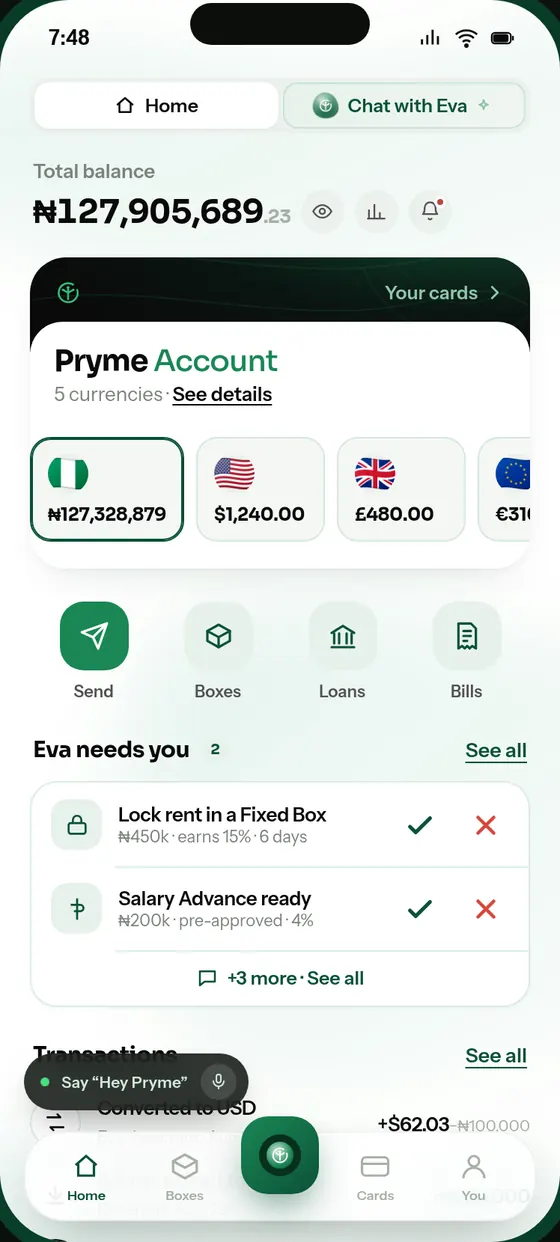
Meet Eva, the assistant inside the Pryme app. She opens accounts, moves money, saves toward your goals and follows up. Nothing leaves your account without your approval.
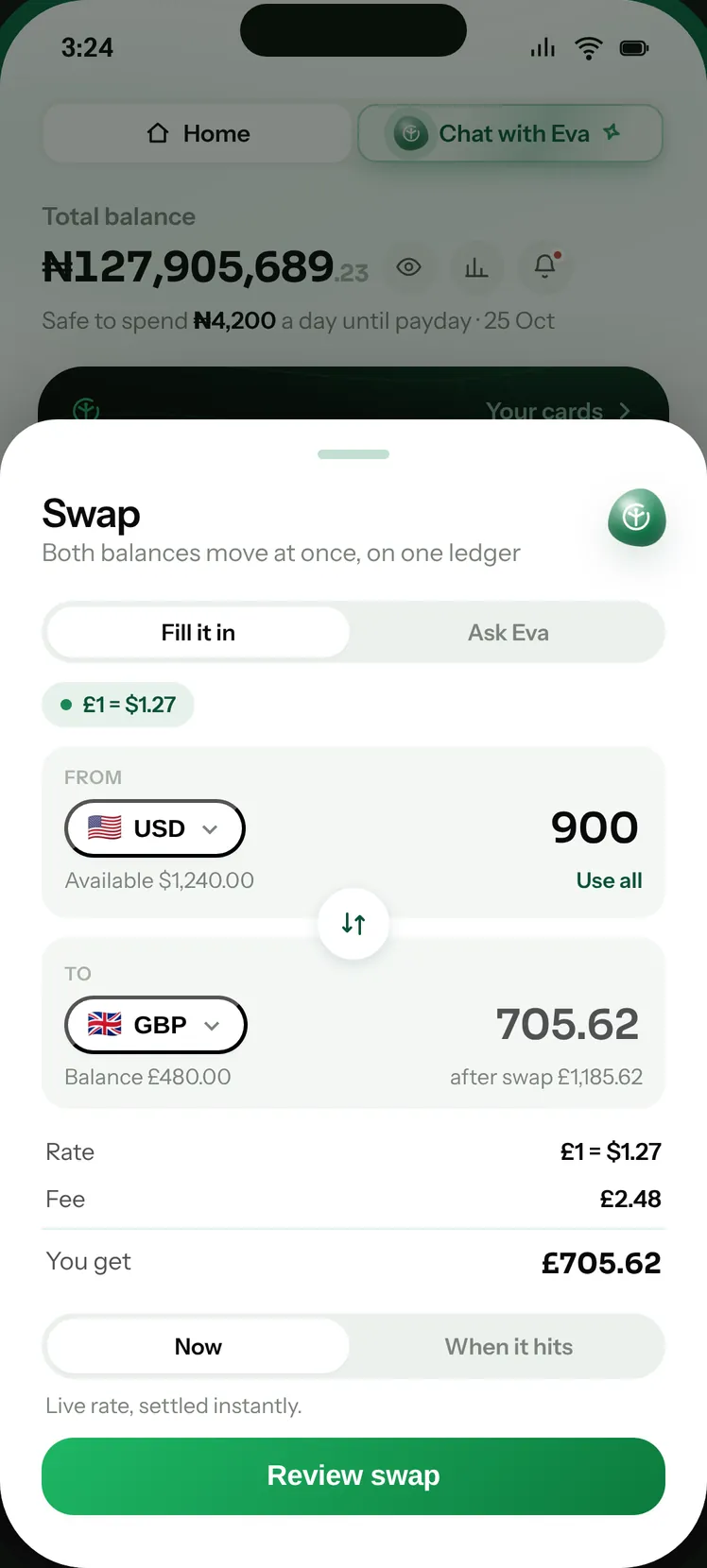
Meet Eva, the assistant inside the Pryme app. She holds dollars, pounds, euros and Naira side by side, swaps at a locked rate, pays bills in any of them and sends anywhere, asking before anything moves.
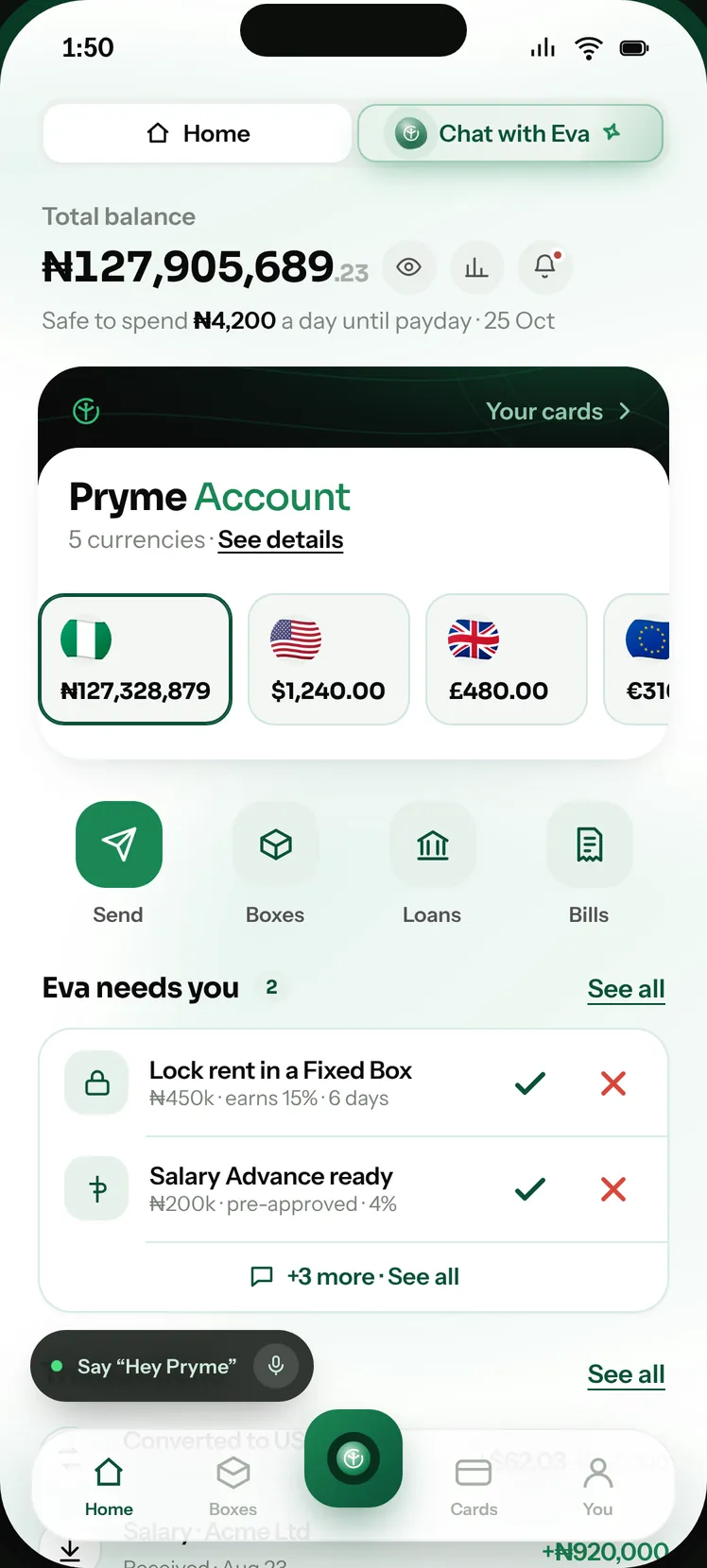
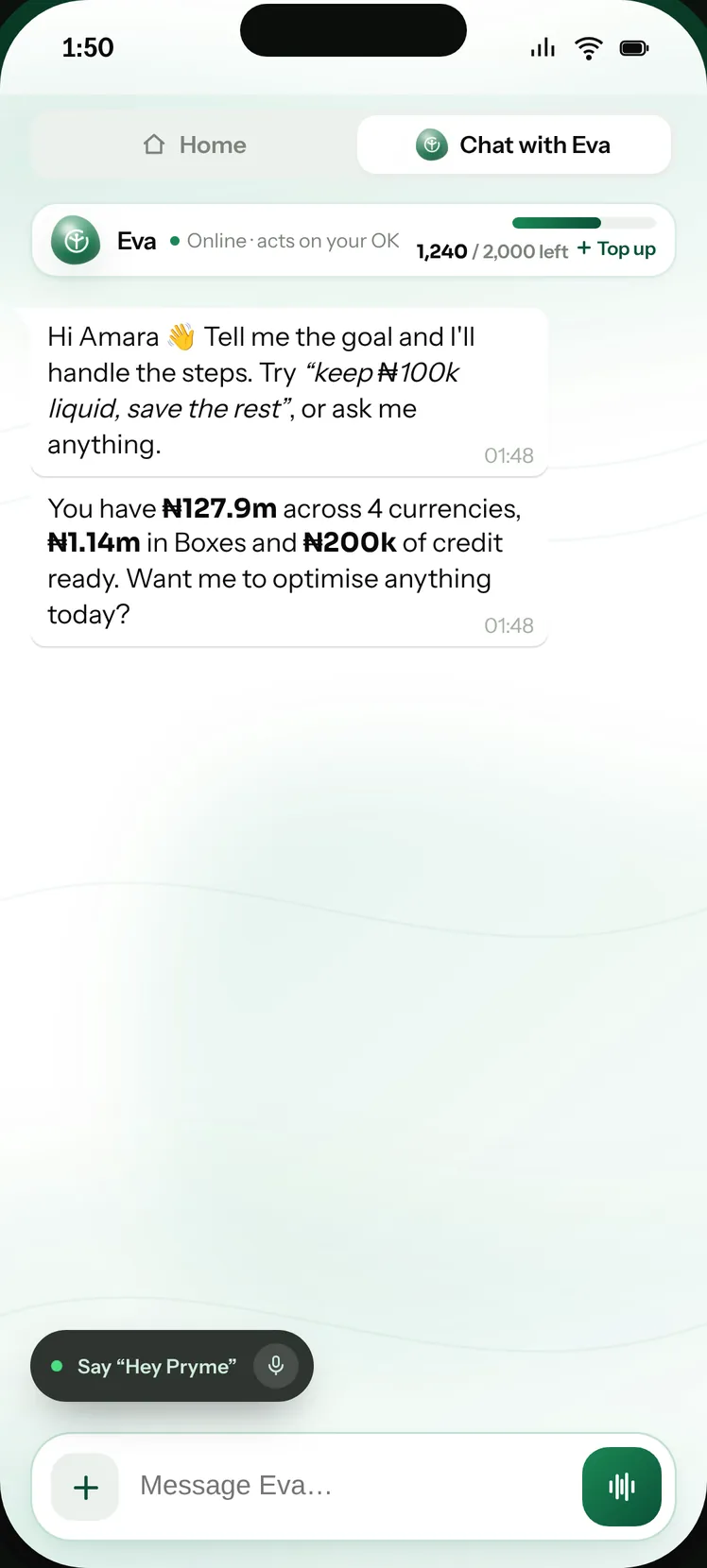
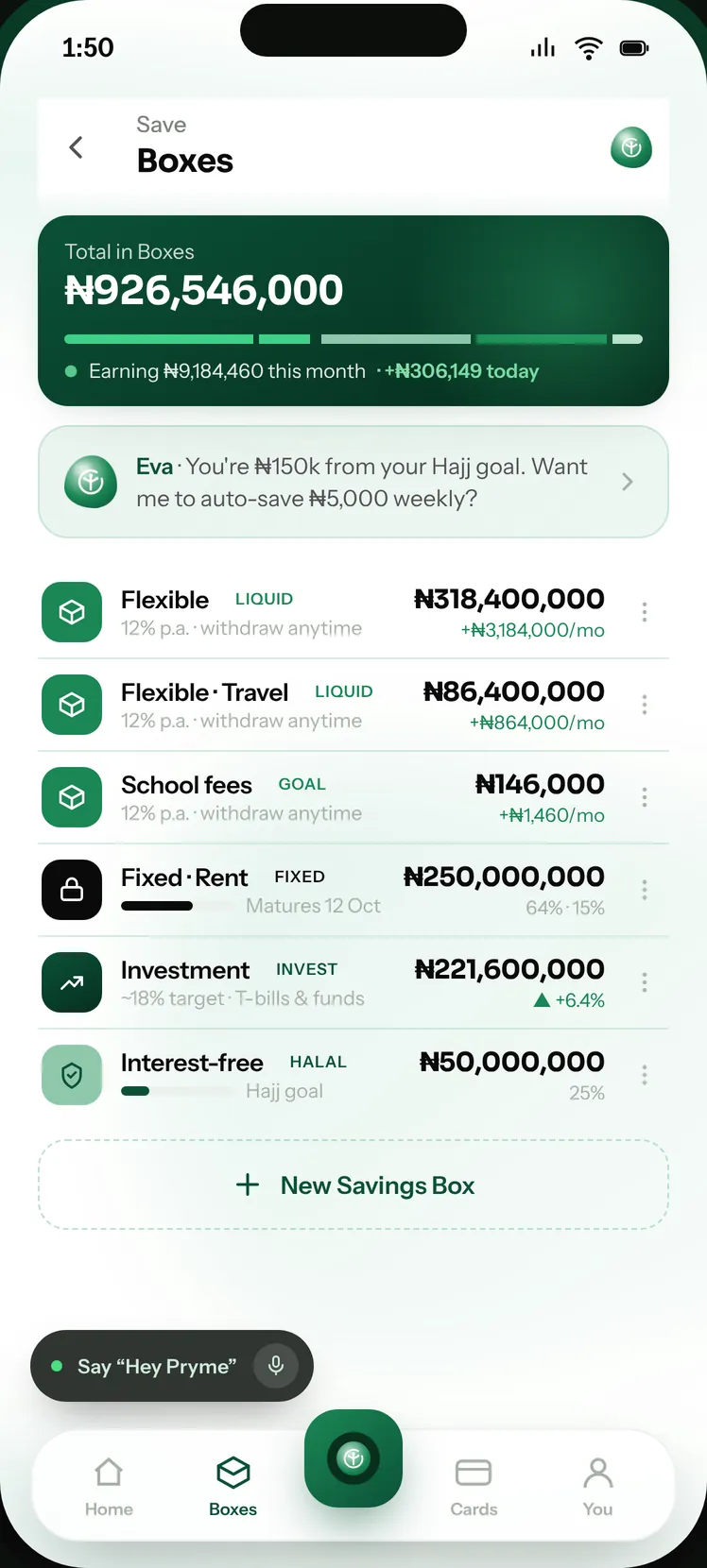
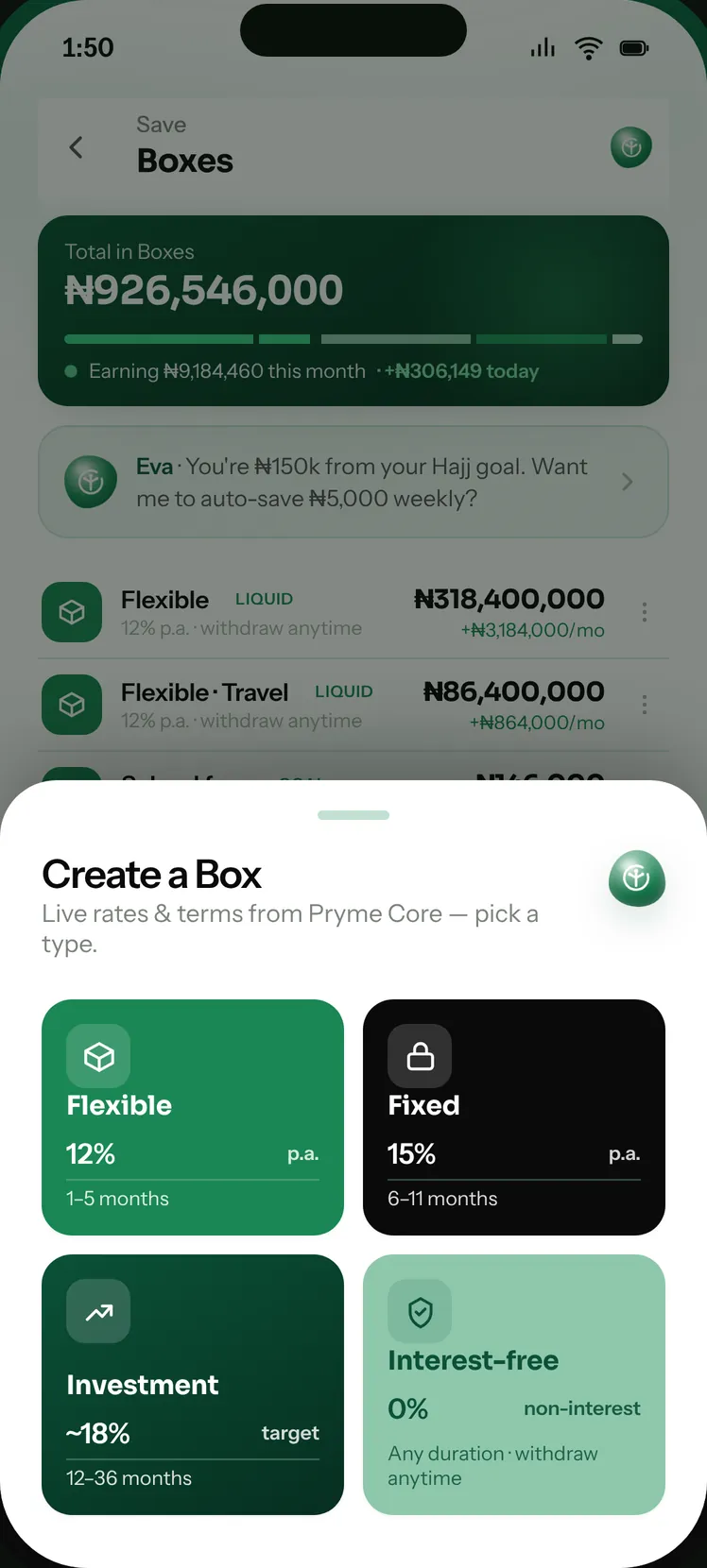
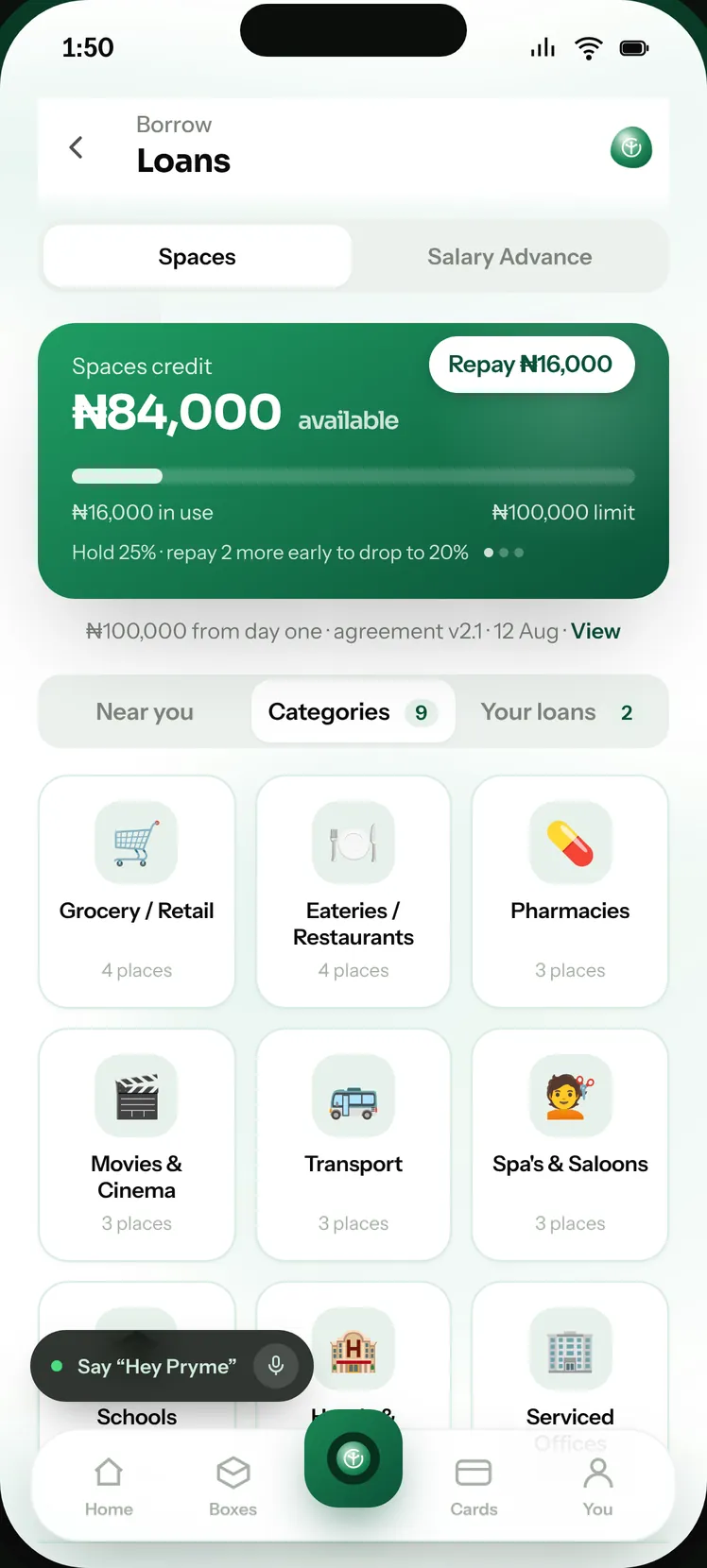
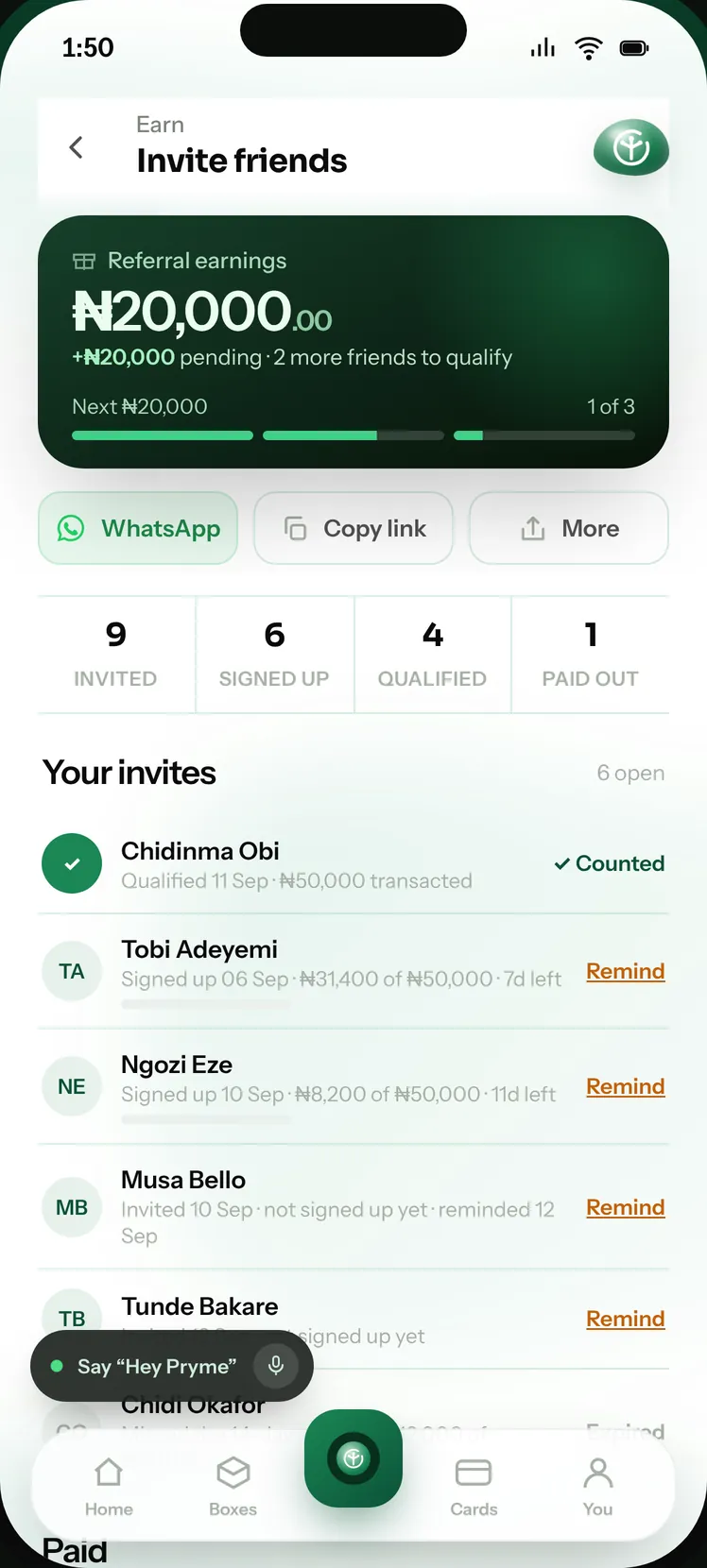
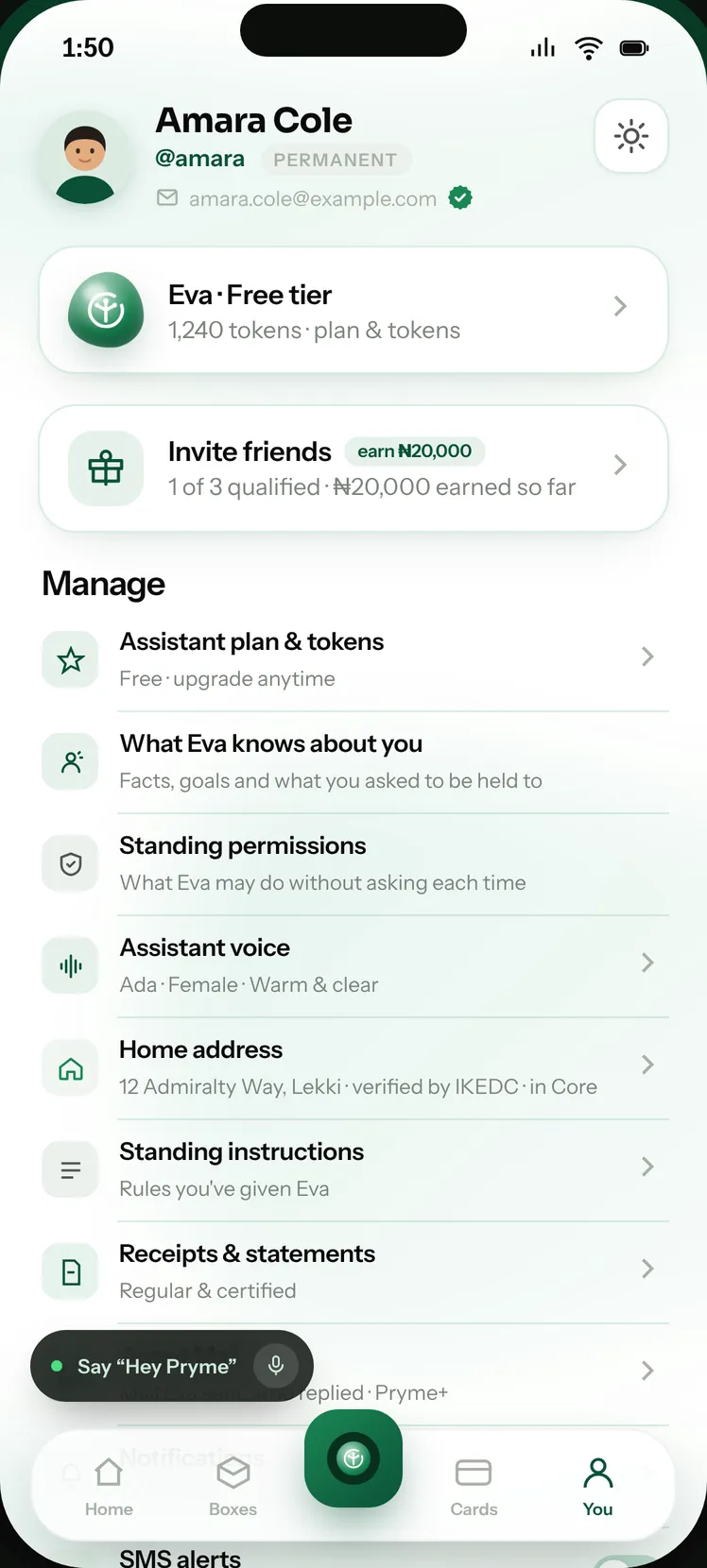
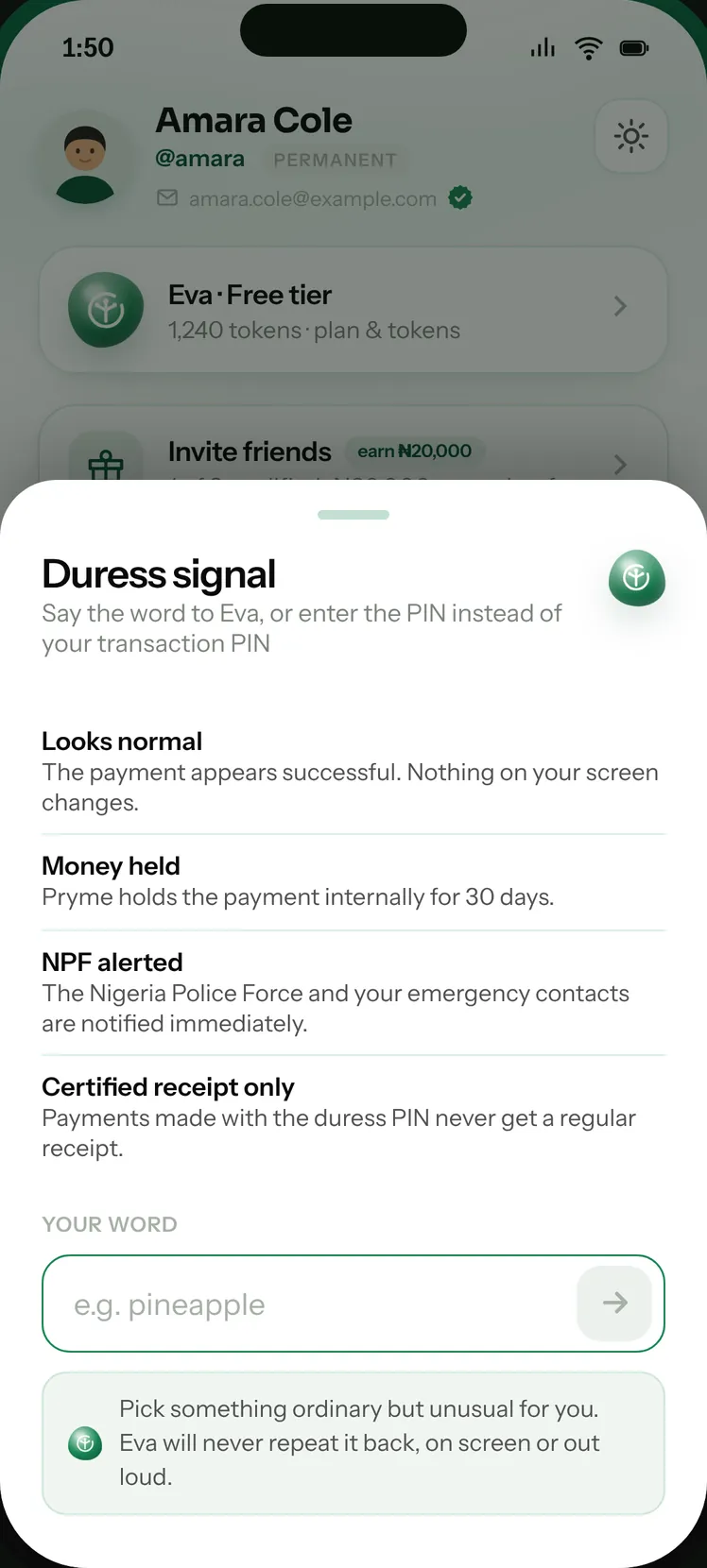
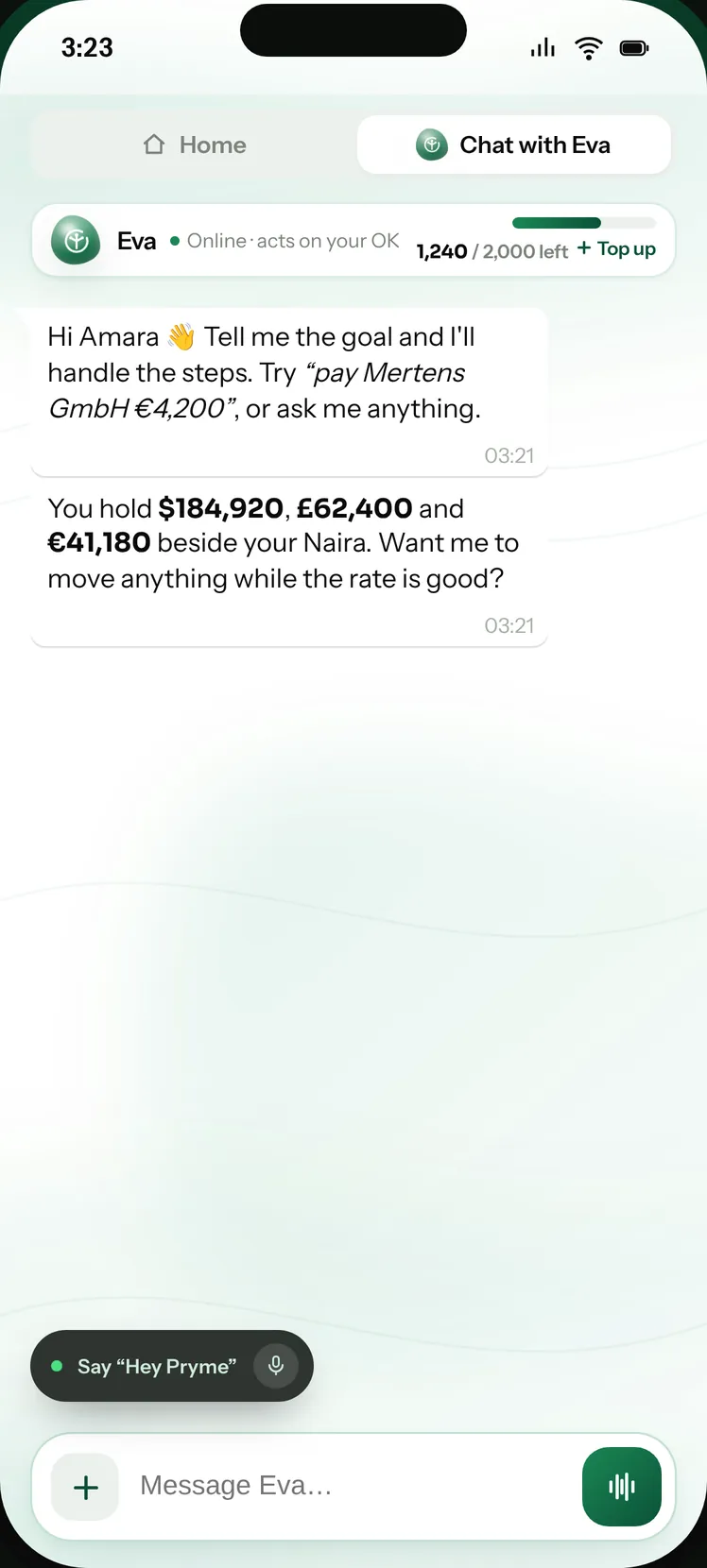
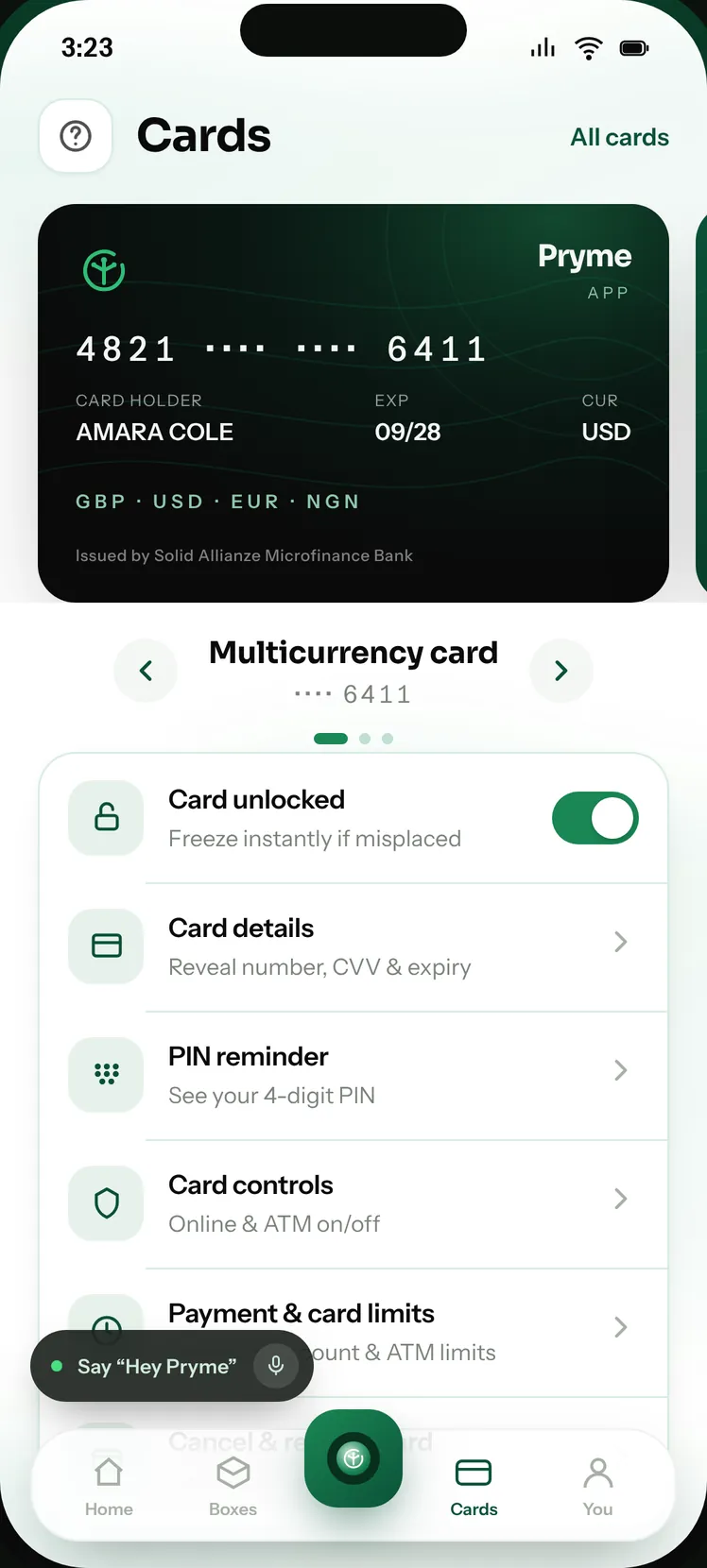
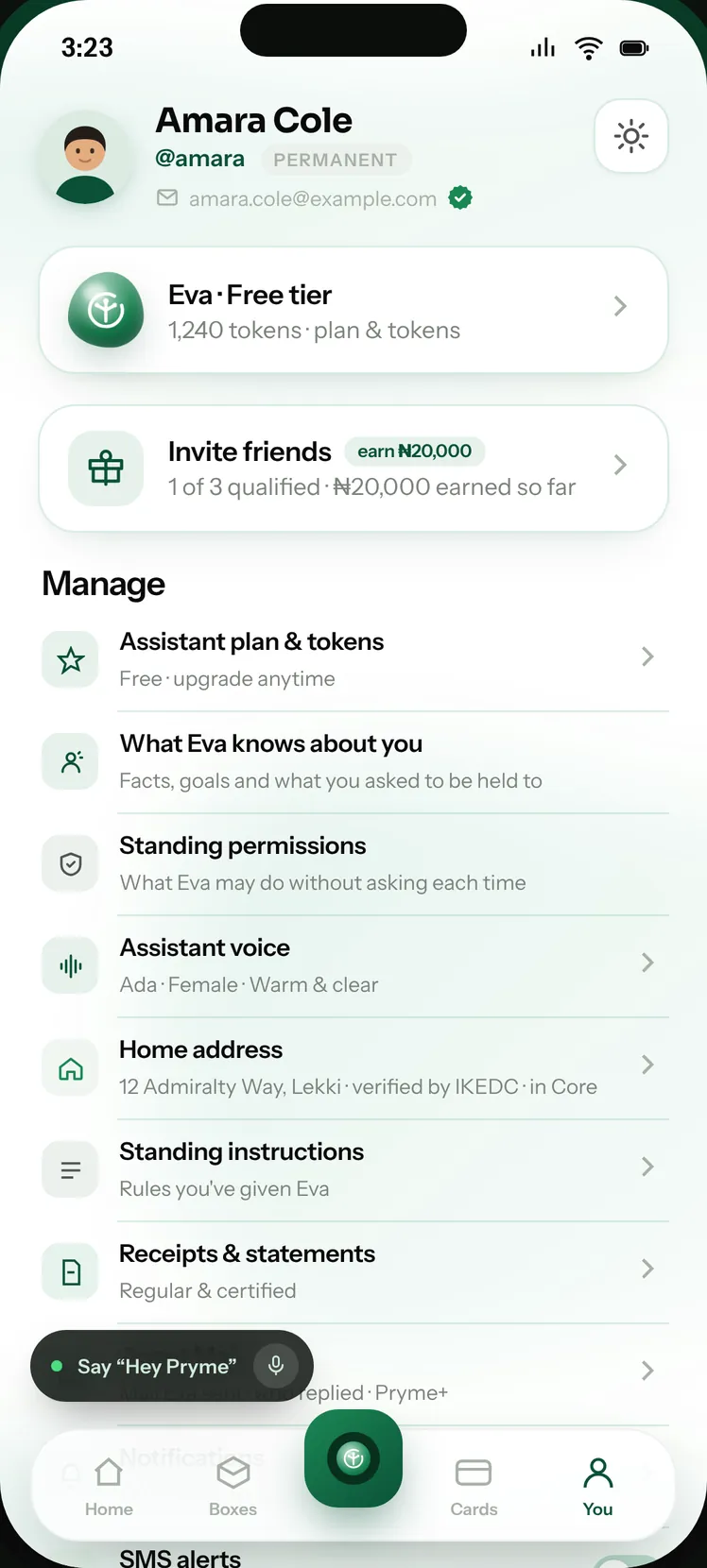
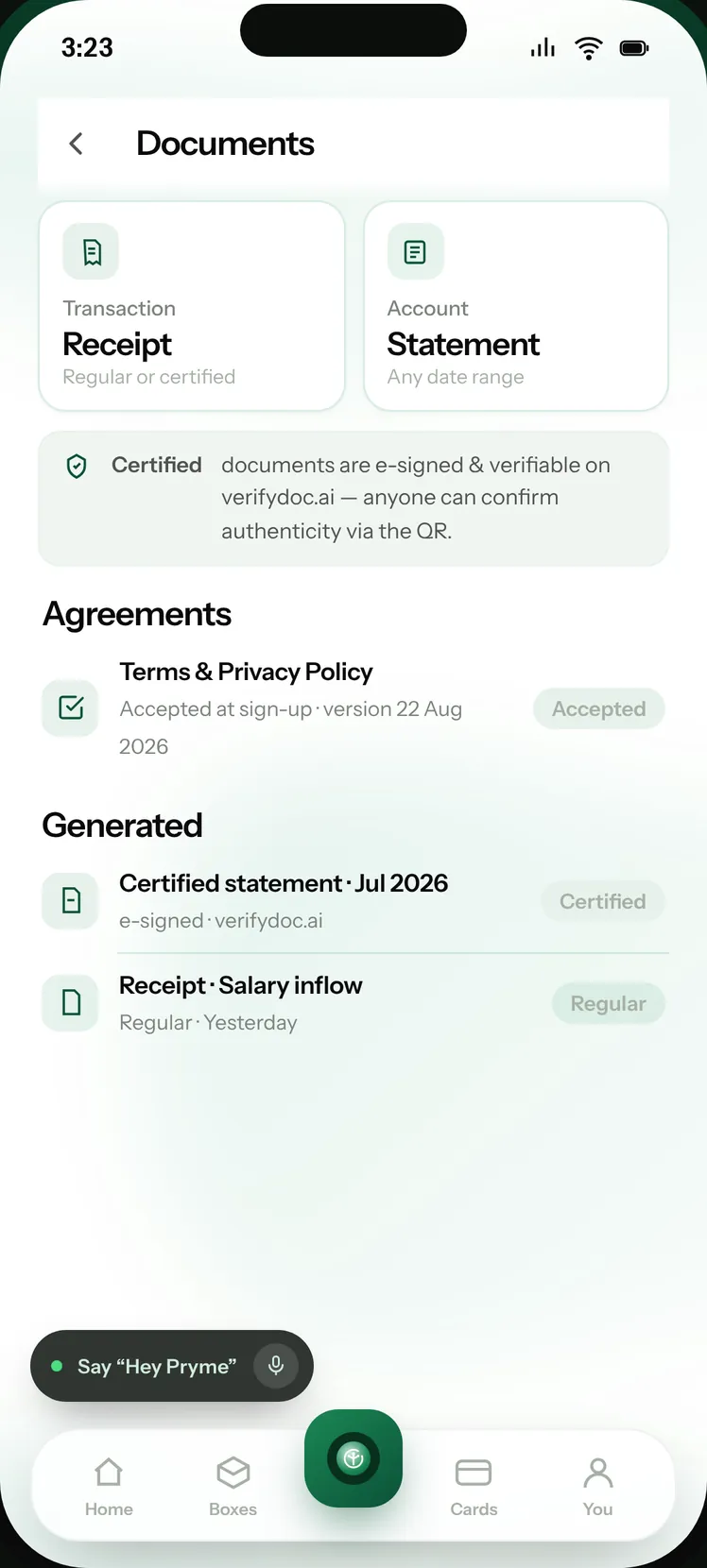
We give you a limit to spend at the shops and services you already use — and an account that works on your month while you get on with it. Dollars, pounds and euros sit beside your Naira, and an assistant handles the running of it, asking you first every single time.
One global account for your money and business. Move across currencies, automate everyday operations and put AI agents to work — with you in control of every important decision.



 Evayour assistant
 DanielChief of Staff
 BenFinance
 BruceCare
Your competitor down the road sells the same thing you sell. The difference is who walks in. We put money in people’s hands that can only be spent in businesses like yours — and then we point them at you.
You are not borrowing. You are selling to somebody who already has the money — and that money can only be spent with a business like yours.
₦100,000 from day one · agreement v2.1 · 12 Aug · View
Eva waits for your rate and asks before she moves anything.
No card, no OTP, nothing for the buyer to type in. They transfer from the bank app they already use, and the money lands in the same account your agents are running — already matched to the order, already in your books.
We give the buyer a one-time account number. They transfer to it from any bank app or by USSD — no card, no OTP, nothing to type in.
Get the account numberTo this account, from any bank app. We watch it, and the page updates itself.
₦26,767.50 from GTBank · John D., matched to order ORD‑1042.
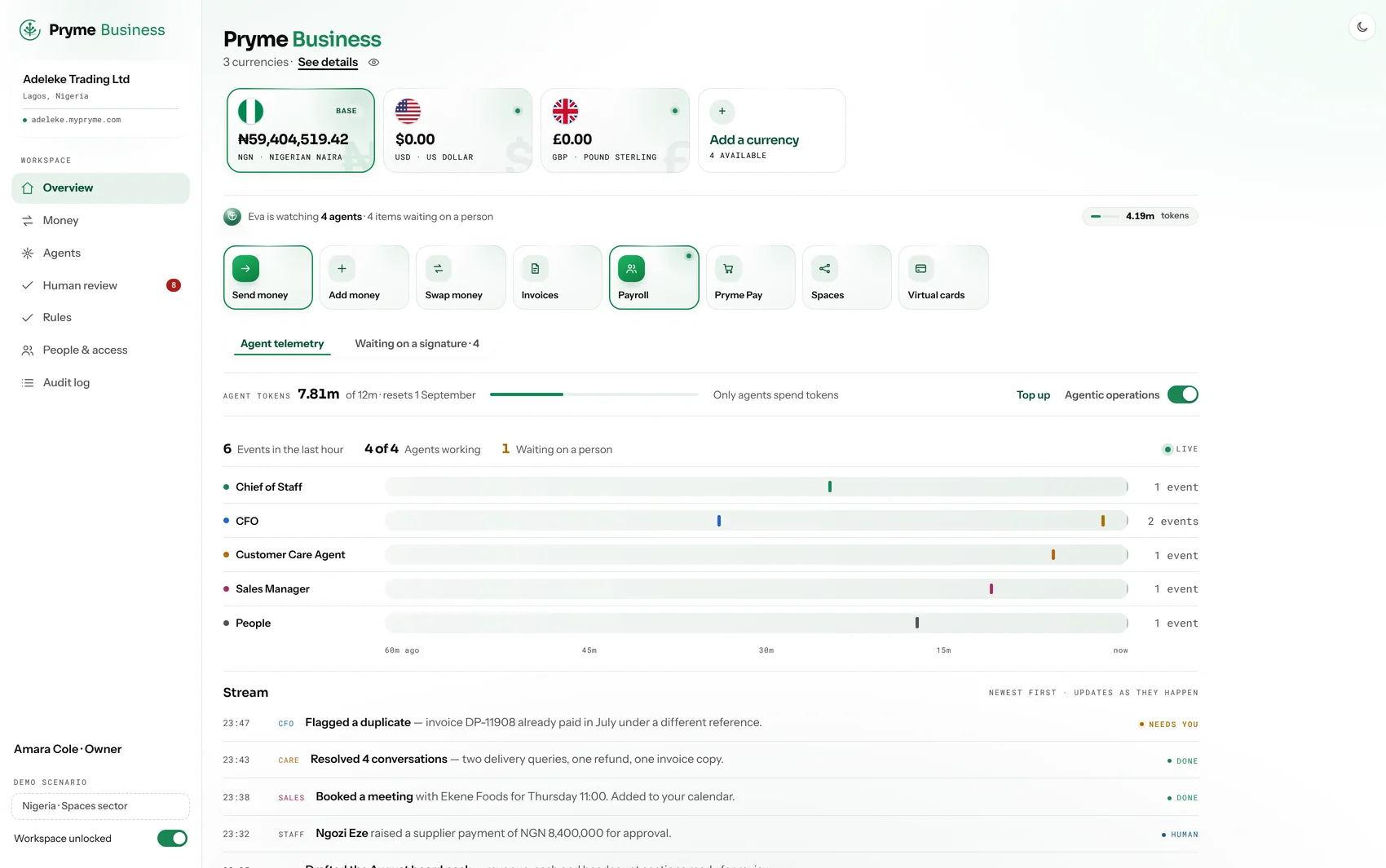
Five agents come with the account. Each one has a job description, a budget and a ceiling you set. They do the work and bring it to you — nothing leaves the account without your signature.
Knows what is stuck, who is waiting and what you promised — and keeps all three moving.
Booked a meeting with John Doe Foods for Thursday 11:00.Keeps the books as you trade and tells you the moment something does not add up.
Flagged a duplicate — invoice DP‑11908 was already paid in July.Holds every filing to its own clock and screens names and payments against your policy — and logs what it refuses.
Screened 412 payments overnight and refused two of them.Goes back to the buyers who went quiet, with the receipt already attached.
Recovered ₦410,000 across three overdue invoices.Replies, follows up on what they asked for and hands you only the ones that need you.
Resolved 4 conversations — two deliveries, one refund.Issue a dedicated Naira account number to each of your own customers, collect into it and reconcile against it. The same rails the Business Account runs on, with the licence behind them.
Dollars, pounds and euros beside a Naira account, on one ledger and one set of books. Five agents come with it and run the account — nothing leaves without your signature.
Five agents come with the account. Each has a job description, a budget and a ceiling you set. They do the work and bring it to you — they propose, you approve.
Knows what is stuck, who is waiting and what you promised, and keeps all three moving.
Booked the quarterly review with your auditor for Thursday.Keeps the books in every currency you hold and flags the moment something does not add up.
Flagged a duplicate — invoice DP‑11908 was already paid in July.Holds every filing to its own clock and screens names and payments against your policy — and logs what it refuses.
Screened 412 payments overnight and refused two of them.Goes back to the buyers who went quiet, with the invoice and the receipt already attached.
Recovered $12,400 across three overdue invoices.Replies, follows up on what they asked for and hands you only the ones that need you.
Resolved 4 conversations — two deliveries, one refund.The business has changed shape four times and never changed what it was rooted in. Each version was built out of what the last one could not do.
An online grocery store, built out of a faulty tab. Selling the food was the easy part — taking the money for it, and moving it, turned out to be the business.
A prepaid card. The first time the company issued rather than resold, and the first time it carried the obligations that come with holding somebody else’s money.
Solid Allianze acquired — an existing bank with an existing licence. The perimeter stopped being someone else’s to draw.
More than one currency on one balance, and the rebrand to Pryme. A Nigerian business could hold dollars without holding a second institution.
Accounts that do the work rather than only hold value. Five agents on the account, inside a policy you write — which is where the new mark starts.
Pryme is a financial technology company. It gives people and businesses in Nigeria one account that holds Naira alongside dollars, pounds and euros, and a set of agents that do the running of it — keeping the books, chasing what is owed, answering customers and paying bills. Nothing leaves an account without the owner’s approval.
Yes. A Pryme account holds Naira, US dollars, pounds sterling and euros side by side on one ledger, each with its own account details — a Nigerian account number, a US account number, a UK sort code and an IBAN for the euro area. You can swap between them at a rate you set, and every currency has its own statement.
Spaces is available in Nigeria. It gives a shopper money to spend that can only be spent with a participating business. The business is paid into its Naira account whether or not the shopper repays, because Pryme carries the credit. For the business it is free to join, there is nothing monthly, and the customer’s identity is never shown — only a reference and what it is worth.
Five agents come with the account. The Chief of Staff runs the week and keeps what is stuck moving. Finance watches the money and keeps the books as you trade. Compliance keeps the filings on time and screens what moves. Sales chases what you are owed. Customer Support answers your customers and follows up. Each has a job description, a budget and a ceiling you set, and each one proposes rather than acts — nothing leaves the account without your signature.
Pryme Pay takes payments on your own site or on a checkout page you control. The buyer is given a one-time account number and transfers to it from any bank app or by USSD — no card, no OTP, nothing to type in. The money lands in the same account your agents are running, already matched to the order and already in your books.
Savings Boxes are separate pots inside a Pryme account, held in Naira. Flexible Boxes can be withdrawn at any time, Fixed Boxes hold to a date, Investment Boxes hold for longer, and Interest-free Boxes earn nothing by design. A business can use them to ring-fence payroll and the tax it withholds, so that money cannot be spent by accident.
Pryme is a financial technology company, not a bank. Accounts and deposits are provided by Solid Allianze Microfinance Bank Limited, which is licensed by the Central Bank of Nigeria and is a member of the Nigeria Deposit Insurance Corporation.
Yes. Pryme Rails lets a platform issue a dedicated Naira account number to each of its own customers, collect into it and reconcile against it, over one API — the same rails the Pryme Business Account runs on.
Pryme is a financial technology company. It gives you one account that holds US dollars, pounds sterling and euros beside Naira, with an assistant that runs the account for you and asks before anything moves. Accounts are provided in Nigeria today, and further markets open as each licence lands.
Accounts are provided in Nigeria today, subject to verification and approval. Foreign-currency balances are held and converted inside that account, so you can hold, receive and swap dollars, pounds and euros wherever you are.
Naira, US dollars, pounds sterling and euros, side by side on one ledger. Each has its own details — a Nigerian account number, a US account number, a UK sort code and an IBAN for the euro area — and each has its own statement.
Swap at a rate you set rather than the rate of the day, then send to any Pryme username or to a Nigerian bank account. There is no fee to send to another Pryme account.
Eva is the assistant inside the Pryme app. She opens accounts, moves money, saves toward your goals, pays what is due and follows up what is owed to you — and asks you before anything moves.
Pryme Rails lets a platform issue a dedicated Naira account number to each of its own customers, collect into it and reconcile against it, over one API — the same rails the Pryme Business Account runs on.
Notes on money that does the work: what we are building, what the regulation actually says, and how we think about letting software act on money. Read the Ledger
What AI agents can do in bookkeeping, close, collections and compliance today, where a person must stay in charge, and how to judge a product.
How multi-currency business accounts work: local details vs SWIFT, payment rails, the real cost of FX, safeguarding vs deposit protection, and hedging.
How UK, US, Canadian and European firms pay Nigerian suppliers and get paid by Nigerian clients: FX, Form A and M, tax, compliance and payout routes.
What it really costs to send money to Nigeria from the UK, US, Canada and Europe: fees, exchange-rate margins, CBN naira rules, BVN, speed and scams.
What AI can and cannot do in day-to-day bookkeeping, how much time it saves on real numbers, and which jobs must stay with you or your accountant.
What we are building, what the regulation actually says, and how we think about letting software act on money.
Follow The Ledger by RSSNew articles as they are published. There is no mailing list yet.
Using Loans on Spaces for cinema trips in Abuja: film ratings from the Abuja-based NFVCB, the tax on snacks, and a family night budget that holds.
How to work out and cut the cost of commuting into Abuja from Kubwa, Lugbe, Nyanya or Gwagwalada: taxis, buses, ride-hail, light rail and driving.
Using Loans on Spaces at Abuja eateries and restaurants: the FCT consumption tax on your bill, office lunches in the CBD, and when credit makes sense.
Plan Christmas and Sallah spending in Abuja: market timing in Wuse, Garki and Utako, travel home, rams and hampers, and where credit does or does not fit.
How Abuja households can use Loans on Spaces for groceries, from Wuse and Garki markets to Kubwa and Lugbe, and keep the monthly shop under control.
How Abuja residents can plan for health costs: the FCT Health Insurance Scheme, general hospitals and PHCs, pharmacy spending and an emergency fund.
Using Loans on Spaces for hotel and shortlet stays in Abuja: the 5% FCT consumption tax, caution deposits, safe booking and repaying on time.
How Abuja residents can use Loans on Spaces at community pharmacies, check a pharmacy is registered, and fit medicines around FHIS cover.
How Abuja tenants can prepare for rent renewal or a move: advance rent, notice rules under the Recovery of Premises Act, fees, AEDC meters and the squeeze.
How to use Loans on Spaces at Abuja salons, barbers and spas, plan for wedding and Sallah season, and keep grooming spending within a fixed amount.
Abuja parents: how Loans on Spaces works for fees at Spaces schools, how to check FCTA accreditation, and how to time repayment around the term.
A checklist of resumption costs for Abuja parents: fees, uniforms, books, school bus and rainy-season kit, plus how to check a school's FCTA approval.
Freelancers and consultants in Abuja: using Loans on Spaces for a desk or serviced office in the CBD, Wuse 2 or Jabi, and checking power and terms.
Which Abuja journeys can go on Loans on Spaces: registered taxis, bus operators and interstate trips, plus FCTA rules on okada and unpainted cars.
Plan a weekend out in Abuja without overspending: parks and Jabi Lake, eating out with the FCT tax, cinema and transport from satellite towns.
A district-by-district look at where customers move in Abuja, from Wuse Market to Kubwa junctions, and how to choose or work a location.
Paydays, the rainy season, harmattan, school terms, Sallah and December: how the Abuja year shifts demand, and how to plan stock and staff.
Abuja cinemas and venues face long commutes, quiet weekdays and rainy evenings. A plan for each, and how Spaces brings paying audiences.
How a small Abuja business holds its own against malls, big chains, market traders and online sellers, with a plan for each rival.
How Abuja supermarkets and mini-marts compete with Wuse and Garki markets, estate shops and big stores, and where Spaces fits in.
Recruiting cashiers, stylists, waiters and drivers in Abuja: commute realities, the ₦70,000 minimum wage, training and retaining good people.
Abuja hotels and shortlets live on official and business travel. How to win corporate guests, fill weekends and use Spaces to reach guests.
Practical, low-cost ways to market a small business in Abuja: estates, offices, commuter routes and opt-in lists that respect the NDPA.
Abuja pharmacies win on trust, reliable stock and proximity. A practical guide for community pharmacies in estates and satellite towns.
How Abuja private schools attract and keep parents: FCT accreditation as a trust signal, enrolment timing, fee flexibility and Spaces.
Abuja eateries live on office lunches, weekend outings and event nights. How to plan for each crowd, and how Spaces adds paying diners.
Abuja salons and spas serve office regulars, estate families and event crowds. How to build bookings in each, and where Spaces helps.
Who rents serviced offices and desks in Abuja, what they check before signing, and how Spaces helps operators reach paying members.
Bus, shuttle and taxi operators in Abuja: the commuter corridors, DRTS rules, the light rail, and how Spaces brings paying passengers.
Abuja customers expect power, punctuality, clear prices, proper receipts and fast payment confirmation. A checklist for businesses that want them back.
A plain map of the local charges an Abuja business may face, which body sets them, what FCT-IRS now collects, and how to check a demand notice.
How the Abuja master plan affects where you can trade, the questions to ask a landlord, and how to compare districts, rent terms and running costs.
Minimum wage, written terms, PAYE for staff living in the FCT or across the boundary in Nasarawa, and practical recruiting tips for Abuja employers.
Why Abuja businesses got overlapping demands, what the single-collector arrangement with FCT-IRS changed, and how to challenge a duplicate charge.
How PCN premises registration works for a community pharmacy in Abuja, where to site it, and the FCT charges that sit alongside your licence.
What FCT-IRS collects, how to get a Tax ID and register as an employer, the filing dates, and what happens when an Abuja business does not file.
Who regulates business signs and outdoor adverts in the FCT, why unapproved signs get removed, and how to get a sign approved before you pay a fabricator.
NFVCB exhibition licensing, FCT premises rules and consumption tax, and how a small screening room in an Abuja suburb can compete with mall cinemas.
FCT hospitality registration and licensing, consumption tax, food handler certificates and land-use risks for guest houses, hotels and shortlets in Abuja.
Location, land-use checks, FCT-IRS levies, signage, stock and power for a grocery shop in Abuja, from a Gwarinpa corner store to a Wuse mini-mart.
How private school approval works under the FCTA Education Secretariat's Quality Assurance Department, annual accreditation, inspections and costs.
Food handler certification from the FCTA, consumption tax collected by FCT-IRS, premises rules and opening costs for an eatery in Abuja.
Choosing a district, land-use rules for home salons, FCT-IRS premises levies and signage, staffing models and a sample budget for Abuja beauty businesses.
Where Abuja's land-use rules allow offices, who the city's serviced-office clients are, the FCT charges involved and a sample setup budget.
DRTS registration, e-hailing rules, where tricycles can operate, and the numbers behind running cars, buses or staff shuttles in the FCT.
Which Abuja light rail stations serve which areas, who the two lines suit, and how to judge whether a rail-and-cab trip beats your current commute.
Band A customers in Abuja pay the highest tariff for at least 20 hours of supply a day. Here is what NERC requires when AEDC falls short, and how to act.
A step-by-step route for Abuja electricity complaints: AEDC's customer care unit, the 15-working-day window, the NERC Forum Office and NERC itself.
How Abuja households apply for an AEDC prepaid meter under MAP, what the paperwork involves, how the cost is refunded, and how to avoid paying middlemen.
How Abuja tenants can protect and recover a caution deposit: what to record at move-in, what landlords may deduct, and how to handle utility arrears.
Service charge is a big part of living in an Abuja estate. Here is what it typically pays for, how to read a breakdown, and how to handle disputes.
How an Abuja household can receive support from relatives abroad, keep it in the currency it arrived in, and use it for rent, tokens and school fees.
How Abuja households can handle FCT Water Board bills, raise complaints, avoid illegal connections and budget for backup water when supply fails.
New to the FCT? What banks and fintechs in Abuja ask for, how the FCT tax clearance rule may affect you, and how to check an institution is licensed.
Seven everyday Abuja money tasks, from AEDC tokens to estate dues and market budgets: what your Pryme Personal Assistant prepares and you approve.
The common rental scams in Abuja, from fake listings and double-let flats to bogus caretakers, with checks to run before you pay any money.
What Abuja tenants pay before moving in, which law governs FCT tenancies, how notice to quit works for yearly tenants, and how to protect your money.
A month-by-month plan for Abuja tenants facing a large annual renewal, using separate Naira Savings Boxes for rent, fees and a buffer.
Why Abuja residents are asked for a tax clearance certificate, what the FCT-IRS needs to issue one, how long it should take, and how to check it is real.
How Abuja tenants, landlords, estate managers and vendors can use verifiable receipts to settle 'I never received it' disputes over rent and bills.
You can add the other type later — many of our customers hold both.
The business first, then you. Nothing is submitted until you review it.
Ideal customer profiles
Generated from your website by VerifiedLead.ai
Pick the ones that look right. Your Sales agent works these first, and you can change them at any time after opening.
We ask this because you have not given us a website. It helps us set the right limits from day one.
Which of these represents you?
Officers listed against this company on the UK register.
We have sent a six-digit code to your email address. Enter it below to confirm the address is yours.
Wrong address? Go back and change it — nothing is created until this step passes. We never ask for a code by phone or email; anyone who does is not us.
Last step. Each time you sign in we email you a six-digit code — we never send codes by SMS.