AI agents for business finance: what they can and can't do
What AI agents can do in bookkeeping, close, collections and compliance today, where a person must stay in charge, and how to judge a product.
Meet Eva, the assistant inside the Pryme app. She opens accounts, moves money, saves toward your goals and follows up. Nothing leaves your account without your approval.
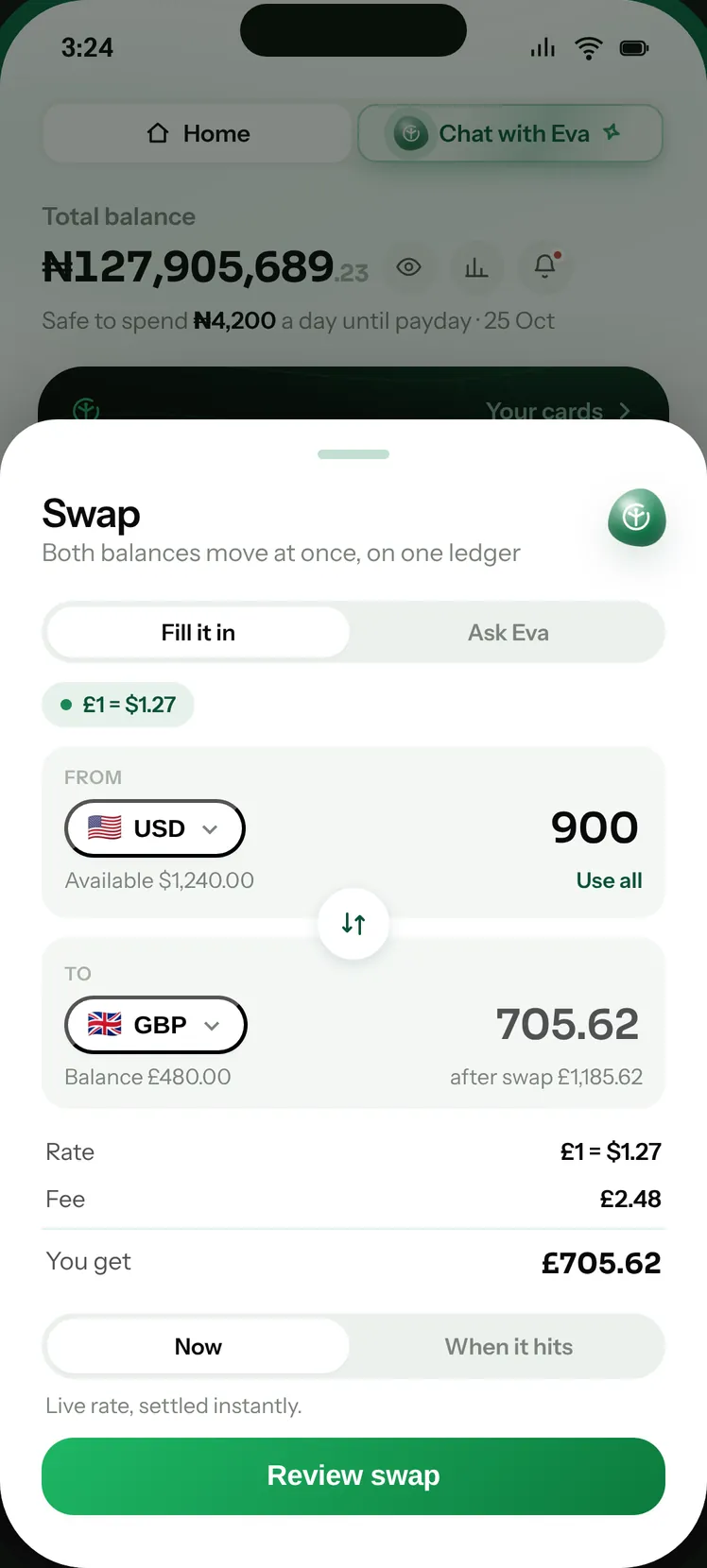
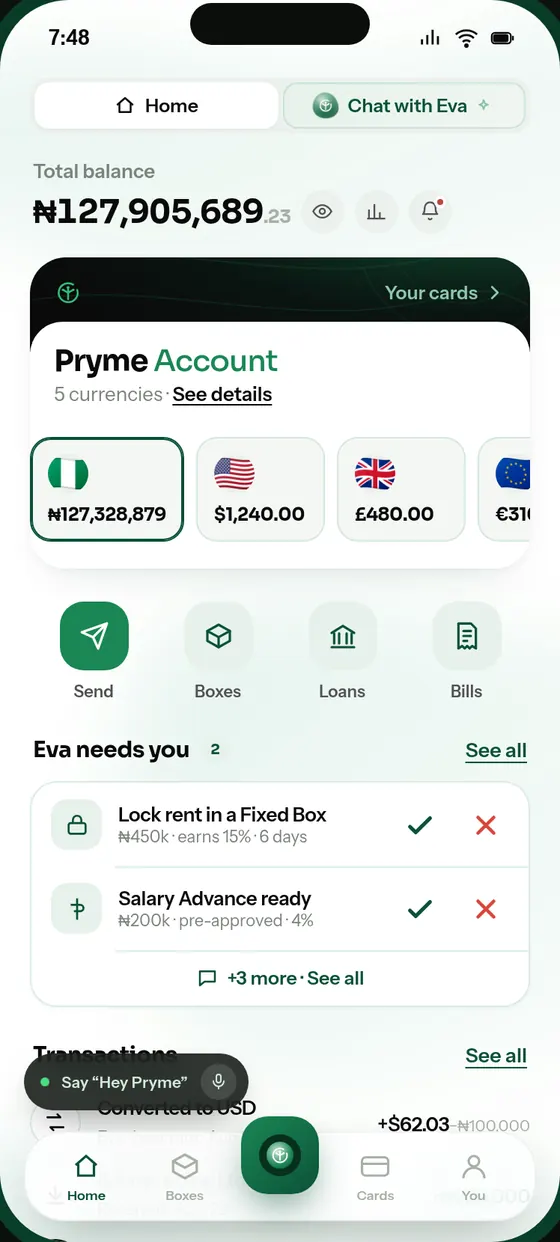
Meet Eva, the assistant inside the Pryme app. She holds dollars, pounds, euros and Naira side by side, swaps at a locked rate, pays bills in any of them and sends anywhere, asking before anything moves.
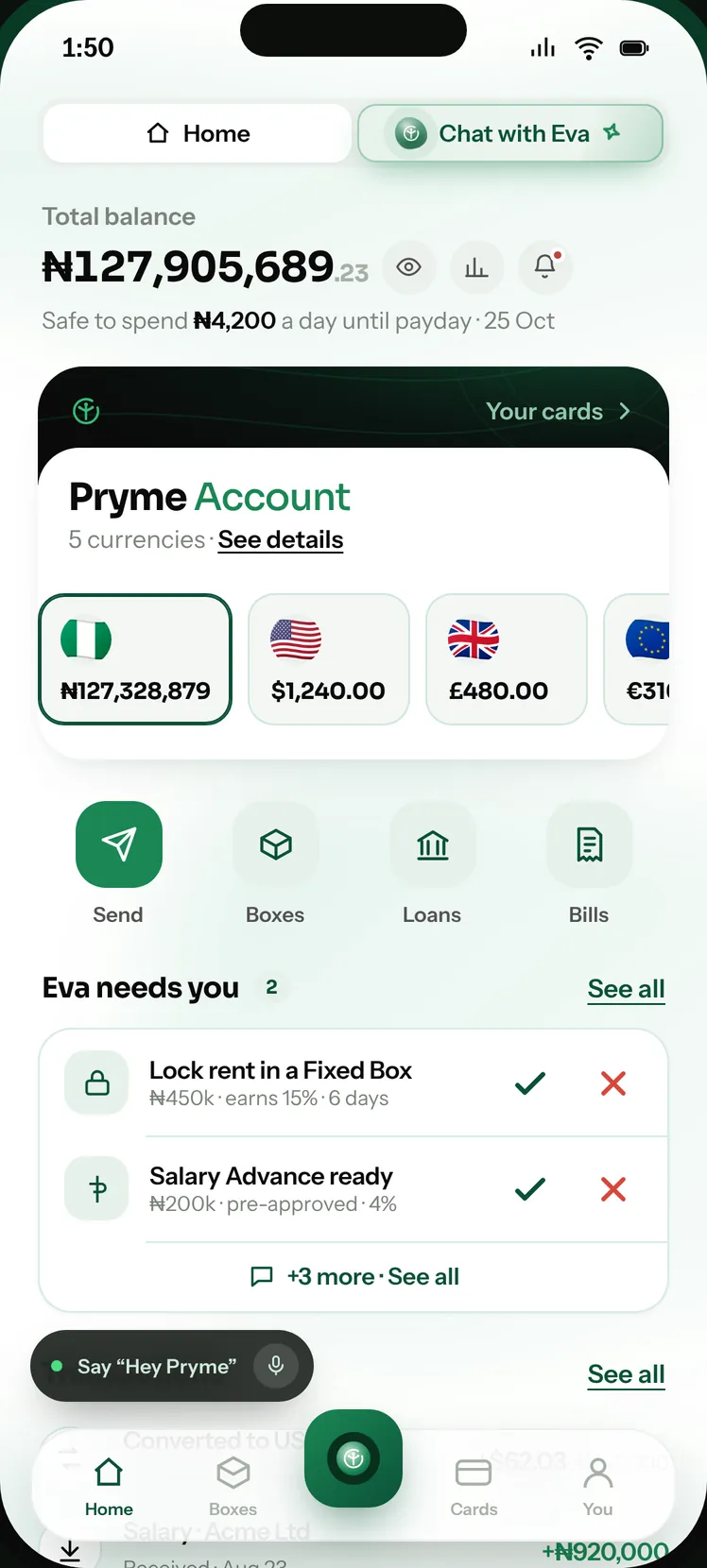
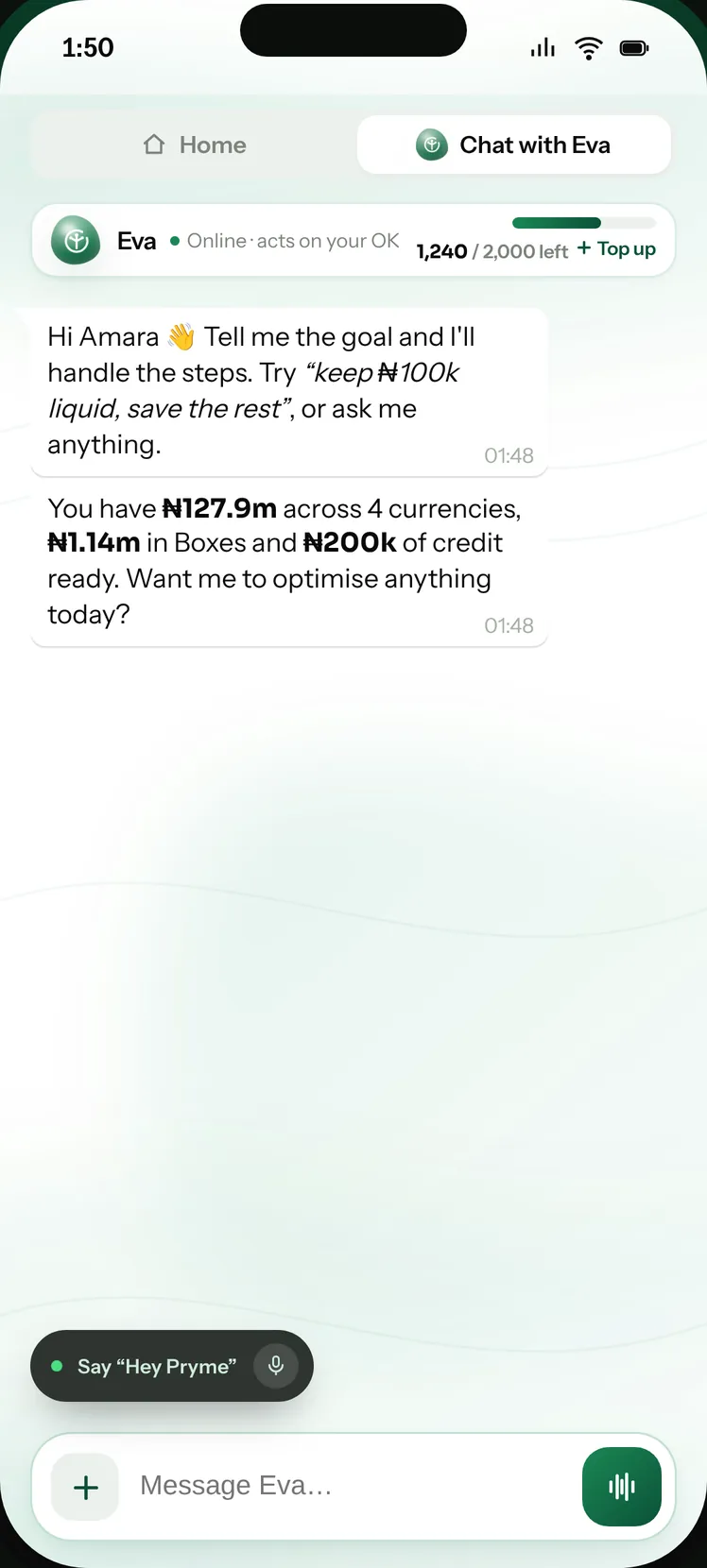
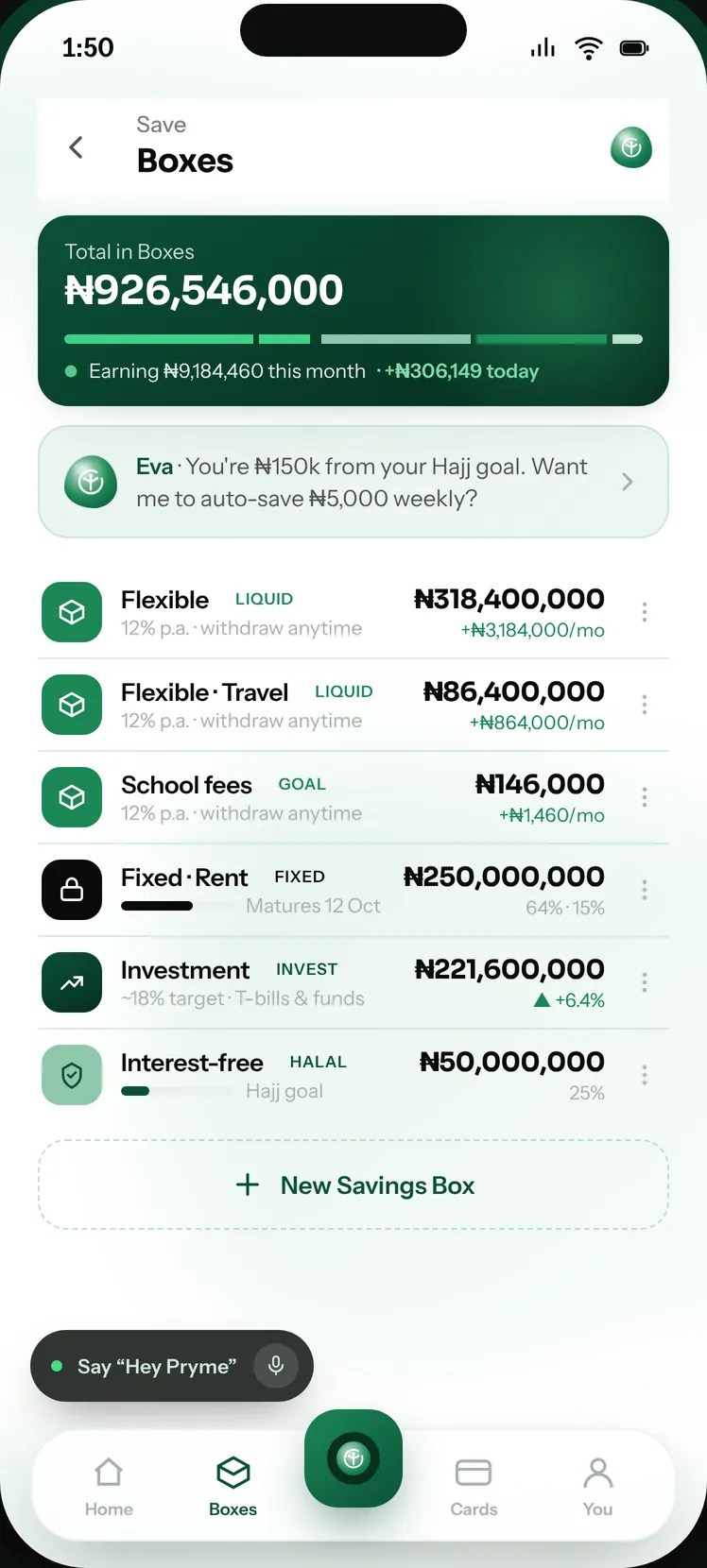
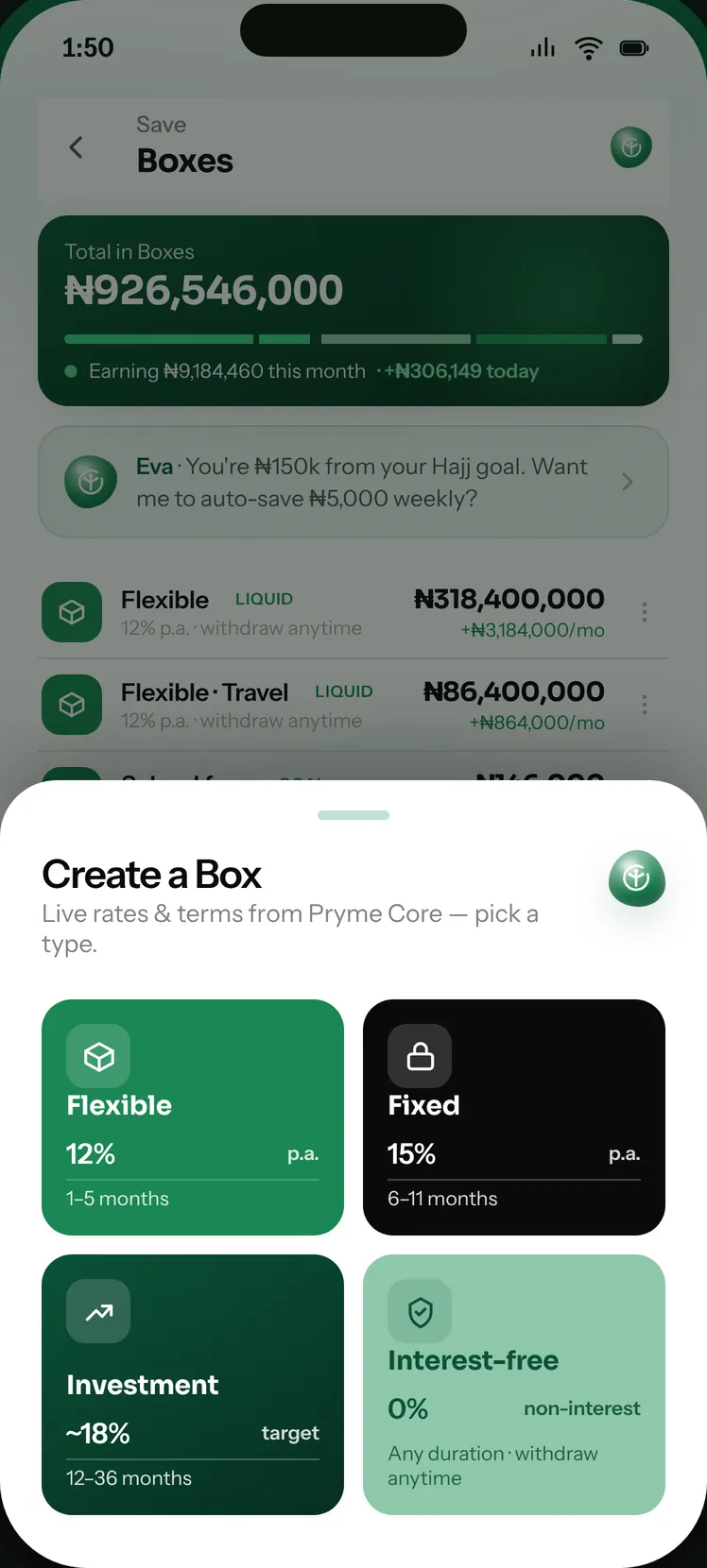
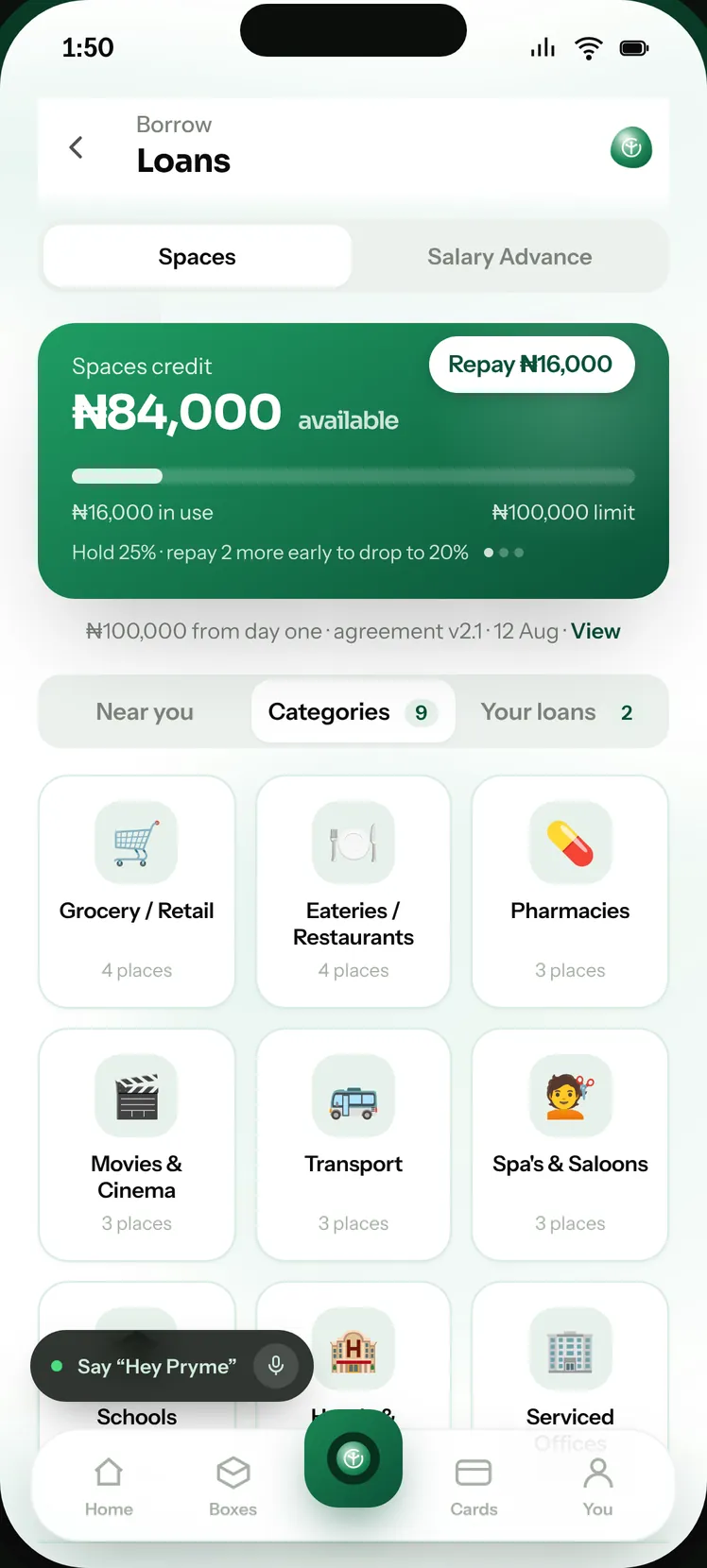
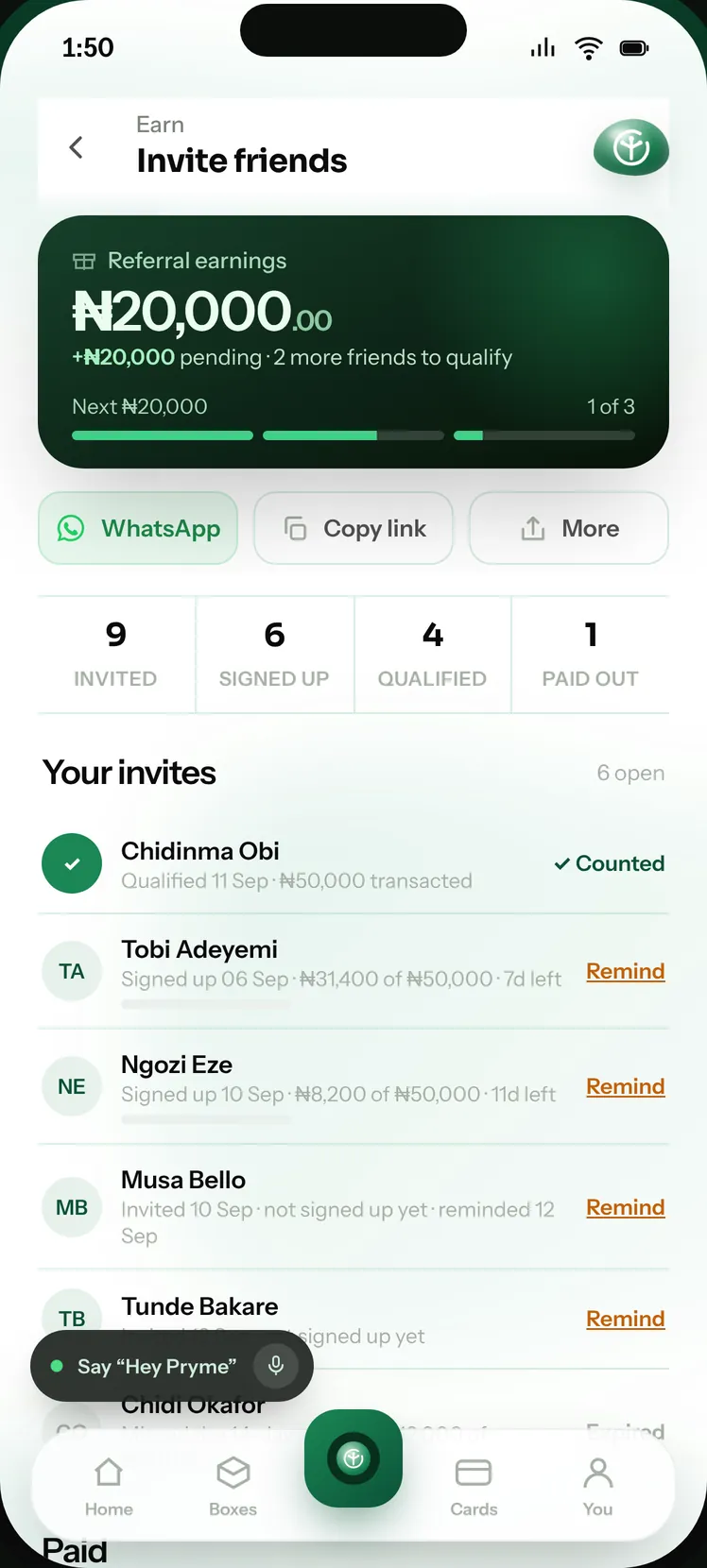
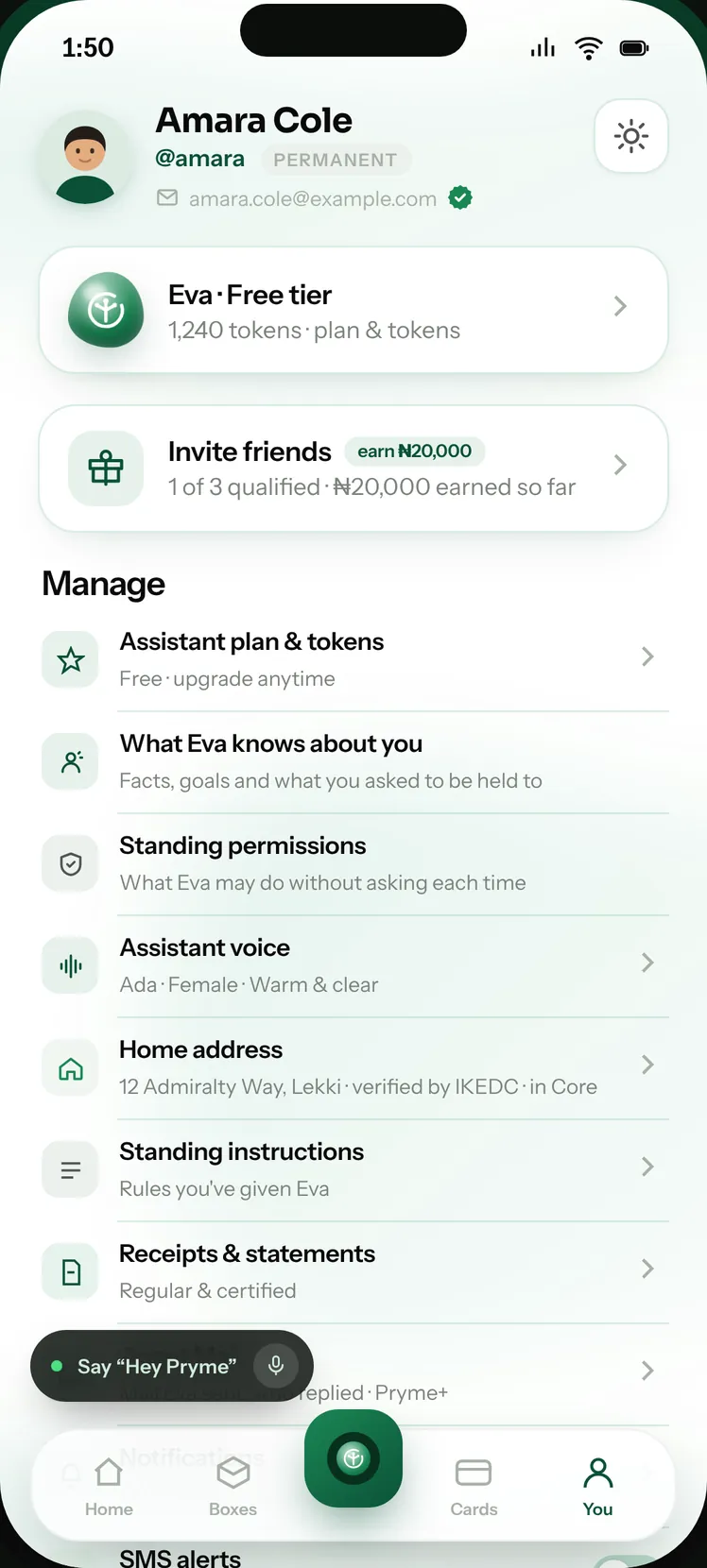
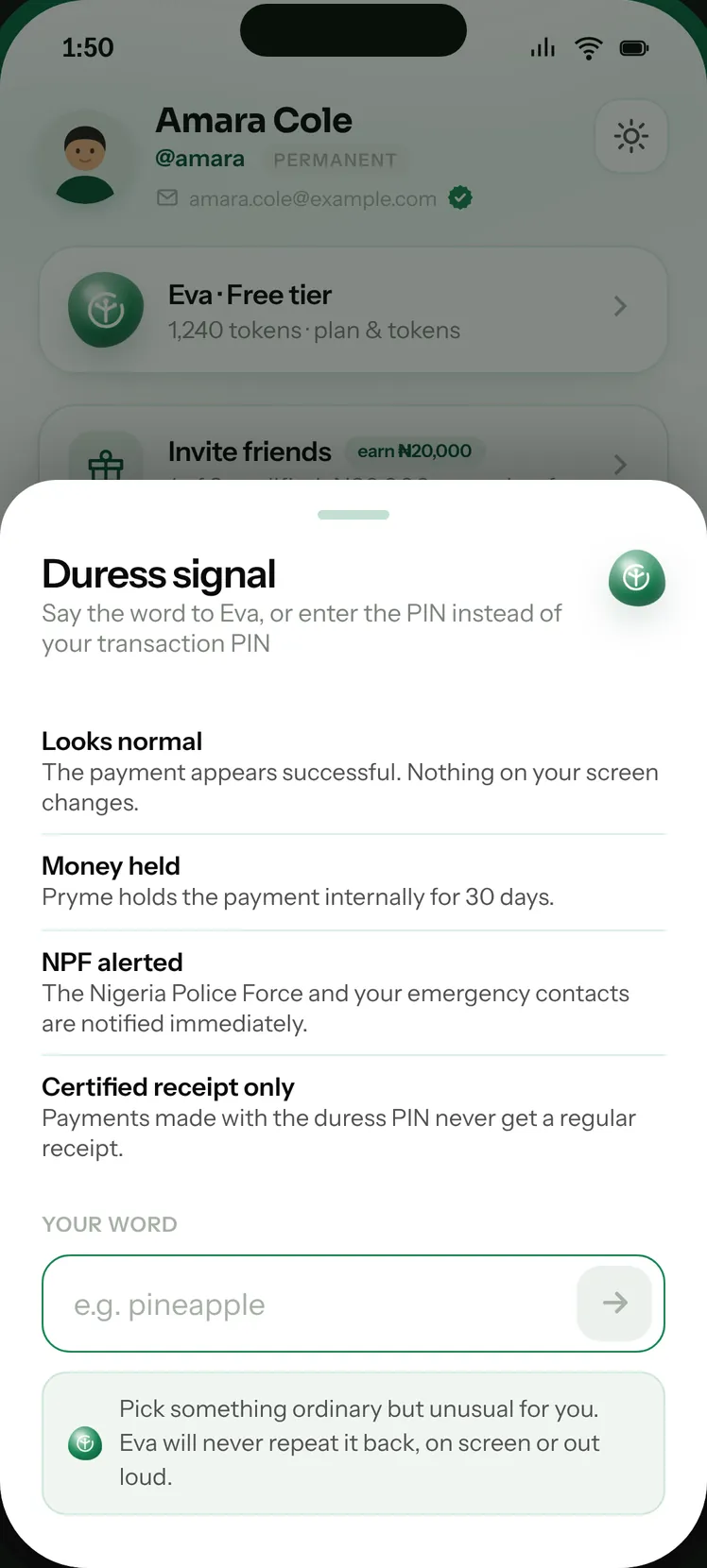
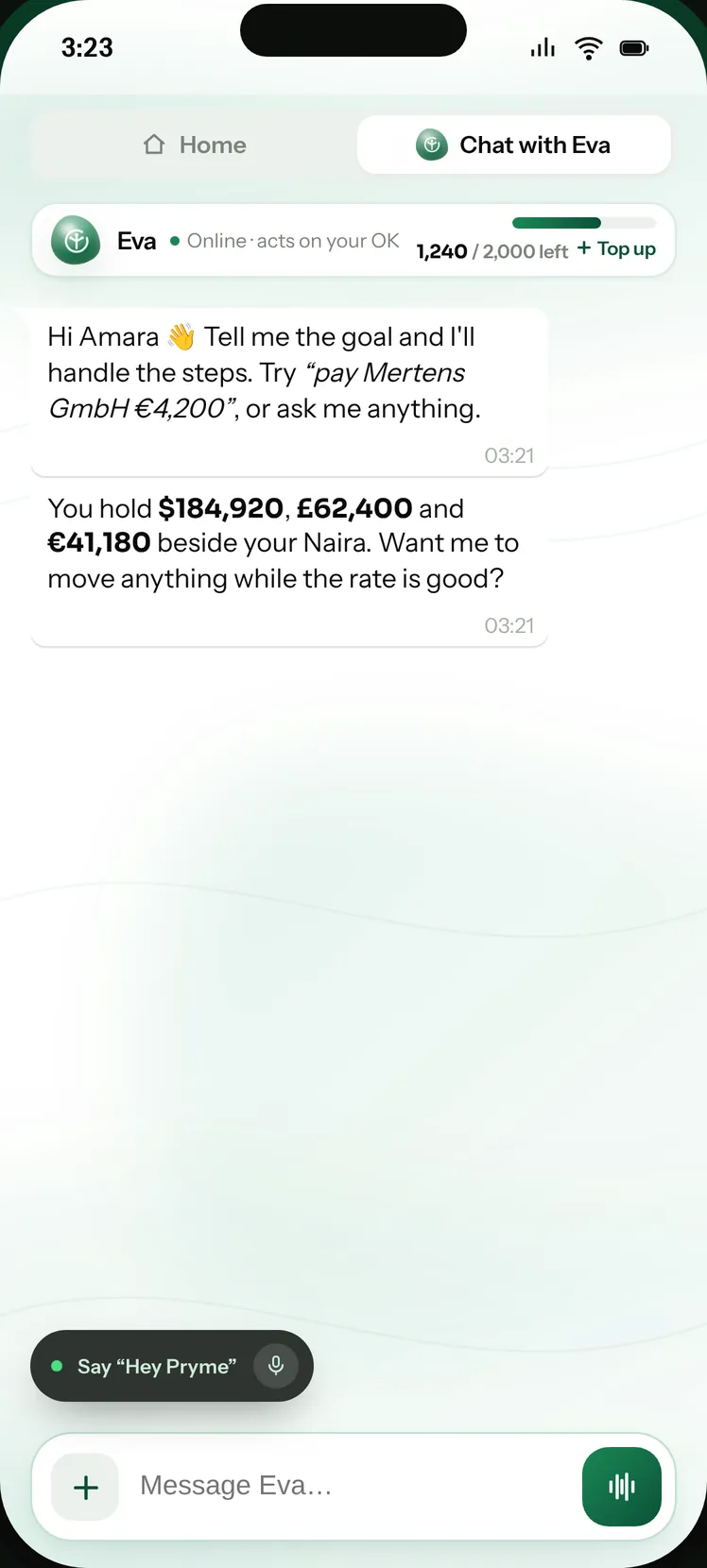
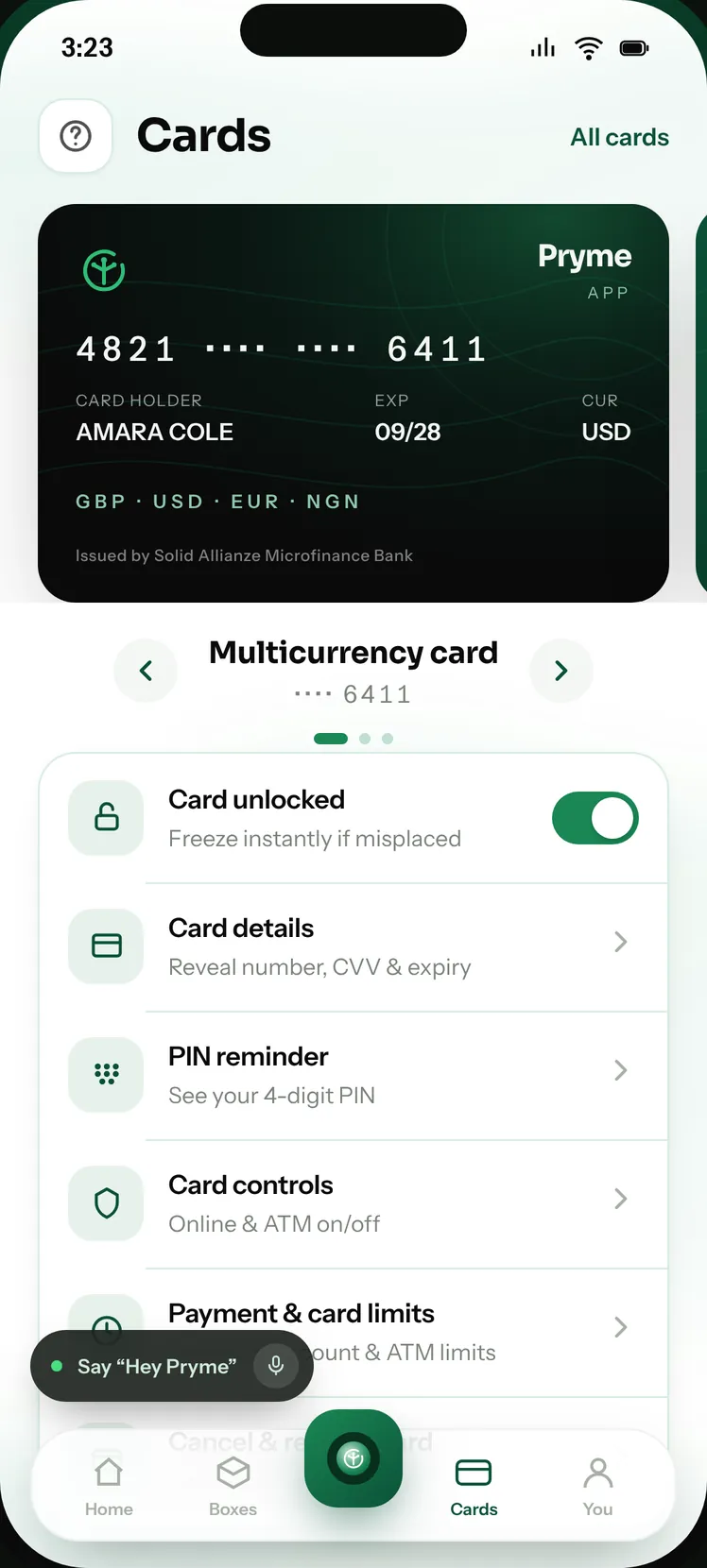
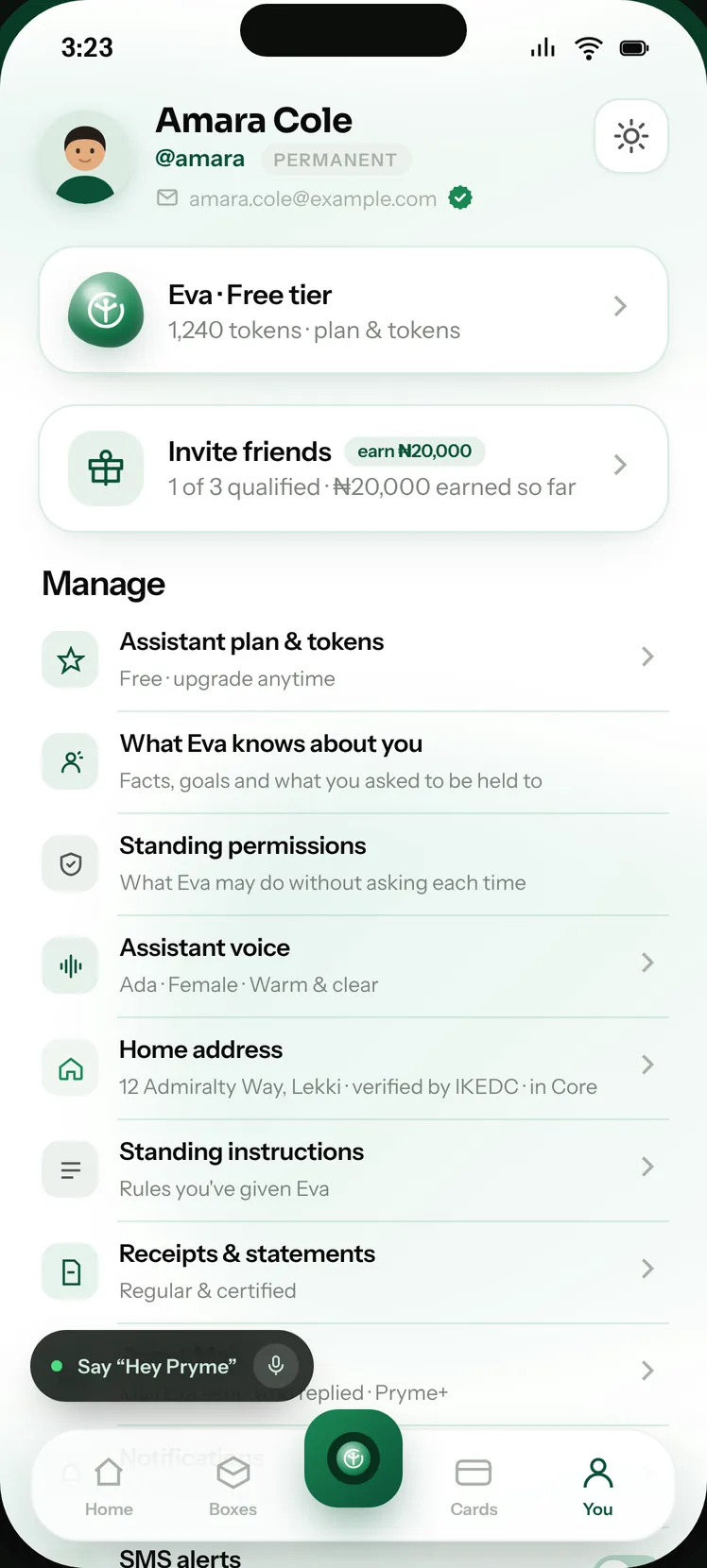
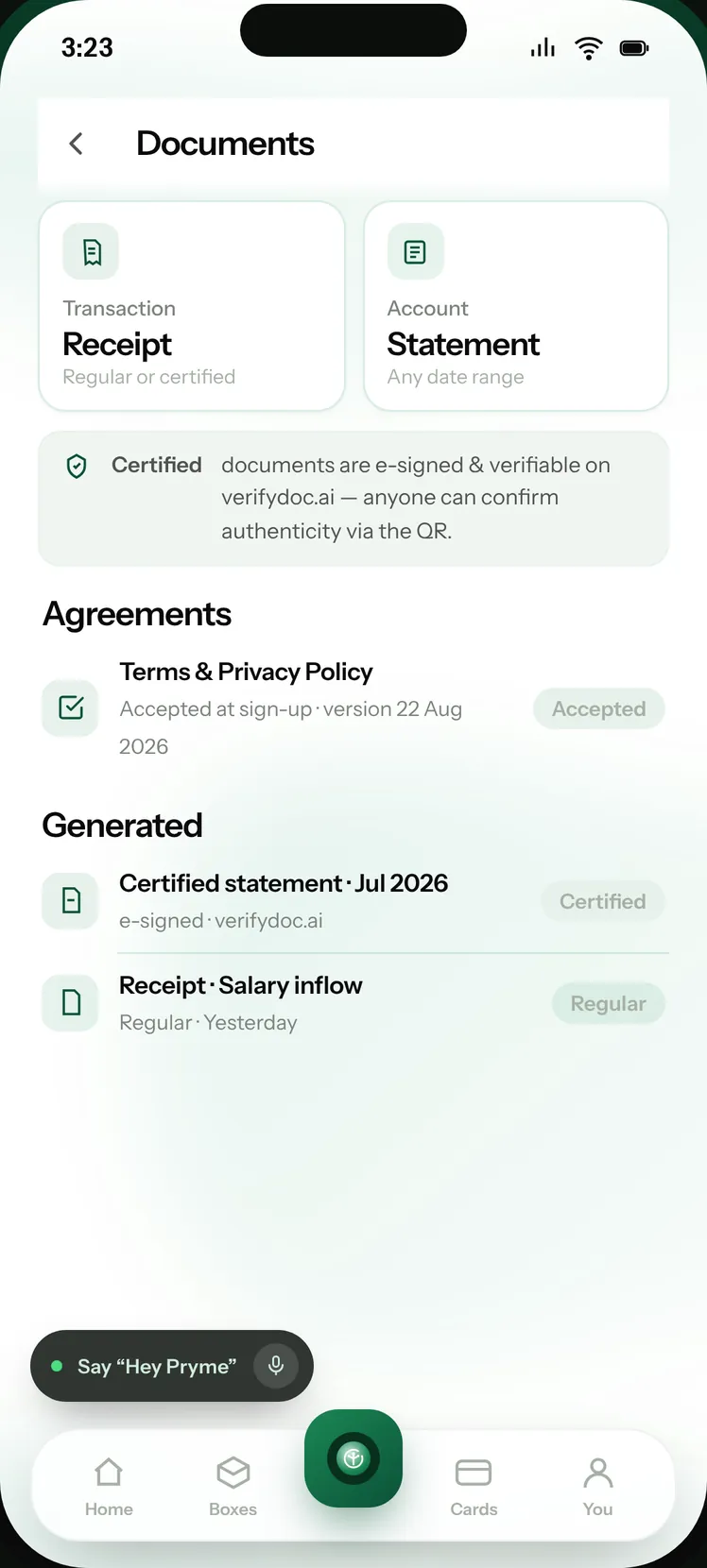
We give you a limit to spend at the shops and services you already use — and an account that works on your month while you get on with it. Dollars, pounds and euros sit beside your Naira, and an assistant handles the running of it, asking you first every single time.
One global account for your money and business. Move across currencies, automate everyday operations and put AI agents to work — with you in control of every important decision.


 Evayour assistant
 DanielChief of Staff
 BenFinance
 BruceCare
Your competitor down the road sells the same thing you sell. The difference is who walks in. We put money in people’s hands that can only be spent in businesses like yours — and then we point them at you.
You are not borrowing. You are selling to somebody who already has the money — and that money can only be spent with a business like yours.
₦100,000 from day one · agreement v2.1 · 12 Aug · View
Eva waits for your rate and asks before she moves anything.
No card, no OTP, nothing for the buyer to type in. They transfer from the bank app they already use, and the money lands in the same account your agents are running — already matched to the order, already in your books.
We give the buyer a one-time account number. They transfer to it from any bank app or by USSD — no card, no OTP, nothing to type in.
Get the account numberTo this account, from any bank app. We watch it, and the page updates itself.
₦26,767.50 from GTBank · John D., matched to order ORD‑1042.
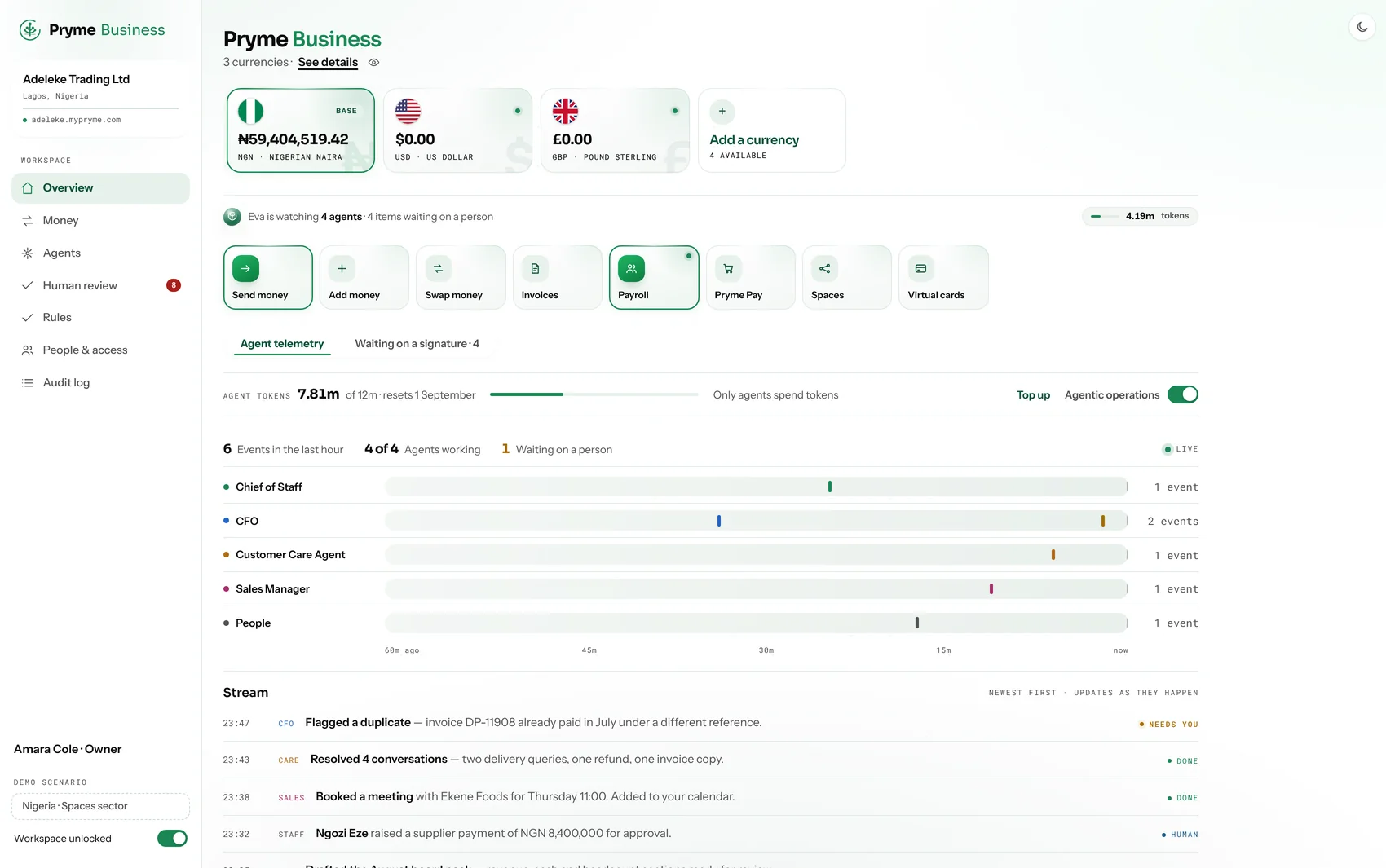
Five agents come with the account. Each one has a job description, a budget and a ceiling you set. They do the work and bring it to you — nothing leaves the account without your signature.
Knows what is stuck, who is waiting and what you promised — and keeps all three moving.
Booked a meeting with John Doe Foods for Thursday 11:00.Keeps the books as you trade and tells you the moment something does not add up.
Flagged a duplicate — invoice DP‑11908 was already paid in July.Holds every filing to its own clock and screens names and payments against your policy — and logs what it refuses.
Screened 412 payments overnight and refused two of them.Goes back to the buyers who went quiet, with the receipt already attached.
Recovered ₦410,000 across three overdue invoices.Replies, follows up on what they asked for and hands you only the ones that need you.
Resolved 4 conversations — two deliveries, one refund.Issue a dedicated Naira account number to each of your own customers, collect into it and reconcile against it. The same rails the Business Account runs on, with the licence behind them.
Dollars, pounds and euros beside a Naira account, on one ledger and one set of books. Five agents come with it and run the account — nothing leaves without your signature.
Five agents come with the account. Each has a job description, a budget and a ceiling you set. They do the work and bring it to you — they propose, you approve.
Knows what is stuck, who is waiting and what you promised, and keeps all three moving.
Booked the quarterly review with your auditor for Thursday.Keeps the books in every currency you hold and flags the moment something does not add up.
Flagged a duplicate — invoice DP‑11908 was already paid in July.Holds every filing to its own clock and screens names and payments against your policy — and logs what it refuses.
Screened 412 payments overnight and refused two of them.Goes back to the buyers who went quiet, with the invoice and the receipt already attached.
Recovered $12,400 across three overdue invoices.Replies, follows up on what they asked for and hands you only the ones that need you.
Resolved 4 conversations — two deliveries, one refund.The business has changed shape four times and never changed what it was rooted in. Each version was built out of what the last one could not do.
An online grocery store, built out of a faulty tab. Selling the food was the easy part — taking the money for it, and moving it, turned out to be the business.
A prepaid card. The first time the company issued rather than resold, and the first time it carried the obligations that come with holding somebody else’s money.
Solid Allianze acquired — an existing bank with an existing licence. The perimeter stopped being someone else’s to draw.
More than one currency on one balance, and the rebrand to Pryme. A Nigerian business could hold dollars without holding a second institution.
Accounts that do the work rather than only hold value. Five agents on the account, inside a policy you write — which is where the new mark starts.
Pryme is a financial technology company. It gives people and businesses in Nigeria one account that holds Naira alongside dollars, pounds and euros, and a set of agents that do the running of it — keeping the books, chasing what is owed, answering customers and paying bills. Nothing leaves an account without the owner’s approval.
Yes. A Pryme account holds Naira, US dollars, pounds sterling and euros side by side on one ledger, each with its own account details — a Nigerian account number, a US account number, a UK sort code and an IBAN for the euro area. You can swap between them at a rate you set, and every currency has its own statement.
Spaces is available in Nigeria. It gives a shopper money to spend that can only be spent with a participating business. The business is paid into its Naira account whether or not the shopper repays, because Pryme carries the credit. For the business it is free to join, there is nothing monthly, and the customer’s identity is never shown — only a reference and what it is worth.
Five agents come with the account. The Chief of Staff runs the week and keeps what is stuck moving. Finance watches the money and keeps the books as you trade. Compliance keeps the filings on time and screens what moves. Sales chases what you are owed. Customer Support answers your customers and follows up. Each has a job description, a budget and a ceiling you set, and each one proposes rather than acts — nothing leaves the account without your signature.
Pryme Pay takes payments on your own site or on a checkout page you control. The buyer is given a one-time account number and transfers to it from any bank app or by USSD — no card, no OTP, nothing to type in. The money lands in the same account your agents are running, already matched to the order and already in your books.
Savings Boxes are separate pots inside a Pryme account, held in Naira. Flexible Boxes can be withdrawn at any time, Fixed Boxes hold to a date, Investment Boxes hold for longer, and Interest-free Boxes earn nothing by design. A business can use them to ring-fence payroll and the tax it withholds, so that money cannot be spent by accident.
Pryme is a financial technology company, not a bank. Accounts and deposits are provided by Solid Allianze Microfinance Bank Limited, which is licensed by the Central Bank of Nigeria and is a member of the Nigeria Deposit Insurance Corporation.
Yes. Pryme Rails lets a platform issue a dedicated Naira account number to each of its own customers, collect into it and reconcile against it, over one API — the same rails the Pryme Business Account runs on.
Pryme is a financial technology company. It gives you one account that holds US dollars, pounds sterling and euros beside Naira, with an assistant that runs the account for you and asks before anything moves. Accounts are provided in Nigeria today, and further markets open as each licence lands.
Accounts are provided in Nigeria today, subject to verification and approval. Foreign-currency balances are held and converted inside that account, so you can hold, receive and swap dollars, pounds and euros wherever you are.
Naira, US dollars, pounds sterling and euros, side by side on one ledger. Each has its own details — a Nigerian account number, a US account number, a UK sort code and an IBAN for the euro area — and each has its own statement.
Swap at a rate you set rather than the rate of the day, then send to any Pryme username or to a Nigerian bank account. There is no fee to send to another Pryme account.
Eva is the assistant inside the Pryme app. She opens accounts, moves money, saves toward your goals, pays what is due and follows up what is owed to you — and asks you before anything moves.
Pryme Rails lets a platform issue a dedicated Naira account number to each of its own customers, collect into it and reconcile against it, over one API — the same rails the Pryme Business Account runs on.
Notes on money that does the work: what we are building, what the regulation actually says, and how we think about letting software act on money. Read the Ledger
What AI agents can do in bookkeeping, close, collections and compliance today, where a person must stay in charge, and how to judge a product.
How multi-currency business accounts work: local details vs SWIFT, payment rails, the real cost of FX, safeguarding vs deposit protection, and hedging.
How UK, US, Canadian and European firms pay Nigerian suppliers and get paid by Nigerian clients: FX, Form A and M, tax, compliance and payout routes.
What it really costs to send money to Nigeria from the UK, US, Canada and Europe: fees, exchange-rate margins, CBN naira rules, BVN, speed and scams.
What AI can and cannot do in day-to-day bookkeeping, how much time it saves on real numbers, and which jobs must stay with you or your accountant.
What we are building, what the regulation actually says, and how we think about letting software act on money.
All of United StatesBusiness operations and agents · 94 articles
Who sends a Form 1099-K, the $20,000 and 200-transaction rule for platforms, card payments, and how sellers of Nigerian goods report the income.
Whether a 13th month is required in Nigeria, how bonuses are taxed under the 2025 tax law, and how a US employer should write the policy.
What AI finance and compliance agents can prepare for a business run across the US and Nigeria, and which steps should stay with a person who approves.
Nigerian PAYE, pension, withholding tax, VAT, income tax and CAC dates a compliance agent can track for a US-owned company, and what a person signs off.
How an AI support agent covers Lagos and New York hours, what it answers alone, what it hands to a person, and the Nigerian data rules that apply.
Why a US-owned Nigerian company usually needs an annual statutory audit, how it ties to CAC and tax deadlines, and what to prepare for the auditors.
Dual approval, payee holds and user limits that stop fraud on payments from a US business to Nigeria, with thresholds and a worked example.
Is a Nigerian subsidiary's functional currency the naira or the dollar? The indicators, three common Lagos set-ups and why the choice sticks.
How to reconcile a naira account and a USD account in QuickBooks: set up, statement matching, exchange-rate lines and the checks that catch errors.
How a US auditor gets reliable evidence of a Nigerian business account, and where a verifiable statement helps and where it does not.
How to build one budget in dollars with naira cost lines, a planning rate, an FX buffer and a monthly re-forecast that stays honest.
How a US owner keeps a Lagos office running: electricity bands and tariffs, internet, cable TV, and controls so bills are paid on time.
Planning backup power and internet for a Lagos office: what supply bands promise, solar and generator budgets, two internet links and a test routine.
Timing dollar-to-naira conversions, sizing buffers in each currency and planning around Nigerian payroll and remittance dates.
What a Chief of Staff agent prepares for a founder running a business in the US and Nigeria, and where each approval sits so nothing moves unchecked.
How to bring a naira-functional subsidiary into US dollar consolidated accounts: rates to use, what goes to OCI, intercompany balances and the CBN rate.
The card options for staff of a US company based in Nigeria, the spending limits Nigerian banks publish, and the controls that keep card spend clean.
How a support agent can answer customers in the US and Nigeria across time zones, what it should hand to a person, and the records Nigerian law expects.
The journal entries for duty and freight on Nigerian imports: capitalise to inventory on entry, move to cost of goods sold as stock sells.
The basic controls a small Lagos office needs, and what the Nigeria Data Protection Act requires when there is a breach, including the 72-hour rule.
How the Nigeria Data Protection Act 2023 applies to a US company holding Nigerian staff and customer data: duties, transfers, registration and fines.
Who must use the NRS e-invoicing system, the turnover bands and dates reported in 2026, and how it reaches a US company, its subsidiary and customers.
How an employer of record employs your Nigerian staff, runs PAYE, pension and levies, and the costs to compare against a subsidiary or contractors.
Official NFEM rate, your actual conversion rate or a parallel quote: which belongs in pay calculations, PAYE, your US books and tax returns.
How a US parent closes a Nigerian subsidiary: staff notice, final payroll and pension, tax deregistration, CAC strike-off and moving cash out.
How to set per diems, receipt rules and exchange-rate conversion for staff travelling between the US and Nigeria, with a worked naira example.
When a US company, and the people who sign on its accounts, must file FinCEN Form 114 for a Nigerian bank account, how value is measured, and the deadline.
When a US company must withhold and file Form 1042-S for a Nigerian payee: US-source work, licences, the no-treaty rate, deadlines and copies.
Why a US company usually issues no 1099 to a contractor in Nigeria, when it does (US citizens and green card holders), and the file to keep instead.
How to verify a Nigerian supplier's new bank account before paying, the warning signs, and what to do in the first hours if money has gone.
How Section 988 treats naira gains and losses for a US company: what counts, when gain is realised, why it is ordinary, plus a worked example.
The Pension Reform Act requirement for group life cover of at least three times annual emoluments: who must buy it, from whom, and how claims work.
What the NHIA Act 2022 requires of employers, how state schemes fit in, and how to choose an NHIA-accredited HMO plan for a Lagos team.
How the three-year cumulative inflation test works, what NBS figures to September 2026 imply for Nigeria, and what changes if it is met.
Salary, statutory employer contributions, health cover, equipment and power: the full monthly cost of a Lagos hire, with a worked example.
What a US owner should put in an engagement letter with a Nigerian outsourced accountant: bookkeeping, tax filings, deadlines, access and records.
The covers a US-based owner needs for stock in a Lagos warehouse, how underinsurance cuts a claim, and how to check that a Nigerian insurer is licensed.
Which insurances Nigerian law makes compulsory for a business, which apply to an office, and what to check with a NAICOM-licensed insurer.
Lending from a US parent to a Nigerian subsidiary: how the interest cap works, withholding on interest, and why the CCI must be in place first.
How to build landed cost for goods bought in Nigeria: purchase price, freight, duty, FX, and the IRS rules on inventory cost and valuation methods.
How long the IRS expects you to keep foreign receipts, Nigerian bank statements and FX records, and which rules make the period longer.
When a US-owned Nigerian subsidiary must pay the Industrial Training Fund levy, the 1% rule, the five-employee and ₦50m tests, deadlines and refunds.
Annual, sick and maternity leave under the Labour Act, Nigeria’s public holidays and how they are declared, for US employers planning cover.
A month-end checklist for a business with a US company and a Nigerian company: banks, FX, intercompany, payroll, VAT and the dates that drive it.
The monthly and annual dates a US-owned Nigerian employer must hit for PAYE, pension, NSITF and WHT, where the sources disagree and how to stay safe.
How to keep books in dollars and naira: functional currency, one ledger account per currency, rates to use, FX gains and losses and monthly reconciliation.
Whether a US company processing data of people in Nigeria must register with the NDPC, how the GAID 2025 tiers work, and the 31 March audit return.
Which Nigerian payroll levies apply to a US company's staff: NSITF at 1% of monthly payroll, ITF at 1% for 5+ staff, and NHF, voluntary for private staff.
Rates by company size, filing deadlines, penalties and the development levy for a Nigerian subsidiary of a US company under the Nigeria Tax Act 2025.
The Labour Act terms a Nigerian contract must cover, the clauses US templates get wrong, and how restraint and IP clauses are treated.
How PAYE works for a US business's Nigerian staff under the 2026 tax bands: who registers, which state collects, monthly remittance and a worked example.
The Nigeria Tax Act 2025 rewrote PAYE from 1 January 2026: new bands, rent relief instead of CRA, tougher penalties and new rules for dollar pay.
What a Nigerian payslip should show, the annual return of emoluments due by 31 January, and the year-end tax records your remote staff will need.
The Nigerian public holiday calendar a US company must plan payroll and payments around, how Muslim holidays are declared, and how weekend holidays work.
Paying a dividend from a Nigerian subsidiary to its US parent: the withholding tax, the CCI, tax clearance and buying the dollars at the bank.
Who pays Nigerian VAT when a US company buys services from Nigeria, and when a Nigerian subsidiary buys from the US: zero rating and the reverse charge.
When a US business selling software or digital services to Nigerian customers must register for Nigerian VAT, charge 7.5% and remit to the NRS.
The withholding tax a Nigerian subsidiary deducts on dividends, interest, royalties and fees paid to its US parent, when it is due and why no treaty helps.
When a US company with Nigerian customers or staff becomes taxable in Nigeria: permanent establishment, significant economic presence and digital sales.
What a US company actually pays for a serviced office in Lagos: the fee lines, VAT, withholding tax, stamping, deposits and the lease terms to negotiate.
What Nigerian banks ask for when a US-owned company opens an account: incorporation documents, board resolution, signatory IDs and BVNs, plus NIPC and CCI.
Why a US LLC asks a Nigerian contractor for Form W-8BEN, what the form records, how long it lasts, and what reporting follows the payments.
The contracts, forms, invoices, payment proofs and exchange-rate records a US business should keep for Nigerian contractors, and for how long.
How a US business with dollar revenue funds naira payroll each month: setting salaries, when to convert, building a buffer and what the transfer costs.
The questions to put to an employer of record before you rely on it for Nigerian PAYE, pension, NSITF, ITF, group life and contracts.
What Nigerian law says about paying wages in naira, how the CBN treats dollar accounts, and the practical issues with paying employees in dollars.
How to peg a Nigerian salary to the dollar and pay it in naira: the reference rate, the date, collars, PAYE and the contract wording.
What a proper invoice from a Nigerian supplier should show before a US LLC pays: identity, Tax ID, VAT treatment, e-invoice number, bank details and terms.
Why approving Nigerian payments in WhatsApp chats fails audits and invites fraud, and what a traceable approval record should contain instead.
Which employers must join Nigeria's pension scheme, RSA and PFA steps, the 7-day remittance rule, group life cover and the 10% and 8% rates.
Running naira and dollars in QuickBooks Online: what to decide before switching multicurrency on, how naira accounts behave, and month-end revaluation.
Keeping receipts and bank evidence that satisfy both an IRS examiner and an NRS review when one business runs accounts in the US and in Nigeria.
How a US-owned company with Lagos staff registers with LIRS as an employer, gets a corporate Payer ID and files monthly PAYE and the annual return.
Getting dividends from a Nigerian subsidiary to the US: withholding tax, the CCI that makes repatriation possible, tax clearance and FX timing.
The deductions a US company's Nigerian payroll has to handle (PAYE, pension, NSITF, ITF, NHF), the monthly deadlines and the three ways to set it up.
How a Sales agent can draft follow-ups to Nigerian business leads from the US, what Nigeria's data protection law expects, and what a person approves.
Economic nexus explained for online sellers of Nigerian goods: how state thresholds work, the California and Texas tests, and marketplace rules.
How a US owner can split payment, recording and review duties when the Lagos office has only two people, with compensating controls that work.
Notice periods, redundancy rules, pay in lieu, leave pay and the tax-free limit on severance when a US company lets Nigerian staff go.
Why a US-based director or finance lead who can sign on a Nigerian company account may need their own FBAR, even with no ownership, and the exceptions.
When a US-owned Nigerian company needs audited accounts: why it cannot use the small-company exemption, AGM rules, CAC and NRS filing deadlines.
Monthly and annual due dates for PAYE, pension, NHF, NSITF and ITF on Nigerian staff, with rates, a worked payroll example and the authority each goes to.
How a Nigerian tax audit works under the 2025 Act: notices, the seven-day minimum, premises access, assessments, objections and the Tax Appeal Tribunal.
Running finance across Lagos and New York: the time difference, FedACH windows in Lagos time, Federal Reserve holidays and how to set approval windows.
How Section 482 and Nigeria's Transfer Pricing Regulations both apply when a US company trades with its Nigerian subsidiary, and what to document.
Why a US-owned Nigerian subsidiary keeps IFRS statutory accounts while the parent consolidates in US GAAP, which IFRS applies and how to reconcile.
Selling Nigerian products online in the US: economic nexus thresholds, how marketplace sales are treated, and when you must register and collect.
How a finance agent matches naira and dollar bank lines to invoices, flags exceptions and drafts FX entries for a person to review and approve each month.
The Nigerian PAYE, pension and annual return dates a US-run business must meet, and how a Compliance agent can flag each one before it is missed.
How a Finance agent can draft a Nigerian payroll run for a US-run business, which numbers it must get right, and what a person still approves.
Changed bank details, fake invoices and duplicate bills from Nigerian vendors: the checks a US finance team should run before paying, and what to do after.
What a US lender looks for when your revenue is earned in Nigeria, and how a verifiable statement lets them confirm the figures have not been altered.
Nigerian withholding tax rates on contractor payments under the 2024 Regulations, who must deduct, the no-TIN rule, and the US forms a US payer uses.
Running US and Nigerian bank accounts in Xero: the plan you need for multiple currencies, adding a naira account, statement imports and reconciliation.
You can add the other type later — many of our customers hold both.
The business first, then you. Nothing is submitted until you review it.
Ideal customer profiles
Generated from your website by VerifiedLead.ai
Pick the ones that look right. Your Sales agent works these first, and you can change them at any time after opening.
We ask this because you have not given us a website. It helps us set the right limits from day one.
Which of these represents you?
Officers listed against this company on the UK register.
We have sent a six-digit code to your email address. Enter it below to confirm the address is yours.
Wrong address? Go back and change it — nothing is created until this step passes. We never ask for a code by phone or email; anyone who does is not us.
Last step. Each time you sign in we email you a six-digit code — we never send codes by SMS.