AI agents for business finance: what they can and can't do
What AI agents can do in bookkeeping, close, collections and compliance today, where a person must stay in charge, and how to judge a product.
Meet Eva, the assistant inside the Pryme app. She opens accounts, moves money, saves toward your goals and follows up. Nothing leaves your account without your approval.
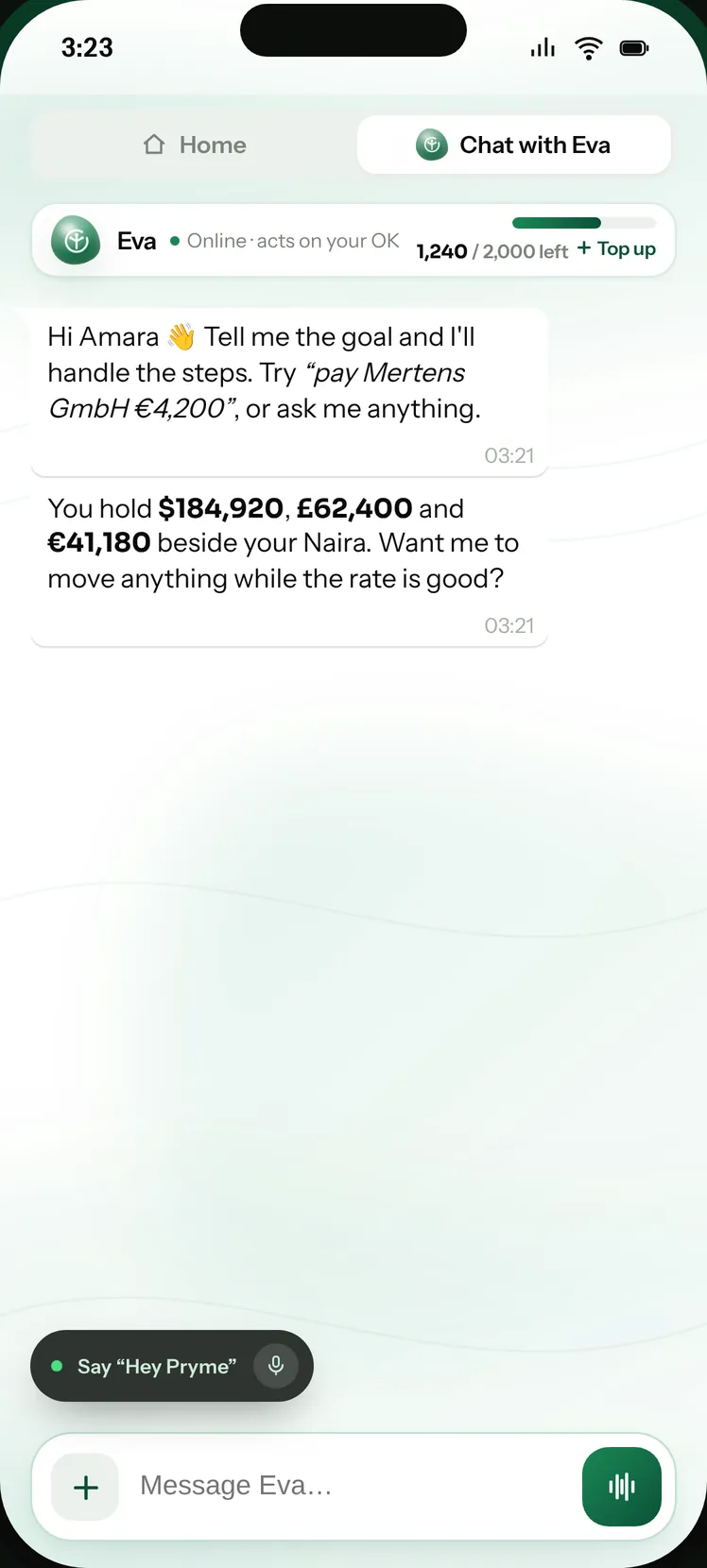
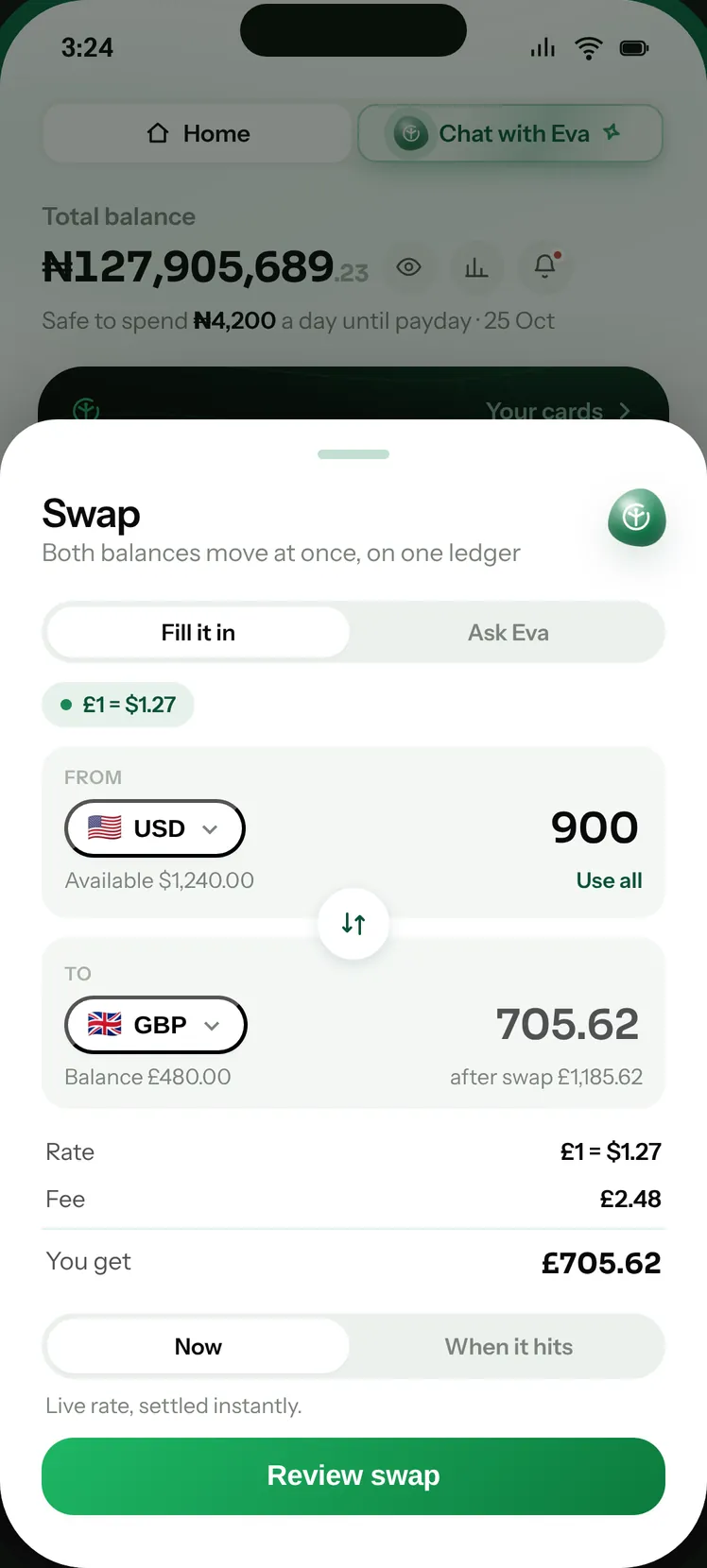
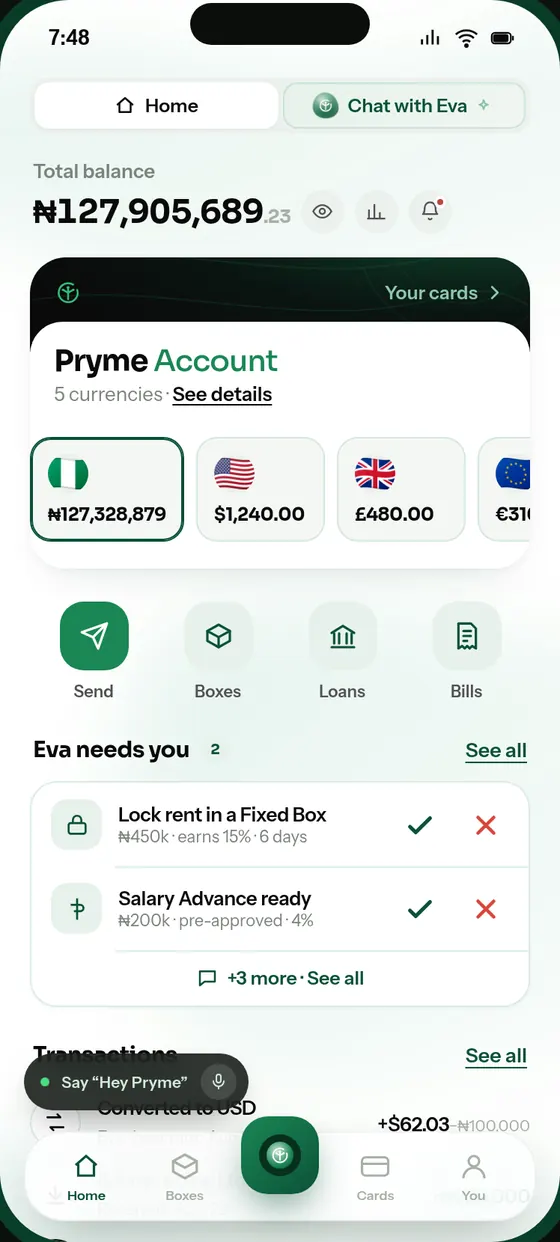
Meet Eva, the assistant inside the Pryme app. She holds dollars, pounds, euros and Naira side by side, swaps at a locked rate, pays bills in any of them and sends anywhere, asking before anything moves.
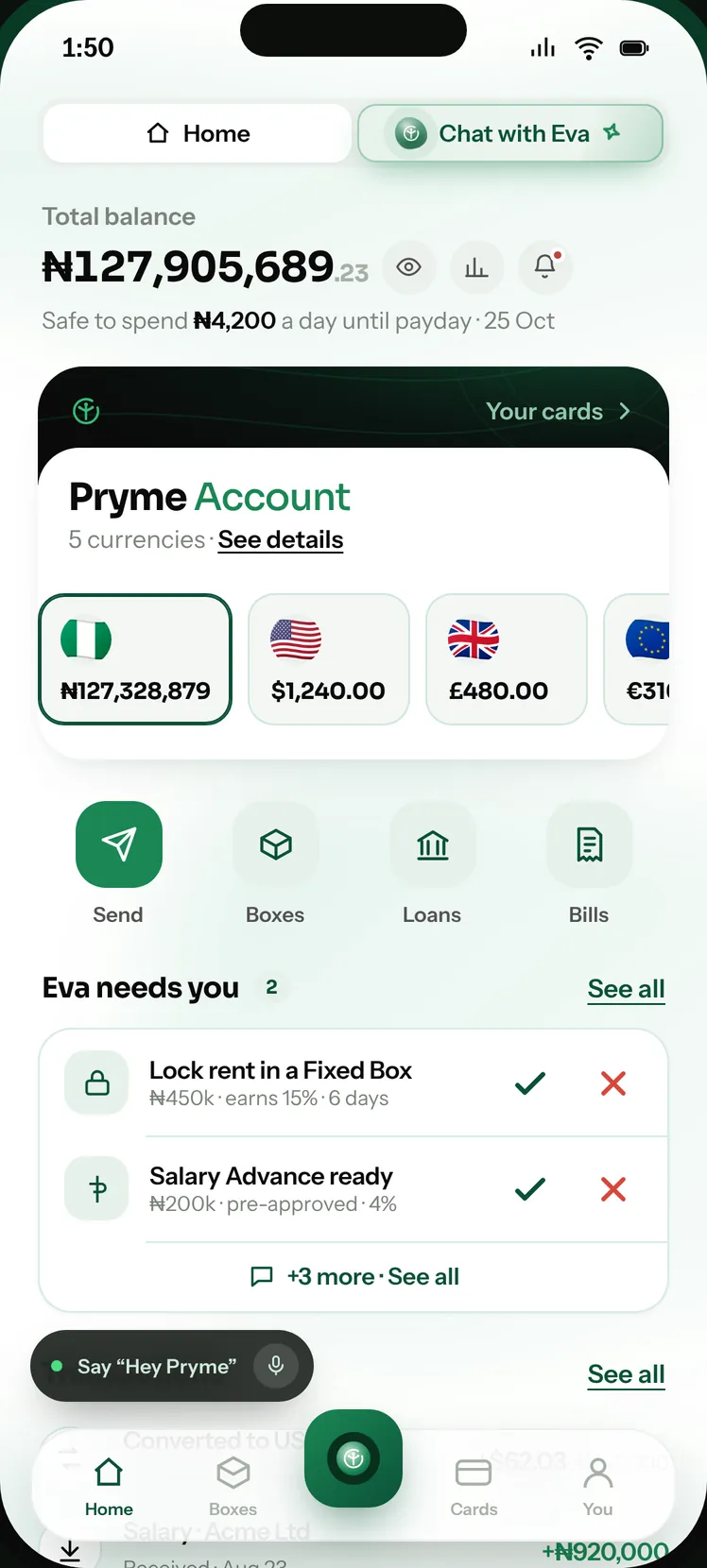
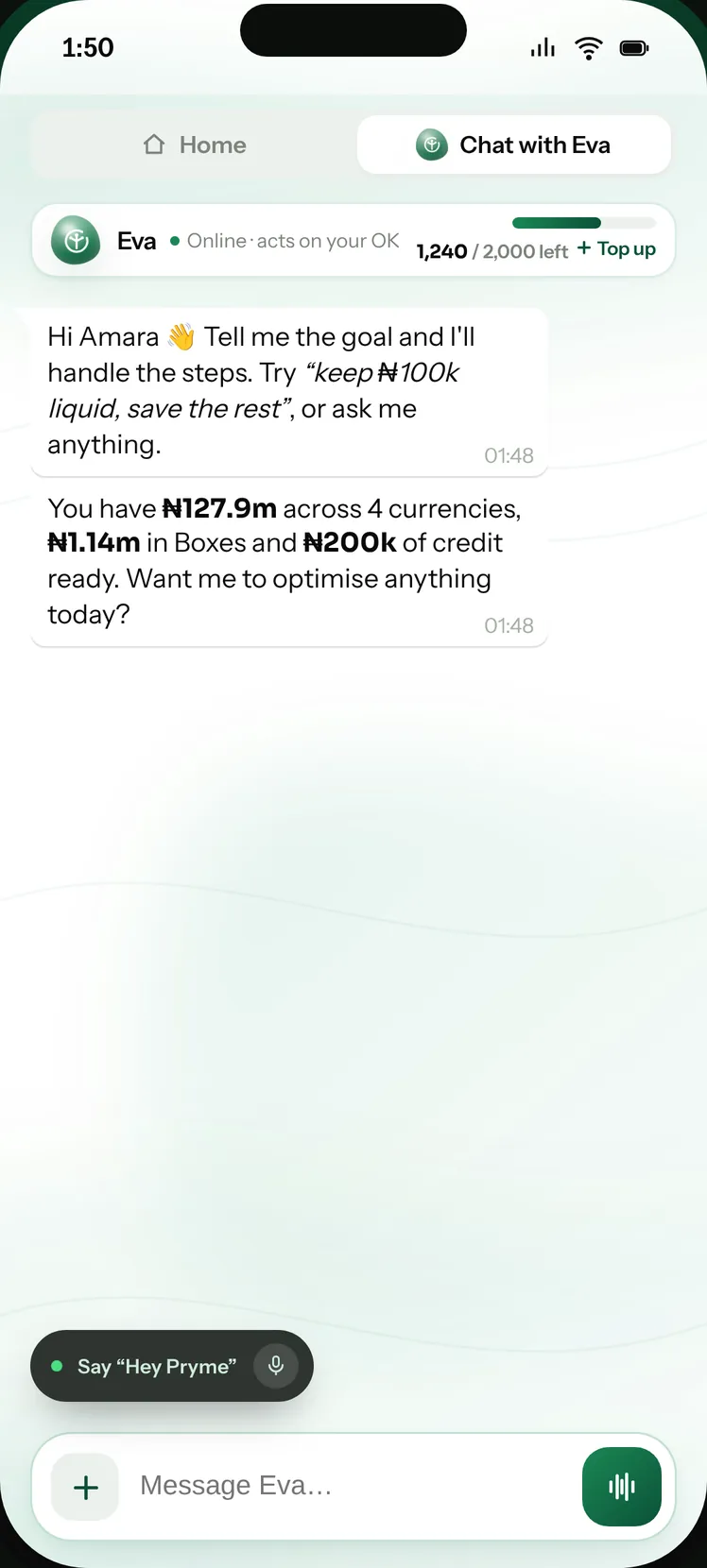
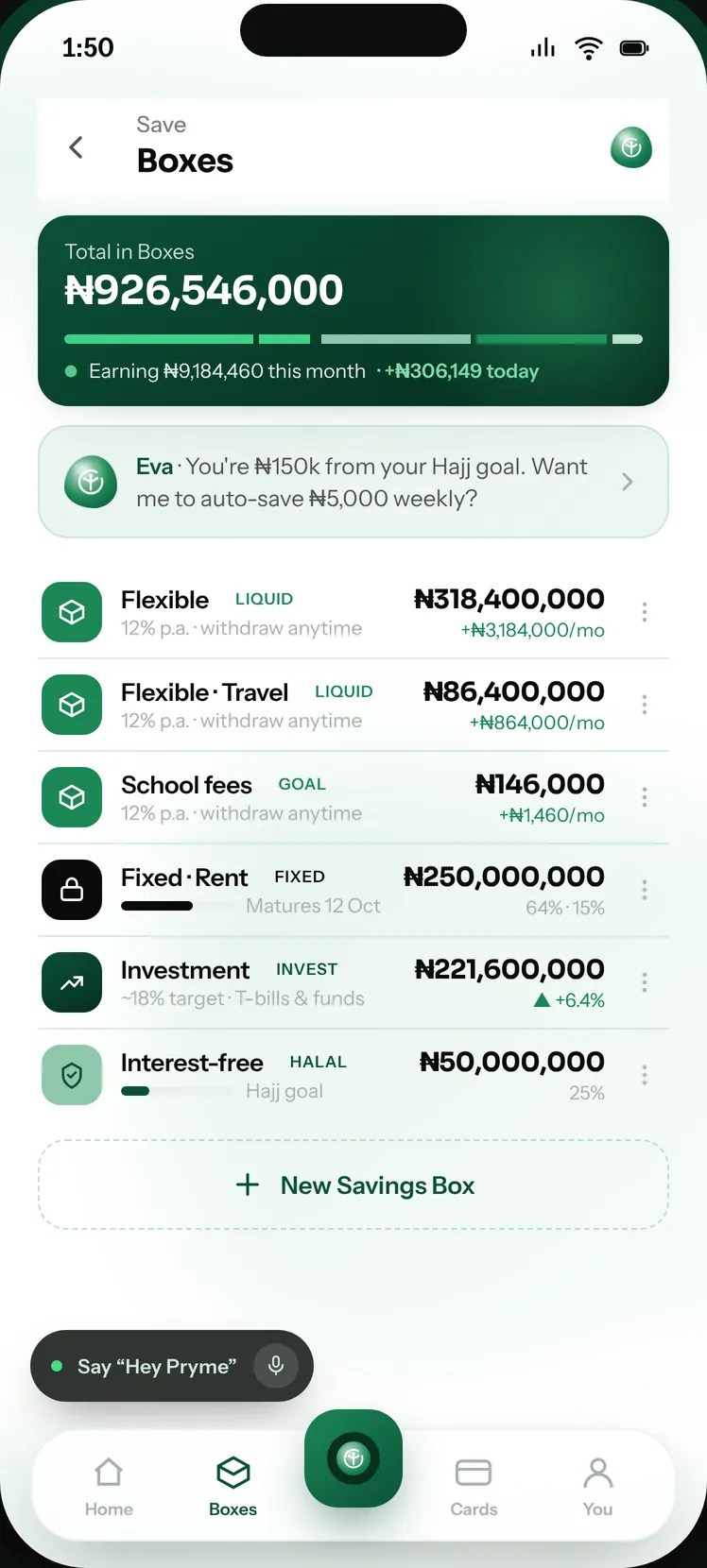
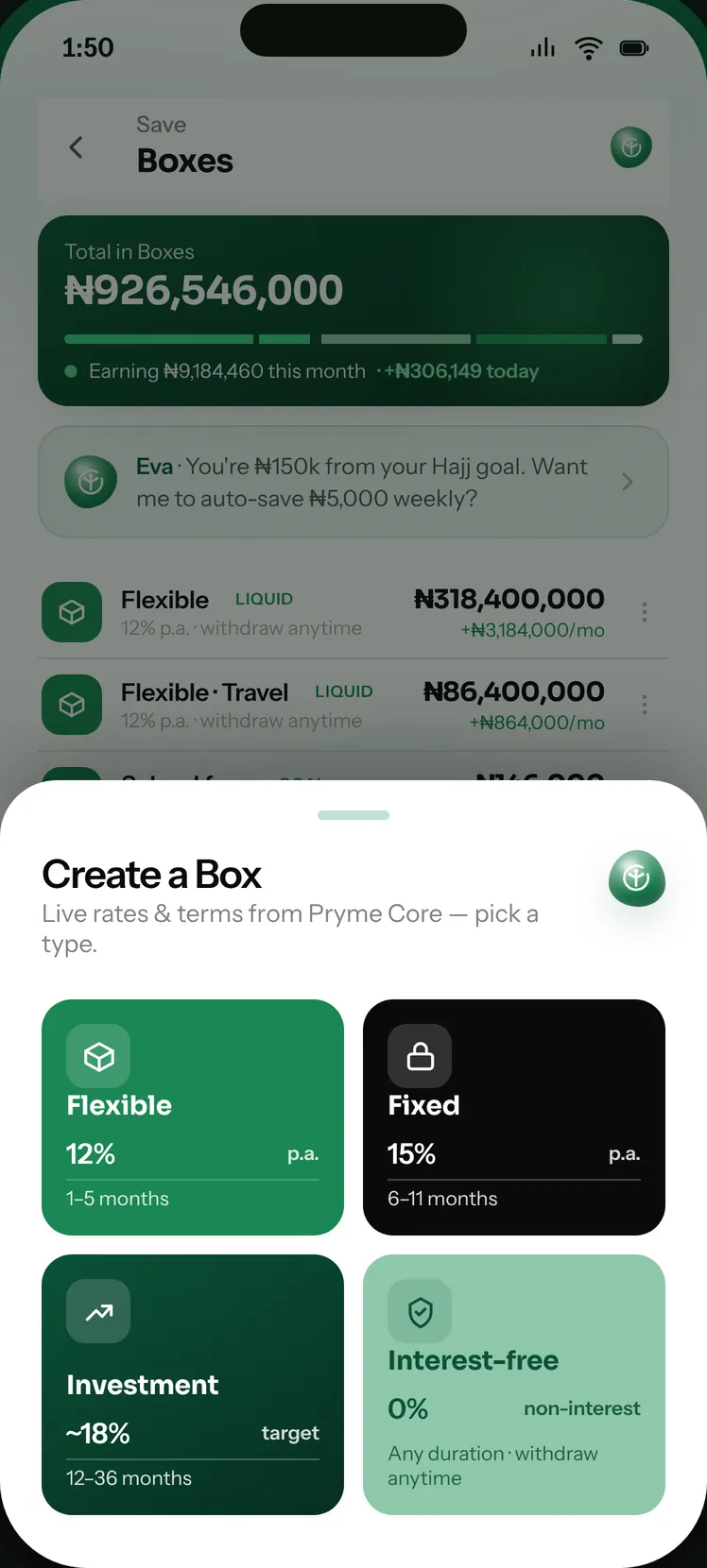
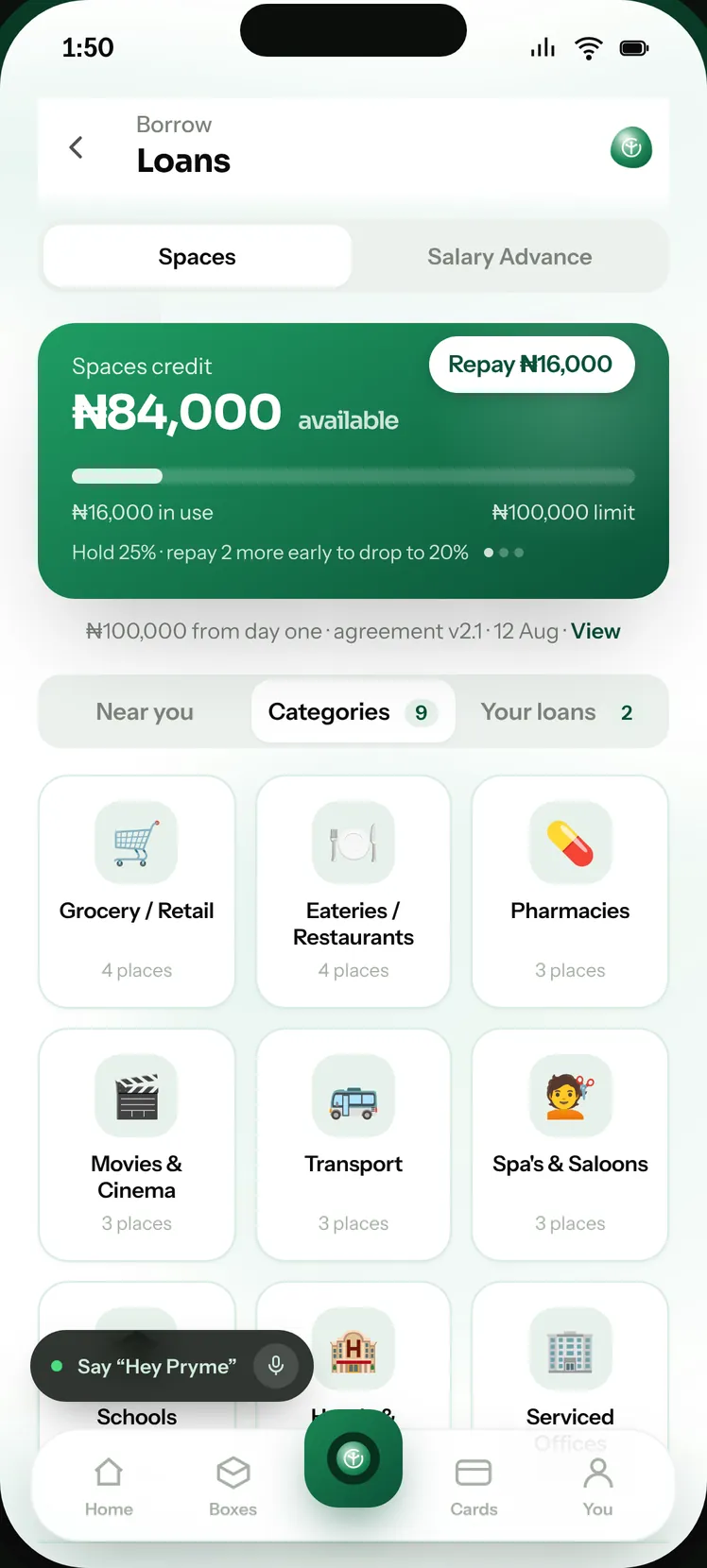
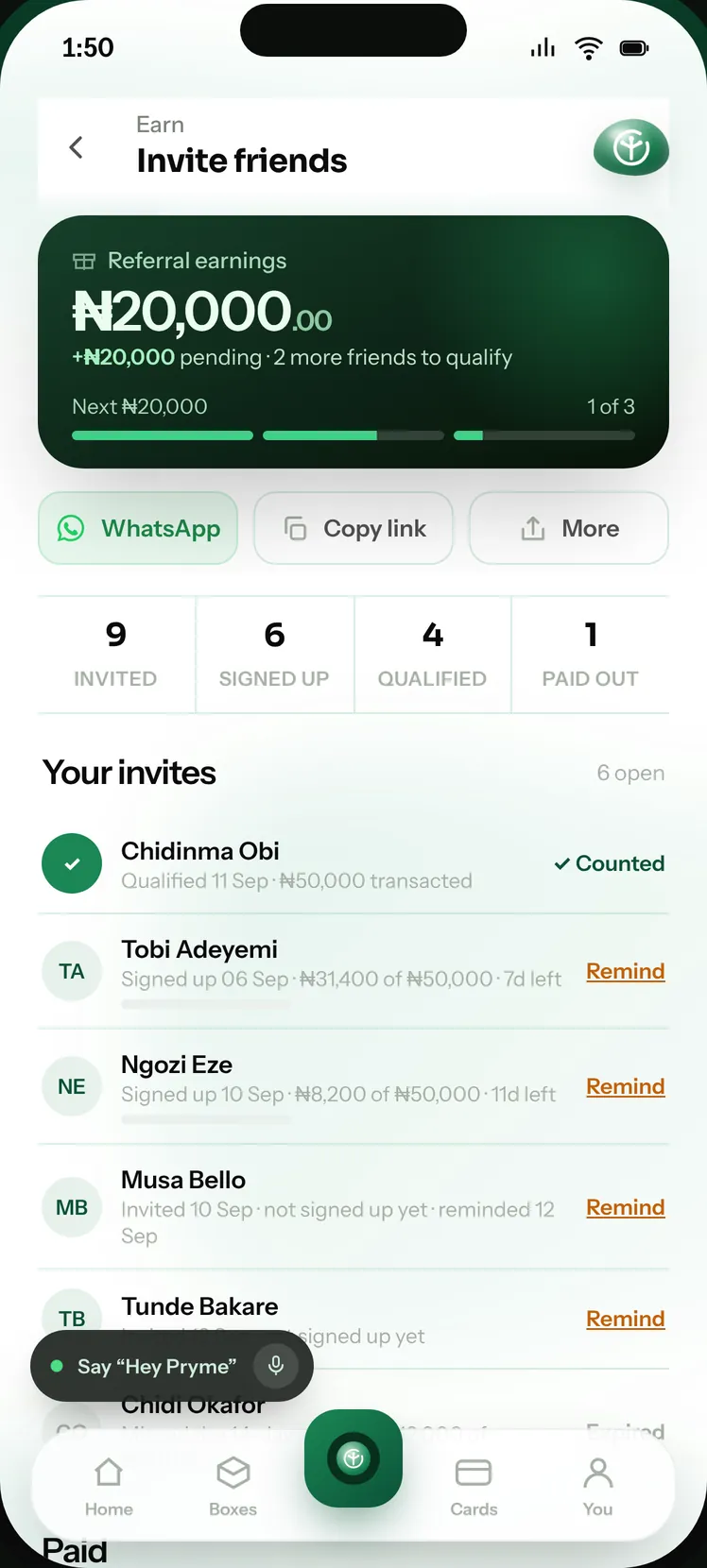
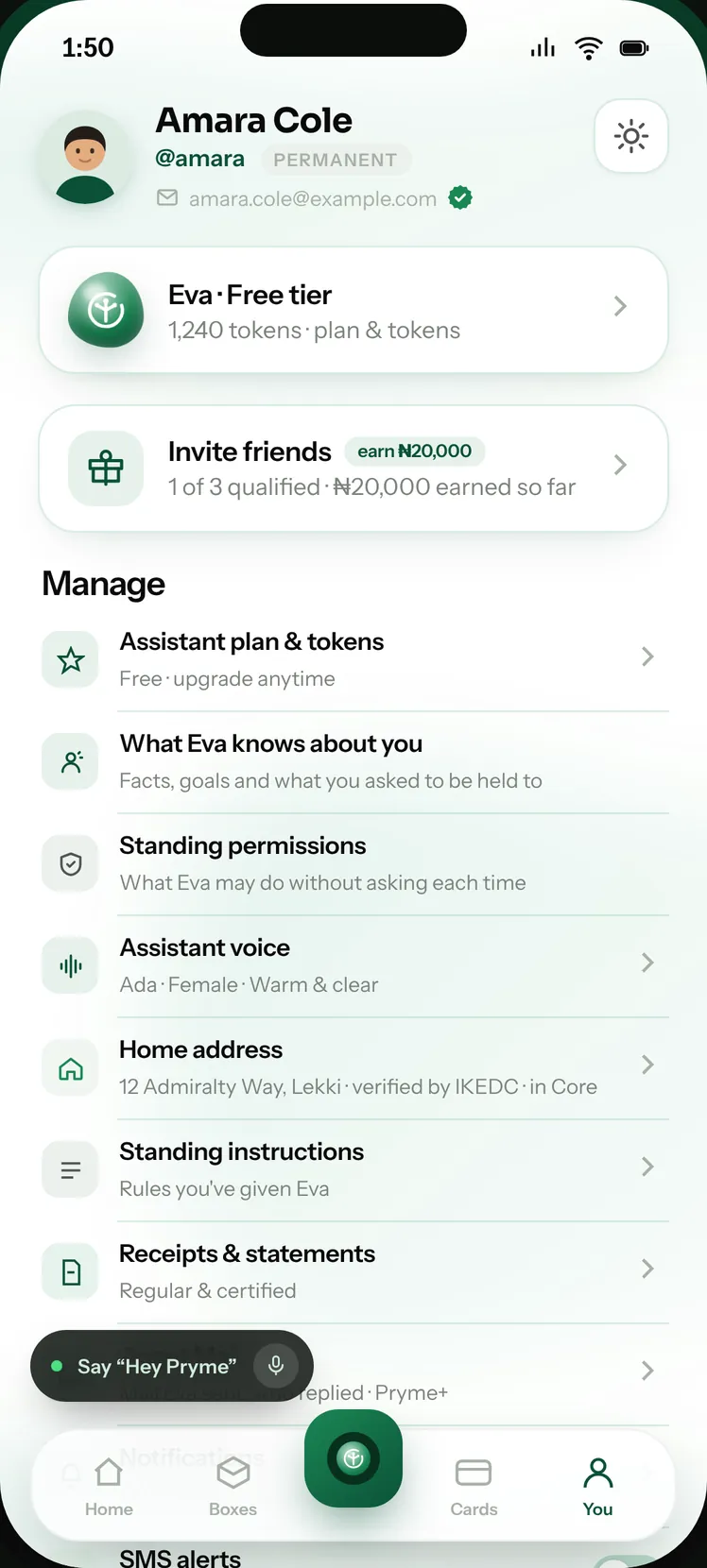
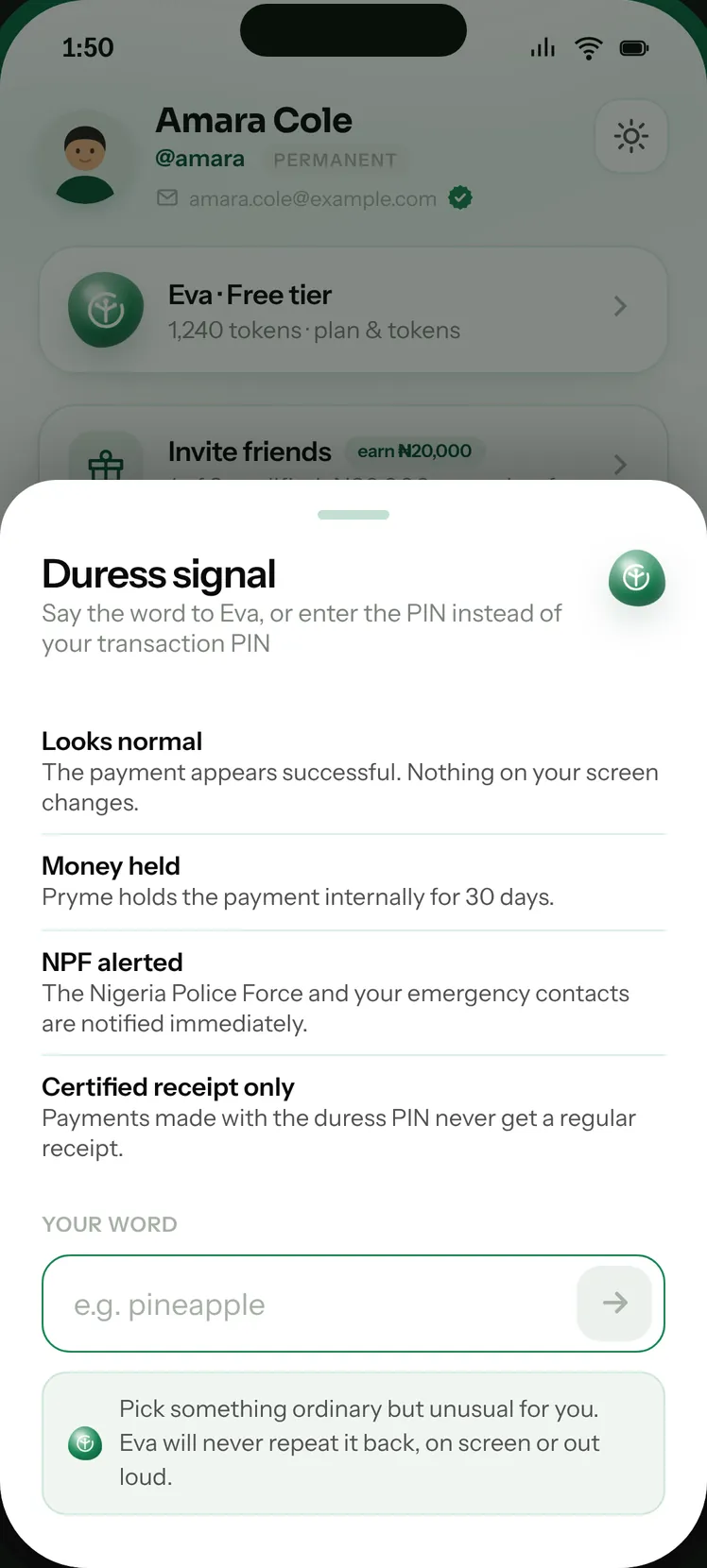
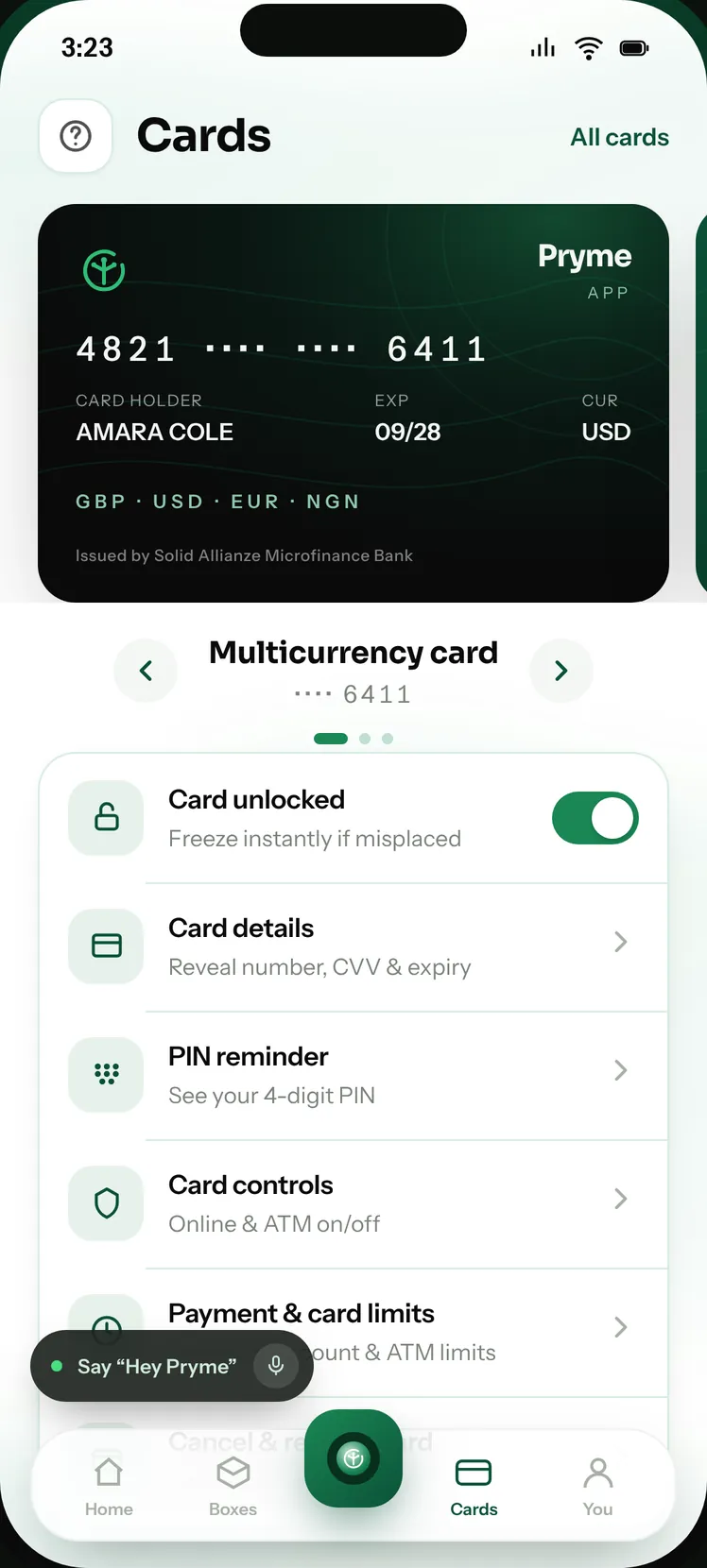
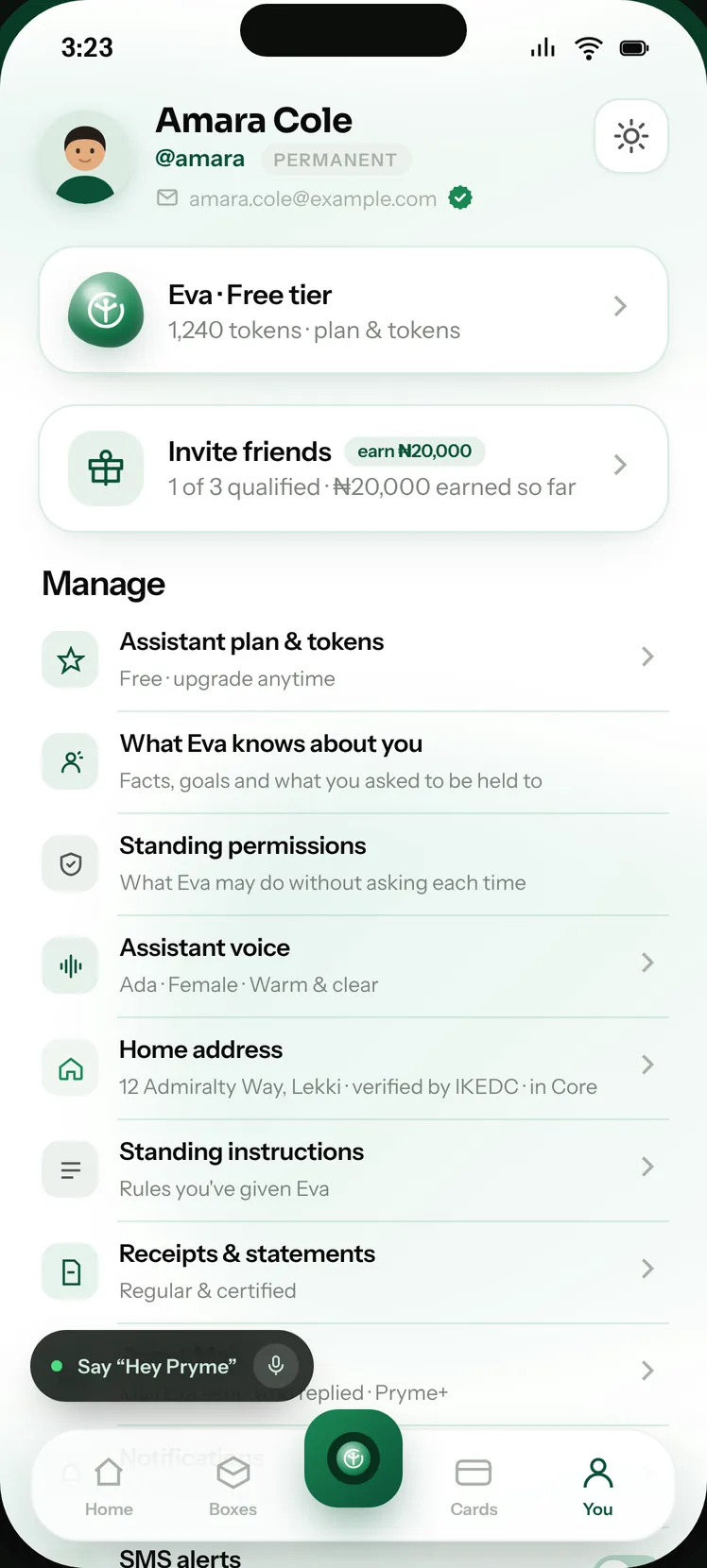
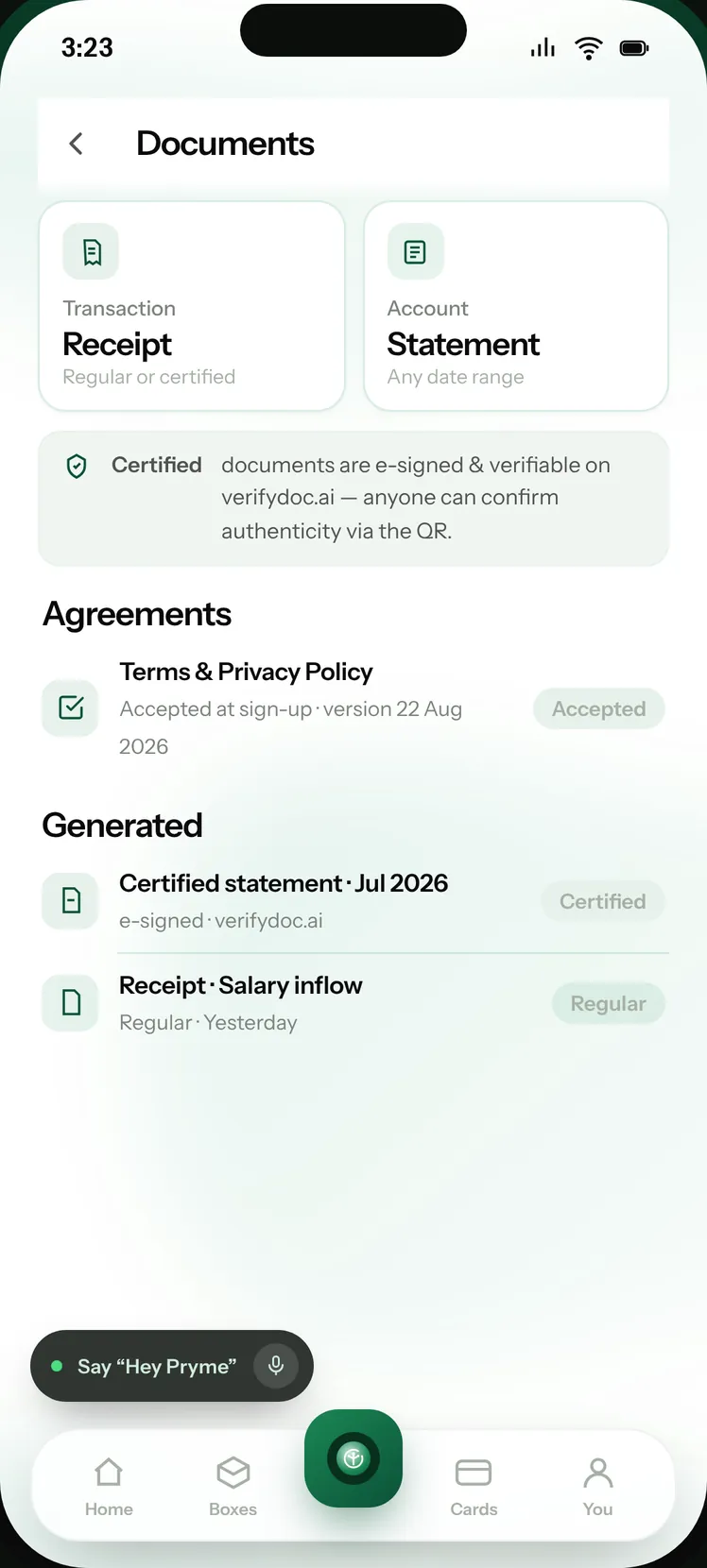
We give you a limit to spend at the shops and services you already use — and an account that works on your month while you get on with it. Dollars, pounds and euros sit beside your Naira, and an assistant handles the running of it, asking you first every single time.
One global account for your money and business. Move across currencies, automate everyday operations and put AI agents to work — with you in control of every important decision.

 Evayour assistant
 DanielChief of Staff
 BenFinance
 BruceCare
Your competitor down the road sells the same thing you sell. The difference is who walks in. We put money in people’s hands that can only be spent in businesses like yours — and then we point them at you.
You are not borrowing. You are selling to somebody who already has the money — and that money can only be spent with a business like yours.
₦100,000 from day one · agreement v2.1 · 12 Aug · View
Eva waits for your rate and asks before she moves anything.
No card, no OTP, nothing for the buyer to type in. They transfer from the bank app they already use, and the money lands in the same account your agents are running — already matched to the order, already in your books.
We give the buyer a one-time account number. They transfer to it from any bank app or by USSD — no card, no OTP, nothing to type in.
Get the account numberTo this account, from any bank app. We watch it, and the page updates itself.
₦26,767.50 from GTBank · John D., matched to order ORD‑1042.
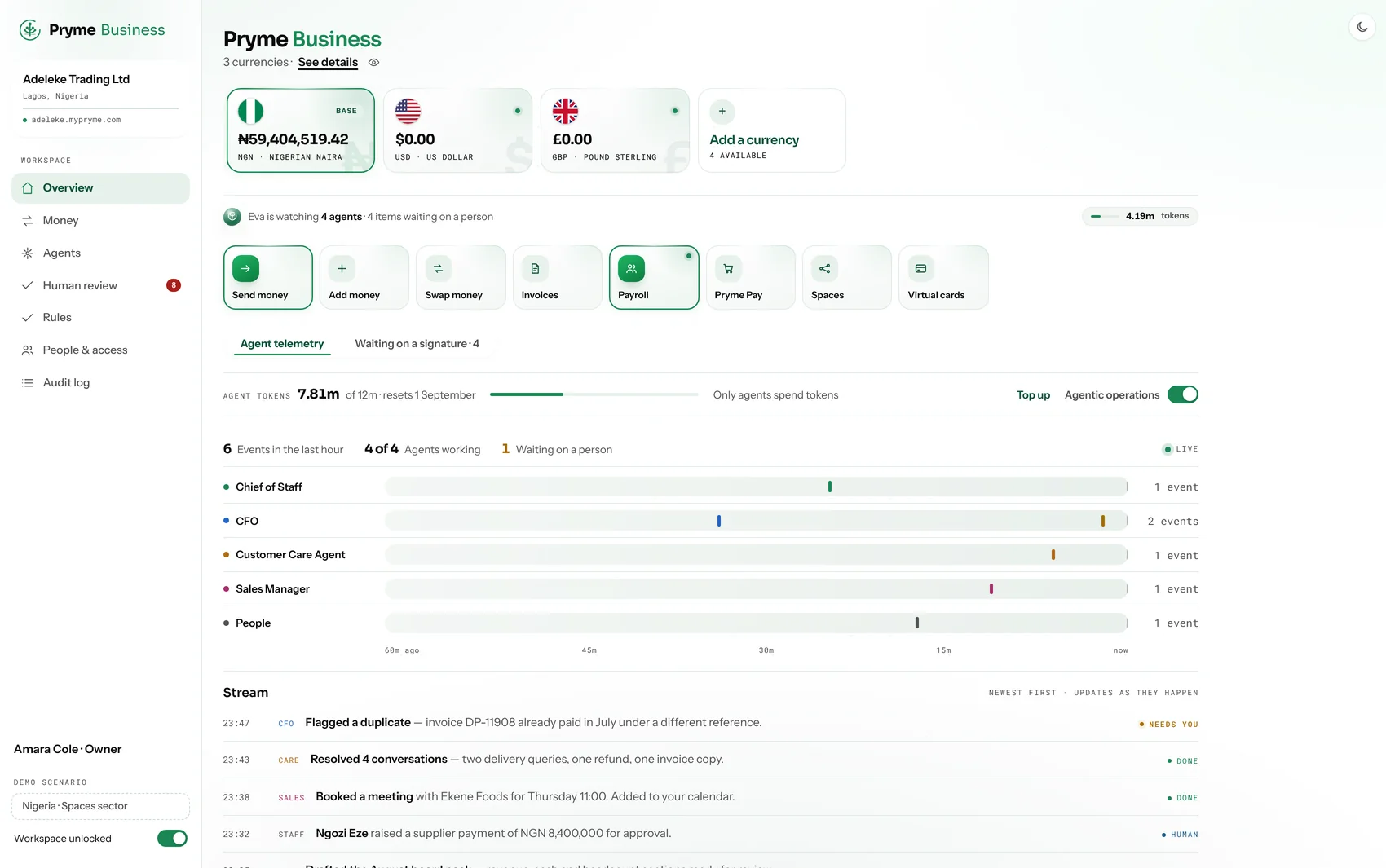
Five agents come with the account. Each one has a job description, a budget and a ceiling you set. They do the work and bring it to you — nothing leaves the account without your signature.
Knows what is stuck, who is waiting and what you promised — and keeps all three moving.
Booked a meeting with John Doe Foods for Thursday 11:00.Keeps the books as you trade and tells you the moment something does not add up.
Flagged a duplicate — invoice DP‑11908 was already paid in July.Holds every filing to its own clock and screens names and payments against your policy — and logs what it refuses.
Screened 412 payments overnight and refused two of them.Goes back to the buyers who went quiet, with the receipt already attached.
Recovered ₦410,000 across three overdue invoices.Replies, follows up on what they asked for and hands you only the ones that need you.
Resolved 4 conversations — two deliveries, one refund.Issue a dedicated Naira account number to each of your own customers, collect into it and reconcile against it. The same rails the Business Account runs on, with the licence behind them.
Dollars, pounds and euros beside a Naira account, on one ledger and one set of books. Five agents come with it and run the account — nothing leaves without your signature.
Five agents come with the account. Each has a job description, a budget and a ceiling you set. They do the work and bring it to you — they propose, you approve.
Knows what is stuck, who is waiting and what you promised, and keeps all three moving.
Booked the quarterly review with your auditor for Thursday.Keeps the books in every currency you hold and flags the moment something does not add up.
Flagged a duplicate — invoice DP‑11908 was already paid in July.Holds every filing to its own clock and screens names and payments against your policy — and logs what it refuses.
Screened 412 payments overnight and refused two of them.Goes back to the buyers who went quiet, with the invoice and the receipt already attached.
Recovered $12,400 across three overdue invoices.Replies, follows up on what they asked for and hands you only the ones that need you.
Resolved 4 conversations — two deliveries, one refund.The business has changed shape four times and never changed what it was rooted in. Each version was built out of what the last one could not do.
An online grocery store, built out of a faulty tab. Selling the food was the easy part — taking the money for it, and moving it, turned out to be the business.
A prepaid card. The first time the company issued rather than resold, and the first time it carried the obligations that come with holding somebody else’s money.
Solid Allianze acquired — an existing bank with an existing licence. The perimeter stopped being someone else’s to draw.
More than one currency on one balance, and the rebrand to Pryme. A Nigerian business could hold dollars without holding a second institution.
Accounts that do the work rather than only hold value. Five agents on the account, inside a policy you write — which is where the new mark starts.
Pryme is a financial technology company. It gives people and businesses in Nigeria one account that holds Naira alongside dollars, pounds and euros, and a set of agents that do the running of it — keeping the books, chasing what is owed, answering customers and paying bills. Nothing leaves an account without the owner’s approval.
Yes. A Pryme account holds Naira, US dollars, pounds sterling and euros side by side on one ledger, each with its own account details — a Nigerian account number, a US account number, a UK sort code and an IBAN for the euro area. You can swap between them at a rate you set, and every currency has its own statement.
Spaces is available in Nigeria. It gives a shopper money to spend that can only be spent with a participating business. The business is paid into its Naira account whether or not the shopper repays, because Pryme carries the credit. For the business it is free to join, there is nothing monthly, and the customer’s identity is never shown — only a reference and what it is worth.
Five agents come with the account. The Chief of Staff runs the week and keeps what is stuck moving. Finance watches the money and keeps the books as you trade. Compliance keeps the filings on time and screens what moves. Sales chases what you are owed. Customer Support answers your customers and follows up. Each has a job description, a budget and a ceiling you set, and each one proposes rather than acts — nothing leaves the account without your signature.
Pryme Pay takes payments on your own site or on a checkout page you control. The buyer is given a one-time account number and transfers to it from any bank app or by USSD — no card, no OTP, nothing to type in. The money lands in the same account your agents are running, already matched to the order and already in your books.
Savings Boxes are separate pots inside a Pryme account, held in Naira. Flexible Boxes can be withdrawn at any time, Fixed Boxes hold to a date, Investment Boxes hold for longer, and Interest-free Boxes earn nothing by design. A business can use them to ring-fence payroll and the tax it withholds, so that money cannot be spent by accident.
Pryme is a financial technology company, not a bank. Accounts and deposits are provided by Solid Allianze Microfinance Bank Limited, which is licensed by the Central Bank of Nigeria and is a member of the Nigeria Deposit Insurance Corporation.
Yes. Pryme Rails lets a platform issue a dedicated Naira account number to each of its own customers, collect into it and reconcile against it, over one API — the same rails the Pryme Business Account runs on.
Pryme is a financial technology company. It gives you one account that holds US dollars, pounds sterling and euros beside Naira, with an assistant that runs the account for you and asks before anything moves. Accounts are provided in Nigeria today, and further markets open as each licence lands.
Accounts are provided in Nigeria today, subject to verification and approval. Foreign-currency balances are held and converted inside that account, so you can hold, receive and swap dollars, pounds and euros wherever you are.
Naira, US dollars, pounds sterling and euros, side by side on one ledger. Each has its own details — a Nigerian account number, a US account number, a UK sort code and an IBAN for the euro area — and each has its own statement.
Swap at a rate you set rather than the rate of the day, then send to any Pryme username or to a Nigerian bank account. There is no fee to send to another Pryme account.
Eva is the assistant inside the Pryme app. She opens accounts, moves money, saves toward your goals, pays what is due and follows up what is owed to you — and asks you before anything moves.
Pryme Rails lets a platform issue a dedicated Naira account number to each of its own customers, collect into it and reconcile against it, over one API — the same rails the Pryme Business Account runs on.
Notes on money that does the work: what we are building, what the regulation actually says, and how we think about letting software act on money. Read the Ledger
What AI agents can do in bookkeeping, close, collections and compliance today, where a person must stay in charge, and how to judge a product.
How multi-currency business accounts work: local details vs SWIFT, payment rails, the real cost of FX, safeguarding vs deposit protection, and hedging.
How UK, US, Canadian and European firms pay Nigerian suppliers and get paid by Nigerian clients: FX, Form A and M, tax, compliance and payout routes.
What it really costs to send money to Nigeria from the UK, US, Canada and Europe: fees, exchange-rate margins, CBN naira rules, BVN, speed and scams.
What AI can and cannot do in day-to-day bookkeeping, how much time it saves on real numbers, and which jobs must stay with you or your accountant.
What we are building, what the regulation actually says, and how we think about letting software act on money.
All of United StatesTrade with Nigeria · 114 articles
AGOA lapsed in 2025 and was extended to 31 December 2026. What that means for Nigerian exporters, eligibility, and the new 12.5% tariff.
How air freight from Lagos is priced, which papers both ends need, and what decides how fast it clears at Houston’s Bush Intercontinental.
What CBP says about declaring Nigerian foodstuff at the airport, the penalty for not declaring, and when a suitcase of food becomes an import.
Egusi, crayfish, ogbono, pepper and dried fish must all be declared at a US airport. What CBP says, what is banned, and when it becomes an import.
CDC says it is illegal to bring bushmeat into the US in any amount. What counts as bushmeat, what happens at the airport, and the fine CDC cites.
Sourcing shoes and garments from Aba for a US label: briefs, samples, staged inspections, FTC labels, the 12.5% tariff and paying makers.
What CBP's 72-hour rule asks of anyone exporting a car to Nigeria: title documents, VIN, lien letters, where to present, and how EEI fits.
Pulled aside with undeclared food from Lagos? What CBP can do, the published penalty levels, why bushmeat is different, and how to respond to a notice.
US customs wants the English country name on goods from Nigeria, legible and permanent. Where it goes, what wording works, what unmarked goods cost.
A binding ruling tells you in writing how CBP will classify your product before you import it. Who can ask, what to send, how long it takes, what it costs.
A bond guarantees your duties to CBP. When you need one for Nigerian goods, how the amount is set, and how to choose between single and continuous.
US law lets you clear your own goods, but most small importers of Nigerian products now use a licensed broker. When it is worth it, and what to ask.
De minimis is suspended, so small parcels from Nigeria now need an entry. How the $2,500 informal entry works, who files, and when it does not apply.
An FDA detention and a CBP seizure are different things with different deadlines. The petitions, relabelling, export and destruction options explained.
The $800 duty-free allowance is suspended for every country and every mode. What that means for small parcels of Nigerian goods, and who pays.
Dried and smoked fish can enter the US, but salted uneviscerated fish is on an FDA import alert and commercial importers must verify HACCP compliance.
Most US goods shipped to Nigeria are EAR99 and go No Licence Required, but end users, end uses and listed items change that. How to check.
When US exports to Nigeria need Electronic Export Information, how the $2,500 per Schedule B rule works, and how to file in ACE AESDirect.
Infant formula, follow-up milk and baby food must be NAFDAC-registered, labelled in four languages and never advertised. What a US exporter needs.
Nigeria's 15-year age limit for imported cars, the 2026 duty and levies on CIF, how customs values the car, and a worked example to check.
Second-hand clothing is under an absolute import ban in Nigeria, and most footwear and bags sit on the prohibition list. What US sellers can ship.
Generators, inverters and solar panels need SONCAP certification before your Nigerian buyer's Form M. How duty is worked out and what installers need.
NAFDAC registers medical devices by risk class A to D. What a US manufacturer must supply, timelines of up to 240 working days, and SONCAP.
Form M, PAAR and SONCAP: what Nigeria Customs needs before your goods arrive, which parts the Nigerian buyer handles and what a US seller must supply.
How a Houston export to Lagos is booked and documented: Form M, SONCAP, the booking, EEI filing, the bill of lading and what clears in Lagos.
From 7 October 2026 Nigeria checks phones, SIM tablets and SIM laptops against NCC type approval. What a US exporter must confirm before shipping.
NAFDAC registration for imported cosmetics: the power of attorney, free sale certificate, NAPAMS, 120 working days and a five-year certificate.
Export controls, EEI, SONCAP and Nigerian duty: the checks a US seller should run before shipping phones, laptops or appliances to Nigeria.
Why a US food brand needs a Nigerian company to register each product with NAFDAC, the documents involved, and the import bans to check first.
The US title and EEI rules for exporting a used car, and the Nigerian age limit, duty and levy rules the car must pass at Lagos.
Used and retreaded tyres are on Nigeria's import prohibition list. What that means for US exporters of tyres, used spare parts and refurbished parts.
Fourteen FDA import alerts list Nigeria. What detention without physical examination means, which alerts apply, and how importers deal with them.
Every commercial food shipment from Nigeria needs FDA prior notice before it lands. The deadlines by mode, what to enter, and what a refusal costs.
An FDA refusal is not always the end. How the hearing, relabelling or reconditioning application, bond and supervision costs work under 21 CFR 1.94-1.99.
Why the Lagos factory that makes your garri, spice or snack must hold its own FDA registration, who can be its US agent, and when it renews.
Why your Nigerian customer must open Form M before you ship, how it moves from bank to Customs, and exactly what you as the US seller must provide.
What a forwarder does on a Lagos to Houston shipment, how to check its FMC licence, and the documents and duties to agree in writing before goods move.
The Foreign Supplier Verification Program makes the US importer answer for Nigerian food safety. Who counts as importer, what to write, what to keep.
Cash in advance, letters of credit, documentary collections and open account: how each works with a Nigerian buyer, and what to agree first.
Tariffs first. Nigeria faces a 12.5% Section 301 tariff from July 2026 and Ghana is not listed. How the other US import rules compare.
Bringing Nigerian vendors to a US trade show: visitor visas, food and textile samples at customs, the 12.5% tariff, and paying vendors after.
The HTS code decides your duty rate and the rules that apply. How the US schedule is built, how the interpretation rules work, and where to check.
The 10+2 filing is due 24 hours before your container is loaded in Lagos, not before it reaches the US. The timeline, data and $5,000 exposure.
How fibre, weave, weight, yarn and hand-loom status move adire fabric between HTS lines, the duty on each, the 12.5% tariff and AGOA.
How to find the US duty on aso-oke and lace: the HTS line, customs origin, the 12.5% tariff on Nigerian products, AGOA and small parcels.
Fresh produce from Nigeria enters the US only if APHIS has authorised that crop from that country. How to check ACIR, and what the FDA adds.
Garri, elubo and other swallow flours need a registered Nigerian mill, prior notice and a US label with allergens declared. What buyers check.
Agbo, herbal teas and bitters from Nigeria: when the FDA treats them as food, a dietary supplement or an unapproved drug, and what that costs.
Fresh or dried, for chewing or for planting: how USDA APHIS plant rules and FDA food rules apply to obi and orogbo shipped from Nigeria.
Which Nigerian carvings, beadwork and crafts need wildlife declarations or CITES permits in the US, the near-ban on ivory, and Nigeria's export limits.
Real coral is wildlife: FWS licence, declaration and sometimes CITES permits. Glass and stone beads are a duty question. HTS lines and the 2026 tariff.
Alcohol from Nigeria needs a federal importer permit, a label approval for each product, FDA steps and state licences. What TTB says, as at September 2026.
The TTB importer permit, label approval and excise rules for Nigerian beer, spirits and palm wine, and the FDA rules for zobo and soft drinks.
Duty on printed books from Nigeria, why the 2026 tariffs may still matter, how CBP handles pirated copies, and what to ask a publisher before buying.
Non-alcoholic Nigerian drinks are FDA foods. How pH, juice content and sealed bottles decide which processing rules apply, plus labels and prior notice.
Garri, fufu flour, lafun and tapioca are FDA-regulated foods. How cyanide risk, supplier checks, labels and prior notice fit together for importers.
Ankara clothing sold in the US needs fibre content, country of origin and dealer identity on its label, plus the right tariff code and origin.
What you need to distribute Nollywood films in the US: written rights from the owner, territory and media terms, recordation, and DVD imports.
A Lagos to Houston food container step by step: ISF before loading, FDA prior notice, entry, FDA review and holds, and the truck leg to your warehouse.
The three FDA rules every Nigerian food import must meet: facility registration, prior notice for each shipment, and a compliant English label.
Frozen fish, vegetables and snacks from Nigeria: which agency rules apply, where the cold chain rules start, and why detention is costlier when frozen.
Nigerian shelled peanuts and melon seeds sit on an FDA import alert for aflatoxin. What that means, the 20 ppb guide, and how shipments get released.
Hair creams, oils and relaxers from Nigeria fall under MoCRA: facility registration, product listing, adverse event reports and safety records.
Honey from Nigeria is an FDA-regulated food. Registration, prior notice, supplier checks for adulteration and residues, labelling and lab testing.
HTS lines and general duty for leather handbags and shoes from Nigeria, the 12.5% Section 301 tariff, AGOA questions and exotic-skin rules.
Packaged chin chin and puff-puff mix for US wholesale: allergens, labels, colour and sulfite alerts, registration and what buyers will ask for.
Pepper, suya spice and other Nigerian spices face FDA import alerts for Salmonella, colours and heavy metals. Testing, labels and the peanut problem.
Two sets of US wood rules apply: one to the carvings, one to the pallets and crates they travel in. What ISPM 15 needs and what the APHIS rules say.
Iru, ogiri and dawadawa are ordinary foods to the FDA, but fermentation, jars and labels raise their own questions. What applies and what to check.
Nigerian palm oil needs a registered producer, prior notice and an English label. Why illegal colours are the main risk and what testing helps.
What a US label on elubo or plantain flour must say, in what order and units, plus the registration, prior notice and import-alert checks behind it.
Shea butter sold as a moisturiser is a cosmetic under US law. What MoCRA means for facility registration, product listing, claims and adverse events.
Dried fish answers to the FDA, and some species to NOAA as well. Seafood HACCP, the uneviscerated fish alert, SIMP species and the 2026 MMPA bans.
Clearing mixed Nigerian air cargo at Hartsfield-Jackson: food, cosmetics and fabric in one consignment, which agency checks what, and luggage vs cargo.
How air freight from Lagos clears at JFK: air waybills, the four-hour FDA prior notice, informal and formal entries, bonds and what happens on a hold.
Dried zobo leaves are a food to the FDA. Registration, prior notice, Salmonella and pesticide alerts, labels, and when health claims cause trouble.
What a US label for egusi, garri or pepper soup spice must show: Nutrition Facts, ingredients, allergens, net quantity and English text, rule by rule.
Where a letter of credit from a Nigerian bank can still fail a US seller, and how confirmation and careful documents reduce that risk.
Which NAFDAC export certificate Nigerian food needs before shipping to the US, what testing it involves, how long it takes, and how it relates to FDA.
What a Nigerian supplier’s NEPC exporter certificate means, what it does not, and the five questions a US buyer should ask about it before ordering.
Why a late Form M holds up your shipment, how SONCAP and proforma validity interact with it, and the steps a US seller takes while waiting.
How Nigeria Customs values goods shipped from the US, why invoices get queried, and the written-reasons, guarantee and appeal rights you have.
The terms a US brand should settle with a Nigerian distributor: territory, exclusivity, NAFDAC registration ownership, trademarks, payment and exit.
Why your Lagos supplier must raise Form NXP before shipping to you, what it ties together, and why it decides which account you should pay.
The goods Nigeria bans or restricts at import, from frozen chicken and used clothing to old cars, and how a US exporter checks a product.
When US duty on Nigerian goods is due, how ACH statements and periodic monthly statements work, and what the 2026 tariffs add to the bill.
Staged payments, independent inspection and transfers that leave a paper trail: how US buyers can pay Nigerian suppliers without paying for nothing.
How trade escrow works when buying from Nigeria: funding, inspection periods, release, licensed providers, fake escrow sites and alternatives.
Naira payments can cut the cost of paying Nigerian suppliers, but not every supplier should be paid in naira. When it fits, when it does not, and how.
How third-party inspection works for goods leaving Lagos for the US: what inspectors check, sampling, reports, and tying payment to the result.
The reciprocal tariff on Nigeria ended in February 2026. What replaced it, what applies to Nigerian imports today, and what is still unclear.
Sales tax registration, FDA and FTC product rules, and the 2026 duty and de minimis changes for a US store shipping Nigerian goods from US stock.
Full container or shared load, the Nigerian export papers, the ISF deadline and US clearance: the sea freight process from Lagos, step by step.
Buying at US salvage auctions for buyers in Nigeria: title brands, Nigeria's 15-year rule, CBP's 72-hour export step, EEI and getting paid.
Packaged Nigerian snacks made in Lagos and sold in the US: FDA facility registration, prior notice, allergen labels and the claims that cause trouble.
The Nigerian applicant, power of attorney, Free Sale certificate and factory inspection NAFDAC needs before US cosmetics can be sold in Nigeria.
Black soap can be true soap, a cosmetic or a drug in the US, depending on what it is made of and what you claim. How to label each one.
Cash in advance, letters of credit, documentary collections or open account: how each payment term works for a US seller and a Nigerian buyer.
Homemade or imported: how FDA labelling, state cottage food laws and sales tax apply when you sell Nigerian food on Etsy or your own Shopify store.
Puff puff, chin chin and zobo at a farmers market: when cottage food law covers you, when you need a permit, and why imported packaged goods differ.
Supplying African shops in the US means FDA duties, store-ready labels and terms that protect cash flow. A practical guide for importer-wholesalers.
Amazon category approval for grocery, FBA shelf-life rules and the FDA requirements Nigerian foods must meet before they can be listed and stocked.
Chin chin, puff puff, plantain chips, kuli kuli and zobo from your Texas kitchen: what SB 541 allows, the $150,000 limit, labels, and what stays banned.
From title clearance with CBP in Houston to Form M, PAAR and customs clearance in Lagos: the order of steps and the papers each one needs.
Under DAP the Nigerian customer clears and pays import duty; under DDP the US seller does. Why DDP is hard for Nigeria and how to price each.
How to book ocean freight from the Port of New York and New Jersey to Lagos: FCL or LCL, carrier or NVOCC, the documents and the order to do it in.
Which US goods need SONCAP for Nigeria, the PC and SC certificates, SON’s published fees and validity, and how US exporters obtain them in 2026.
FTC rules on fibre content, "Made in Nigeria" and dealer identity, where the label goes, online listings and care labels, for diaspora fashion sellers.
Short goods, wrong goods or no goods: the evidence to keep, how arbitration and the New York Convention help, and where mediation in Lagos fits.
Jumia's cross-border route is now an overseas warehouse (FBJ) model aimed at Chinese sellers. What that means for a US seller and how payouts work.
The rules changed three times in 2026. Products of Nigeria now face a 12.5% Section 301 tariff on top of normal duty, unless exempt.
Why supplier documents matter at the US border and in disputes, what to check on a Nigerian invoice, and how verifiable receipts and statements help.
A CAC search, NEPC exporter status, FDA records for food and a few reference checks: how a US buyer can verify a Nigerian supplier before sending money.
How US store owners buy from Balogun, Mile 12 or Tejuosho through agents, and the controls, export papers and US rules that protect each order.
You can add the other type later — many of our customers hold both.
The business first, then you. Nothing is submitted until you review it.
Ideal customer profiles
Generated from your website by VerifiedLead.ai
Pick the ones that look right. Your Sales agent works these first, and you can change them at any time after opening.
We ask this because you have not given us a website. It helps us set the right limits from day one.
Which of these represents you?
Officers listed against this company on the UK register.
We have sent a six-digit code to your email address. Enter it below to confirm the address is yours.
Wrong address? Go back and change it — nothing is created until this step passes. We never ask for a code by phone or email; anyone who does is not us.
Last step. Each time you sign in we email you a six-digit code — we never send codes by SMS.