AI agents for business finance: what they can and can't do
What AI agents can do in bookkeeping, close, collections and compliance today, where a person must stay in charge, and how to judge a product.
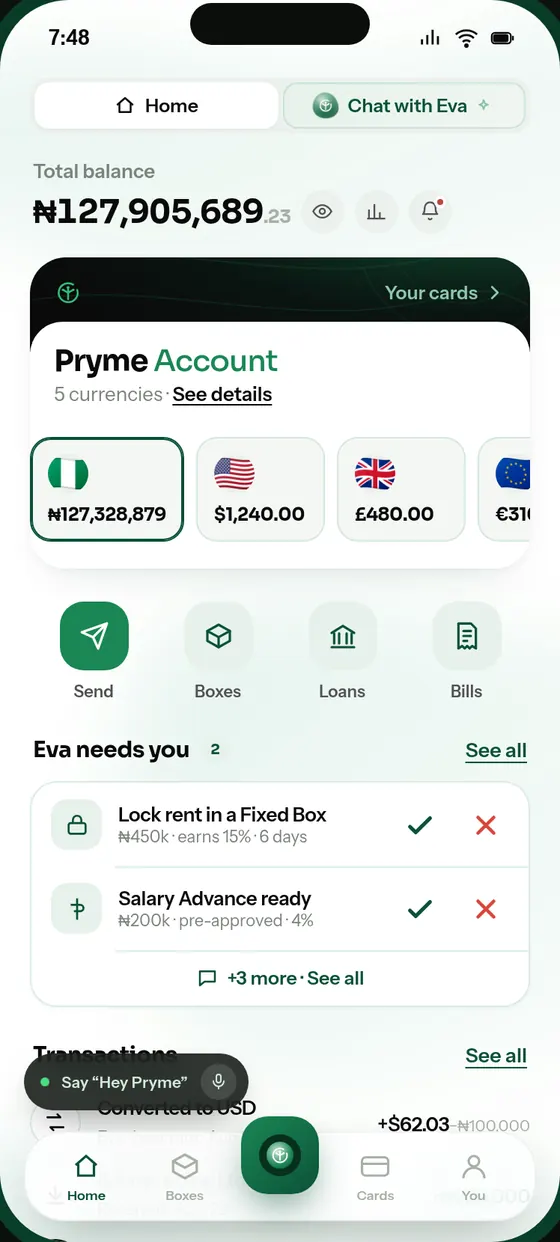
Meet Eva, the assistant inside the Pryme app. She opens accounts, moves money, saves toward your goals and follows up. Nothing leaves your account without your approval.
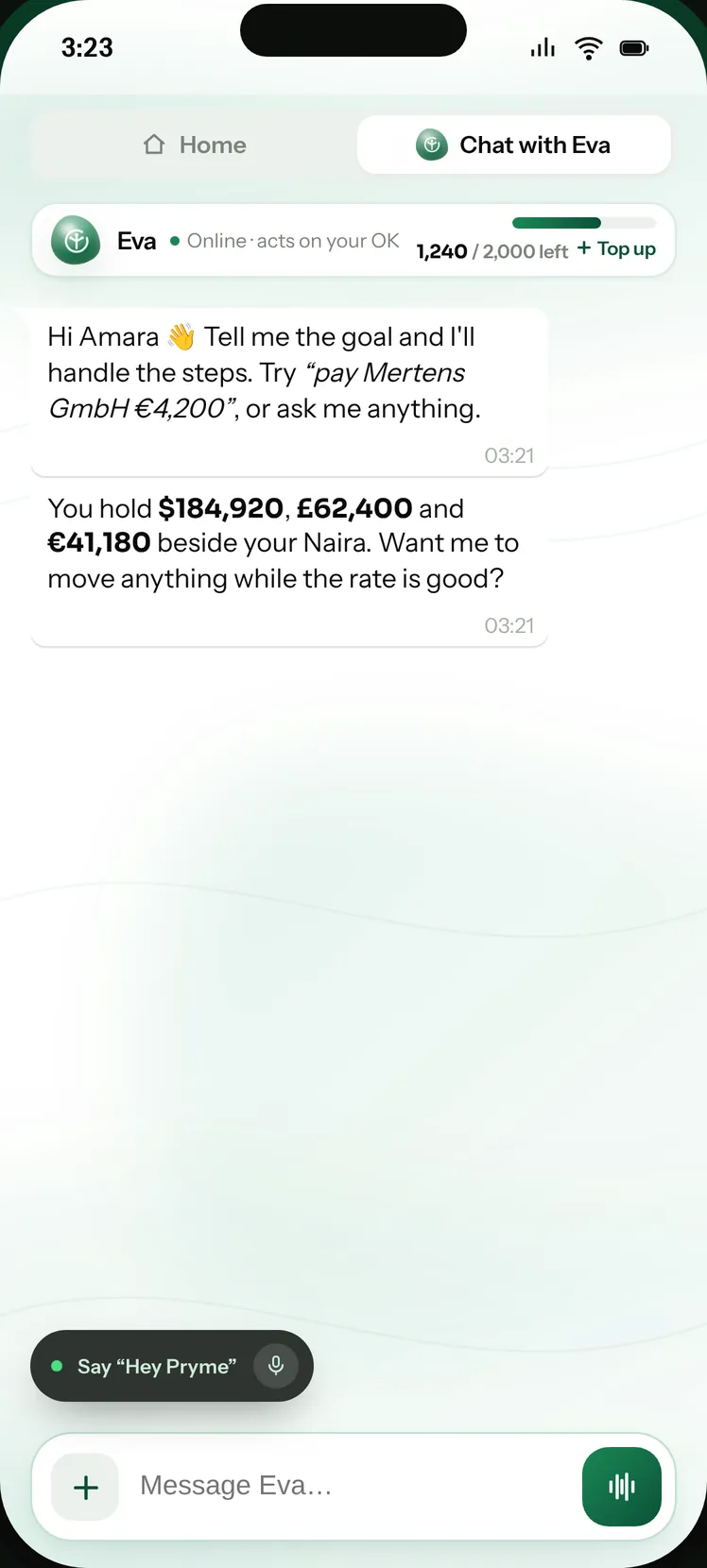
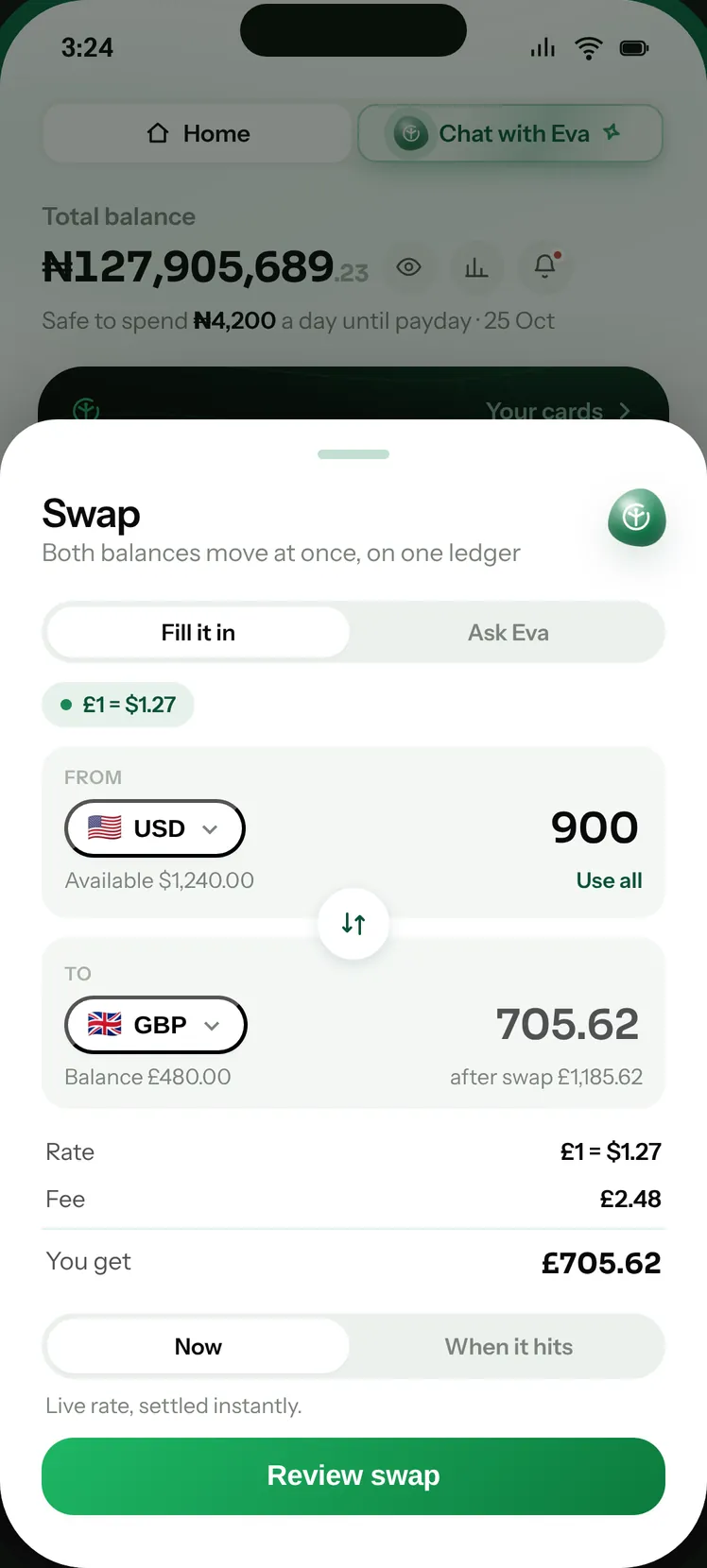
Meet Eva, the assistant inside the Pryme app. She holds dollars, pounds, euros and Naira side by side, swaps at a locked rate, pays bills in any of them and sends anywhere, asking before anything moves.
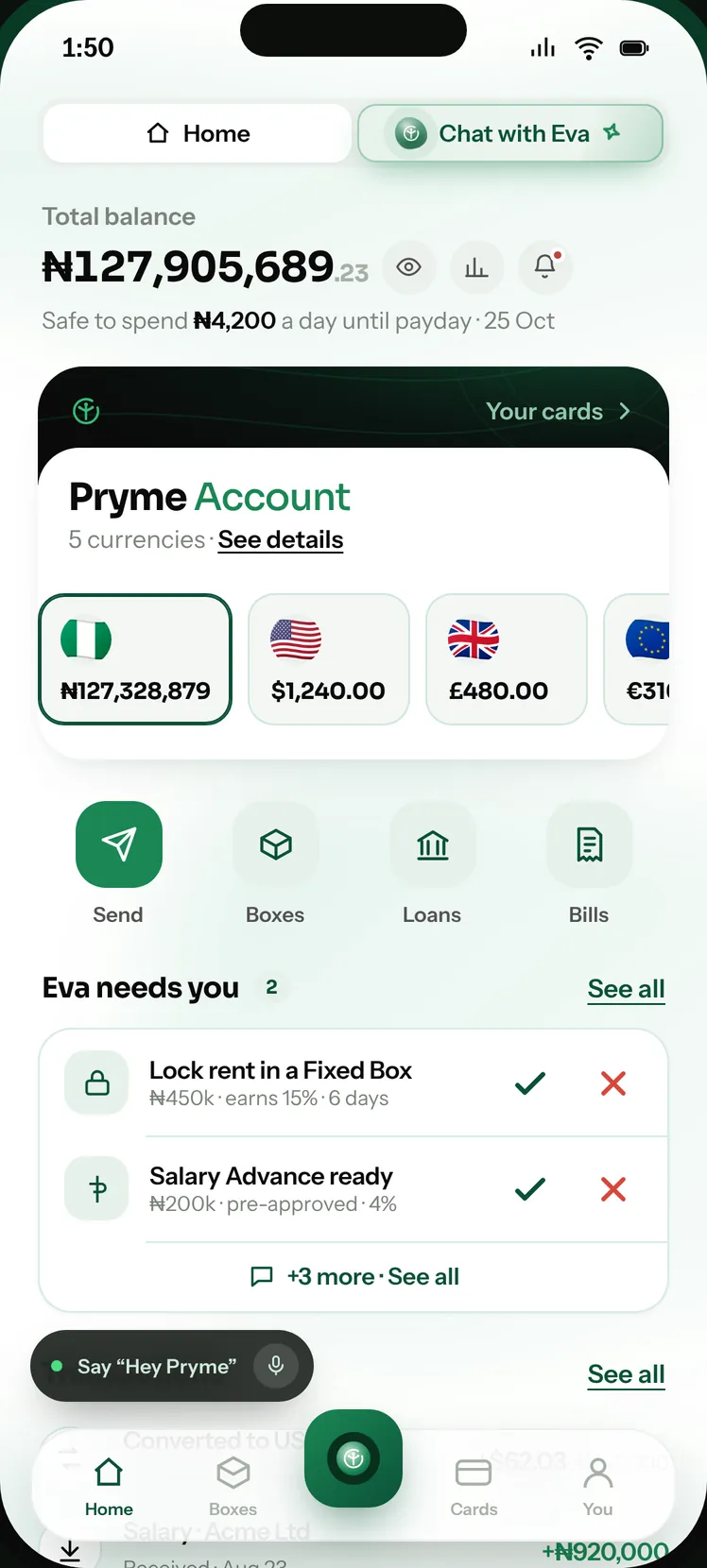
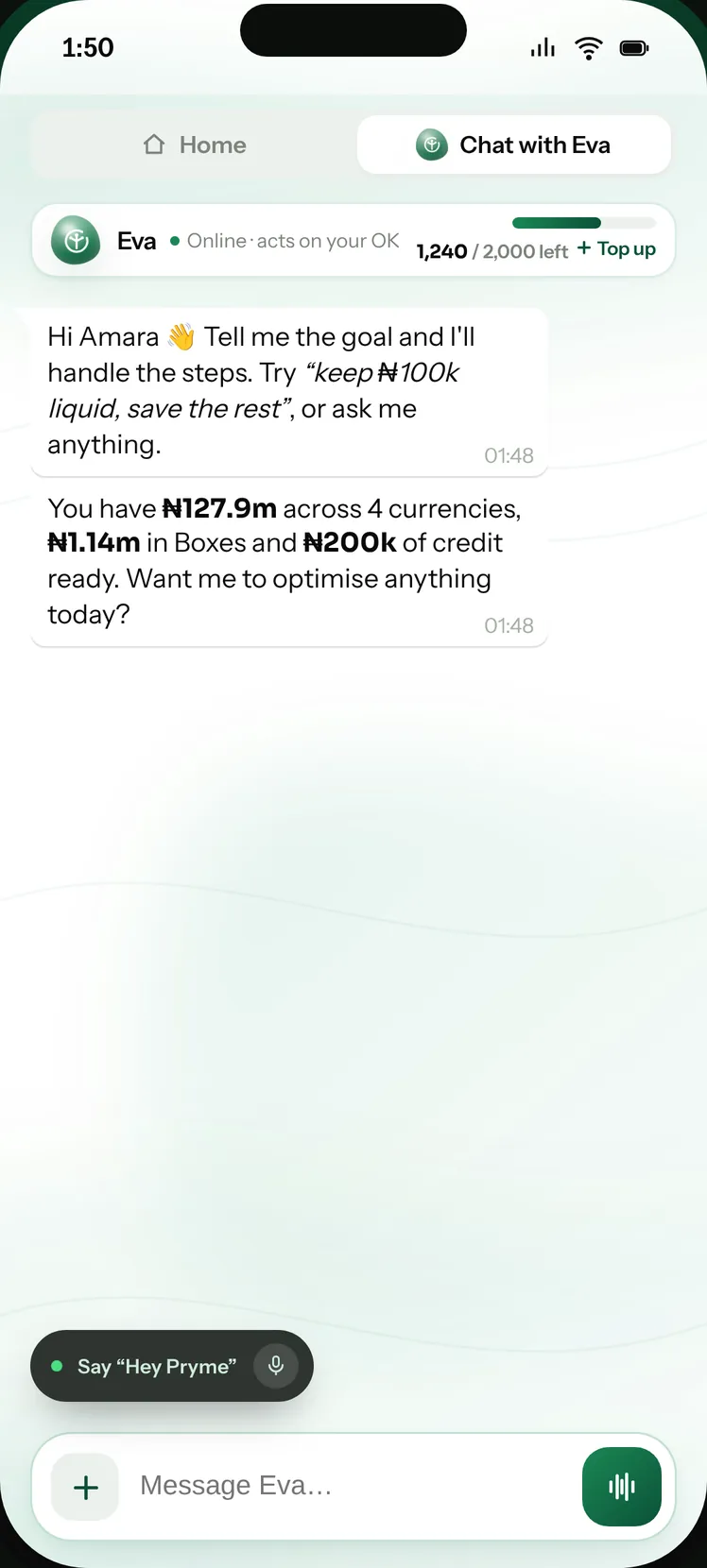
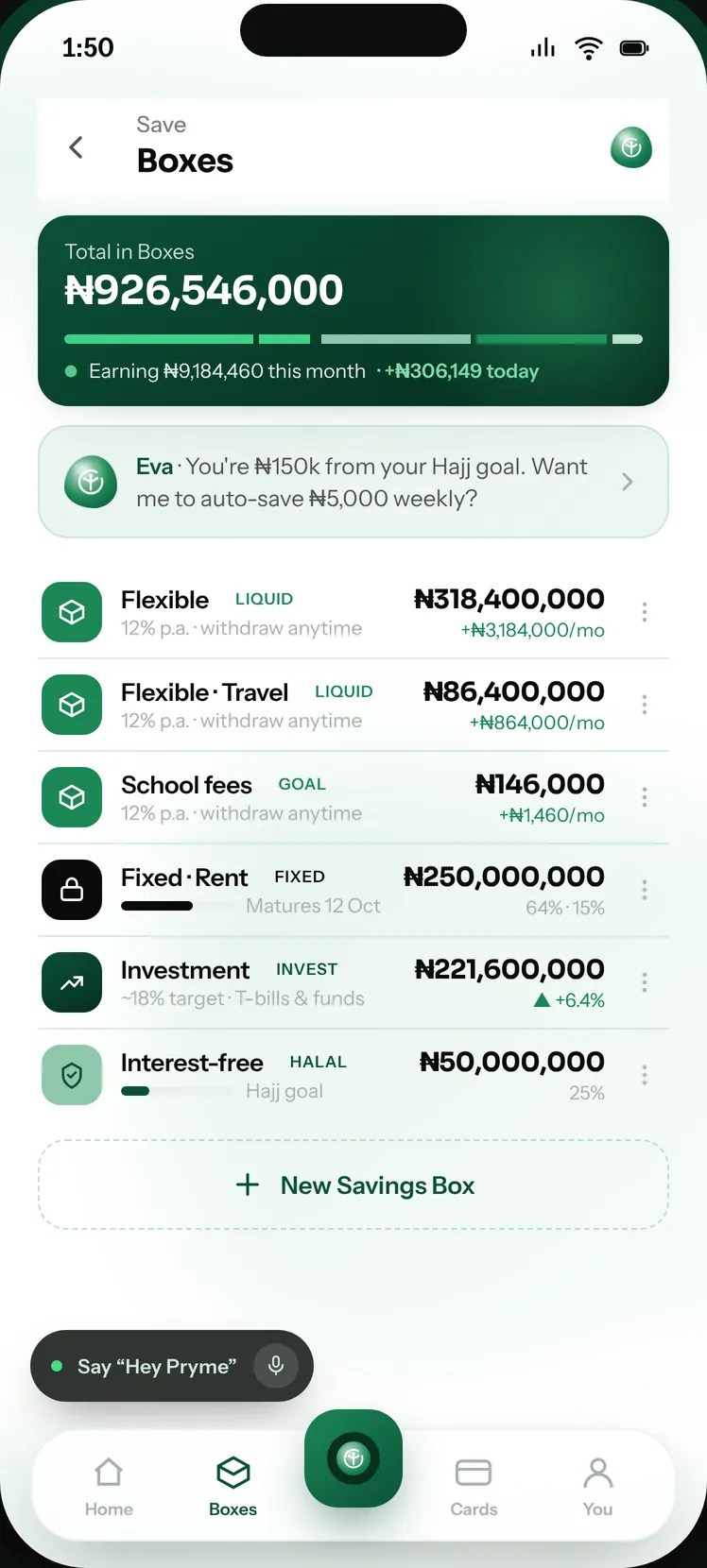
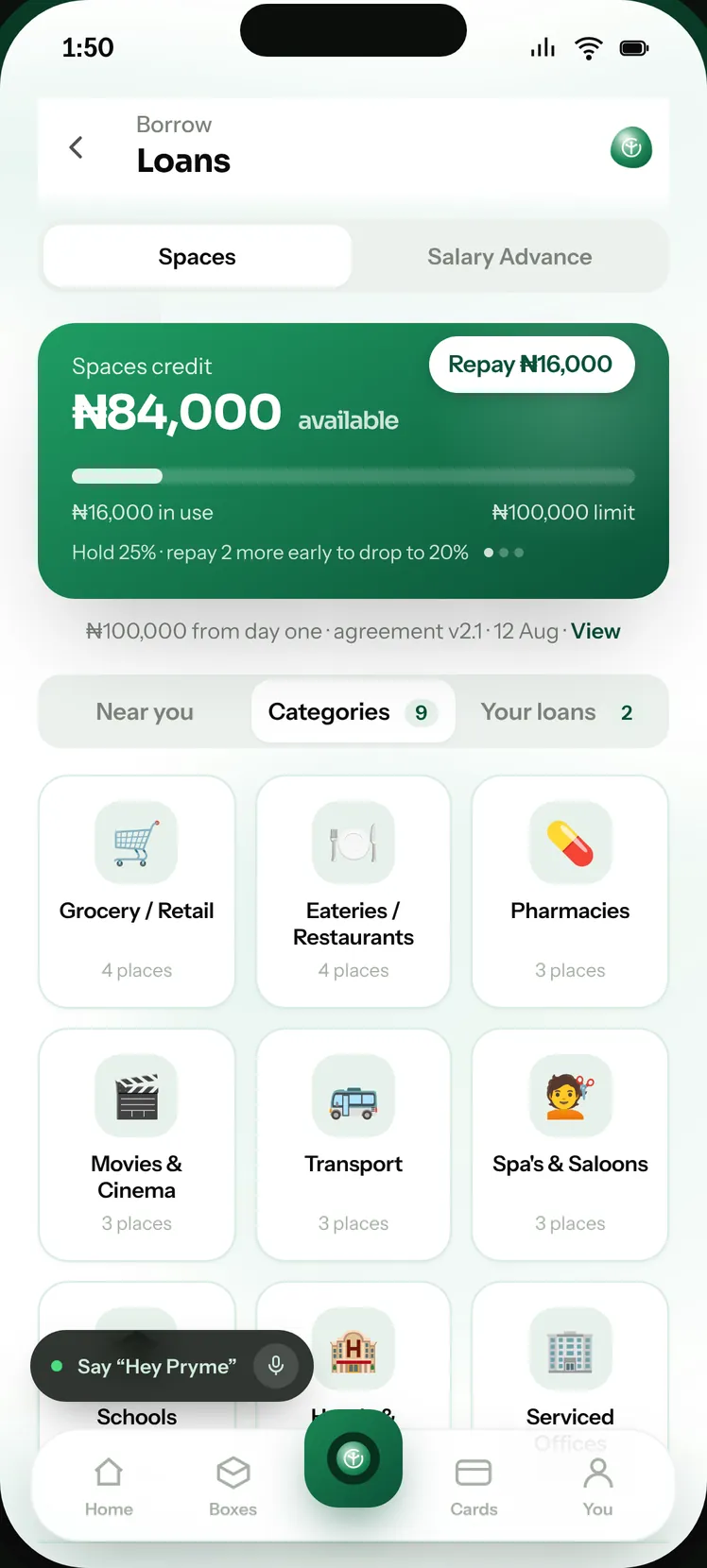
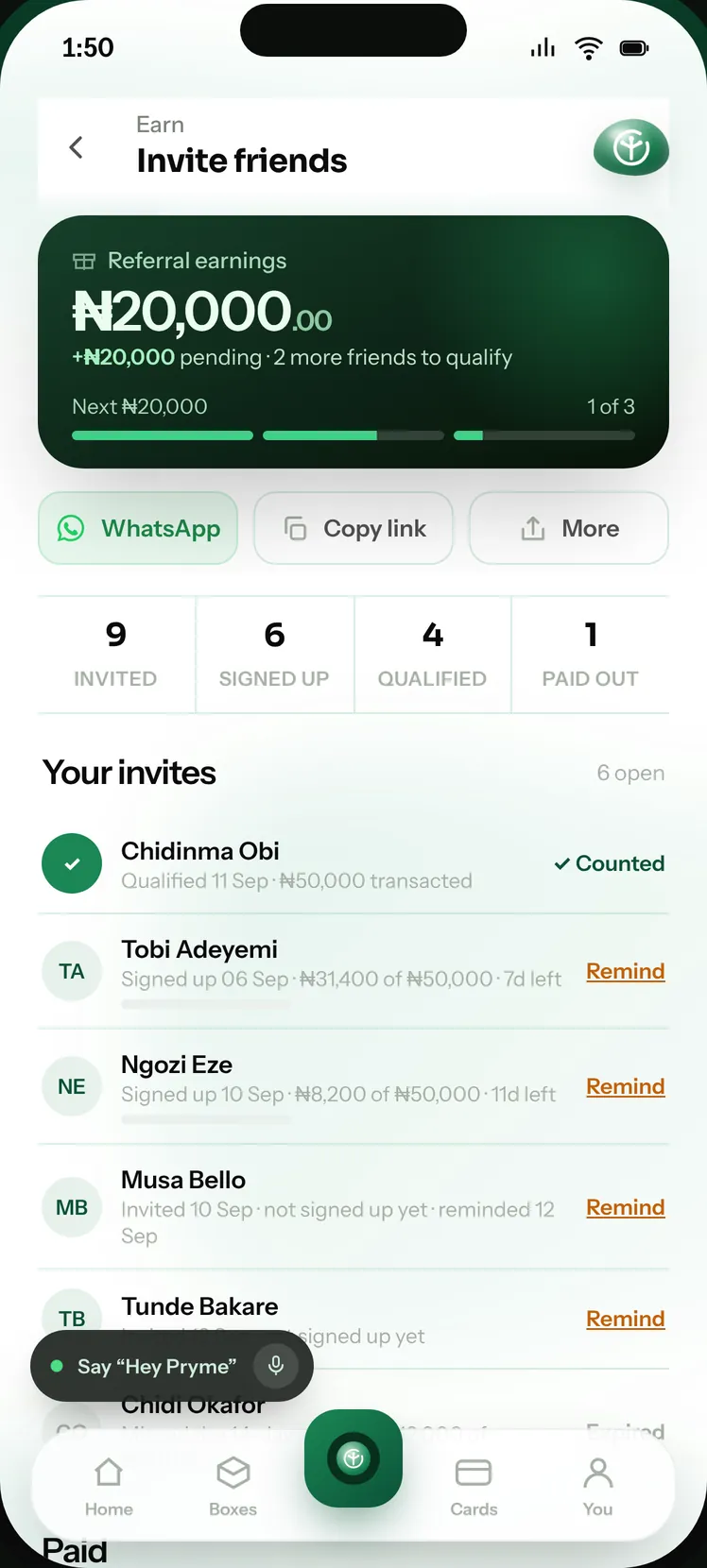
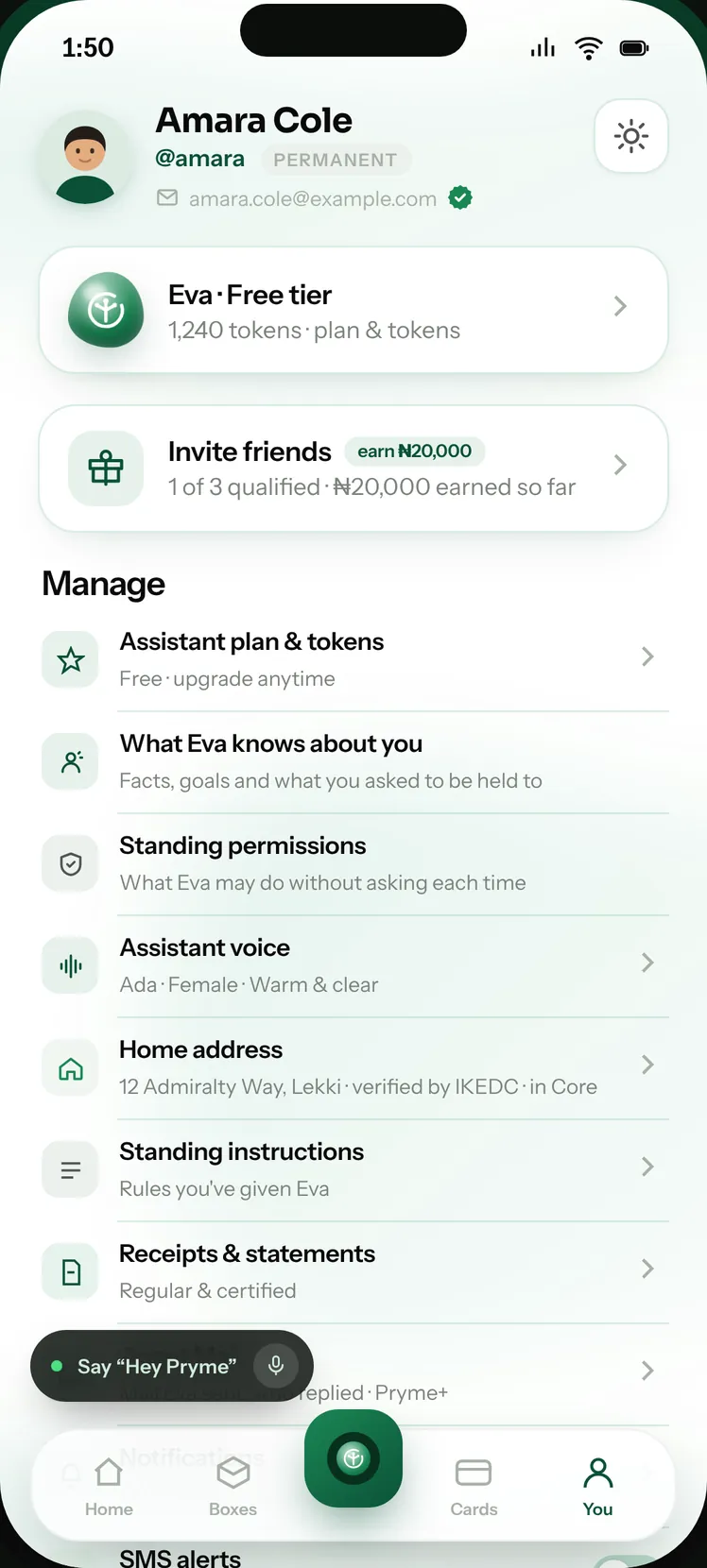
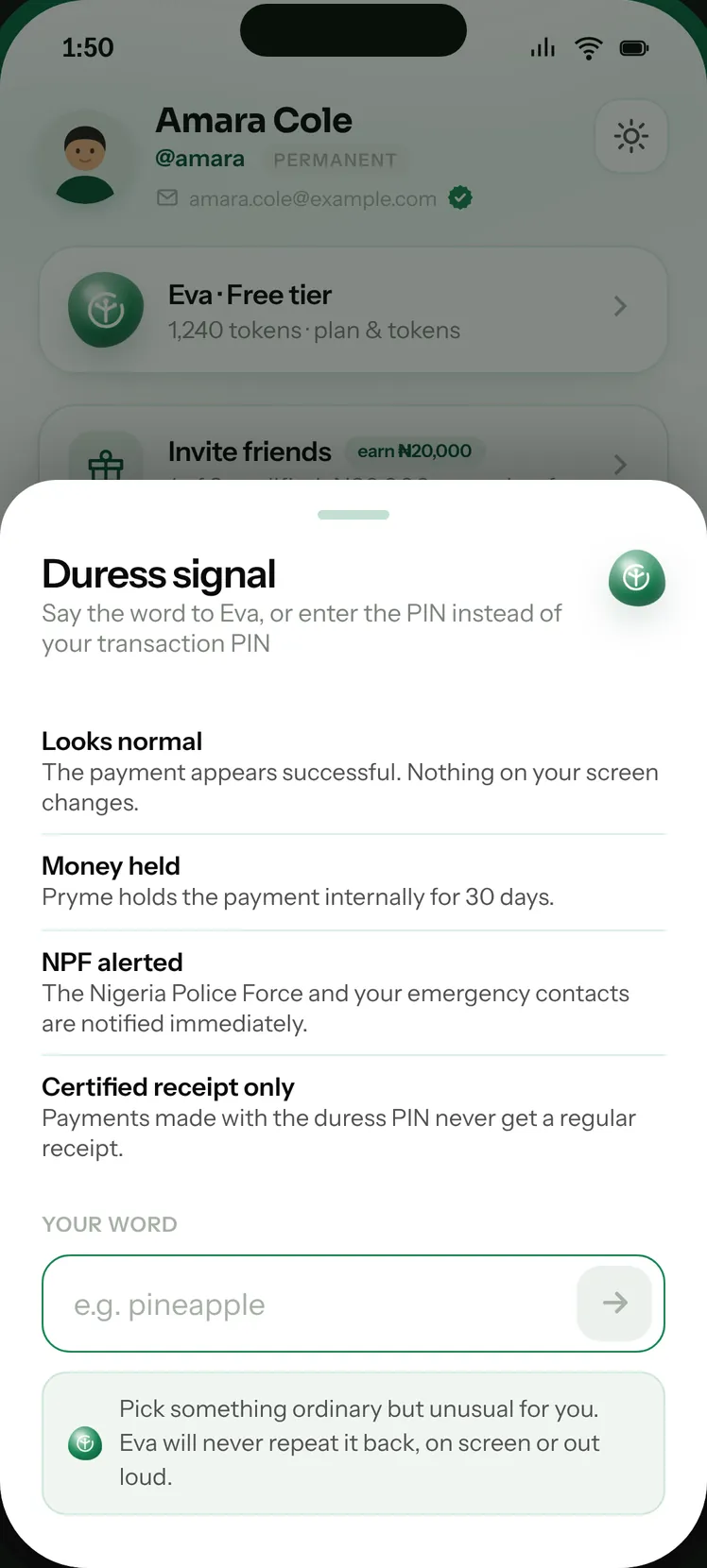
We give you a limit to spend at the shops and services you already use — and an account that works on your month while you get on with it. Dollars, pounds and euros sit beside your Naira, and an assistant handles the running of it, asking you first every single time.
One global account for your money and business. Move across currencies, automate everyday operations and put AI agents to work — with you in control of every important decision.


 Evayour assistant
 DanielChief of Staff
 BenFinance
 BruceCare
Your competitor down the road sells the same thing you sell. The difference is who walks in. We put money in people’s hands that can only be spent in businesses like yours — and then we point them at you.
You are not borrowing. You are selling to somebody who already has the money — and that money can only be spent with a business like yours.
₦100,000 from day one · agreement v2.1 · 12 Aug · View
Eva waits for your rate and asks before she moves anything.
No card, no OTP, nothing for the buyer to type in. They transfer from the bank app they already use, and the money lands in the same account your agents are running — already matched to the order, already in your books.
We give the buyer a one-time account number. They transfer to it from any bank app or by USSD — no card, no OTP, nothing to type in.
Get the account numberTo this account, from any bank app. We watch it, and the page updates itself.
₦26,767.50 from GTBank · John D., matched to order ORD‑1042.
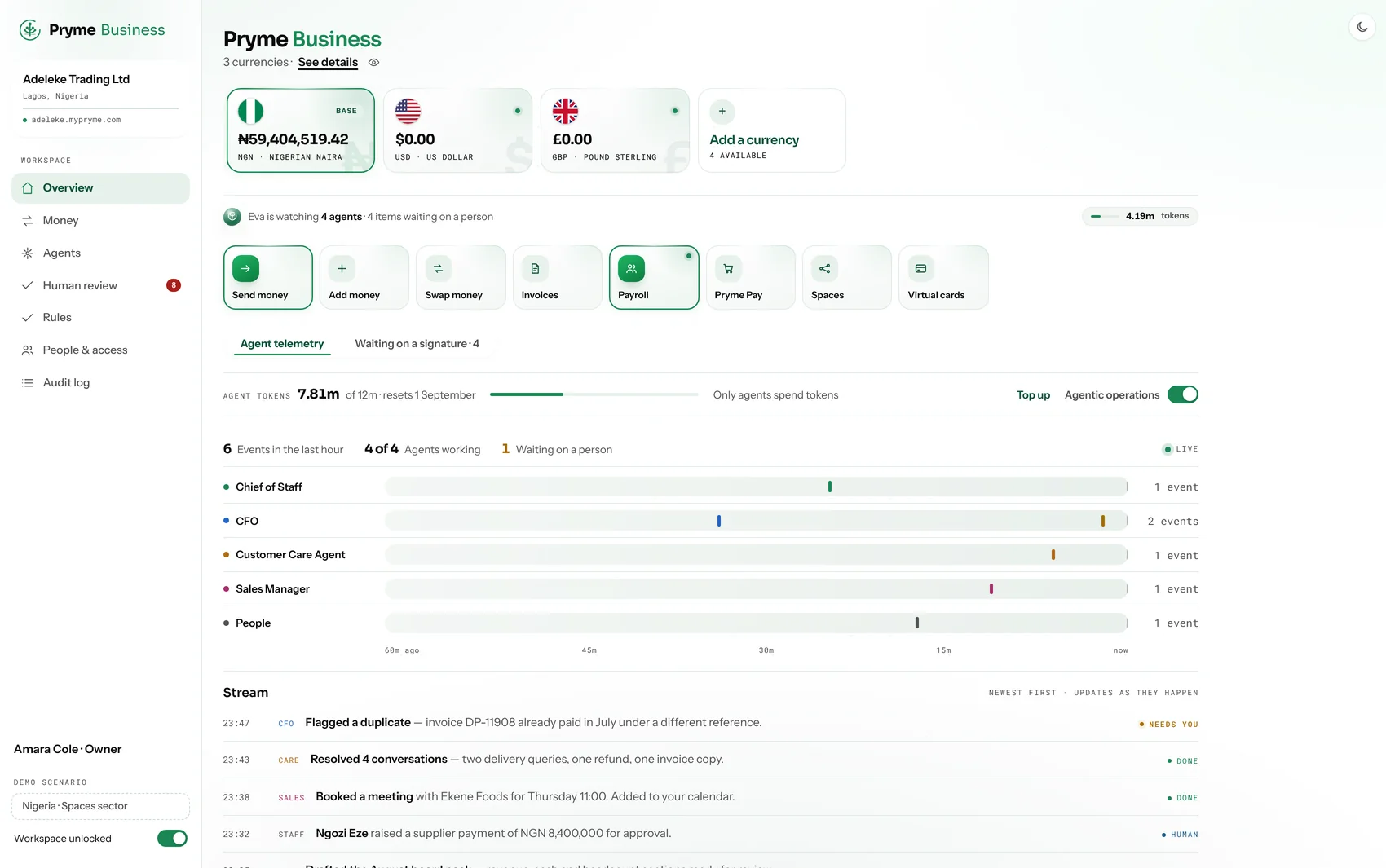
Five agents come with the account. Each one has a job description, a budget and a ceiling you set. They do the work and bring it to you — nothing leaves the account without your signature.
Knows what is stuck, who is waiting and what you promised — and keeps all three moving.
Booked a meeting with John Doe Foods for Thursday 11:00.Keeps the books as you trade and tells you the moment something does not add up.
Flagged a duplicate — invoice DP‑11908 was already paid in July.Holds every filing to its own clock and screens names and payments against your policy — and logs what it refuses.
Screened 412 payments overnight and refused two of them.Goes back to the buyers who went quiet, with the receipt already attached.
Recovered ₦410,000 across three overdue invoices.Replies, follows up on what they asked for and hands you only the ones that need you.
Resolved 4 conversations — two deliveries, one refund.Issue a dedicated Naira account number to each of your own customers, collect into it and reconcile against it. The same rails the Business Account runs on, with the licence behind them.
Dollars, pounds and euros beside a Naira account, on one ledger and one set of books. Five agents come with it and run the account — nothing leaves without your signature.
Five agents come with the account. Each has a job description, a budget and a ceiling you set. They do the work and bring it to you — they propose, you approve.
Knows what is stuck, who is waiting and what you promised, and keeps all three moving.
Booked the quarterly review with your auditor for Thursday.Keeps the books in every currency you hold and flags the moment something does not add up.
Flagged a duplicate — invoice DP‑11908 was already paid in July.Holds every filing to its own clock and screens names and payments against your policy — and logs what it refuses.
Screened 412 payments overnight and refused two of them.Goes back to the buyers who went quiet, with the invoice and the receipt already attached.
Recovered $12,400 across three overdue invoices.Replies, follows up on what they asked for and hands you only the ones that need you.
Resolved 4 conversations — two deliveries, one refund.The business has changed shape four times and never changed what it was rooted in. Each version was built out of what the last one could not do.
An online grocery store, built out of a faulty tab. Selling the food was the easy part — taking the money for it, and moving it, turned out to be the business.
A prepaid card. The first time the company issued rather than resold, and the first time it carried the obligations that come with holding somebody else’s money.
Solid Allianze acquired — an existing bank with an existing licence. The perimeter stopped being someone else’s to draw.
More than one currency on one balance, and the rebrand to Pryme. A Nigerian business could hold dollars without holding a second institution.
Accounts that do the work rather than only hold value. Five agents on the account, inside a policy you write — which is where the new mark starts.
Pryme is a financial technology company. It gives people and businesses in Nigeria one account that holds Naira alongside dollars, pounds and euros, and a set of agents that do the running of it — keeping the books, chasing what is owed, answering customers and paying bills. Nothing leaves an account without the owner’s approval.
Yes. A Pryme account holds Naira, US dollars, pounds sterling and euros side by side on one ledger, each with its own account details — a Nigerian account number, a US account number, a UK sort code and an IBAN for the euro area. You can swap between them at a rate you set, and every currency has its own statement.
Spaces is available in Nigeria. It gives a shopper money to spend that can only be spent with a participating business. The business is paid into its Naira account whether or not the shopper repays, because Pryme carries the credit. For the business it is free to join, there is nothing monthly, and the customer’s identity is never shown — only a reference and what it is worth.
Five agents come with the account. The Chief of Staff runs the week and keeps what is stuck moving. Finance watches the money and keeps the books as you trade. Compliance keeps the filings on time and screens what moves. Sales chases what you are owed. Customer Support answers your customers and follows up. Each has a job description, a budget and a ceiling you set, and each one proposes rather than acts — nothing leaves the account without your signature.
Pryme Pay takes payments on your own site or on a checkout page you control. The buyer is given a one-time account number and transfers to it from any bank app or by USSD — no card, no OTP, nothing to type in. The money lands in the same account your agents are running, already matched to the order and already in your books.
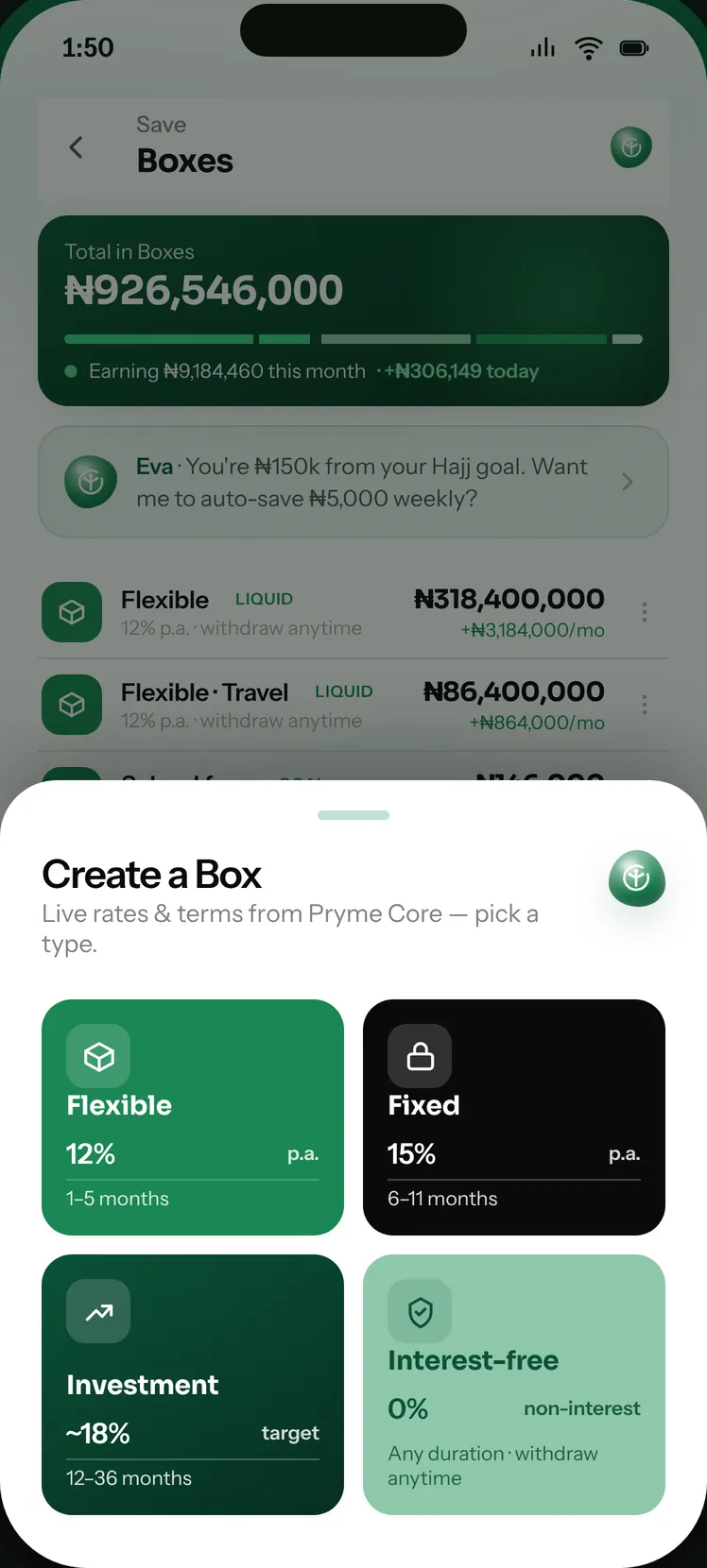
Savings Boxes are separate pots inside a Pryme account, held in Naira. Flexible Boxes can be withdrawn at any time, Fixed Boxes hold to a date, Investment Boxes hold for longer, and Interest-free Boxes earn nothing by design. A business can use them to ring-fence payroll and the tax it withholds, so that money cannot be spent by accident.
Pryme is a financial technology company, not a bank. Accounts and deposits are provided by Solid Allianze Microfinance Bank Limited, which is licensed by the Central Bank of Nigeria and is a member of the Nigeria Deposit Insurance Corporation.
Yes. Pryme Rails lets a platform issue a dedicated Naira account number to each of its own customers, collect into it and reconcile against it, over one API — the same rails the Pryme Business Account runs on.
Pryme is a financial technology company. It gives you one account that holds US dollars, pounds sterling and euros beside Naira, with an assistant that runs the account for you and asks before anything moves. Accounts are provided in Nigeria today, and further markets open as each licence lands.
Accounts are provided in Nigeria today, subject to verification and approval. Foreign-currency balances are held and converted inside that account, so you can hold, receive and swap dollars, pounds and euros wherever you are.
Naira, US dollars, pounds sterling and euros, side by side on one ledger. Each has its own details — a Nigerian account number, a US account number, a UK sort code and an IBAN for the euro area — and each has its own statement.
Swap at a rate you set rather than the rate of the day, then send to any Pryme username or to a Nigerian bank account. There is no fee to send to another Pryme account.
Eva is the assistant inside the Pryme app. She opens accounts, moves money, saves toward your goals, pays what is due and follows up what is owed to you — and asks you before anything moves.
Pryme Rails lets a platform issue a dedicated Naira account number to each of its own customers, collect into it and reconcile against it, over one API — the same rails the Pryme Business Account runs on.
Notes on money that does the work: what we are building, what the regulation actually says, and how we think about letting software act on money. Read the Ledger
What AI agents can do in bookkeeping, close, collections and compliance today, where a person must stay in charge, and how to judge a product.
How multi-currency business accounts work: local details vs SWIFT, payment rails, the real cost of FX, safeguarding vs deposit protection, and hedging.
How UK, US, Canadian and European firms pay Nigerian suppliers and get paid by Nigerian clients: FX, Form A and M, tax, compliance and payout routes.
What it really costs to send money to Nigeria from the UK, US, Canada and Europe: fees, exchange-rate margins, CBN naira rules, BVN, speed and scams.
What AI can and cannot do in day-to-day bookkeeping, how much time it saves on real numbers, and which jobs must stay with you or your accountant.
What we are building, what the regulation actually says, and how we think about letting software act on money.
All of United StatesFreelancers and remote work · 86 articles
When a US freelancer gets Form 1099-K for platform or card payments from Nigerian clients: thresholds, gifts mixed in, and reporting without one.
Paid in USDT or bitcoin by a Nigerian client? The IRS taxes it as ordinary income at its dollar value on the day you receive it. Here is how that works.
Split sheets, producer agreements, points and publishing: how a US-based producer gets paid by a Nigerian label, and the tax on royalties.
Why a US freelancer with Nigerian clients should separate business money, which accounts fit dollars and naira, and what FDIC and FBAR rules mean.
When a trip to Lagos or Abuja for clients is deductible under IRS foreign travel rules, how to split a mixed trip, and what records to keep.
Nigerian VAT reaches services consumed in Nigeria, even from abroad. When a US freelancer should charge 7.5% and when the Nigerian client accounts for it.
From a firm demand letter to US small claims, Lagos small claims and a Nigerian court action: what each route involves and when it is worth it.
Nigerian withholding tax can sometimes reduce US tax through Form 1116, but the credit limit and source rules decide how much. What to file and keep.
Your songs play on Nigerian radio and in Lagos clubs. How that money reaches a US PRO through local collecting societies, and why it takes a year or more.
Nigerian brands pay US-based creators for reach at home. The contract terms to agree, withholding tax to expect and how the US taxes the fee.
The clauses that matter when a US freelancer works for a Nigerian client: scope, currency, tax deductions, late payment, disputes and governing law.
The IRS has no official naira rate. Which rate to use for naira receipts on Schedule C, how to apply it consistently, and the records to keep.
The Nigeria Data Protection Act reaches US freelancers who process data on people in Nigeria. Your duties as a processor, breach rules and penalties.
IRS rules for a Nigeria trip that mixes client work and family: the one-week and 25% tests, allocating the flight, and the records to keep.
A Nigerian client's bank reversed a card payment. What the card networks need to see, how long you have, and the evidence that carries weight.
COREN registration, who signs the drawings and liability terms for US-based engineers doing remote design reviews on Nigerian projects.
Remote gigs from Lagos look harmless, but F-1 work is limited to set categories. Here is why freelancing can breach status and what is allowed.
How to write a naira fee that tracks the dollar: choosing a reference rate, base date, reset band and payment date, with a worked example.
Cash, equity or both: how US-based developers can price, contract and get taxed fairly when building for Lagos and Abuja startups.
When the naira weakens, Nigerian clients' budgets buy fewer dollars. How US-based freelancers can price, contract and plan cash so income holds.
US-based product designers working for Nigerian fintechs: the usual ways they get paid, and the contract clauses that matter most for design work.
How a US-based freelancer can price work for Nigerian clients whose budgets are in naira, without underselling or losing the deal to currency swings.
Working as a Yoruba, Igbo, Hausa or Pidgin translator or interpreter in the US: court credentials, pay data, and how to price freelance work.
A ₦150,000 column fee is still US income. How small Nigerian media payments are reported, and what Nigerian withholding tax means for you.
What a Nigerian finance team needs on a US freelancer's invoice, why fake invoices make them cautious, and how verifiable receipts let them check.
Spending months in Lagos while working for US and Nigerian clients? The US tax, Nigerian residence and entry points to check before a long stay.
An H-4 EAD is work authorisation not tied to one employer. What that means for freelancing for Nigerian clients, and the tax that follows.
What working from Lagos for a few months means for a US-resident freelancer: why the US still taxes it, the 330-day test, and Nigeria's 183-day rule.
US tax residents report freelance income from Nigerian clients like any other: Schedule C, self-employment tax and quarterly estimates, all in dollars.
Can you freelance for Nigerian clients on OPT? What the official rules say about work related to your major, hours, reporting and the unemployment clock.
Sharing Wise USD account details with a Nigerian client? Why the payment arrives as a Swift wire, what Wise charges to receive it, and what to send them.
How a US freelancer can receive money from a Nigerian company through Payoneer: receiving accounts, payment requests, the fees Payoneer lists, and limits.
A Nigerian client can pay a US freelancer by bank wire, card or payment platform. How each route works, what it costs and what to send the client.
Nigerian clients paying your Stripe invoices by card: why payments fail, what Stripe's decline data tells you, and how to set up so more go through.
Green card holders can take any lawful work, but report worldwide income. What goes on your US return, which forms apply and what to watch on long stays.
H-1B status covers work for the employer that petitioned for you. Why a Nigerian client does not change that, and routes that can make side work lawful.
Marketplace plans for self-employed Nigerians in the US, who can buy one, the 2027 enrolment dates, and how the self-employed health deduction works.
Who qualifies for the IRS home office deduction when your clients are in Nigeria, the $5 simplified method, and the limits that trip people up.
The invoice currency decides who carries exchange-rate risk. How USD, naira and indexed invoices work for a US freelancer, with a worked example.
How a US freelancer can add a late-payment charge to invoices for Nigerian clients, word it so it holds up, and what enforcing it really involves.
What a single-member LLC changes for a US freelancer with Nigerian clients: liability, banking, tax treatment and state costs, and what it does not.
Contract points for US-based doctors advising Nigerian hospitals remotely: scope, clinical responsibility, patient data, fees and disputes.
How Nigerian royalties reach an artist in the US, which collecting society the NCC recognises, and how royalties are taxed on both sides.
Your Nigerian client wants VAT on your invoice. What Nigeria's 2025 tax law says about foreign suppliers, and what a US invoice should actually show.
Steps when a Nigerian client's payment to you goes to the wrong account: who acts, how SWIFT tracing works, US wire rules, and what to do about fraud.
How a USD wire from a Nigerian domiciliary account reaches a US freelancer, what the CBN's 2026 FX Manual changed, and what paperwork the client needs.
Paid in naira by a Nigerian client? How to hold it, when to convert, how dollars reach your US account and which records keep the IRS and your bank happy.
Why Nigerian finance teams ask for a Tax ID, what a non-resident freelancer can give them, and what happens to withholding tax if you have none.
Your Nigerian client's card keeps failing on a dollar invoice. Why naira cards struggle with USD charges, and the payment routes that work instead.
Can a US-based freelancer get paid by a Nigerian client through a Paystack or Flutterwave link? Who can open one, what it costs and the US tax side.
Nigerian clients rarely issue a Form 1099, but the income is still reportable. How the 1099 rules work and how to keep your own records instead.
Whether a Nigerian company calls you staff or a contractor, the IRS looks at the actual relationship. How status changes your US tax and what to check.
Deposits, dollar or naira fees, flights and riders: how US-based performers can structure Nigerian bookings so they are paid before they travel.
Nigerian clients often deduct tax before paying non-residents. The 10% and 5% rates, the receipt to ask for, and how to price your contract for it.
Flat fee or day rate, flights, per diems, deposits and rights: the terms US-based actors should agree before flying to a Nollywood set.
Acting, editing, writing or scoring for Nigerian producers: contract terms, payment routes, and how Nigerian and US tax apply to film work.
Card checkout, naira transfers or a Nigerian payment gateway: how a US-based creator can collect naira or dollars for courses, and what each costs.
How a US-based podcaster should invoice a Nigerian sponsor: currency, withholding tax, the VAT question and what each payment route costs.
Nigerian startups pay from dollar runway. How to set a USD rate that survives withholding tax, VAT and bank charges, with a worked example.
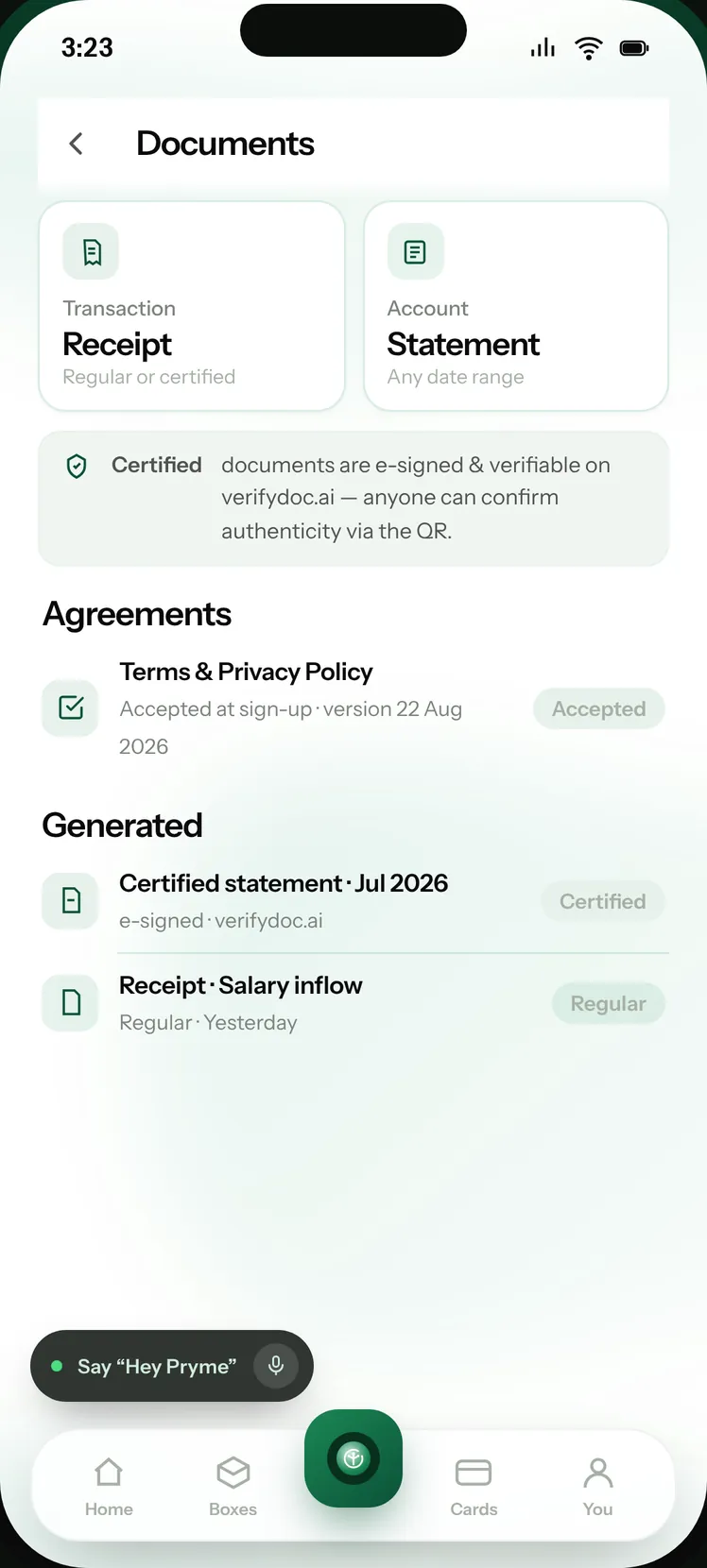
How US freelancers can use Pryme's regular and verifiable receipts and statements, made with VerifyDoc.ai, for records with Nigerian clients.
Nigerian clients often pay late and in lumps. How Form 1040-ES works for 2026, the safe harbours, and the annualised method for uneven income.
Nigerian clients pay in bursts. How the IRS annualised income method lets US freelancers match estimated tax to when the money arrived.
The records the IRS expects from a US freelancer paid in naira and dollars: what to keep, how to convert naira, and how long to hold each record.
Bookkeeping and management accounts can be done from anywhere. Signing Nigerian returns and audits is another matter. Licensing and payment set-ups.
Registration with the BPP database, Tax ID rules, withholding tax and US anti-bribery law: what a US-based consultant should know before bidding.
Hired by a Nigerian fintech while living in the US? The ways Nigerian firms usually pay US-based staff, and what each means for tax and take-home pay.
Pricing JAMB and SAT lessons for Nigerian parents, collecting fees in naira or dollars, and the rules on children's data and your own work status.
Whether a US-based remote worker can work while visiting Nigeria: passport and visa rules, what NIS visas forbid, Nigerian tax tests and employer policy.
On retainer for a Lagos or Abuja agency? Retainer structures, when to invoice, and the clauses that keep monthly payments on time.
Self-employment tax applies whoever your client is. How the 15.3% charge works on Nigerian client income, and why Nigerian withholding will not reduce it.
Monthly card billing fails often with Nigerian customers. How US-based SaaS sellers price in naira or dollars, handle failed cards and invoice annually.
The 2026 limits for SEP IRAs and Solo 401(k)s, how fees from Nigerian clients count as earned income, and which plan suits which freelancer.
Can a US freelancer take a Nigerian client to small claims court? The limits, serving papers in Nigeria and why a win may not mean payment.
Self-employment tax on income from Nigerian clients builds your US Social Security record. How credits are earned in 2026 and why reporting matters.
STEM OPT is tied to an E-Verify employer and a signed I-983 training plan. What that means for paid side work for clients back home.
Nigerian banks onboard vendors carefully and pay on their own cycle. What to expect on due diligence, security reviews, payment terms and tax.
Shares or options instead of fees: when US tax applies, how the 83(b) election works, and the IRS forms for holding foreign shares.
The IRS dates a US freelancer with Nigerian or other foreign clients must keep: April 15, the four estimated tax dates, extensions and FBAR.
Tutoring for WAEC, JAMB, SAT or university courses: how to price for Nigerian parents, collect fees in naira or dollars, and report it in the US.
Your US licence covers US law. Nigerian law, courts and documents are another matter. Where the limits sit on both sides and how to collect fees.
What a US-licensed nurse should check before advising Nigerian hospitals remotely: what a US licence covers, NMCN registration, and the limits.
Green card freelancers with clients in two countries: why it is one Schedule C, how to fold in naira income, and where Nigerian tax fits.
Paid by a Nigerian employer and no W-2 arriving? How US residents report foreign wages, convert naira to dollars, and handle tax that was not withheld.
A Nigerian client sent you a W-8BEN or asked for a W-9. Why they ask, which form a US person signs, and what to send instead when neither fits.
Employee or contractor, PAYE or self-employment tax: how US and Nigerian tax rules apply when you live in the US and work for a Lagos or Abuja firm.
Your audience may be in Lagos, but if you are a US tax resident your channel income is taxed in the US. How AdSense and other channel income is treated.
You can add the other type later — many of our customers hold both.
The business first, then you. Nothing is submitted until you review it.
Ideal customer profiles
Generated from your website by VerifiedLead.ai
Pick the ones that look right. Your Sales agent works these first, and you can change them at any time after opening.
We ask this because you have not given us a website. It helps us set the right limits from day one.
Which of these represents you?
Officers listed against this company on the UK register.
We have sent a six-digit code to your email address. Enter it below to confirm the address is yours.
Wrong address? Go back and change it — nothing is created until this step passes. We never ask for a code by phone or email; anyone who does is not us.
Last step. Each time you sign in we email you a six-digit code — we never send codes by SMS.