AI agents for business finance: what they can and can't do
What AI agents can do in bookkeeping, close, collections and compliance today, where a person must stay in charge, and how to judge a product.
Meet Eva, the assistant inside the Pryme app. She opens accounts, moves money, saves toward your goals and follows up. Nothing leaves your account without your approval.
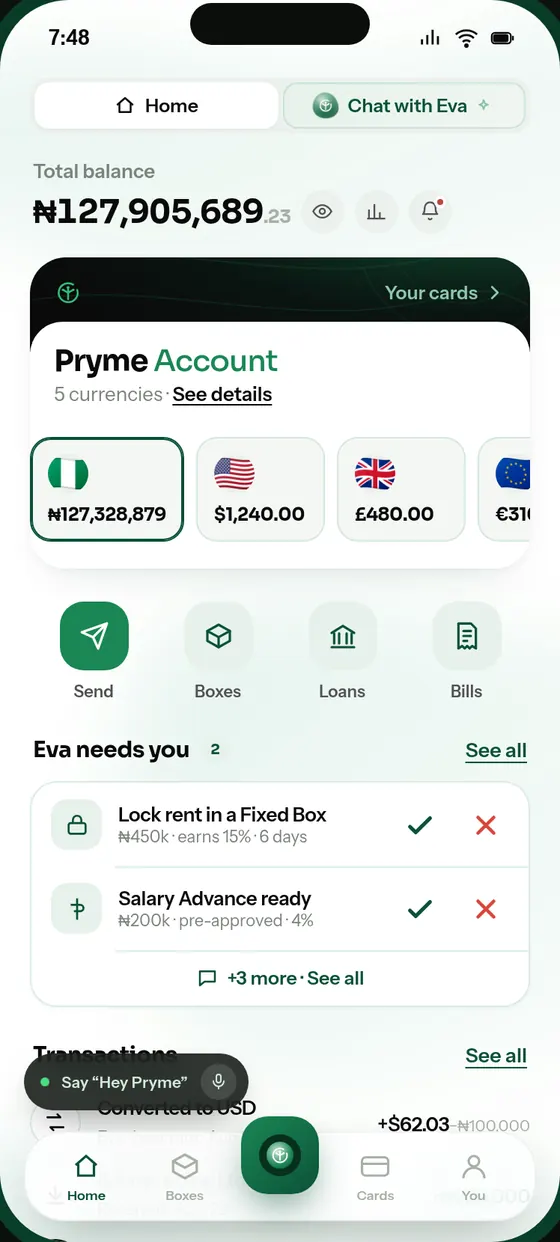
Meet Eva, the assistant inside the Pryme app. She holds dollars, pounds, euros and Naira side by side, swaps at a locked rate, pays bills in any of them and sends anywhere, asking before anything moves.
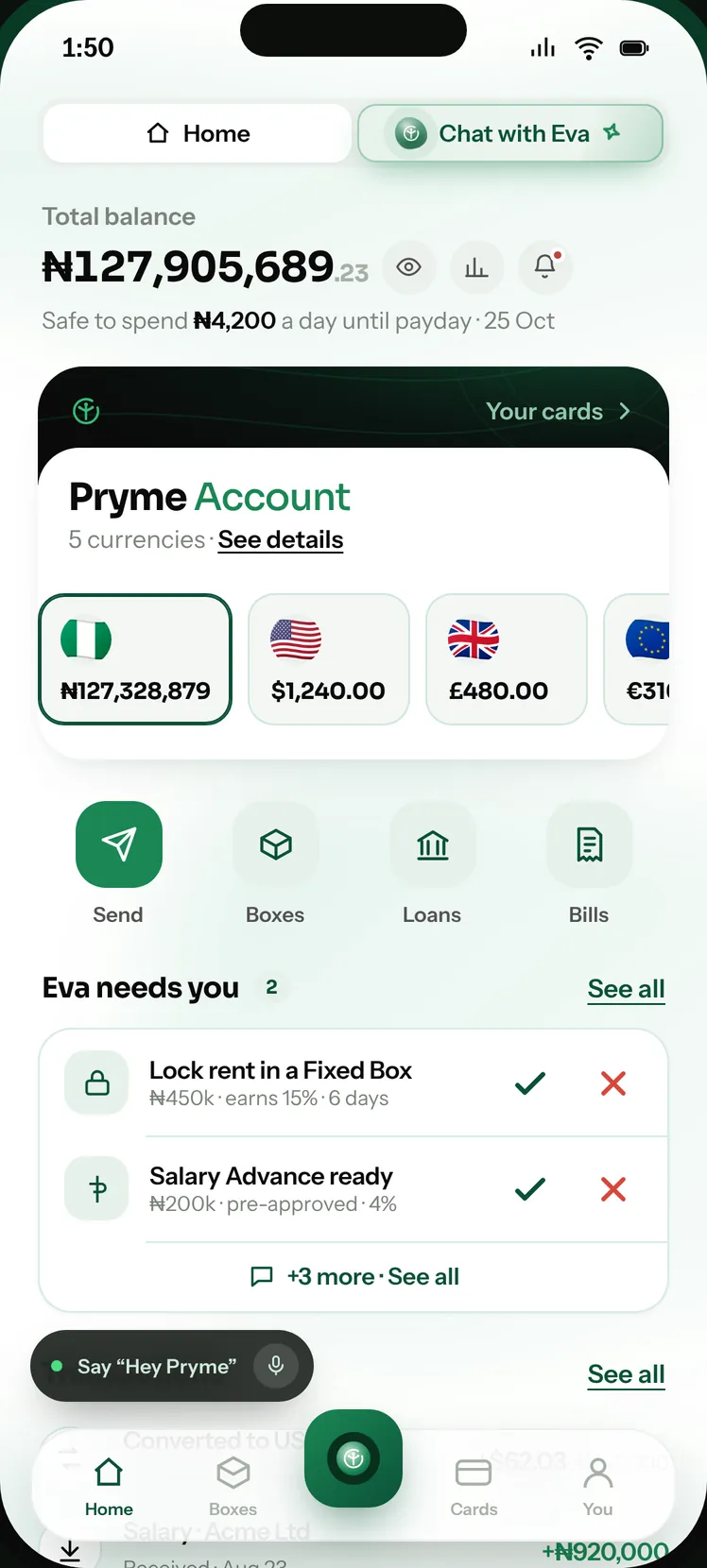
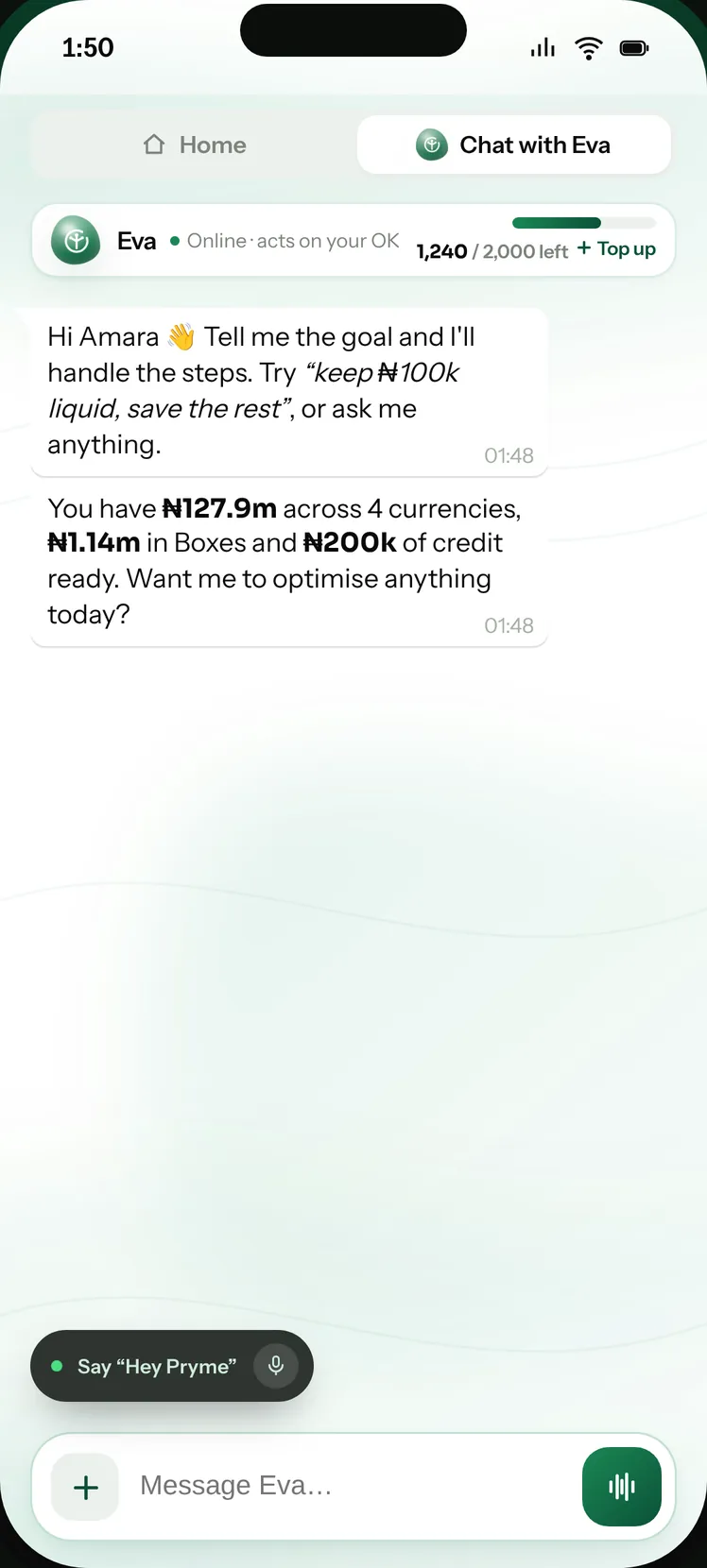
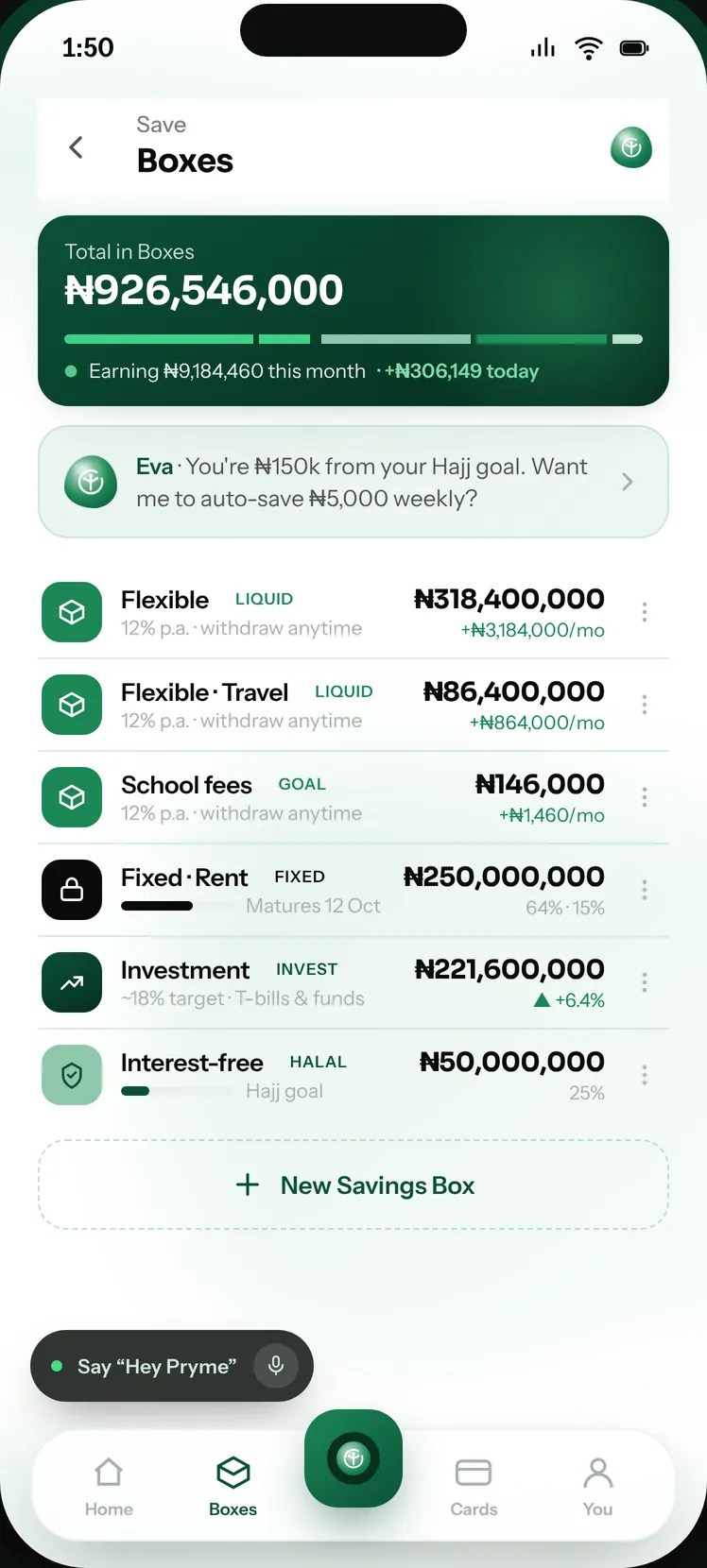
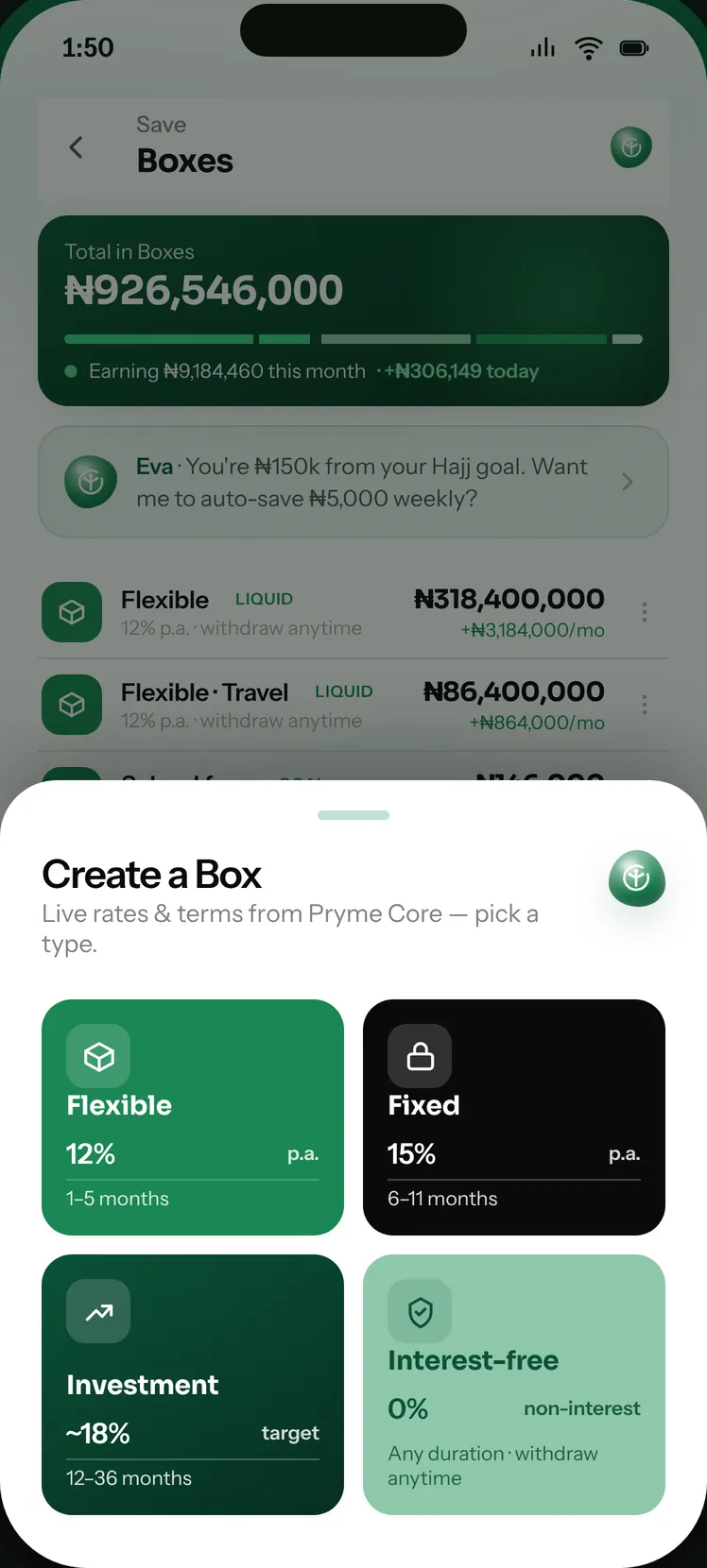
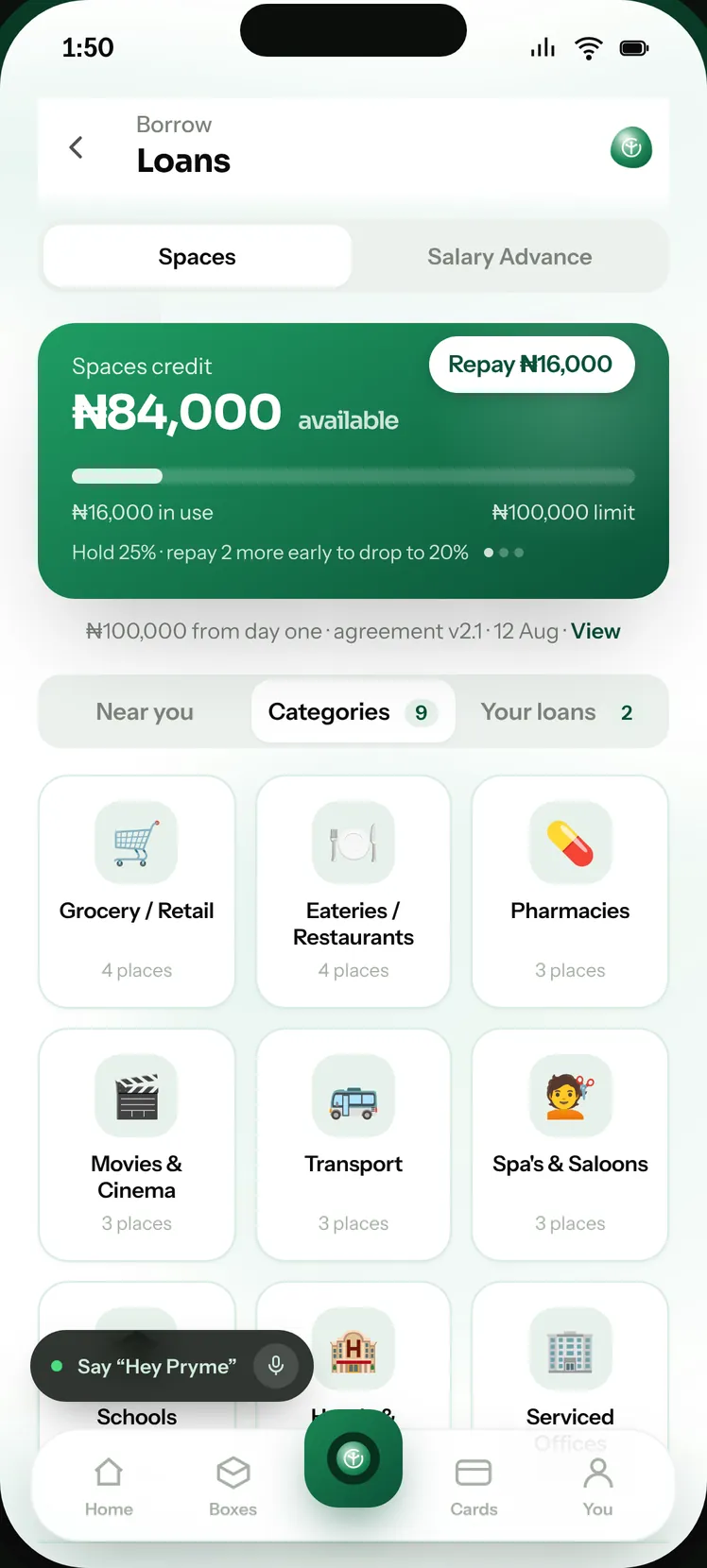
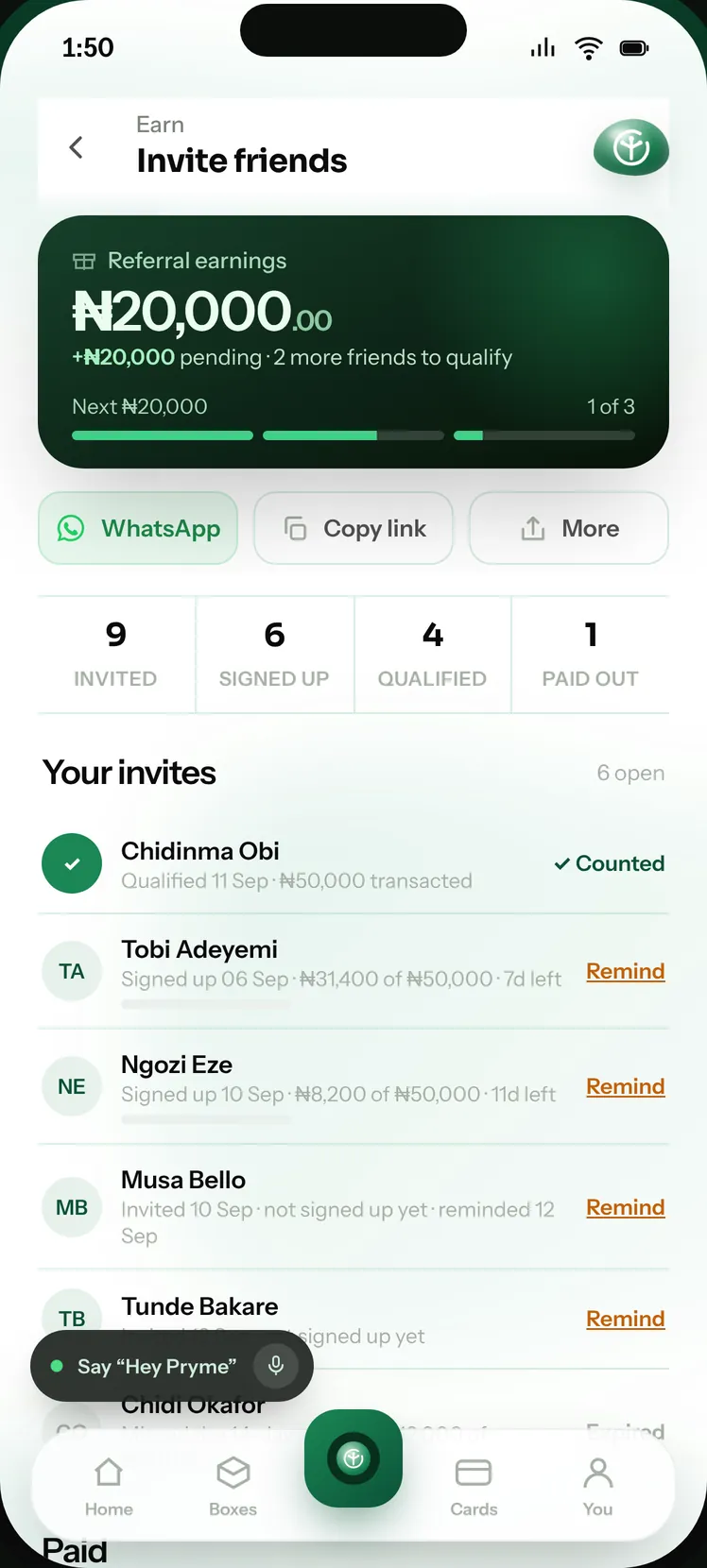
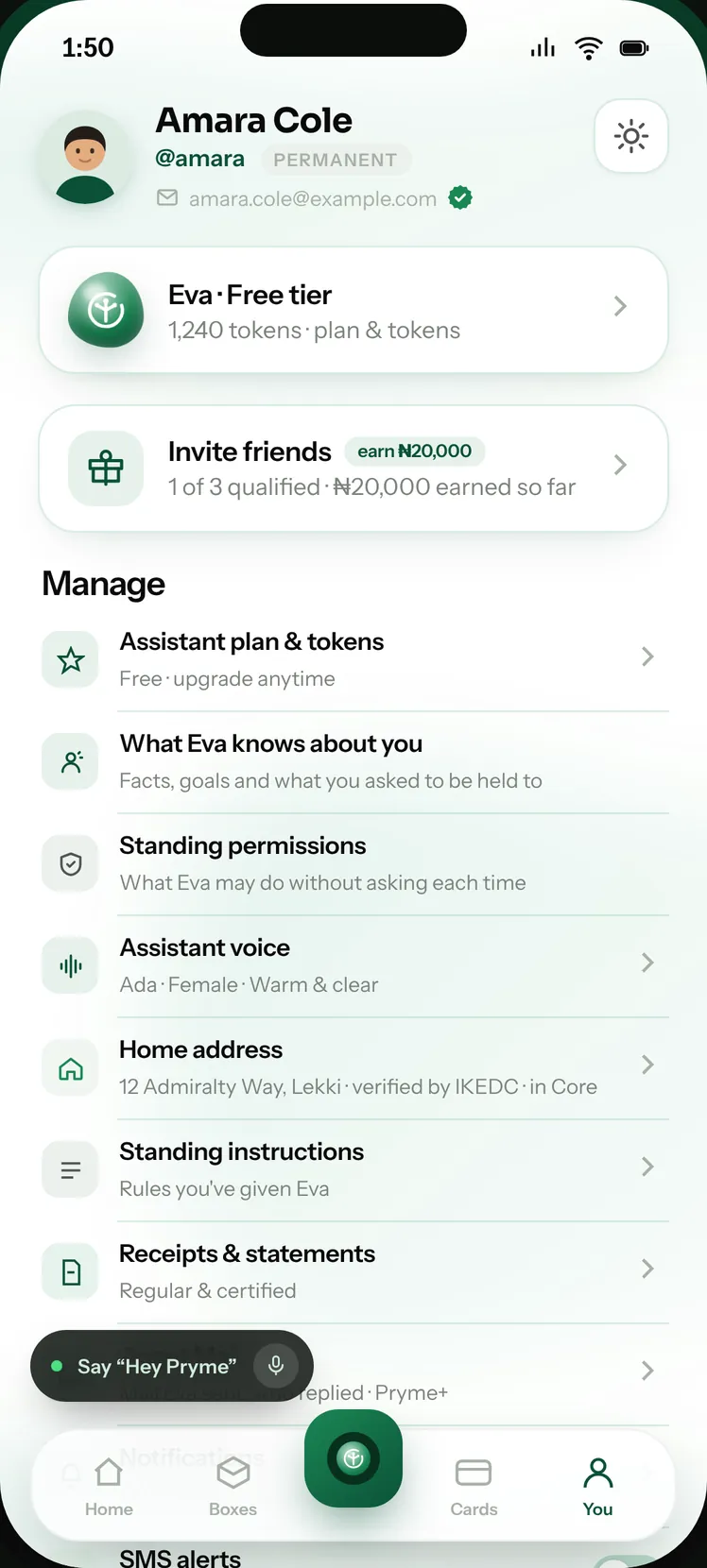
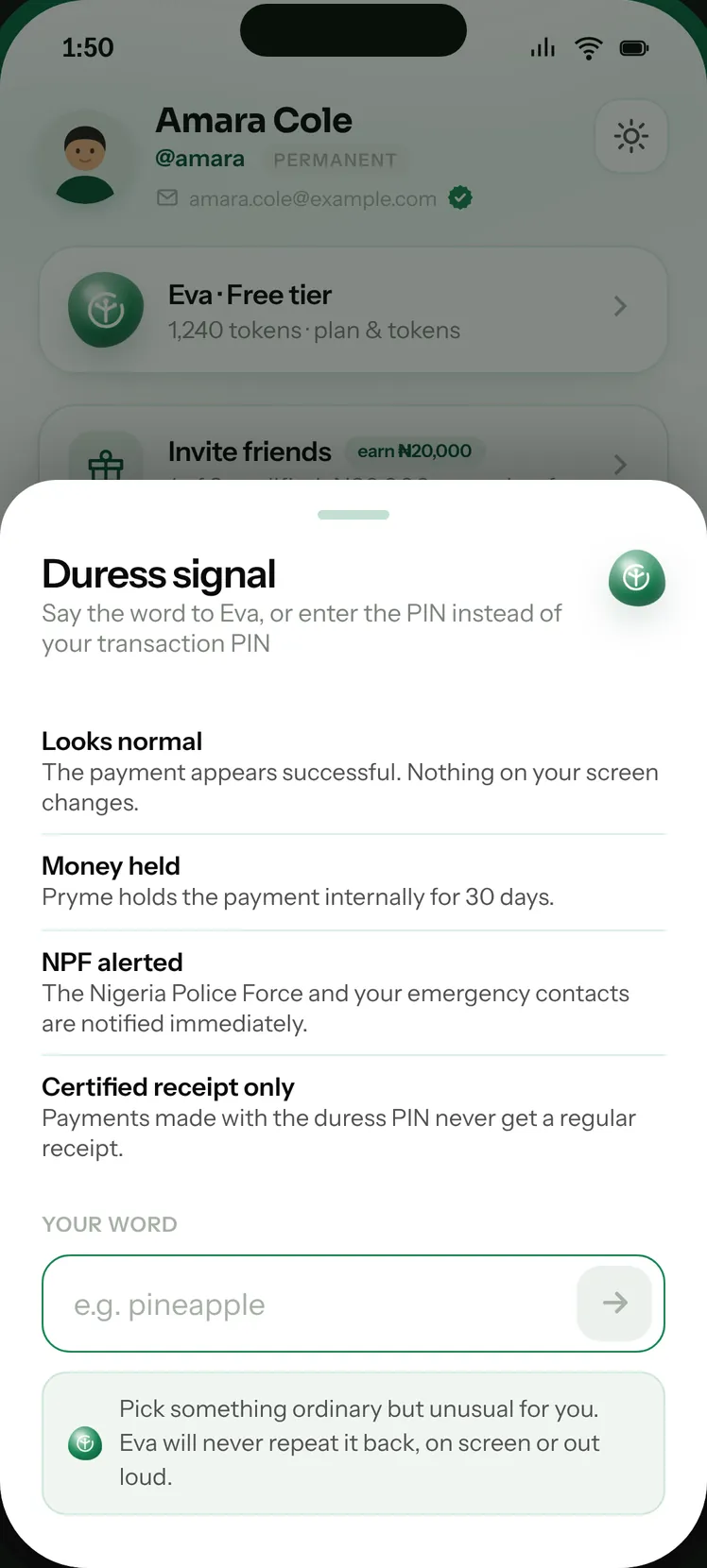
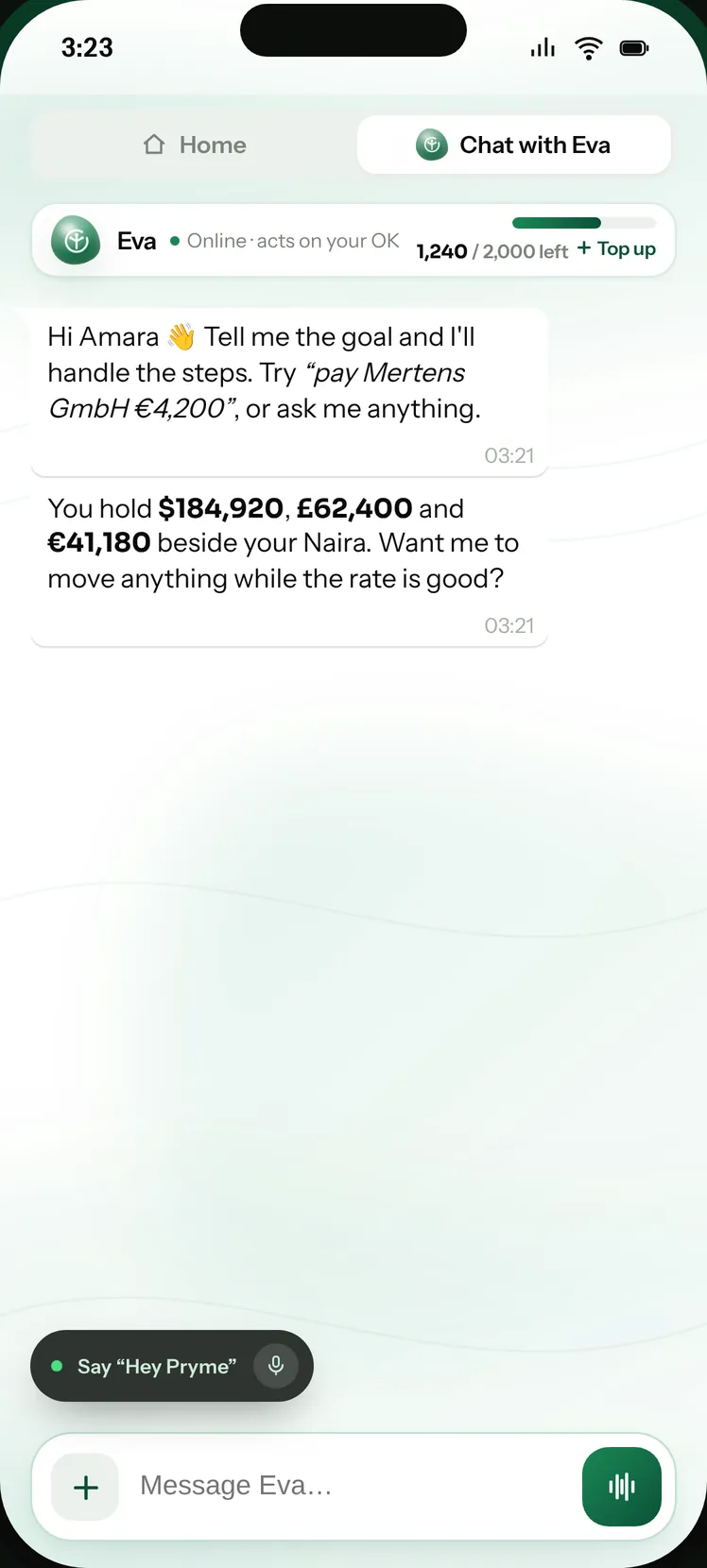
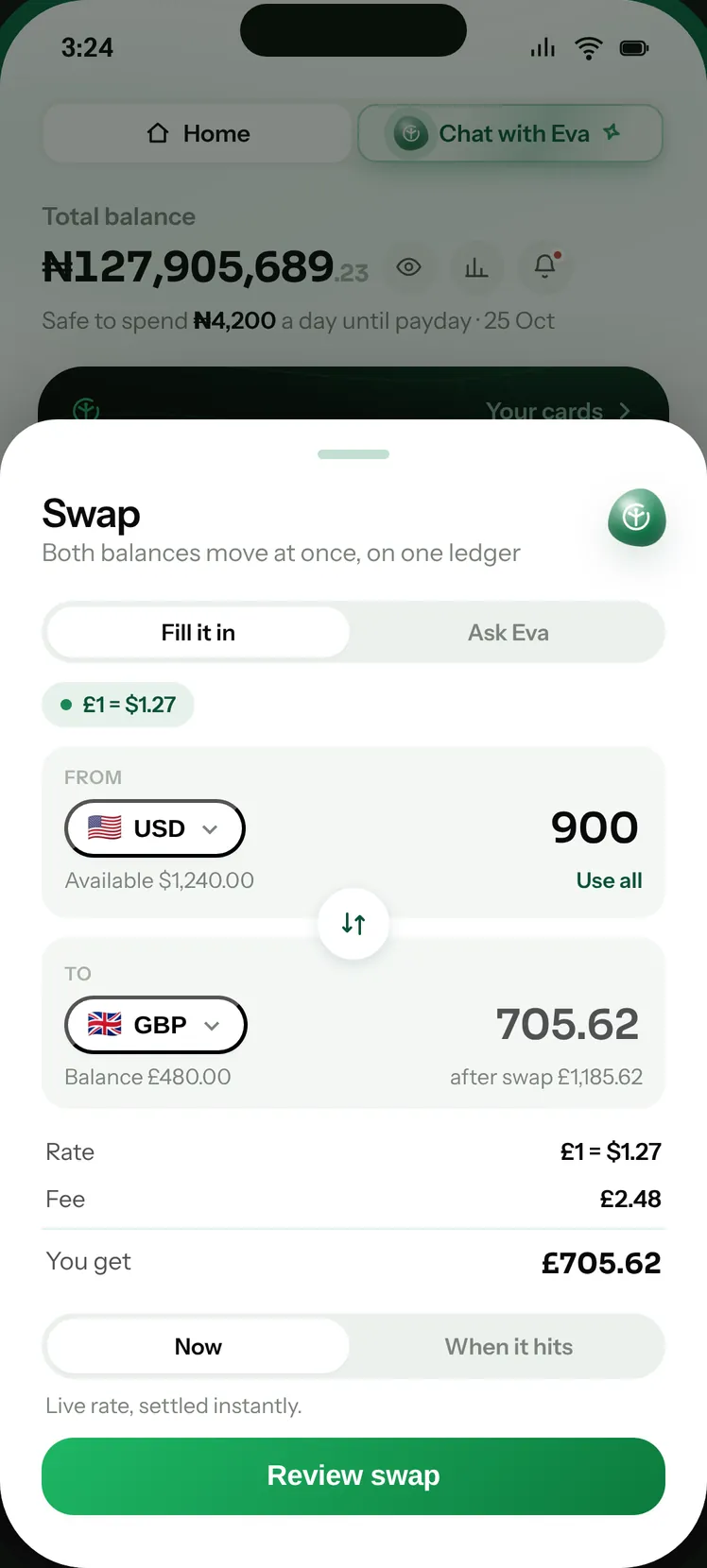
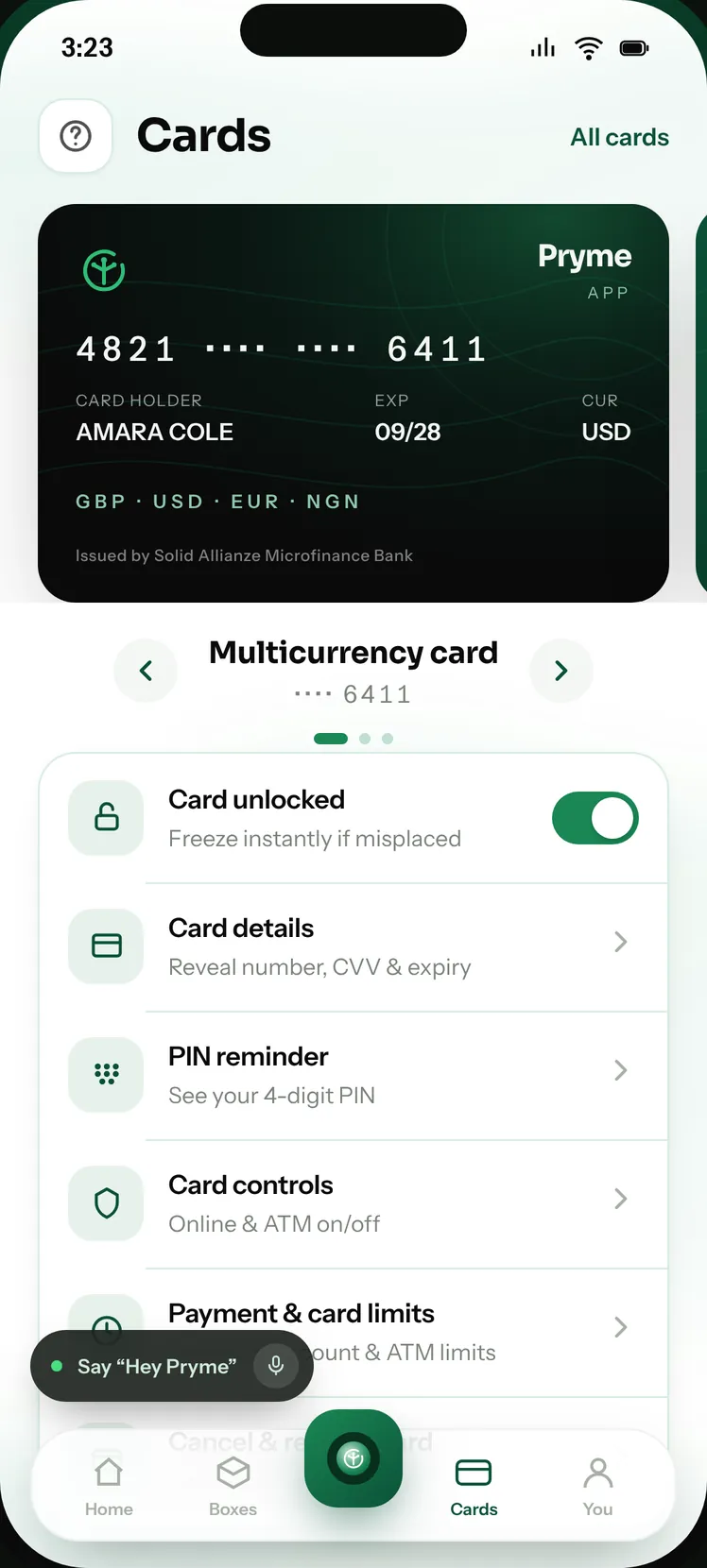
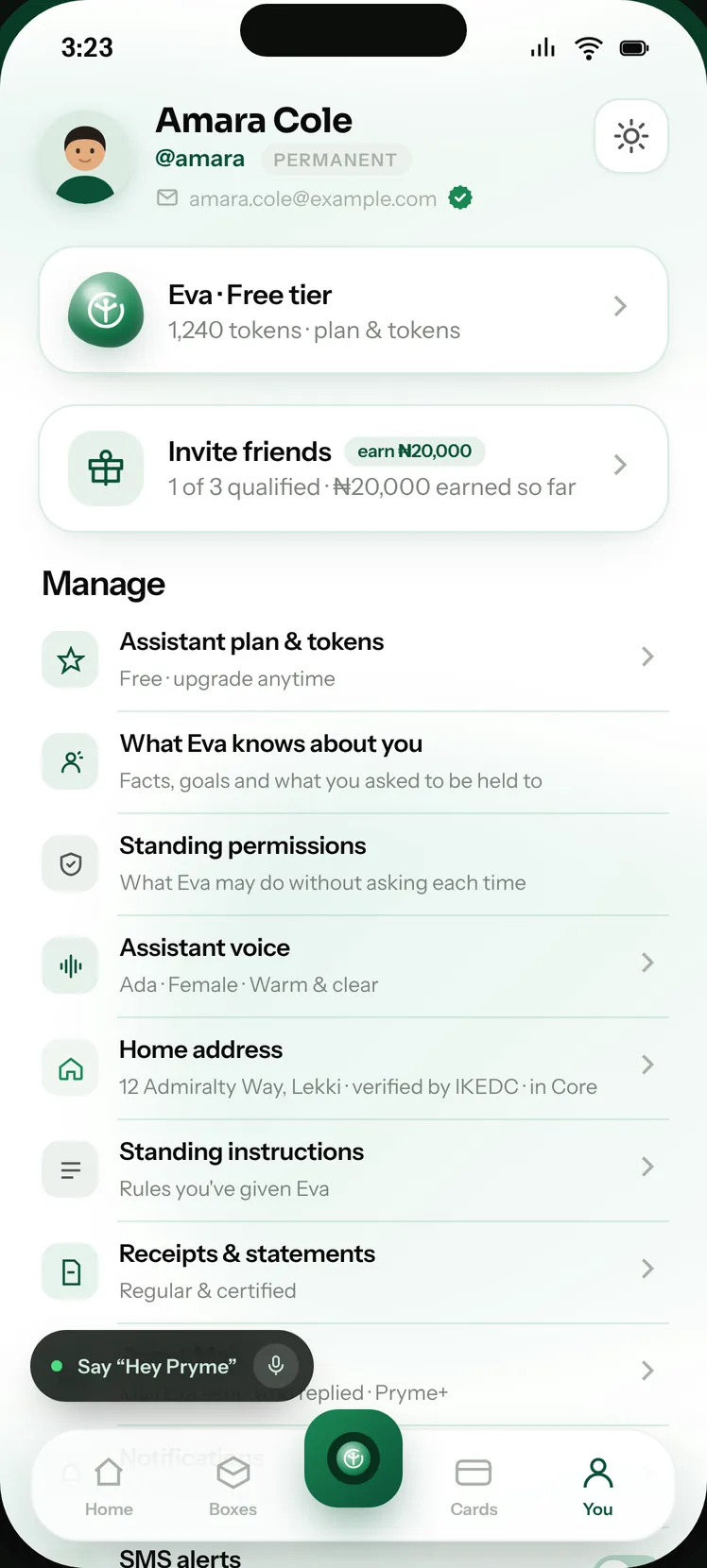
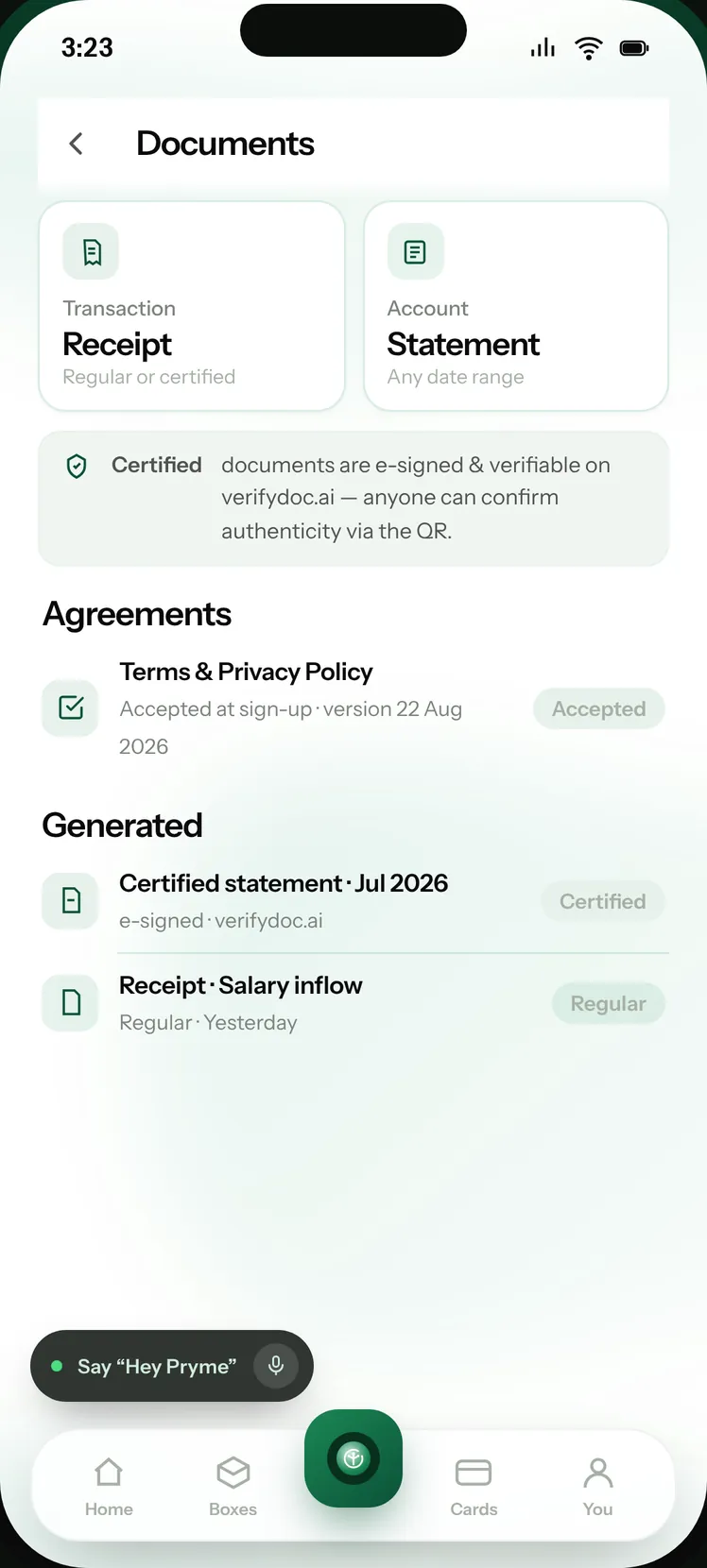
We give you a limit to spend at the shops and services you already use — and an account that works on your month while you get on with it. Dollars, pounds and euros sit beside your Naira, and an assistant handles the running of it, asking you first every single time.
One global account for your money and business. Move across currencies, automate everyday operations and put AI agents to work — with you in control of every important decision.

 Evayour assistant
 DanielChief of Staff
 BenFinance
 BruceCare
Your competitor down the road sells the same thing you sell. The difference is who walks in. We put money in people’s hands that can only be spent in businesses like yours — and then we point them at you.
You are not borrowing. You are selling to somebody who already has the money — and that money can only be spent with a business like yours.
₦100,000 from day one · agreement v2.1 · 12 Aug · View
Eva waits for your rate and asks before she moves anything.
No card, no OTP, nothing for the buyer to type in. They transfer from the bank app they already use, and the money lands in the same account your agents are running — already matched to the order, already in your books.
We give the buyer a one-time account number. They transfer to it from any bank app or by USSD — no card, no OTP, nothing to type in.
Get the account numberTo this account, from any bank app. We watch it, and the page updates itself.
₦26,767.50 from GTBank · John D., matched to order ORD‑1042.
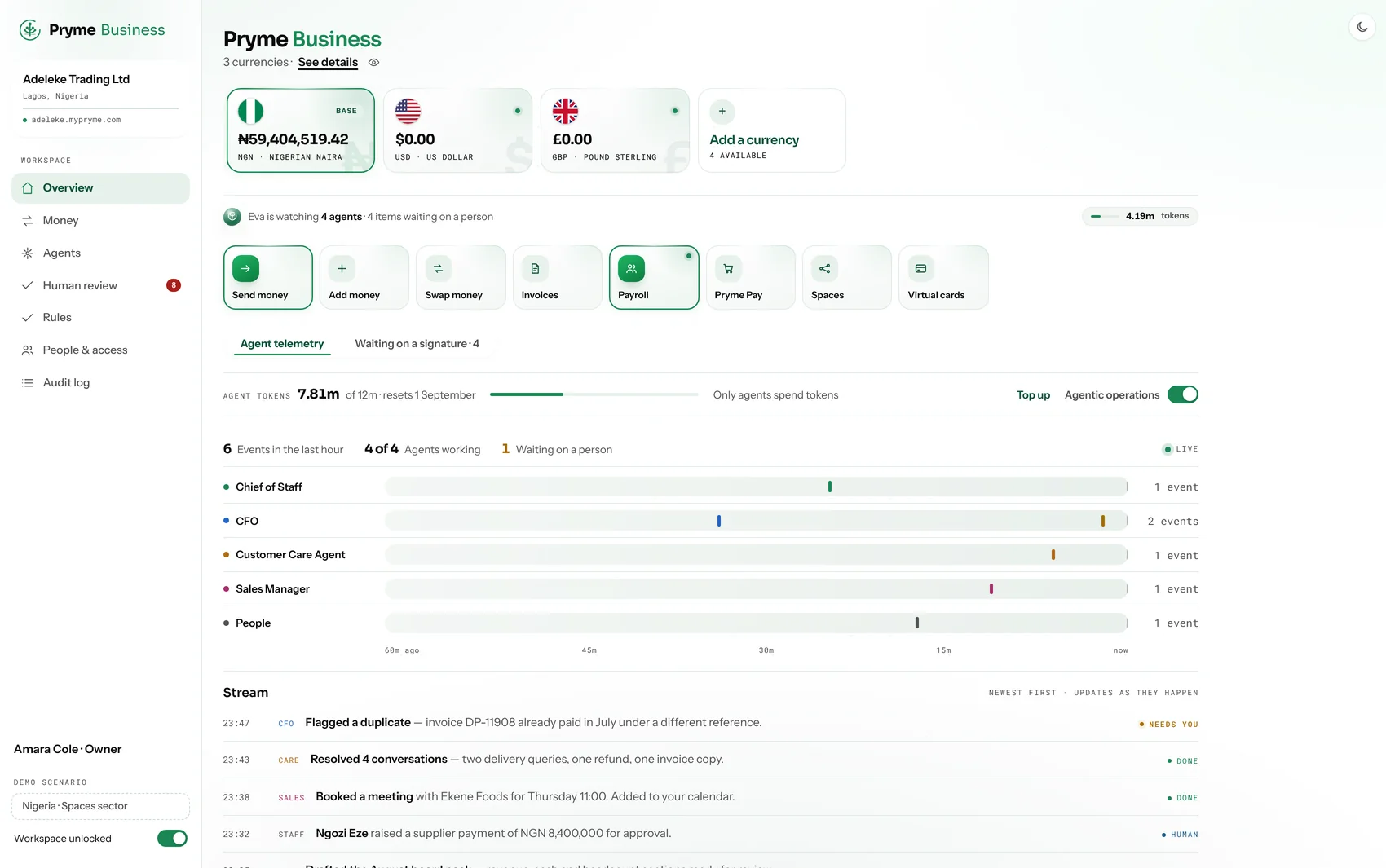
Five agents come with the account. Each one has a job description, a budget and a ceiling you set. They do the work and bring it to you — nothing leaves the account without your signature.
Knows what is stuck, who is waiting and what you promised — and keeps all three moving.
Booked a meeting with John Doe Foods for Thursday 11:00.Keeps the books as you trade and tells you the moment something does not add up.
Flagged a duplicate — invoice DP‑11908 was already paid in July.Holds every filing to its own clock and screens names and payments against your policy — and logs what it refuses.
Screened 412 payments overnight and refused two of them.Goes back to the buyers who went quiet, with the receipt already attached.
Recovered ₦410,000 across three overdue invoices.Replies, follows up on what they asked for and hands you only the ones that need you.
Resolved 4 conversations — two deliveries, one refund.Issue a dedicated Naira account number to each of your own customers, collect into it and reconcile against it. The same rails the Business Account runs on, with the licence behind them.
Dollars, pounds and euros beside a Naira account, on one ledger and one set of books. Five agents come with it and run the account — nothing leaves without your signature.
Five agents come with the account. Each has a job description, a budget and a ceiling you set. They do the work and bring it to you — they propose, you approve.
Knows what is stuck, who is waiting and what you promised, and keeps all three moving.
Booked the quarterly review with your auditor for Thursday.Keeps the books in every currency you hold and flags the moment something does not add up.
Flagged a duplicate — invoice DP‑11908 was already paid in July.Holds every filing to its own clock and screens names and payments against your policy — and logs what it refuses.
Screened 412 payments overnight and refused two of them.Goes back to the buyers who went quiet, with the invoice and the receipt already attached.
Recovered $12,400 across three overdue invoices.Replies, follows up on what they asked for and hands you only the ones that need you.
Resolved 4 conversations — two deliveries, one refund.The business has changed shape four times and never changed what it was rooted in. Each version was built out of what the last one could not do.
An online grocery store, built out of a faulty tab. Selling the food was the easy part — taking the money for it, and moving it, turned out to be the business.
A prepaid card. The first time the company issued rather than resold, and the first time it carried the obligations that come with holding somebody else’s money.
Solid Allianze acquired — an existing bank with an existing licence. The perimeter stopped being someone else’s to draw.
More than one currency on one balance, and the rebrand to Pryme. A Nigerian business could hold dollars without holding a second institution.
Accounts that do the work rather than only hold value. Five agents on the account, inside a policy you write — which is where the new mark starts.
Pryme is a financial technology company. It gives people and businesses in Nigeria one account that holds Naira alongside dollars, pounds and euros, and a set of agents that do the running of it — keeping the books, chasing what is owed, answering customers and paying bills. Nothing leaves an account without the owner’s approval.
Yes. A Pryme account holds Naira, US dollars, pounds sterling and euros side by side on one ledger, each with its own account details — a Nigerian account number, a US account number, a UK sort code and an IBAN for the euro area. You can swap between them at a rate you set, and every currency has its own statement.
Spaces is available in Nigeria. It gives a shopper money to spend that can only be spent with a participating business. The business is paid into its Naira account whether or not the shopper repays, because Pryme carries the credit. For the business it is free to join, there is nothing monthly, and the customer’s identity is never shown — only a reference and what it is worth.
Five agents come with the account. The Chief of Staff runs the week and keeps what is stuck moving. Finance watches the money and keeps the books as you trade. Compliance keeps the filings on time and screens what moves. Sales chases what you are owed. Customer Support answers your customers and follows up. Each has a job description, a budget and a ceiling you set, and each one proposes rather than acts — nothing leaves the account without your signature.
Pryme Pay takes payments on your own site or on a checkout page you control. The buyer is given a one-time account number and transfers to it from any bank app or by USSD — no card, no OTP, nothing to type in. The money lands in the same account your agents are running, already matched to the order and already in your books.
Savings Boxes are separate pots inside a Pryme account, held in Naira. Flexible Boxes can be withdrawn at any time, Fixed Boxes hold to a date, Investment Boxes hold for longer, and Interest-free Boxes earn nothing by design. A business can use them to ring-fence payroll and the tax it withholds, so that money cannot be spent by accident.
Pryme is a financial technology company, not a bank. Accounts and deposits are provided by Solid Allianze Microfinance Bank Limited, which is licensed by the Central Bank of Nigeria and is a member of the Nigeria Deposit Insurance Corporation.
Yes. Pryme Rails lets a platform issue a dedicated Naira account number to each of its own customers, collect into it and reconcile against it, over one API — the same rails the Pryme Business Account runs on.
Pryme is a financial technology company. It gives you one account that holds US dollars, pounds sterling and euros beside Naira, with an assistant that runs the account for you and asks before anything moves. Accounts are provided in Nigeria today, and further markets open as each licence lands.
Accounts are provided in Nigeria today, subject to verification and approval. Foreign-currency balances are held and converted inside that account, so you can hold, receive and swap dollars, pounds and euros wherever you are.
Naira, US dollars, pounds sterling and euros, side by side on one ledger. Each has its own details — a Nigerian account number, a US account number, a UK sort code and an IBAN for the euro area — and each has its own statement.
Swap at a rate you set rather than the rate of the day, then send to any Pryme username or to a Nigerian bank account. There is no fee to send to another Pryme account.
Eva is the assistant inside the Pryme app. She opens accounts, moves money, saves toward your goals, pays what is due and follows up what is owed to you — and asks you before anything moves.
Pryme Rails lets a platform issue a dedicated Naira account number to each of its own customers, collect into it and reconcile against it, over one API — the same rails the Pryme Business Account runs on.
Notes on money that does the work: what we are building, what the regulation actually says, and how we think about letting software act on money. Read the Ledger
What AI agents can do in bookkeeping, close, collections and compliance today, where a person must stay in charge, and how to judge a product.
How multi-currency business accounts work: local details vs SWIFT, payment rails, the real cost of FX, safeguarding vs deposit protection, and hedging.
How UK, US, Canadian and European firms pay Nigerian suppliers and get paid by Nigerian clients: FX, Form A and M, tax, compliance and payout routes.
What it really costs to send money to Nigeria from the UK, US, Canada and Europe: fees, exchange-rate margins, CBN naira rules, BVN, speed and scams.
What AI can and cannot do in day-to-day bookkeeping, how much time it saves on real numbers, and which jobs must stay with you or your accountant.
What we are building, what the regulation actually says, and how we think about letting software act on money.
All of All diasporaStart or run a company · 78 articles
Registration, labels with a local importer address, Nigerian products under import checks and stock that sells: a checklist for an African grocery abroad.
Small and single-shareholder Nigerian companies need no AGM; others do, and can hold it online. What CAMA requires and how to run one from abroad.
A written contract, a narrow mandate, payment approvals and a fixed monthly report: how to appoint and control a Nigerian manager while you live abroad.
How an owner abroad appoints a managing director in Nigeria: the board resolution, the contract terms that matter, CAC filings and the controls to keep.
How to design signing rules and approval limits for a Nigerian company account when some signatories live abroad, and how changes are made later.
Can a diaspora-owned Nigerian company borrow from the Bank of Industry? The sectors it funds, the documents and security it asks for, and how to apply.
What a Nigerian bank asks for when your directors live abroad: company papers, a BVN or NRBVN for each signatory, and which steps can be done remotely.
Companies with foreign equity need a business permit from the Ministry of Interior. When it applies, the documents listed, the capital floor and the order.
How a company owned from abroad can give a Nigerian manager written authority: what to include, what to leave out and how to revoke it.
Before buying a Nigerian business from abroad: CAC records, filings, tax history, debts, staff and pension, property and the deal structure to check.
Who CAC accredits, how to check an agent from abroad, and what the government part of a registration should cost under the 2025 fee schedule.
Annual returns are filed online, so living abroad is no excuse. Deadlines for companies and business names, the fees, and how late penalties add up.
The resolutions, consents and CAC filing needed to appoint or remove a director when the owners live outside Nigeria, with fees and timelines.
The one-off and daily CAC penalties for late annual returns and late changes, a worked example, and how to clear years of arrears from abroad.
How to amend a Nigerian company's objects or business activity at CAC when the business changes, with the resolution, filing deadline and fees.
A Nigerian company must have a registered office in Nigeria, even if every owner lives abroad. What the law requires, the options, and changing it.
A diaspora cargo business needs registrations where you trade, a Nigerian clearing partner, cargo insurance and enough customs knowledge to quote fairly.
The real trade-offs for a founder abroad selling into Nigeria: tax residence, registration, banking, investors and the paperwork each route adds.
Register vehicles and equipment in the company's name and keep an asset register you can check from abroad. What to record and why tax rules care.
Why Nigerian banks mark company accounts dormant, what reactivation needs when directors live abroad, and how to stop the money moving to the CBN.
Why CAC turns down proposed company names, the restricted words in CAMA 2020, and how to choose a name that passes first time from abroad.
CAMA 2020 made the company seal optional. What replaced it, why some agencies and banks still ask for sealed documents, and what to do from abroad.
CAMA 2020 lets small companies skip the company secretary, but a foreign shareholder ends small status. Here is the test, who can act and what they do.
The returns a Nigerian company must file each year and month, the deadlines under the 2025 tax laws, who may sign them and the penalties for missing them.
A Nigerian company run from abroad gets its tax clearance certificate from NRS after filing and paying. What it covers, the two-week rule and Rev360.
The covers Nigerian law requires of a business, from group life and employees' compensation to motor and buildings, and how to buy them from abroad.
How much of your Nigerian company to give the partner who runs it on the ground, and how the CAMA 2020 voting thresholds protect your control.
The grant programmes we could verify for Nigerian founders, what diaspora applicants should check, and how to spot the fake grant offers that target them.
How a group of Nigerians abroad pooling money for investments at home can choose between a private company, an LLP, a co-operative society and a trust.
CAC filings have required a NIN since 2023. What that means for a Nigerian director living abroad, foreign co-directors, and keeping your address private.
A dual citizen is still Nigerian under the Constitution, but CAC records the nationality you declare. What that changes for NIPC, permits and small status.
CAMA 2020 removed the unissued share pool, so a Nigerian option scheme needs a different set-up. The routes, the resolutions and the CAC filings.
Which foreign companies can be exempted from forming a Nigerian company under CAMA s.80, how the application works, and why most diaspora businesses will not qualify.
Land you can prove, a registered company, a manager on contract and records you can check from abroad: the set-up for a Nigerian farm you own remotely.
CBN payment licences, from PSSP and PTSP to switching and mobile money, with the capital figures in the 2020 circular and the local presence each needs.
How a flip works: the share exchange, Nigerian capital gains and stamp duty, NIPC and capital importation, moving IP and the tax residence trap.
Why CAMA s.78 requires a foreign company to incorporate a Nigerian entity before carrying on business, and what goes wrong when a diaspora-owned company does not.
Nigerian law has no vesting rule of its own. How co-founders in Lagos and abroad build it with share transfers, leaver terms and CAC filings.
Before you franchise your Nigerian food brand abroad: securing trademarks, disclosure rules, the franchise agreement and how royalties come home.
Shareholder loan or new shares when you fund your Nigerian company from abroad: documents, tax, the CCI and how each gets money back out.
What a diaspora-owned firm needs to bid for federal contracts: BPP registration and the IRR, tax and pension certificates, and documents signed abroad.
Licensing depends on the services and the place. Braiding, chemicals, nails and chair rental: the permits and cash controls for a salon abroad.
Most Nigerian NGOs, churches and associations register as incorporated trustees under CAMA Part F. What trustees abroad must do, the fees and filings.
The order of steps when a Nigerian company takes equity from abroad: resolutions, the foreign-currency inflow, the Certificate of Capital Importation and CAC filings.
The Lagos Tenancy Law covers business premises outside four areas. The rent, service charge, notice and signing terms to settle when leasing from abroad.
What a free zone enterprise can and cannot do under NEPZA's rules, what it costs to qualify, and which diaspora-owned businesses actually benefit.
How limited partnerships and LLPs under CAMA 2020 work for a family business run by one sibling in Nigeria and funded by another abroad, with CAC fees.
Setting up a Lagos dispatch business from abroad: courier licensing, the okada restrictions, rider contracts and the cash controls that matter most.
How the Nigeria Data Protection Act applies to a Nigerian company run from abroad: registration tiers, the DPO, audit returns, breaches and transfers.
NiRA runs .ng but sells only through accredited registrars. How to register .ng or .com.ng from abroad, keep control of it and what it can mean for tax.
What a Nigerian NGO must record and report when money arrives from donors abroad: CAC returns, SCUML registration, bank reporting and records.
Who prepares a Nigerian company's accounts, when they are due at CAC and NRS, and what changes if you qualify as a small company.
A director's guarantee makes you a debtor if the company defaults. What Nigerian courts have said, what it exposes abroad, and what to negotiate.
What CAMA 2020 expects of directors when a Nigerian company cannot pay its debts, the rescue and winding-up routes, and the debts that follow you.
How to file a change of registered address for a Nigerian company at CAC, the 14-day deadline, and who else to tell when the owner lives abroad.
The company details, privacy notice and terms a Nigerian company website should carry under CAMA 2020 and the Nigeria Data Protection Act 2023.
How a diaspora wedding planner can set deposits, staged payments and cancellation terms that stand up, and pay suppliers in Nigeria and abroad safely.
The permits and food hygiene rules for a Nigerian restaurant abroad, a worked start-up budget and how to source ingredients that pass import controls.
A foreign company must incorporate in Nigeria to do business there. The CAC, NIPC, business permit and capital steps, in order, with the published fees.
NIPC registration turns on foreign participation, not on where owners live. Which diaspora set-ups trigger it, the documents, the fee and the timing.
Whether a relative in Nigeria can hold shares for you, and why the PSC rules mean the real owner abroad still has to be disclosed to CAC.
Pioneer status was replaced on 1 January 2026 by the Economic Development Incentive. What the new credit offers, who qualifies, and what it means for a diaspora-founded company.
The CAC, LASRERA and SCUML registrations a property agency needs when the owner lives abroad, and why a qualifying director in Lagos matters.
Which Nigerian businesses must register with SCUML, the documents the portal asks for, what it costs and what you must do after you are registered.
What the SEC's crowdfunding rules let a Nigerian company raise, through which kind of platform, and what changes when the backers live abroad.
CAMA says ₦100,000; the Ministry of Interior and a reversed CAC notice say more. Every figure for foreign-participation companies, with its source.
The clauses that protect an owner abroad in a Nigerian company with local partners: control, reserved matters, deadlock, exit and dispute resolution.
CAC filings are made online with uploaded signatures, and CAMA 2020 accepts e-signatures. When you still need a notary, a witness or stamp duty paid.
CAMA 2020 lets one person form a private company with one director, if it stays small. The rules, and the practical gaps when the sole owner lives abroad.
Who qualifies for a Nigeria Startup Act label, how the local shareholding rule works for diaspora founders and what the label gives and requires.
Which registers a Nigerian company must keep under CAMA 2020, where they must sit, who can inspect them, and how owners abroad keep them current.
Paying dividends to an owner abroad: Nigerian withholding tax, treaty rates, tax clearance, the CCI and how the money reaches your account.
Where a diaspora founder's startup IP is owned shapes royalties, NOTAP approval, the Startup Act label, investor diligence and tax. The trade-offs.
Nigerian trademarks are filed with the Trademarks, Patents and Designs Registry, usually through an agent. The stages, documents and time involved.
A share transfer needs a signed instrument, stamp duty within 30 days, a board approval and a CAC filing. How each step works when one party is abroad.
CAMA 2020 allows electronic general meetings, extended to public companies in 2022. Board meetings rest on your articles. The rules and the minutes.
What a Lagos virtual office gives a company run from abroad, whether it works as a CAC registered office and what banks and tax offices will expect.
A company that never traded can be struck off voluntarily under CAMA s.692; one that traded needs a winding up. The tests, filings and CAC fees.
You can add the other type later — many of our customers hold both.
The business first, then you. Nothing is submitted until you review it.
Ideal customer profiles
Generated from your website by VerifiedLead.ai
Pick the ones that look right. Your Sales agent works these first, and you can change them at any time after opening.
We ask this because you have not given us a website. It helps us set the right limits from day one.
Which of these represents you?
Officers listed against this company on the UK register.
We have sent a six-digit code to your email address. Enter it below to confirm the address is yours.
Wrong address? Go back and change it — nothing is created until this step passes. We never ask for a code by phone or email; anyone who does is not us.
Last step. Each time you sign in we email you a six-digit code — we never send codes by SMS.