AI agents for business finance: what they can and can't do
What AI agents can do in bookkeeping, close, collections and compliance today, where a person must stay in charge, and how to judge a product.
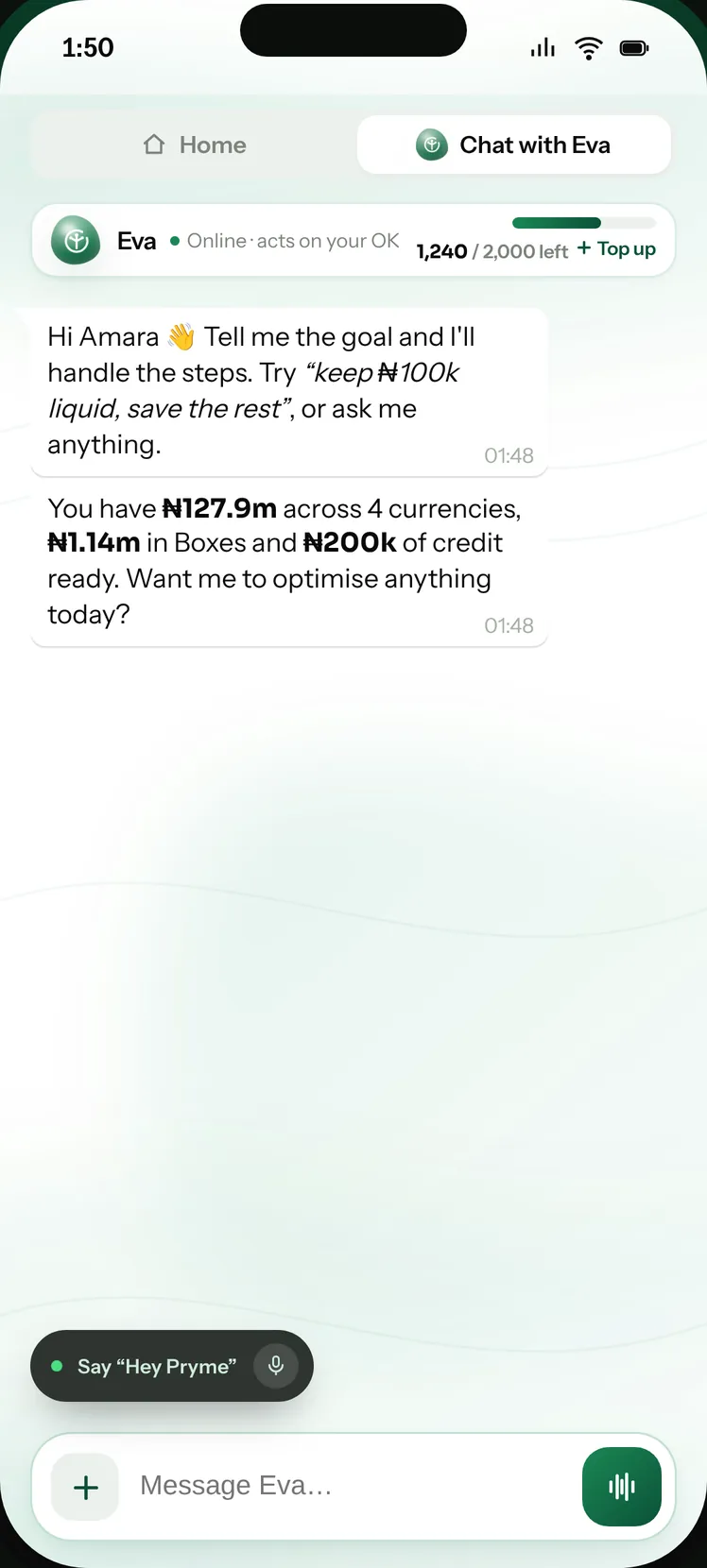
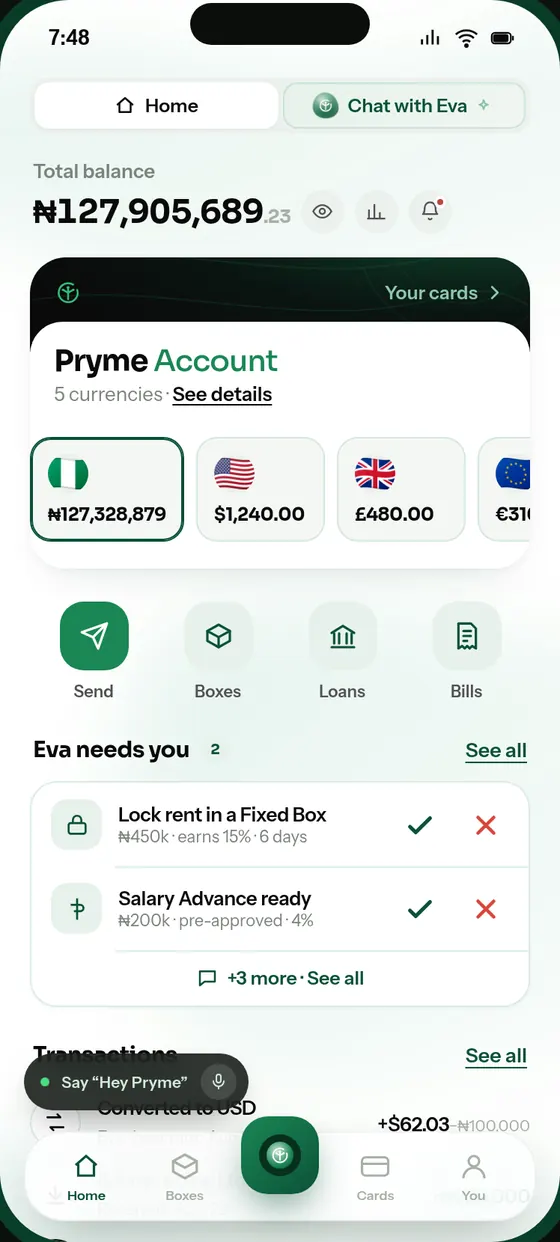
Meet Eva, the assistant inside the Pryme app. She opens accounts, moves money, saves toward your goals and follows up. Nothing leaves your account without your approval.
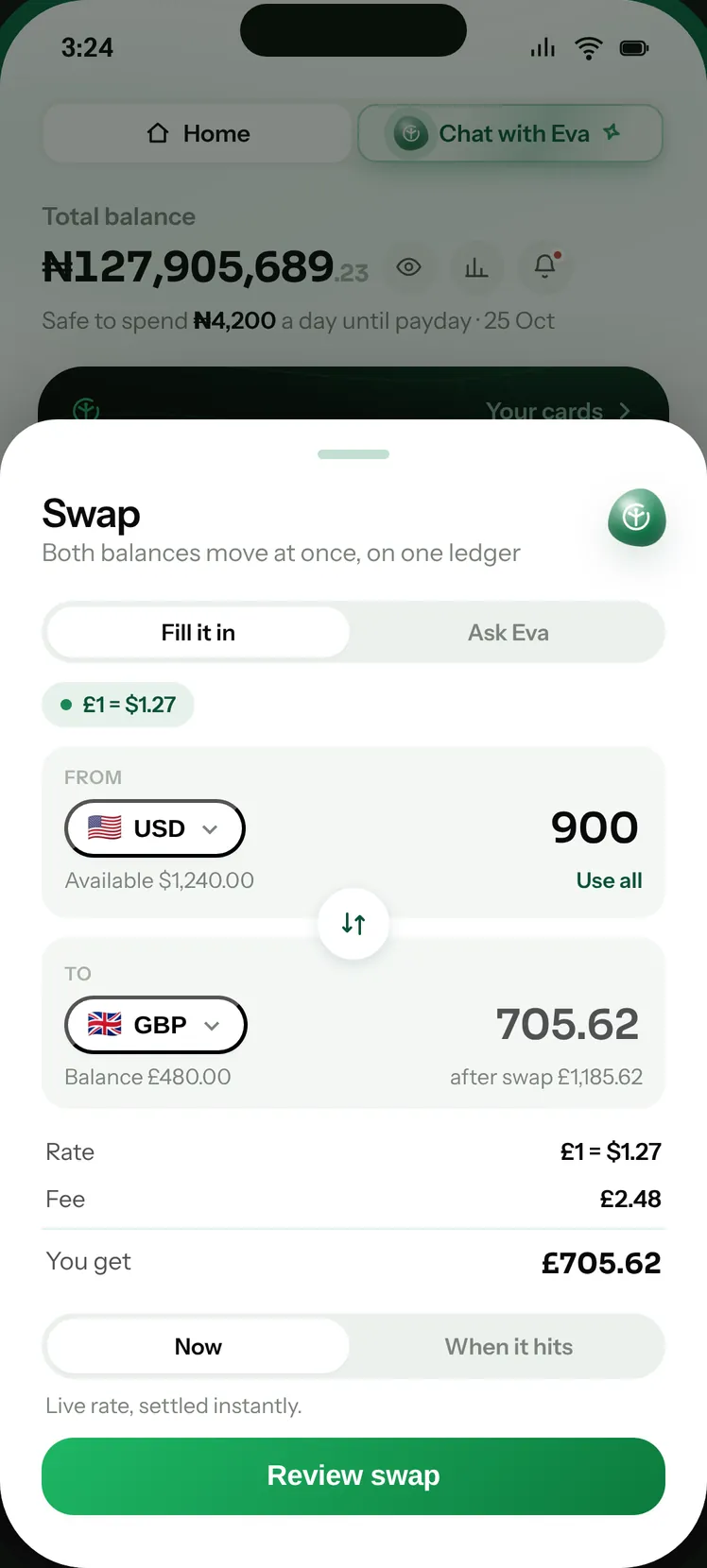
Meet Eva, the assistant inside the Pryme app. She holds dollars, pounds, euros and Naira side by side, swaps at a locked rate, pays bills in any of them and sends anywhere, asking before anything moves.
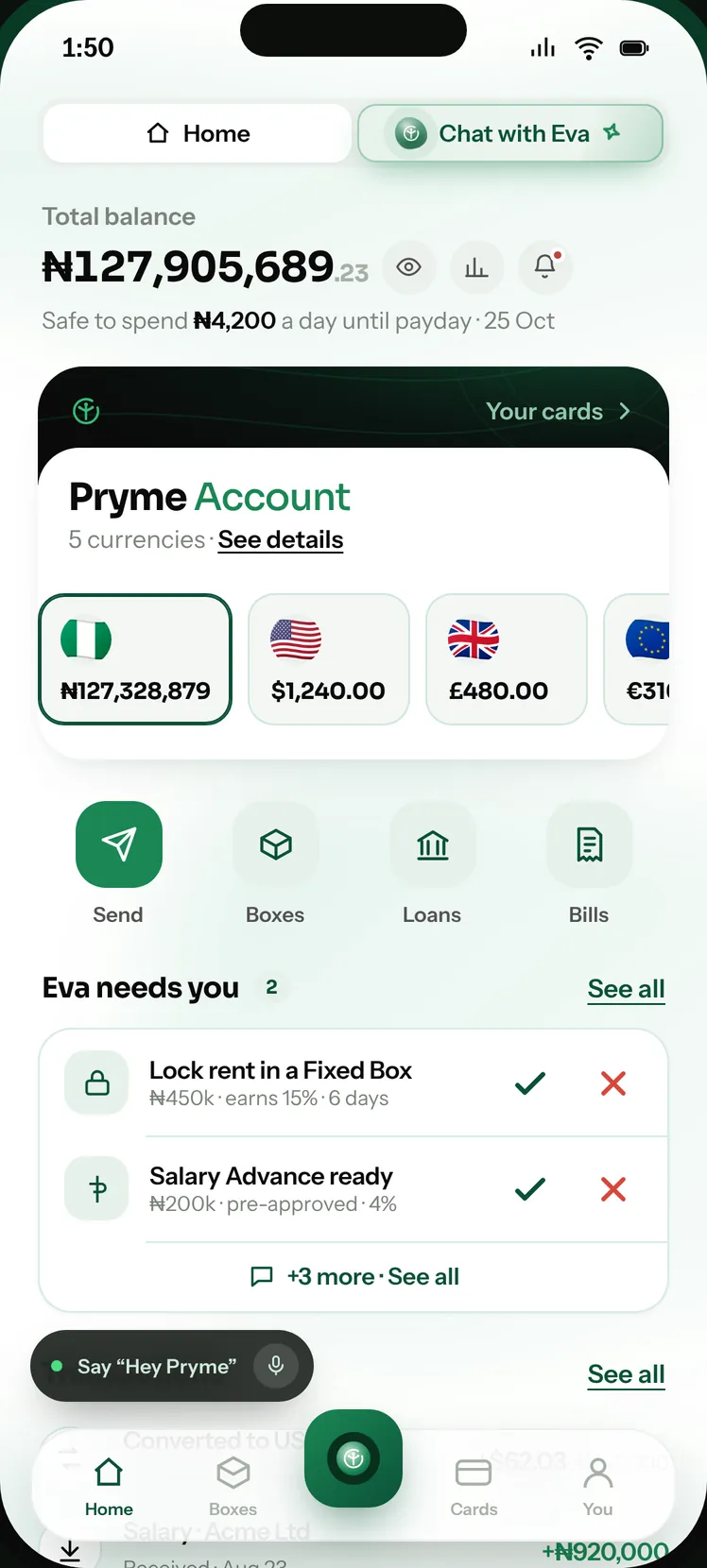
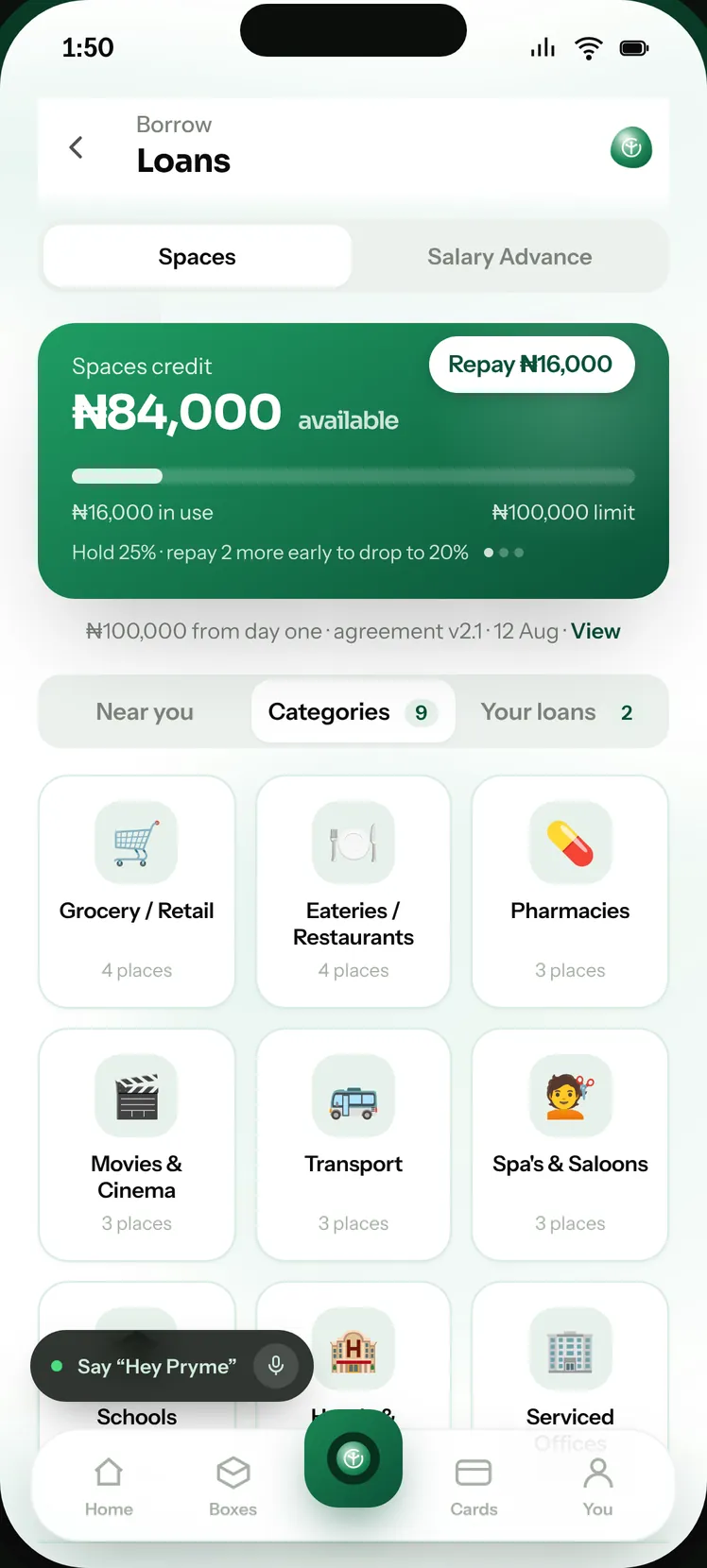
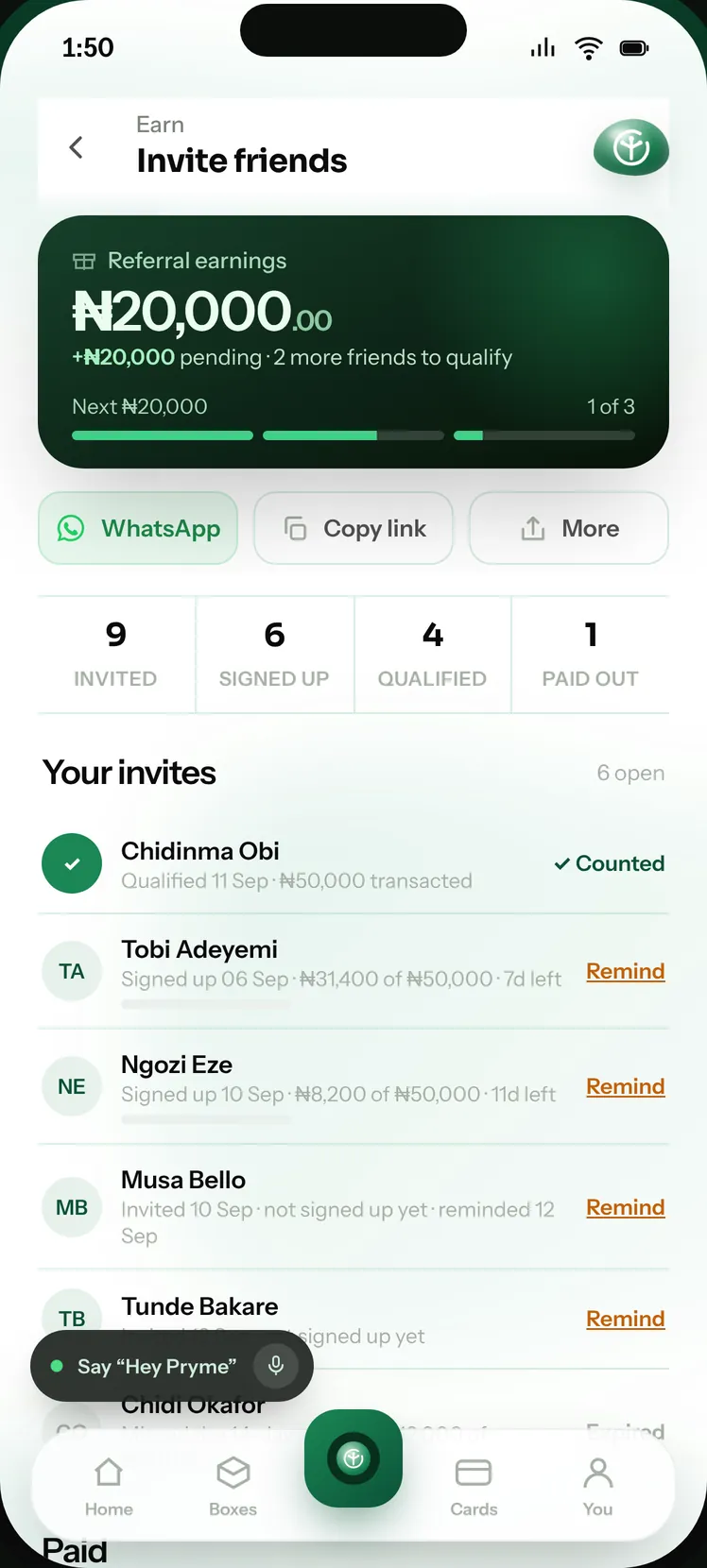
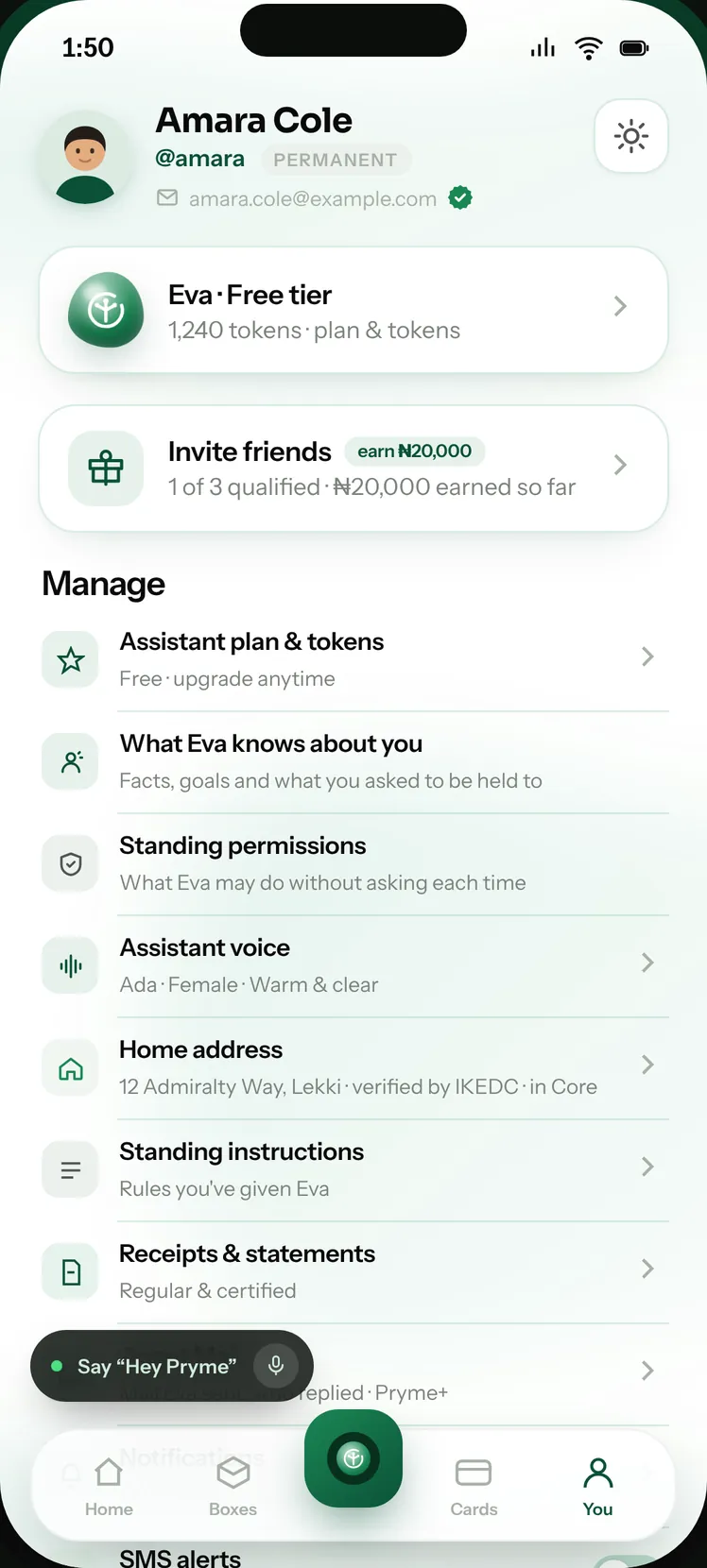
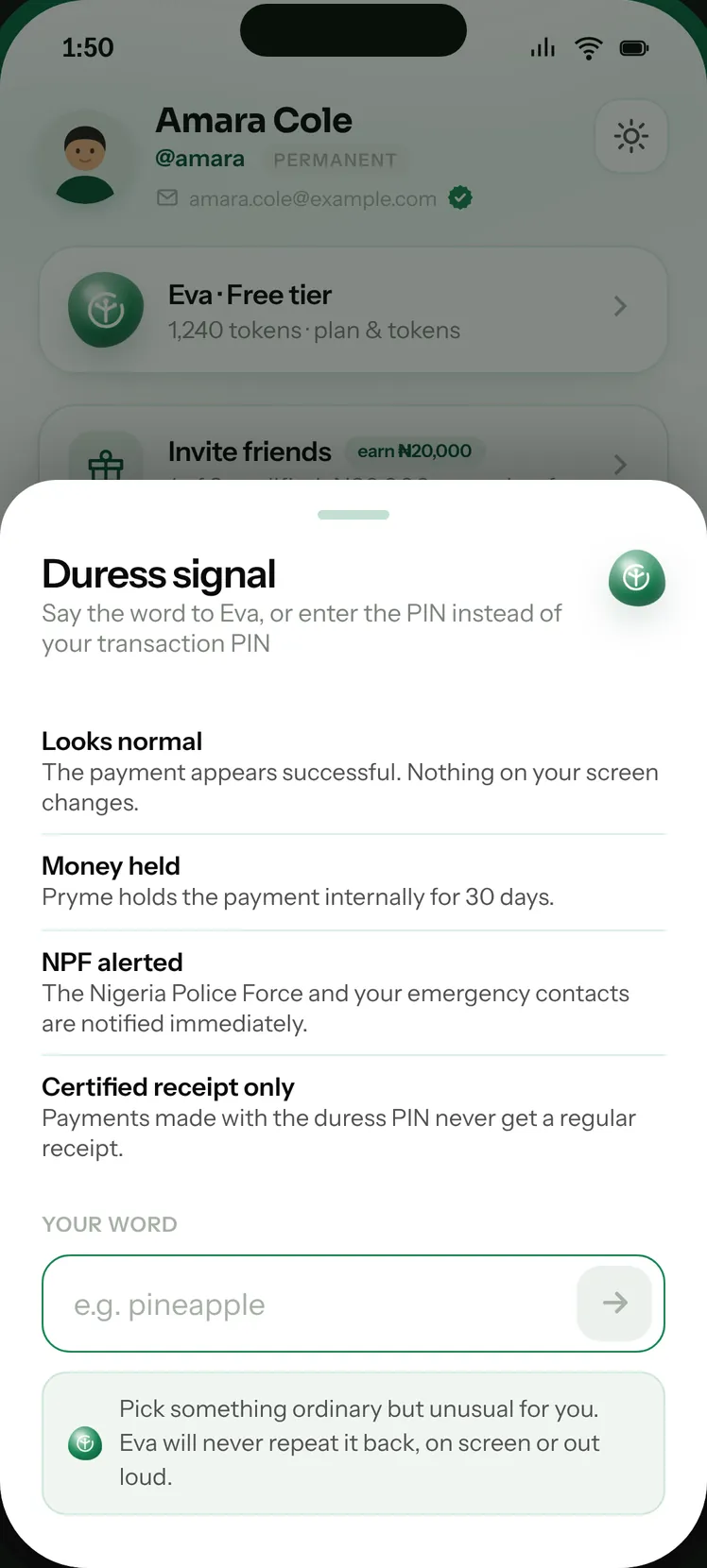
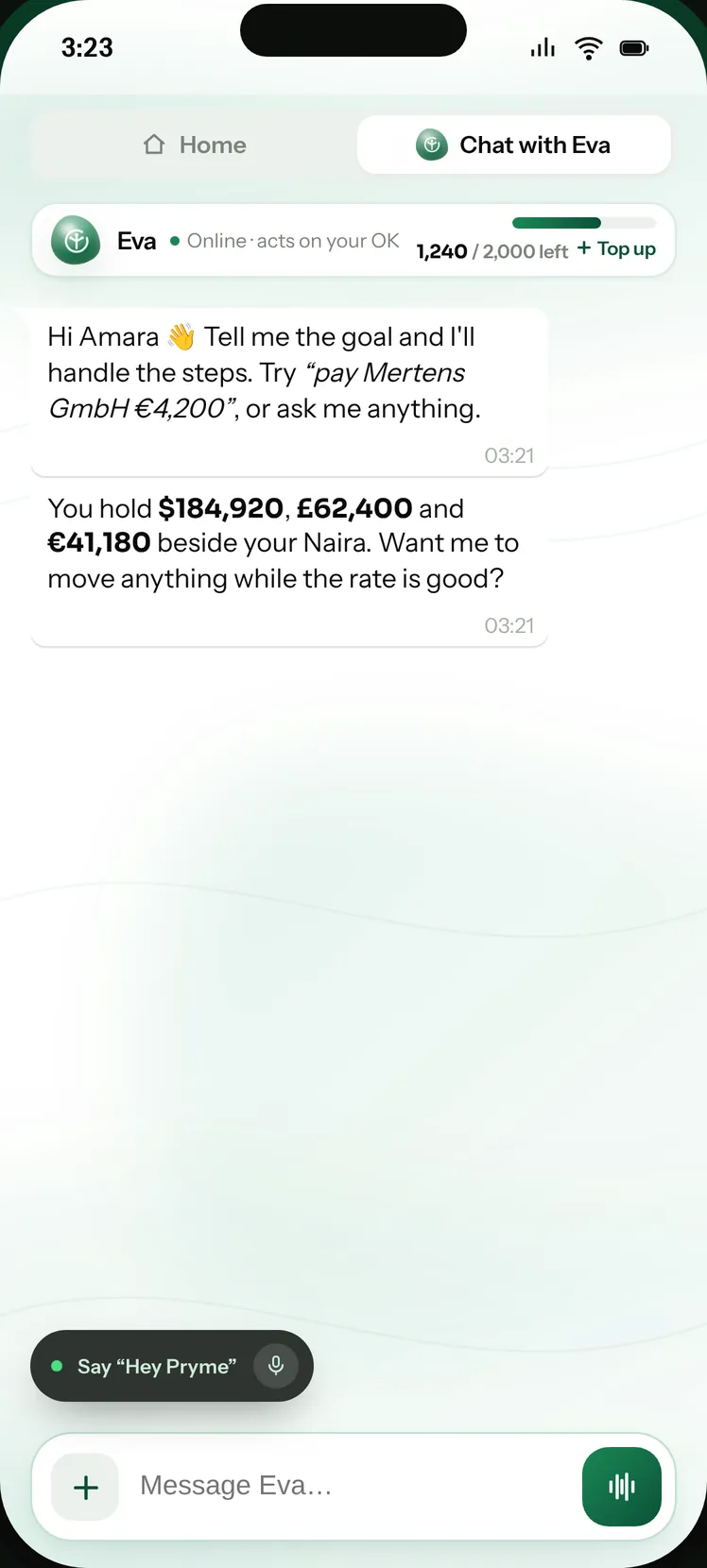
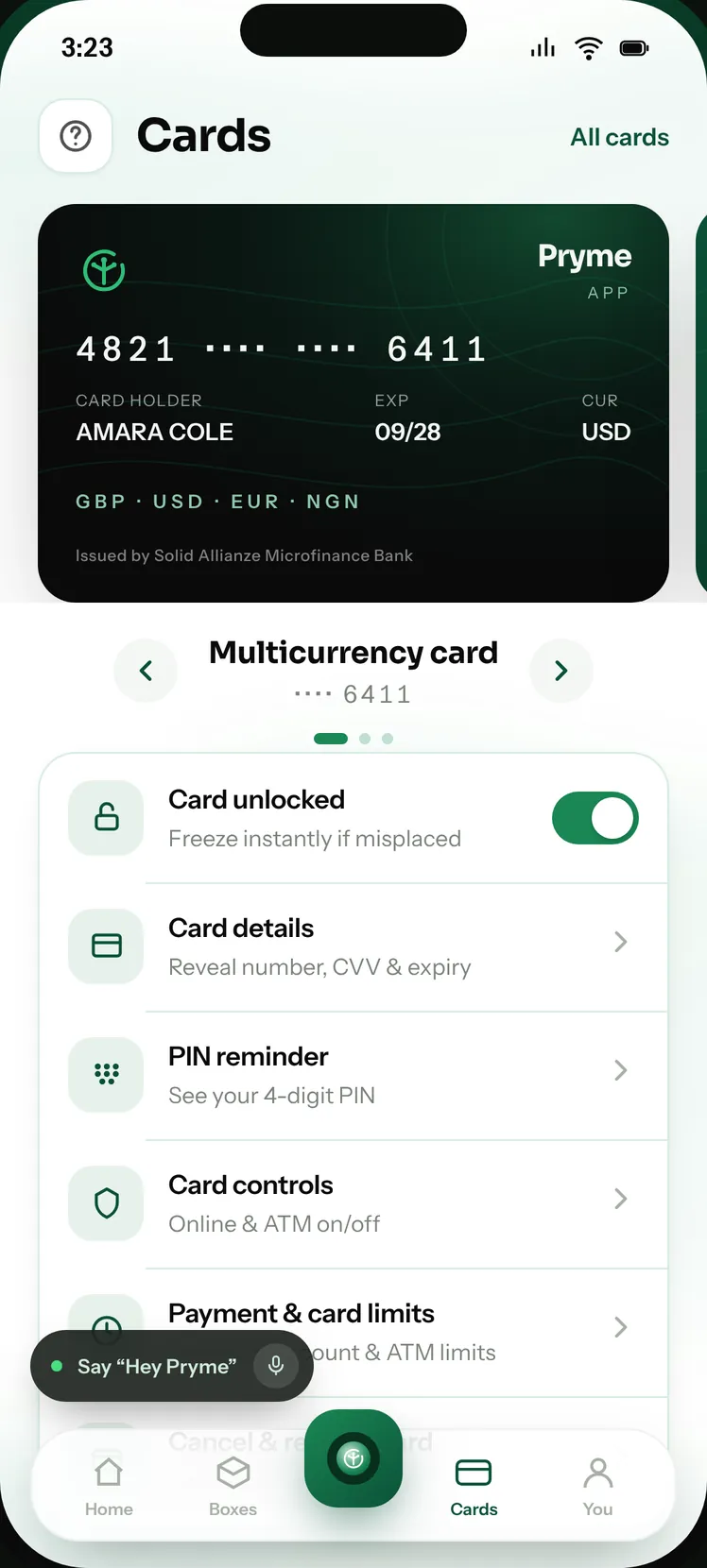
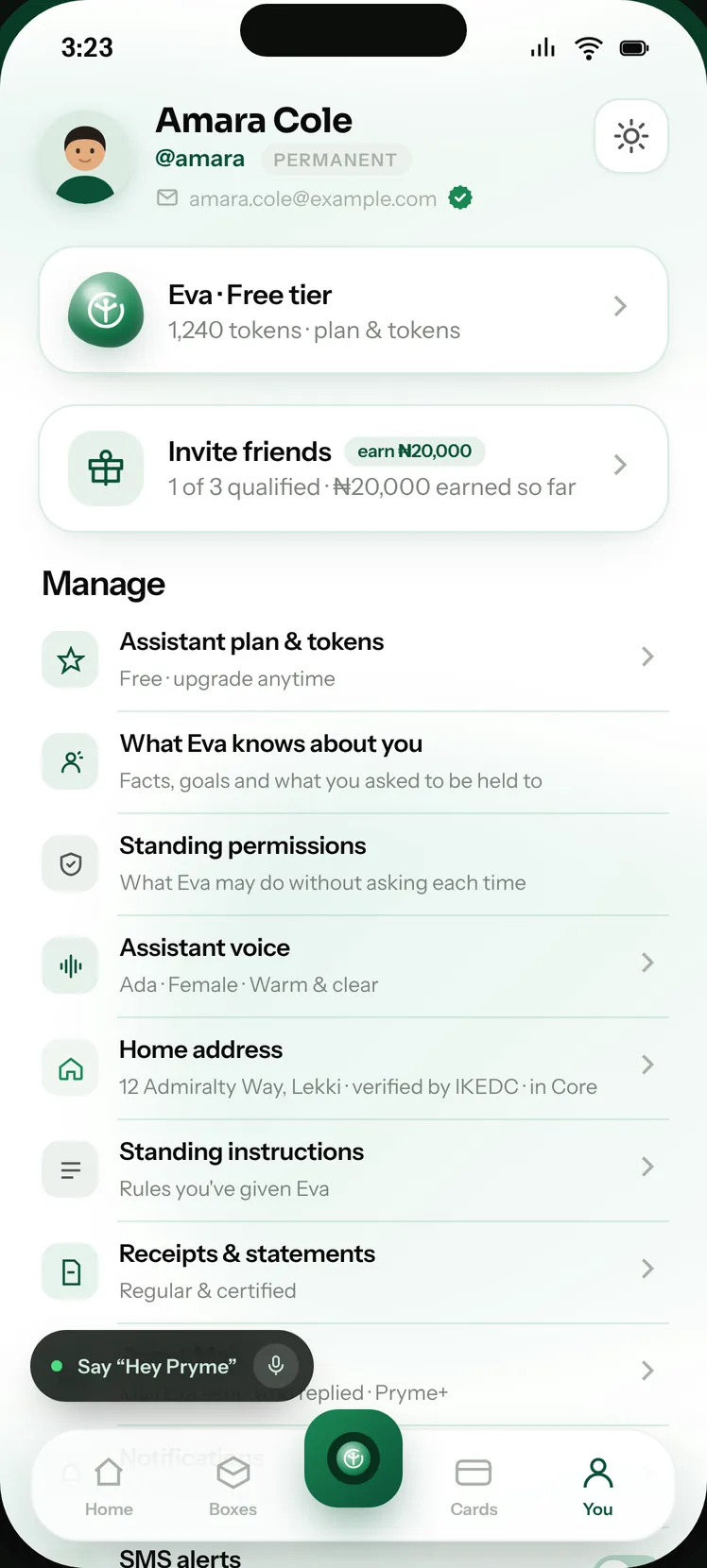
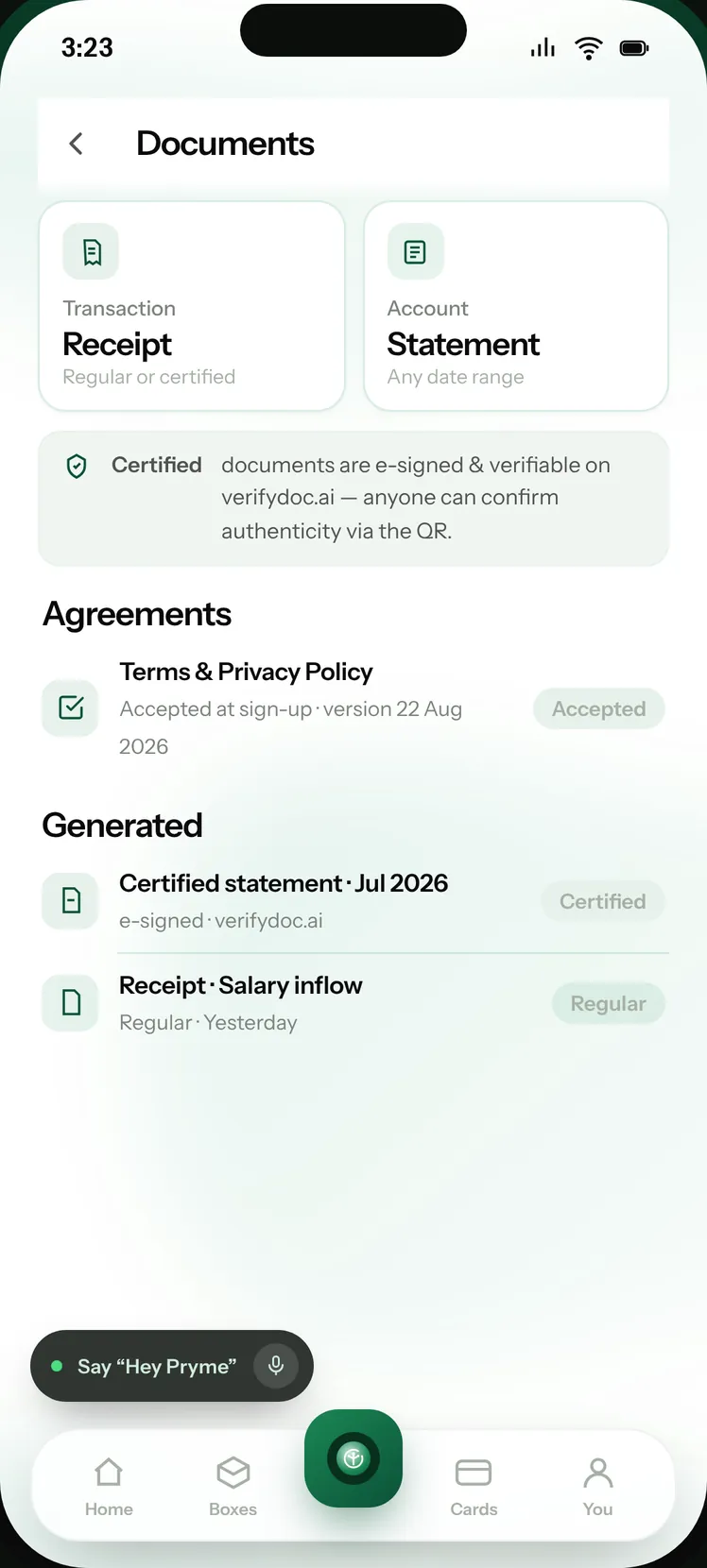
We give you a limit to spend at the shops and services you already use — and an account that works on your month while you get on with it. Dollars, pounds and euros sit beside your Naira, and an assistant handles the running of it, asking you first every single time.
One global account for your money and business. Move across currencies, automate everyday operations and put AI agents to work — with you in control of every important decision.


 Evayour assistant
 DanielChief of Staff
 BenFinance
 BruceCare
Your competitor down the road sells the same thing you sell. The difference is who walks in. We put money in people’s hands that can only be spent in businesses like yours — and then we point them at you.
You are not borrowing. You are selling to somebody who already has the money — and that money can only be spent with a business like yours.
₦100,000 from day one · agreement v2.1 · 12 Aug · View
Eva waits for your rate and asks before she moves anything.
No card, no OTP, nothing for the buyer to type in. They transfer from the bank app they already use, and the money lands in the same account your agents are running — already matched to the order, already in your books.
We give the buyer a one-time account number. They transfer to it from any bank app or by USSD — no card, no OTP, nothing to type in.
Get the account numberTo this account, from any bank app. We watch it, and the page updates itself.
₦26,767.50 from GTBank · John D., matched to order ORD‑1042.
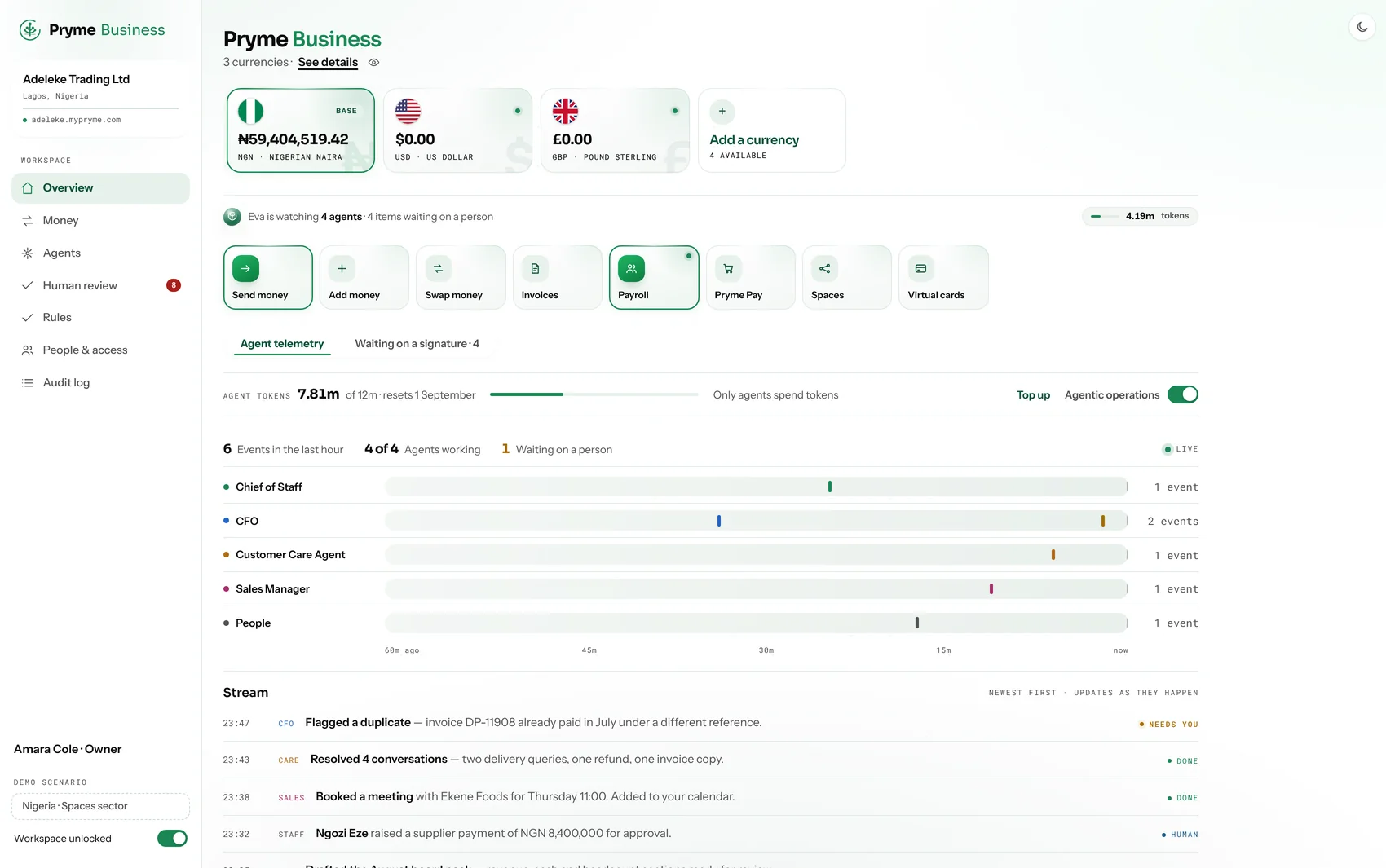
Five agents come with the account. Each one has a job description, a budget and a ceiling you set. They do the work and bring it to you — nothing leaves the account without your signature.
Knows what is stuck, who is waiting and what you promised — and keeps all three moving.
Booked a meeting with John Doe Foods for Thursday 11:00.Keeps the books as you trade and tells you the moment something does not add up.
Flagged a duplicate — invoice DP‑11908 was already paid in July.Holds every filing to its own clock and screens names and payments against your policy — and logs what it refuses.
Screened 412 payments overnight and refused two of them.Goes back to the buyers who went quiet, with the receipt already attached.
Recovered ₦410,000 across three overdue invoices.Replies, follows up on what they asked for and hands you only the ones that need you.
Resolved 4 conversations — two deliveries, one refund.Issue a dedicated Naira account number to each of your own customers, collect into it and reconcile against it. The same rails the Business Account runs on, with the licence behind them.
Dollars, pounds and euros beside a Naira account, on one ledger and one set of books. Five agents come with it and run the account — nothing leaves without your signature.
Five agents come with the account. Each has a job description, a budget and a ceiling you set. They do the work and bring it to you — they propose, you approve.
Knows what is stuck, who is waiting and what you promised, and keeps all three moving.
Booked the quarterly review with your auditor for Thursday.Keeps the books in every currency you hold and flags the moment something does not add up.
Flagged a duplicate — invoice DP‑11908 was already paid in July.Holds every filing to its own clock and screens names and payments against your policy — and logs what it refuses.
Screened 412 payments overnight and refused two of them.Goes back to the buyers who went quiet, with the invoice and the receipt already attached.
Recovered $12,400 across three overdue invoices.Replies, follows up on what they asked for and hands you only the ones that need you.
Resolved 4 conversations — two deliveries, one refund.The business has changed shape four times and never changed what it was rooted in. Each version was built out of what the last one could not do.
An online grocery store, built out of a faulty tab. Selling the food was the easy part — taking the money for it, and moving it, turned out to be the business.
A prepaid card. The first time the company issued rather than resold, and the first time it carried the obligations that come with holding somebody else’s money.
Solid Allianze acquired — an existing bank with an existing licence. The perimeter stopped being someone else’s to draw.
More than one currency on one balance, and the rebrand to Pryme. A Nigerian business could hold dollars without holding a second institution.
Accounts that do the work rather than only hold value. Five agents on the account, inside a policy you write — which is where the new mark starts.
Pryme is a financial technology company. It gives people and businesses in Nigeria one account that holds Naira alongside dollars, pounds and euros, and a set of agents that do the running of it — keeping the books, chasing what is owed, answering customers and paying bills. Nothing leaves an account without the owner’s approval.
Yes. A Pryme account holds Naira, US dollars, pounds sterling and euros side by side on one ledger, each with its own account details — a Nigerian account number, a US account number, a UK sort code and an IBAN for the euro area. You can swap between them at a rate you set, and every currency has its own statement.
Spaces is available in Nigeria. It gives a shopper money to spend that can only be spent with a participating business. The business is paid into its Naira account whether or not the shopper repays, because Pryme carries the credit. For the business it is free to join, there is nothing monthly, and the customer’s identity is never shown — only a reference and what it is worth.
Five agents come with the account. The Chief of Staff runs the week and keeps what is stuck moving. Finance watches the money and keeps the books as you trade. Compliance keeps the filings on time and screens what moves. Sales chases what you are owed. Customer Support answers your customers and follows up. Each has a job description, a budget and a ceiling you set, and each one proposes rather than acts — nothing leaves the account without your signature.
Pryme Pay takes payments on your own site or on a checkout page you control. The buyer is given a one-time account number and transfers to it from any bank app or by USSD — no card, no OTP, nothing to type in. The money lands in the same account your agents are running, already matched to the order and already in your books.
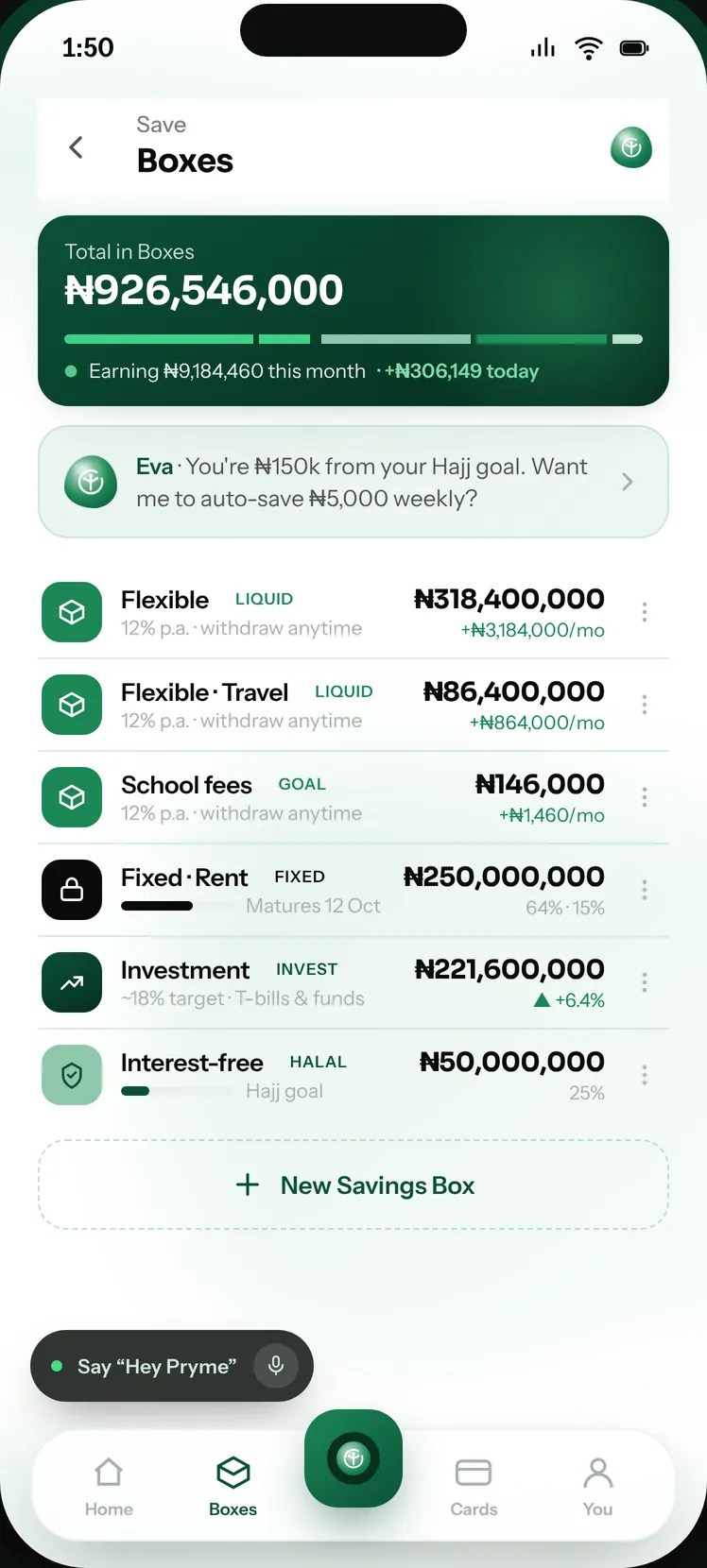
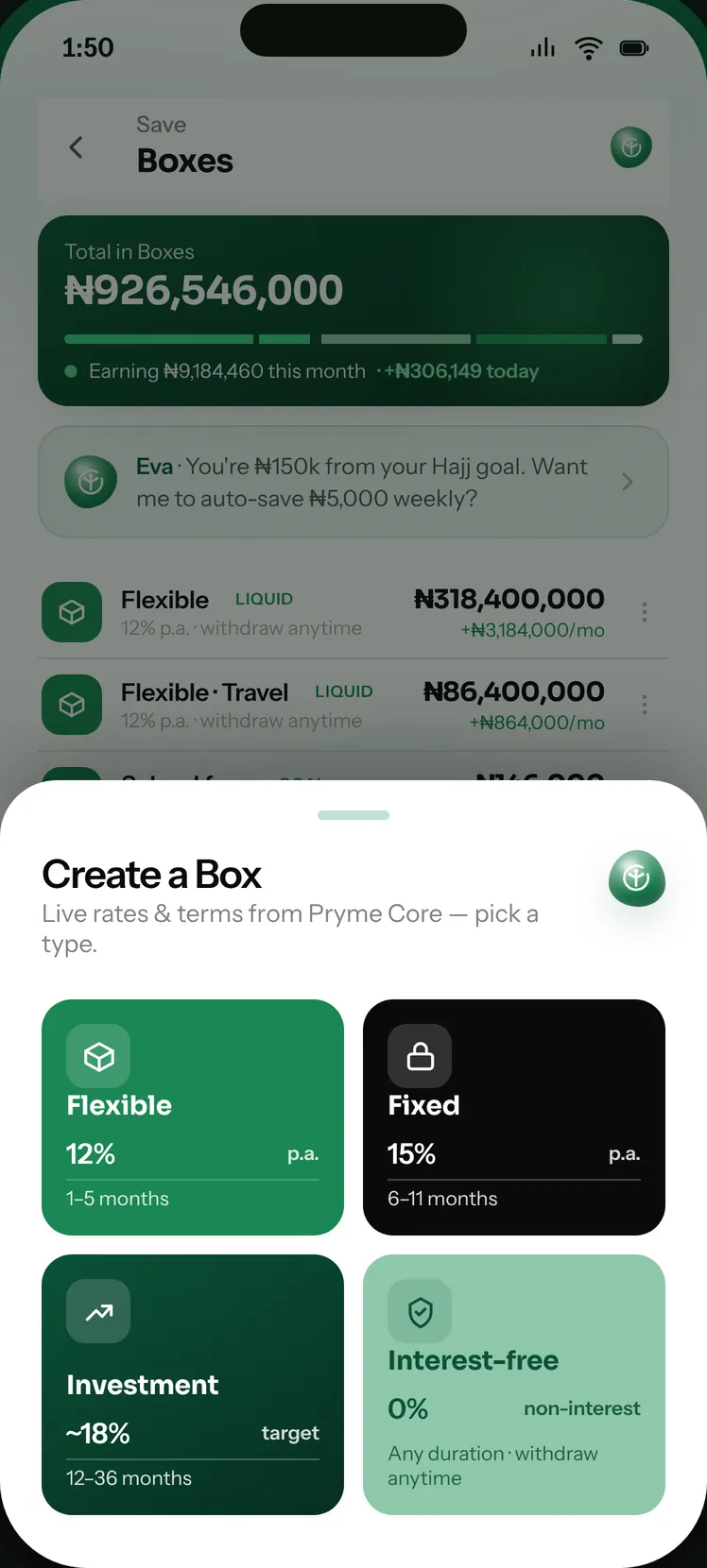
Savings Boxes are separate pots inside a Pryme account, held in Naira. Flexible Boxes can be withdrawn at any time, Fixed Boxes hold to a date, Investment Boxes hold for longer, and Interest-free Boxes earn nothing by design. A business can use them to ring-fence payroll and the tax it withholds, so that money cannot be spent by accident.
Pryme is a financial technology company, not a bank. Accounts and deposits are provided by Solid Allianze Microfinance Bank Limited, which is licensed by the Central Bank of Nigeria and is a member of the Nigeria Deposit Insurance Corporation.
Yes. Pryme Rails lets a platform issue a dedicated Naira account number to each of its own customers, collect into it and reconcile against it, over one API — the same rails the Pryme Business Account runs on.
Pryme is a financial technology company. It gives you one account that holds US dollars, pounds sterling and euros beside Naira, with an assistant that runs the account for you and asks before anything moves. Accounts are provided in Nigeria today, and further markets open as each licence lands.
Accounts are provided in Nigeria today, subject to verification and approval. Foreign-currency balances are held and converted inside that account, so you can hold, receive and swap dollars, pounds and euros wherever you are.
Naira, US dollars, pounds sterling and euros, side by side on one ledger. Each has its own details — a Nigerian account number, a US account number, a UK sort code and an IBAN for the euro area — and each has its own statement.
Swap at a rate you set rather than the rate of the day, then send to any Pryme username or to a Nigerian bank account. There is no fee to send to another Pryme account.
Eva is the assistant inside the Pryme app. She opens accounts, moves money, saves toward your goals, pays what is due and follows up what is owed to you — and asks you before anything moves.
Pryme Rails lets a platform issue a dedicated Naira account number to each of its own customers, collect into it and reconcile against it, over one API — the same rails the Pryme Business Account runs on.
Notes on money that does the work: what we are building, what the regulation actually says, and how we think about letting software act on money. Read the Ledger
What AI agents can do in bookkeeping, close, collections and compliance today, where a person must stay in charge, and how to judge a product.
How multi-currency business accounts work: local details vs SWIFT, payment rails, the real cost of FX, safeguarding vs deposit protection, and hedging.
How UK, US, Canadian and European firms pay Nigerian suppliers and get paid by Nigerian clients: FX, Form A and M, tax, compliance and payout routes.
What it really costs to send money to Nigeria from the UK, US, Canada and Europe: fees, exchange-rate margins, CBN naira rules, BVN, speed and scams.
What AI can and cannot do in day-to-day bookkeeping, how much time it saves on real numbers, and which jobs must stay with you or your accountant.
What we are building, what the regulation actually says, and how we think about letting software act on money.
All of United KingdomBusiness operations and agents · 104 articles
A UK parent on FRS 102 and a Nigerian subsidiary filing IFRS accounts must report as one group. How the two sets meet, and the translation step in naira.
How an AI agent can match pound and naira bank lines to invoices, the Nigerian charges and deductions that break matches, and what a person reviews.
How to build and run a compliance calendar covering UK and Nigerian filings with an AI agent: the monthly cycle, annual dates, owners and approvals.
Duplicate invoices slip through when suppliers bill in two currencies or resend with new numbers. The rules an AI agent should use to hold, not reject.
What an AI agent can prepare when chasing invoices in naira and pounds, what a person must approve, UK late payment interest and short payments.
Naira receipts rarely match invoices exactly: withholding tax, charges, part payments. The rules an AI matching agent needs, and where a person decides.
Let an agent assemble Nigerian payroll inputs, but check PAYE bands, pension, NSITF and bank details yourself. A review sequence and a worked example.
An agent can prepare UK and Nigerian VAT working papers, but each return is the business's own, filed through its own system. Who does what, and when.
Which back-office tasks AI agents can prepare for a business run across the UK and Nigeria, where a person must approve, and the records to keep.
Lagos prices are rising far faster than UK ones. Five ways UK firms review Nigerian pay, the legal steps, and the arithmetic of real-terms change.
Vetting a Lagos hire from the UK: which checks the Nigeria Data Protection Act allows, what to tell the candidate, and where criminal checks fit.
How to set payment approval limits and dual control for a business with staff in the UK and Nigeria: thresholds, roles, currencies and records.
Lagos never changes its clocks; the UK does twice a year. How the gap moves, the 2026 and 2027 dates, and payroll cut-offs that survive the switch.
Your bank wants to know who you pay in Nigeria and why. The document pack that answers enhanced due diligence questions quickly, and what to avoid.
Electricity bands and tariffs, generator fuel arithmetic, solar costs reported in 2026, and two-link internet: a continuity plan for a Lagos team.
Which Nigerian visa a UK employee needs for meetings or real work, what the NIS e-visa asks for, and why visa on arrival is no longer an option.
A method for forecasting cash in pounds and naira: separate currency columns, planned conversions, rate scenarios and each country's tax dates.
Fraudsters pose as the UK founder to rush a Lagos finance officer into paying. How it works, the call-back rule that stops it, and what to do next.
A UK company that owns a Nigerian subsidiary rarely pays a CFC charge, but only if one of five exemptions fits. How each test works, with examples.
Lend to your Nigerian company and both tax systems take an interest: arm's length pricing, 10% Nigerian WHT, the treaty cap and UK credit relief.
Before you pay a Nigerian invoice: check the company on CAC, match the account name, confirm changed bank details by phone, and know the UK limits.
Renting desks in Lagos for your staff: what the price really covers, how power and internet work, and the tax and company-law questions a desk can raise.
Annual returns, accounts and company tax deadlines in the UK and Nigeria compared: Companies House, HMRC, CAC and the NRS, with late-filing penalties.
A UK company pays Corporation Tax on management fees from Nigeria, and Nigerian 10% WHT can be credited, up to the UK tax on that income. A worked example.
A UK company is taxed on profits from abroad too. How credit for Nigerian tax works, the branch exemption election, and the 2027 change PwC reports.
Lagos and London share a clock for half the year and sit an hour apart for the rest. Plan shifts, extend hours and use AI support with a human check.
Multi-factor sign-in, managed devices and the five Cyber Essentials controls, applied to a team split between the UK and Lagos, with costs and common gaps.
Market receipts, handwritten invoices, faded till slips: how to scan Nigerian paper records so they stand up for HMRC, and how long to keep them.
A UK company's credit for Nigerian WHT is capped at the UK tax on the same income and cut if the tax could have been avoided. How the limits bite.
Two people to send money to Nigeria: how dual authorisation works on business banking, how to set the rules, and the gaps it leaves if set up badly.
An employer of record employs your Nigerian hire and runs PAYE, pension and NSITF. What the two contracts say, what it costs and what it cannot fix.
A worked example for UK finance leads: total the naira cost, convert at a budget rate, add a buffer and the conversion cost, then review monthly.
Naira balances move in sterling value every month. How a UK company records the gains and losses, and how corporation tax usually follows the accounts.
The Senior or Specialist Worker route moves existing Nigerian staff within a group to the UK. The £52,500 salary floor, the 12-month rule and limits.
When a UK parent must prepare and audit group accounts with a Nigerian subsidiary, what the auditor asks for, and how naira is translated.
Yes for employers under the Pension Reform Act. Cover of at least three times annual total emolument, paid for by you, with the certificate displayed.
How group health cover for Lagos staff works through NHIA-accredited HMOs, what plans include, what drives premiums and what to ask first.
Formal naira hedges are hard for a small UK firm to get. What a non-deliverable forward is, who can use one, and the practical hedges that work instead.
Engaging Lagos talent as contractors from a UK company: when a contractor looks like an employee, what that costs, and how to draft and run the agreement.
How long a UK company must keep records of foreign transactions, when 6 years becomes longer, and what HMRC expects for naira and dollar amounts.
An AI agent can draft supplier and payroll payments; a person should release them. Setting approval ceilings, and the payments that always need a person.
When a Nigerian contractor or company needs your UK data, the ICO's IDTA is the usual safeguard. What it contains, what you can change, and the risk test.
The Immigration Skills Charge is paid by the employer when it assigns a certificate of sponsorship. The rates GOV.UK publishes, who is exempt and refunds.
No bank feed from your Nigerian bank? How to turn a naira statement into a clean CSV for Xero, which Xero plans handle currencies, and what HMRC expects.
A supplier's email asks you to pay a new account. How payment diversion works, why cross-border losses are hard to recover, and the checks that stop it.
Who owns the code and designs your Lagos team creates? Employees, contractors and EOR staff differ, and under UK and Nigerian law the fix is in writing.
Before a Nigerian subsidiary's management fee reaches the UK it meets withholding tax, a deduction test, transfer pricing and FX paperwork.
What a UK employer may monitor when staff work from Lagos: NDPA principles, when an impact assessment is needed, and why webcams are high risk.
Close the books in the right order when money moves in pounds and naira: bank, FX, payroll, tax deadlines on both sides, evidence and the board pack.
Functional currency, spot rates, month-end revaluation and realised versus unrealised gains: how a UK company with naira transactions keeps clean books.
A naira float in a Lagos office is easy to lose sight of from London. The imprest method, float limits, receipt rules and a monthly check that works.
A UK employer with Lagos staff is covered by Nigeria's data law. Lawful bases for HR data, what to tell staff, breach reporting and moving files to the UK.
The housing fund deduction changed in 2023. The rate is still 2.5%, but private-sector staff now opt in. What employers deduct, remit and record.
CAMA 2020 lets small companies skip the audit, but a UK-owned subsidiary often fails the test. The conditions in section 394 and what follows.
A UK company is taxed in Nigeria only through a taxable presence: an office, an agent, a project, staff serving clients there, or digital sales.
Written terms within three months, notice from one day to one month, 6 days' leave, 12 days' sick pay: the Labour Act rules UK employers meet first.
How Nigerian public holidays, including Islamic holidays declared at short notice, affect when payments settle, and how a UK business plans around them.
A Standard Visitor visa covers meetings, training and internal projects, not work. The permitted activities, the £135 fee and the invitation letter.
Nigerian VAT for a subsidiary owned from the UK. The 7.5% rate, the small business exemption, Tax ID, Rev360, returns and invoices explained.
Two employer-paid levies on Nigerian payroll. NSITF takes 1% of monthly payroll; the ITF takes 1% of annual payroll once you have five staff.
What a UK company's contract with a Lagos support provider should say: measurable service levels, data terms under UK GDPR and the NDPA, and exit rights.
Naira card limits, dollar and pound cards, domiciliary transfers under the 2026 FX Manual, and the Nigerian VAT and WHT questions on foreign software.
Lagos-resident staff pay PAYE to LIRS. Who registers, the eTax corporate profile, the 10th-of-month deadline, the January return and a worked 2026 example.
If your staff live in Nigeria, their pay is taxed there. Who deducts PAYE, which state collects it, the 2026 bands and penalties, and options for UK firms.
Ten, fifty or two hundred Nigerian contractors to pay: the bulk payout options, how naira batches move, and the checks before you send the file.
What a Nigerian contractor's invoice should show, what a UK company must keep and for how long, and how VAT and the exchange rate fit into the record.
A UK firm can usually pay a Nigerian contractor in dollars from abroad into a domiciliary account. What the CBN's 2026 FX Manual changes, and the limits.
How CAC, Remita and High Commission payments are receipted, which record proves what, and how long a UK company must keep each one.
A bonus to a Nigerian employee is taxed through PAYE in any currency. How conversion works, the deadlines and penalties, and the wages rule.
Three ways a UK company can pay people in Nigeria: contractors, an employer of record or its own subsidiary, and the Nigerian payroll duties behind each.
The Pension Reform Act 2014 applies once you have three staff in Nigeria: 10% employer, 8% employee, seven working days to remit, and group life cover.
Purchase orders, approval limits in each currency, supplier checks and withholding tax: controls for buyers in Lagos and approvers in London.
Hitting your bank's limit on payments to Nigeria? How limit increases usually work, what the bank will ask you, and the Nigerian-side limits to plan for.
The documents to keep for each payment between the UK and Nigeria, how long each country requires them, and how to file them so an auditor can follow.
Nigeria refunds excess VAT to taxable persons; we found no route for unregistered foreign firms. How to avoid the charge, and when to register.
The full route for a UK parent: Nigerian company tax, withholding tax on the dividend, a Certificate of Capital Importation for FX, then UK exemption.
Keeping good people in Lagos: Labour Act notice rules, retention bonuses and clawbacks within its deduction limits, and how far non-competes go.
No official salary table exists for Lagos tech roles. How to build a benchmark you can defend, the legal floors, and take-home pay under 2026 bands.
Dollar salaries attract talent but meet the Labour Act's legal tender rule, the CBN's settle-in-naira policy and PAYE at the official rate. The trade-offs.
With three people across London and Lagos, who should raise, approve, pay and reconcile? A practical split of duties, and what to do when you cannot split.
Shipping a laptop from the UK to Lagos needs a UK export declaration and attracts Nigerian duty, levies and 7.5% VAT on the landed value. A worked example.
Can a UK startup grant EMI options to its Lagos team? The employment and working-time tests, why contractors and EOR staff miss out, and other routes.
Your own Lagos employees are not a restricted transfer under UK GDPR; contractors and Nigerian companies are. The ICO's three-step test explained.
Nigeria can tax foreign digital firms with no office there. The ₦25m, .ng domain and naira-pricing tests, deemed profit, VAT and the treaty question.
Sponsor licence, certificate of sponsorship, Skills Charge, visa fee and health surcharge: what a UK employer pays to bring a Nigerian hire, as published.
A branch is part of the UK company, so its naira results go into the UK accounts and tax return. How to account for it, the election and the CAMA catch.
Statutory notice under Nigeria's Labour Act runs from one day to one month by service. Pay in lieu, writing rules, and why giving reasons is safer.
Both countries expect arm's length pricing between related companies. The UK SME exemption, Nigeria's broad connected-person rules, and what to document.
Sending staff from the UK to Lagos or Abuja: what FCDO advice says, why it affects insurance, and the duty-of-care plan to put in place before they fly.
Why Nigerian cards fail on UK checkouts, why local gateways need a Nigerian company, the bank transfer route, and the tax side-effect of naira pricing.
What a Nigerian auditor will ask a UK company for: full-period statements, year-end balances, signatories, FX workings and intercompany matches.
A UK policy rarely covers a Lagos office on its own. Local versus global cover, the Nigerian covers employers must carry, and what to ask a broker.
A UK company rarely gets a Nigerian bank account in its own name. The three real routes: a subsidiary, a partner, or a multicurrency account.
A UK company renting in Lagos. Whose name goes on the lease, rent-in-advance limits, 10% withholding tax, VAT, stamp duty and receipts.
HMRC publishes overseas subsistence rates, with a Nigeria row. How to use them, what to pay in naira on the ground, and the records to keep.
No UK-Nigeria social security agreement means no certificate of coverage. The 52-week NI rule, the 183-day treaty test and the Nigerian side, in order.
The £90,000 taxable turnover test for founders trading between the UK and Nigeria: what counts, what does not, and the reverse charge trap.
Nigerian expenses carry no UK VAT to reclaim, but services bought from Nigeria may need the reverse charge. How each type lands on your UK VAT return.
How a VAT-registered UK business accounts for services bought from Nigerian suppliers: when the reverse charge applies, return boxes, value and rates.
Why a receipt others can check is genuine and unaltered helps UK–Nigeria businesses with auditors, tax authorities, partners and payment disputes.
Whether Nigerian withholding tax applies when a UK business pays contractors in Nigeria, which payer deducts, the resident rates and the receipt.
Nigeria's Labour Act leaves normal hours to agreement and sets no overtime rate. What it does fix, who it covers, and the rules a UK owner should write.
Nigeria's Labour Act gives employers three months to issue written terms. What they must include, who the Act covers, and what UK owners should add.
How a UK bookkeeper adds NGN to Xero or QuickBooks: which plans include multicurrency, setting up naira bank accounts, rates, and month-end revaluation.
You can add the other type later — many of our customers hold both.
The business first, then you. Nothing is submitted until you review it.
Ideal customer profiles
Generated from your website by VerifiedLead.ai
Pick the ones that look right. Your Sales agent works these first, and you can change them at any time after opening.
We ask this because you have not given us a website. It helps us set the right limits from day one.
Which of these represents you?
Officers listed against this company on the UK register.
We have sent a six-digit code to your email address. Enter it below to confirm the address is yours.
Wrong address? Go back and change it — nothing is created until this step passes. We never ask for a code by phone or email; anyone who does is not us.
Last step. Each time you sign in we email you a six-digit code — we never send codes by SMS.